
 한국어
 English
 日本語
 中文(简体)
 Viewing now
Ranexa Extended-Release Tablet 500 mg (Ranolazine)
Ranolazine 500mg
Tablet · Prescription medication
Korea Menarini Co., Ltd.
MFDS item code 202001782 · Approved 2020.03.16
Combination treatment of symptoms of stable angina when control with or intolerance to first-line therapy is inadequate
This medication is used to effectively alleviate the symptoms of stable angina in patients inadequately controlled or intolerant to first-line antianginal therapies such as beta-blockers or calcium channel blockers. Such combination therapy helps manage and improve angina symptoms in patients, thus serving as a good option for treating stable angina symptoms.
1. Adults The recommended initial dose of this medicine is 375 milligrams twice daily. After 2 - 4 weeks, increase the dose to 500 milligrams twice daily; depending on the patient's response to treatment, the dose may be increased to a maximum of 750 milligrams twice daily. If the patient experiences treatment-related adverse reactions (e.g., dizziness, nausea, or vomiting), a dose reduction to 500 milligrams or 375 milligrams twice daily may be required. If symptoms do not resolve after dose reduction, treatment should be discontinued. 2. Method of administration Swallow this medicine whole; do not split, crush, or chew it. This medicine may be taken with food or on an empty stomach. 3. Administration to special populations 1) Patients receiving CYP3A4 and P-gp inhibitors Careful dose titration is recommended for patients treated with moderate CYP3A4 inhibitors (e.g., diltiazem, fluconazole, erythromycin) or P-gp inhibitors (e.g., verapamil, cyclosporine). Do not coadminister with strong CYP3A4 inhibitors (see Precautions for Use, ‘1. Do not administer to the following patients’, ‘2. Administer with caution to the following patients’, and ‘5. Interactions’). 2) Older adults Dose titration in older adults should be performed carefully and cautiously. Exposure to ranolazine may be increased in older adults due to age-related decreases in renal function. The incidence of adverse reactions was higher in older adults (see Precautions for Use, ‘3. Adverse Reactions’). 3) Patients with renal impairment Careful dose titration is recommended in patients with mild to moderate renal impairment (creatinine clearance 30 - 80 mL/min) (see Precautions for Use, ‘12. Information for Healthcare Professionals’). Do not administer this medicine to patients with severe renal impairment (creatinine clearance < 30 mL/min) (see Precautions for Use, ‘1. Do not administer to the following patients’). 4) Patients with hepatic impairment Careful dose titration is recommended in patients with mild hepatic impairment (see Precautions for Use, ‘12. Information for Healthcare Professionals’). Do not administer this medicine to patients with moderate or severe hepatic impairment (see Precautions for Use, ‘1. Do not administer to the following patients’).
This medication should not be used in patients with known allergies to the active ingredient or excipients, significantly impaired renal function, or severe liver dysfunction. It should not be taken with certain strong medications, nor should it be combined with specific antiarrhythmics. Patients with lactose intolerance or hereditary lactose issues should also avoid this drug. When using this medication, special caution should be exercised in patients with mild renal or hepatic impairment, elderly patients, those with low body weight, and patients with severe heart failure. These patients may have elevated drug concentrations, increasing the risk of side effects, so their condition should be monitored closely, and dosage reductions or discontinuation may be necessary. This medication can cause various side effects, the most common being dizziness, headache, constipation, nausea, and fatigue. In severe cases, memory impairment, decreased consciousness, and heart-related issues may occur, so any unusual symptoms should be reported to a healthcare professional immediately. While taking this medication, attention should be paid to potential changes in the QT interval, which can be prolonged. Patients with a history of QT interval prolongation or those taking related medications should exercise additional caution. Furthermore, since this drug is metabolized in the liver, drug interactions can occur when taken with medications that inhibit or induce specific liver enzymes, altering the efficacy of this drug. Careful monitoring or dosage adjustments may be needed when taken with certain antifungals, antibiotics, antiarrhythmics, immunosuppressants, and statins. It is advisable for pregnant or nursing women not to use this medication, and safety and efficacy have not been established in pediatric patients. In case of overdose, symptoms such as dizziness, nausea, vomiting, and visual disturbances may occur, and appropriate treatment should be sought immediately. Finally, this medication requires caution when driving or operating machinery due to potential symptoms such as dizziness, blurred vision, or hallucinations, so care is needed. Lastly, this medication should be kept out of the reach of children, and expired medications should not be used.
Loss of appetite, decreased appetite, dehydration, hyponatremia, anxiety, insomnia, confused state, hallucinations, disorientation, dizziness, headache, drowsiness, fainting, sensory impairment, sleepiness, tremor, orthostatic dizziness, sensory abnormalities, amnesia, degree of consciousness depression, loss of consciousness, cooperation disturbance, gait disturbance, olfactory disturbances, tonic convulsions, blurred vision, visual impairment, double vision, vertigo, tinnitus, hearing loss, facial flushing, hypotension, peripheral coldness, orthostatic hypotension, dyspnea, cough, nosebleed, throat tightness, constipation, vomiting, nausea, abdominal pain, dry mouth, indigestion, abdominal bloating, gastric discomfort, pancreatitis, erosive duodenitis, oral sensory impairment, pruritus, hyperhidrosis, vascular swelling, allergic dermatitis, urticaria, cold sweat, rash, limb pain, muscle cramps, joint swelling, muscle weakness, dysuria, hematuria, chromaturia, acute renal failure, urinary retention, erectile dysfunction, asthenia, fatigue, peripheral edema, increased blood creatinine, increased blood urea, corrected QT interval prolongation, increased platelet or white blood cell count, weight loss, elevated liver enzyme levels, rhabdomyolysis, transient ischemic attack, double vision, hypersomnia
Not everyone experiences these, and they can vary from person to person.
This medication is sensitive to air and moisture, so it must be stored in a tightly closed container. It is best stored at room temperature between 1°C and 30°C. Proper storage can help maintain the drug's effectiveness over time.
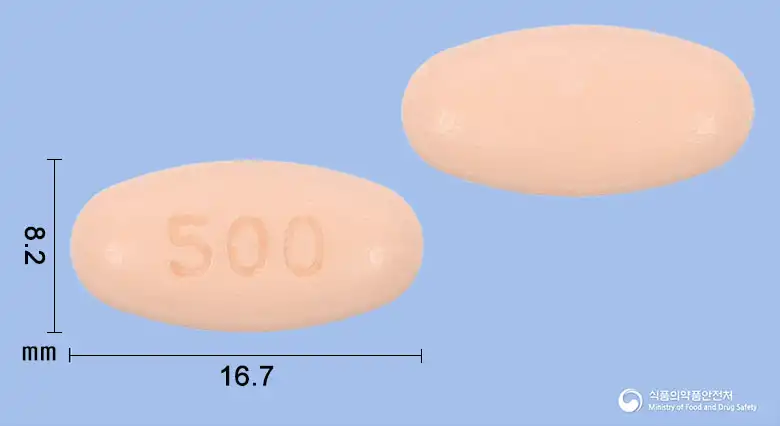
A bright orange, oval-shaped, biconvex, extended-release film-coated tablet, engraved with 500 on one side.
30 tablets/box [(15 tablets/PTP*2)], 60 tablets/box [(20 tablets/PTP*3)]
Even with the same ingredient, strength, dosage form and how it is taken can differ.
Viewing nowRanolazine 500mg
Tablet · Prescription medication
Korea Menarini Co., Ltd.
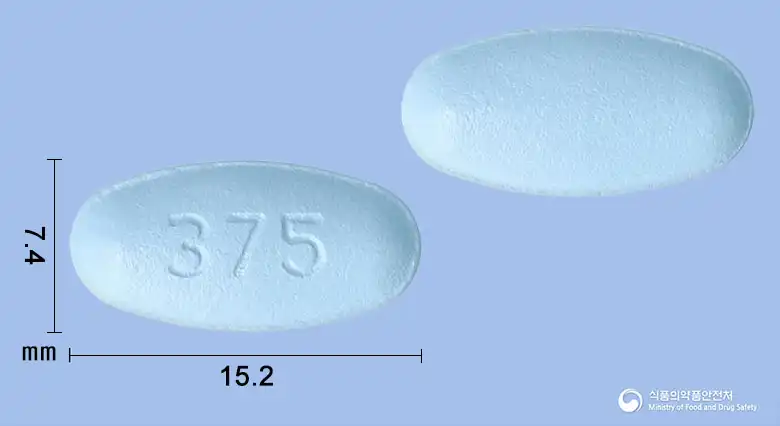
Ranolazine 375mg
Tablet · Prescription medication
Korea Menarini Co., Ltd.

Ranolazine 750mg
Tablet · Prescription medication
Korea Menarini Co., Ltd.
Even with the same ingredient, the dose and directions can differ by strength and dosage form. Talk to a doctor or pharmacist before switching from a medication you are already taking.
No questions yet.
For anything that needs medical judgment, consult a doctor or pharmacist.
This drug information is based on data provided by the Korea Ministry of Food and Drug Safety.
Consult a doctor or pharmacist for accurate dosage, administration, and usage instructions.