
 한국어
 English
 日本語
 中文(简体)
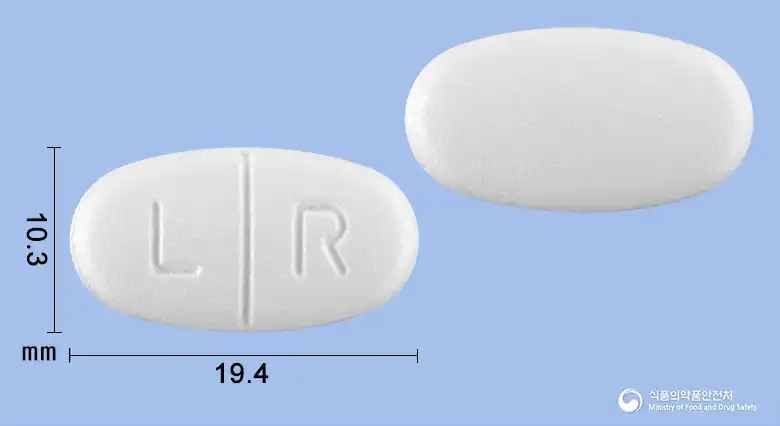 Viewing now
Levetiracetam 1000 mg Tablets
Levetiracetam 1000mg
Tablet · Prescription medication
Genewon Science Co., Ltd.
MFDS item code 201907533 · Approved 2019.10.28 · Insurance code 671706220
Adjunctive treatment of epilepsy (partial and myoclonic seizures, etc.); monotherapy for partial seizures
This medication is used for the treatment of patients with epilepsy, specifically for patients aged 16 years and older diagnosed with primary generalized seizures or partial seizures. It can also be used as an adjunct therapy for patients aged 4 years and older who have secondary generalized seizures or partial seizures that are not controlled by existing treatments. It is effective in treating seizures in pediatric patients with myoclonic epilepsy and in the treatment of primary generalized tonic-clonic seizures in idiopathic generalized epilepsy. In cases where oral administration is difficult, it can be administered as an injection. This medication is used to effectively improve the overall seizure symptoms of epilepsy.
The film-coated tablets and oral solution are administered orally and may be taken with or without food. Take with plenty of water. The daily dose should be divided into 2 equal doses administered twice daily. Levetiracetam treatment may be initiated by intravenous or oral administration. When changing the route of administration from oral to intravenous or vice versa, the change may be made directly without dose titration; the total daily dose and frequency of administration should remain the same. Monotherapy Adults and adolescents 16 years of age and older The initial dose is 250mg twice daily. After 2 weeks, increase the dose to 500mg twice daily. Depending on clinical response, the daily dose may be increased by 500mg [250mg per dose, twice daily] every 2 weeks. The maximum dose is 3000mg daily [1500mg per dose, twice daily]. Adjunctive therapy 1. Partial-onset seizures Adults (18 years of age and older) and adolescents weighing 50kg or more (12~17 years of age) Start treatment with 500mg twice daily. Depending on clinical response and tolerability, the daily dose may be increased or decreased by 1000mg [500mg per dose, twice daily] every 2 to 4 weeks. The maximum recommended dose is 3000mg daily. 2. Myoclonic seizures in pediatric patients (12 years of age and older) Start treatment with 500mg twice daily. Increase the dose by 1,000mg daily every 2 weeks to the recommended daily dose of 3,000mg. Efficacy at doses below 3,000mg daily has not been studied. 3. Primary generalized tonic-clonic seizures (12 years of age and older) Adults (18 years of age and older) and adolescents weighing 50kg or more (12-17 years of age) Start treatment with 1,000mg daily [500mg per dose, twice daily]. Increase the dose by 1,000mg daily [500mg per dose, twice daily] every 2 weeks to the recommended daily dose of 3,000mg [1,500mg per dose, twice daily]. Efficacy at doses below 3,000mg daily has not been adequately studied. 4. Patients with renal impairment Since levetiracetam clearance is related to renal function, adjust the dose individually according to the patient's renal function. Refer to the table below for dosage adjustment in adults. To use the table, the patient's creatinine clearance (CLCr, ml/min) is required; in adults, this can be calculated from serum creatinine (mg/dl) using the formula below. Thereafter, adjust CLcr according to body surface area (BSA) as follows. Dosage adjustment in adult patients with renal impairment Normal: ≧ 80 ml/min/1.73m2, 500-1,500mg per dose, twice daily (12-hour interval) Mild: 50-79 ml/min/1.73m2, 500-1,000mg per dose, twice daily (12-hour interval) Moderate: 30-49 ml/min/1.73m2, 250-750mg per dose, twice daily (12-hour interval) Severe: < 30 ml/min/1.73m2, 250-500mg per dose, twice daily (12-hour interval) End-stage renal disease patients on dialysis(1): - ml/min/1.73m2, 500-1,000mg per dose, once daily(2) (1) An initial loading dose of 750mg is recommended on the first day of treatment. (2) An additional dose of 250-500mg is recommended after dialysis. 5. Patients with hepatic impairment No dosage adjustment is required in patients with mild to moderate hepatic impairment. In patients with severe hepatic impairment, creatinine clearance may underestimate renal impairment. Therefore, when creatinine clearance is less than 60mL/min/1.73m2, it is recommended that the daily maintenance dose be reduced by 50%. 6. Children Oral formulations are not recommended for infants under 1 month of age because of insufficient safety and efficacy data. Tablets are not indicated for children under 4 years of age; the oral solution should be administered to infants 1 month of age and older. Injection is not recommended in children under 16 years of age because its safety and efficacy have not been established. 7. Older adults (65 years of age and older) Dose adjustment is recommended in older patients with reduced renal function.
Children 4~11 years of age and adolescents 12~17 years of age weighing less than 50kg: The initial dose is 10mg/kg per dose twice daily. Depending on clinical response and tolerability, the dose may be increased up to 60mg/kg daily [30mg/kg per dose, twice daily]. Dose changes should not exceed an increase or decrease of 20mg/kg daily [10mg/kg per dose, twice daily] every 2 weeks. Use the lowest effective dose. The dose for children weighing 50kg or more is the same as the adult dose. 15-20kg(1): 20mg/kg/day (twice daily) 300mg-400mg/day [150-200mg per dose twice daily]; 40mg/kg/day (twice daily) 600mg-800mg/day [300-400mg per dose twice daily]; 60mg/kg/day (twice daily) 900mg-1,200mg/day [450-600mg per dose twice daily] 20.1-40kg: 20mg/kg/day (twice daily) 500mg/day [250mg per dose, twice daily]; 40mg/kg/day (twice daily) 1,000mg/day [500mg per dose, twice daily]; 60mg/kg/day (twice daily) 1,500mg/day [750mg per dose, twice daily] 40.1-50kg(2): 20mg/kg/day (twice daily) 1,000mg/day [500mg per dose, twice daily]; 40mg/kg/day (twice daily) 2,000mg/day [1,000mg per dose, twice daily]; 60mg/kg/day (twice daily) 3,000mg/day [1,500mg per dose, twice daily] (1) For children weighing 20kg or less, it is recommended to initiate treatment with the 100mg/ml oral solution. (2) The dosage and administration for children and adolescents weighing 50kg or more are the same as for adults. 3. Primary generalized tonic-clonic seizures (12 years of age and older) Adolescents 12-17 years of age weighing less than 50kg Start treatment at 20mg/kg daily [10mg/kg per dose, twice daily]. Increase the dose by 20mg/kg daily [10mg/kg per dose, twice daily] every 2 weeks to the recommended daily dose of 60mg/kg [30mg/kg per dose, twice daily]. Efficacy at doses below 60mg/kg daily has not been adequately studied. ks= 0.45 (infants under 1 year of age) ; ks= 0.55 (children under 13 years of age and female adolescents) ks= 0.7 (male adolescents) Dosage adjustment in pediatric patients and adolescents weighing less than 50kg with renal impairment Normal: ≧ 80 ml/min/1.73m2, 10-30mg/kg (0.10-0.30 ml/kg) twice daily Mild: 50-79 ml/min/1.73m2, 10-20mg/kg (0.10-0.20 ml/kg) twice daily Moderate: 30-49 ml/min/1.73m2, 5-15mg/kg (0.05-0.15ml/kg) twice daily Severe: < 30 ml/min/1.73m2, 5-10 mg/kg (0.05-0.10ml/kg) twice daily End-stage renal disease patients on dialysis: --, 10-20mg/kg (0.10-0.20 ml/kg) once daily(1)(2) (1) A loading dose of 15 mg/kg (0.15ml/kg) is recommended on the first day of treatment. (2) An additional dose of 5-10 mg/kg (0.05-0.10ml/kg) is recommended after dialysis.
This medication is used for the treatment of epilepsy, and there may be an increased risk of suicidal thoughts or behavior while taking it; therefore, any changes in mood or behavior should be reported to a healthcare professional immediately. This medication can commonly cause neuropsychiatric side effects such as drowsiness, fatigue, coordination problems, and abnormal behavior, especially within the first 4 weeks of treatment. Stopping the medication suddenly may increase the risk of worsening seizures, so the dosage should be decreased gradually as directed by a physician. Patients who are hypersensitive to this medication should not take it, and those with impaired kidney or liver function may require dosage adjustments. This medication may also cause side effects related to a decrease in blood cell counts, so if symptoms like fever or weakness occur, blood tests should be performed. This medication may induce psychotic symptoms, aggression, anxiety, and depression among other behavioral changes, and any such symptoms should be discussed with a healthcare professional immediately. Caution is advised as seizures may worsen during the initial administration or dosage increase, and patients with heart disease or a risk of prolonged QT interval should be used cautiously. Drowsiness or dizziness may occur while taking this medication, so caution is required when driving or operating machinery, especially during the beginning of treatment or when the dosage is changed. The use of this medication during pregnancy may affect the fetus; therefore, women who are planning to become pregnant or are pregnant should consult a physician, and breastfeeding may transfer the medication to the baby, so consideration should be given to stopping breastfeeding or reevaluating medication use. Safety for infants under 1 month of age has not been established, and liquid forms should be used instead of tablets for children under 4 years old. Elderly patients may have reduced kidney function and should have their dosage determined carefully, as there may be an increased risk of adverse reactions. In cases of overdose, symptoms may include drowsiness, agitation, aggression, decreased consciousness, and respiratory depression, with no specific antidote available; treatment according to symptoms and possibly blood dialysis may be required. This medication has minimal interactions with other drugs; however, it may affect blood concentration when used with certain drugs, so it is important to inform the physician of all currently used medications. When stored, the medication should be kept out of reach of children in a safe place, and transferring the medication to another container should be avoided due to the risk of accidents and degradation of quality.
Not everyone experiences these, and they can vary from person to person.
This medication should be stored in a tightly sealed container to prevent exposure to air or moisture. It is best to maintain a storage temperature between 1 and 30 degrees Celsius.
White oval film-coated tablet
30 tablets per bottle
Even with the same ingredient, strength, dosage form and how it is taken can differ.
Viewing nowLevetiracetam 1000mg
Tablet · Prescription medication
Genewon Science Co., Ltd.
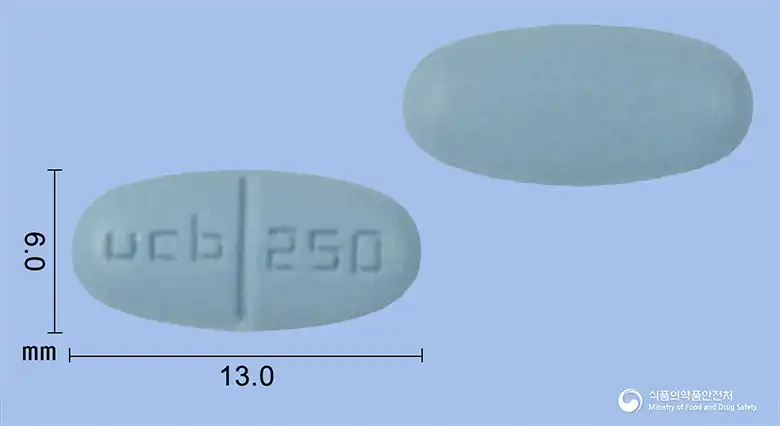
Levetiracetam 250mg
Tablet · Prescription medication
UCB Korea Co., Ltd.
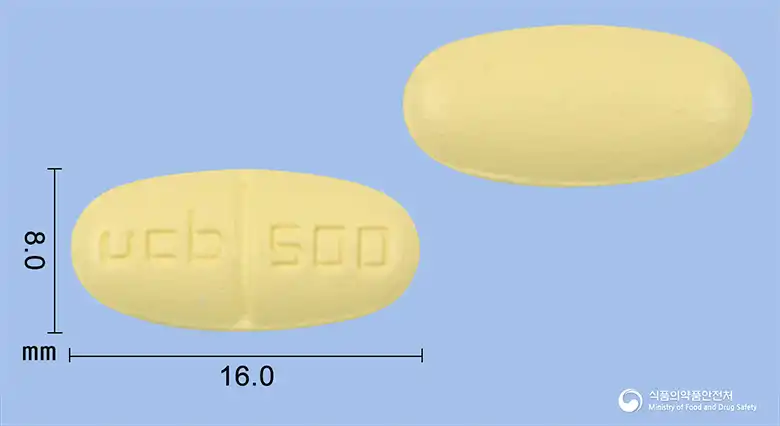
Levetiracetam 500mg
Tablet · Prescription medication
UCB Korea Co., Ltd.
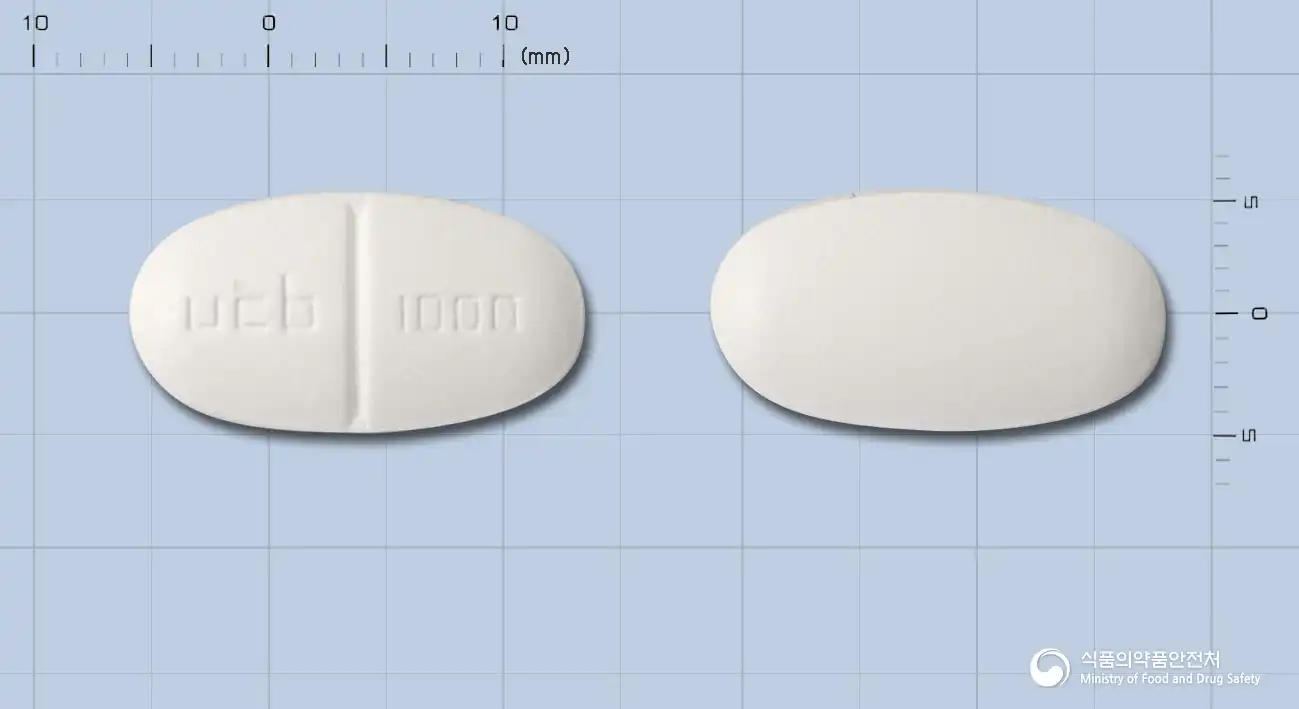
Levetiracetam 1000mg
Tablet · Prescription medication
UCB Korea Co., Ltd.
Levetiracetam 10g
Solution · Prescription medication
UCB Korea Co., Ltd.
Levetiracetam 500mg
Injections · Prescription medication
UCB Pharma Co., Ltd.
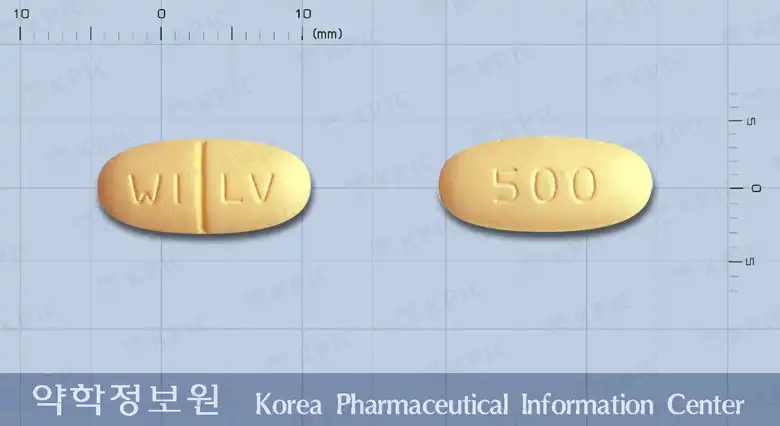
Levetiracetam 500mg
Tablet · Prescription medication
Hanmi Pharmaceutical Co., Ltd.
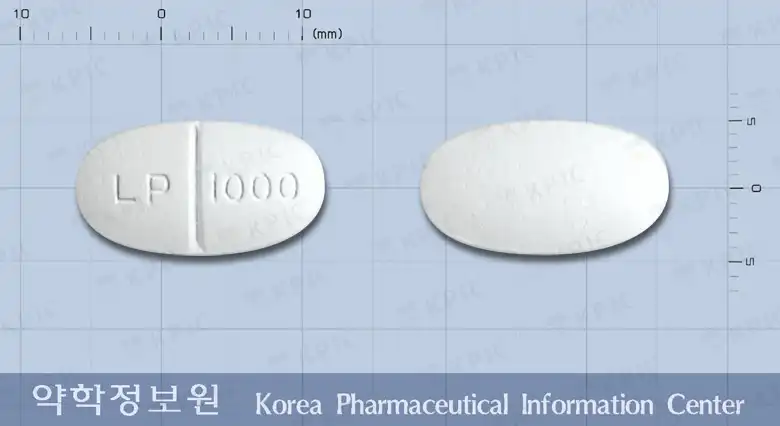
Levetiracetam 1000mg
Tablet · Prescription medication
Hanlim Pharmaceutical Co., Ltd.
Even with the same ingredient, the dose and directions can differ by strength and dosage form. Talk to a doctor or pharmacist before switching from a medication you are already taking.
No questions yet.
For anything that needs medical judgment, consult a doctor or pharmacist.
This drug information is based on data provided by the Korea Ministry of Food and Drug Safety.
Consult a doctor or pharmacist for accurate dosage, administration, and usage instructions.