
 한국어
 English
 日本語
 中文(简体)
 Viewing now
Cefcal Capsule (Cefradine Hydrate)
Cefradine Hydrate 500mg
Hard capsule · Prescription medication
Genupharm Co., Ltd.
MFDS item code 201906154 · Approved 2019.08.29 · Insurance code 698004510
Treatment of respiratory and ear infections (such as tonsillitis), urinary tract infections (such as cystitis), and skin infections (such as abscesses)
This medication is used primarily for respiratory infections such as tonsillitis, pharyngitis, lobar pneumonia, and bronchitis. It is also effective for urinary tract infections, including cystitis, pyelonephritis, urethritis, and prostatitis. It can be used to treat various skin infections such as abscesses, soft tissue infections, furuncles, and pustular infections. It is also used for the treatment of otitis media and exhibits a broad spectrum of activity against various bacterial infections. This medication helps improve a variety of infectious diseases.
○ Adults 1) Skin and soft tissue infections, respiratory infections: Administer cefradine orally according to the severity of the infection, at 250mg~500mg (potency) per dose 4 times daily or 500mg~1g (potency) twice daily. 2) Urinary tract infections: For uncomplicated urinary tract infections, administer 500mg (potency) per dose twice daily. For severe urinary tract infections, administer 500mg (potency) per dose 4 times daily or 1g (potency) per dose twice daily. Severe infections may also require a longer treatment period and intensive treatment. ○ Patients with renal impairment 1) For patients not undergoing hemodialysis, administer as follows. Creatinine clearance (mL/min) Dose per administration (mg) Dosing interval (hours) >20 500 6~12 15~20 250 12~24 10~14 250 24~40 5~9 250 40~50 <5 250 50~70 2) For patients undergoing chronic, intermittent hemodialysis, administer an initial dose of 250mg (potency) when hemodialysis is started, then administer 250mg (potency) 6~12 hours later and again 36~48 hours later. Administer 250mg at the next hemodialysis session (only if at least 30 hours have passed since the most recent dose). Adjust the dose appropriately according to age and symptoms.
○ Children: Administer 25~50mg (potency) per Kg of body weight per day orally in 2~4 divided doses. For otitis media, administer 75~100mg (potency) per Kg of body weight per day in 2~4 divided doses. However, do not administer more than 4g (potency) per day or exceed the adult dose. It is preferable not to administer this medicine to infants 9 months of age or younger.
This medication should not be used in patients who have previously experienced severe allergic reactions such as shock due to this drug. Caution should be exercised when administering this medication to patients who have had allergic reactions to this drug or to other similar classes of antibiotics. Patients with allergies to penicillin antibiotics should also use this medication with caution. Patients with a family history of allergic symptoms such as bronchial asthma, skin rashes, or hives should be careful. Patients with severely impaired kidney function should be closely monitored while using this medication and dosage adjustments may be necessary. Patients who have difficulty swallowing medications or the elderly with poor nutritional status should be carefully observed for signs of vitamin K deficiency. This medication contains a dye called Yellow No. 5, so patients with allergies to this ingredient should be cautious with use. During treatment, severe allergic reactions or symptoms such as discomfort, dizziness, and sweating may occur. If such symptoms appear, immediately stop taking the medication and seek medical attention. If allergic symptoms such as skin rashes, hives, itching, or fever occur, discontinue the medication and receive appropriate treatment. Gastrointestinal disorders may manifest as abdominal pain, diarrhea, vomiting, or stomach pain, and especially severe colitis symptoms require immediate discontinuation of the medication. If symptoms of respiratory distress, cough, or asthma occur, the medication should be stopped and medical treatment is necessary. Blood tests may occasionally show decreased white blood cell counts, anemia, or decreased platelet counts, thus regular testing is required. Rarely, severe skin reactions such as Stevens-Johnson syndrome or toxic epidermal necrolysis may occur. Liver function abnormalities may present, so regular monitoring of liver enzyme levels is necessary. There is a possibility of rapid deterioration of kidney function, thus kidney status should be checked periodically. Oral infections such as stomatitis or candidiasis may arise. Vitamin K deficiency can increase the risk of bleeding, so attention should be paid to symptoms of bleeding. Symptoms such as headache, general malaise, and upper abdominal discomfort may occur. When using this medication, it is advisable to conduct sensitivity tests to prevent the emergence of resistant bacteria and administer it only for the necessary minimum duration. To prevent severe allergic reactions, it is recommended to obtain a patient history and perform skin reaction tests before administration. In case of a serious reaction like shock, prepare emergency measures, and ensure the patient is closely monitored in a stable condition after administration. This medication may place stress on the kidneys when used in conjunction with certain diuretics or aminoglycoside antibiotics, so caution is needed when co-administered. Pregnant women or those capable of becoming pregnant should use this medication only when the benefits of treatment are deemed to outweigh the risks, due to incomplete safety confirmation. Nursing mothers should also administer the medication cautiously as it may be passed into breast milk. Particularly in infants under 9 months, it is advisable not to use this medication due to insufficient safety establishment.
Not everyone experiences these, and they can vary from person to person.
This medication should be stored in a tightly sealed container to protect it from exposure to air or moisture, preferably at room temperature between 1 and 30 degrees Celsius. Storing it this way helps maintain the effectiveness of the medication for a long time.
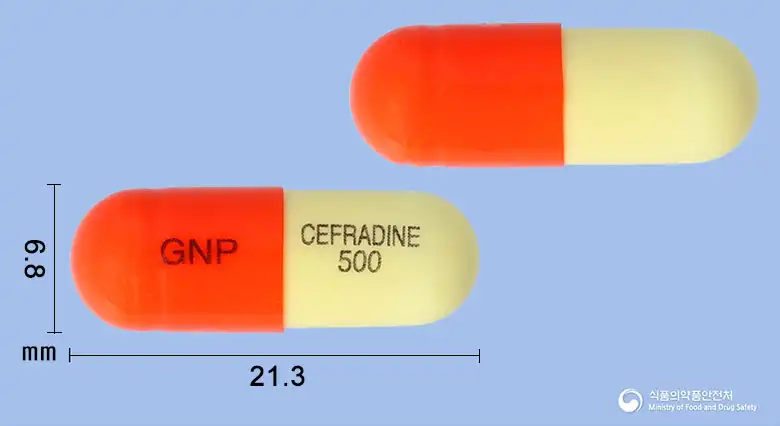
A hard capsule with a light yellow powder inside, with upper light ochre and lower pale yellow.
30 capsules/bottle, 300 capsules/bottle
Even with the same ingredient, strength, dosage form and how it is taken can differ.
Viewing nowCefradine Hydrate 500mg
Hard capsule · Prescription medication
Genupharm Co., Ltd.
Cefradine Hydrate
Prescription medication
Il Sung IS Co., Ltd.
Cefradine Hydrate
Prescription medication
Ilseong IS Co., Ltd.
Cefradine Hydrate
Prescription medication
Il Sung IS Co., Ltd.
Cefradine Hydrate
Prescription medication
Il Sung IS Co., Ltd.
Cefradine Hydrate
Prescription medication
Il Sung IS Co., Ltd.
Cefradine Hydrate
Prescription medication
International Pharmaceutical Co., Ltd.
Cefradine Hydrate
Prescription medication
Ildong Pharmaceutical Co., Ltd.
Even with the same ingredient, the dose and directions can differ by strength and dosage form. Talk to a doctor or pharmacist before switching from a medication you are already taking.
No questions yet.
For anything that needs medical judgment, consult a doctor or pharmacist.
This drug information is based on data provided by the Korea Ministry of Food and Drug Safety.
Consult a doctor or pharmacist for accurate dosage, administration, and usage instructions.