
 한국어
 English
 日本語
 中文(简体)
 Viewing now
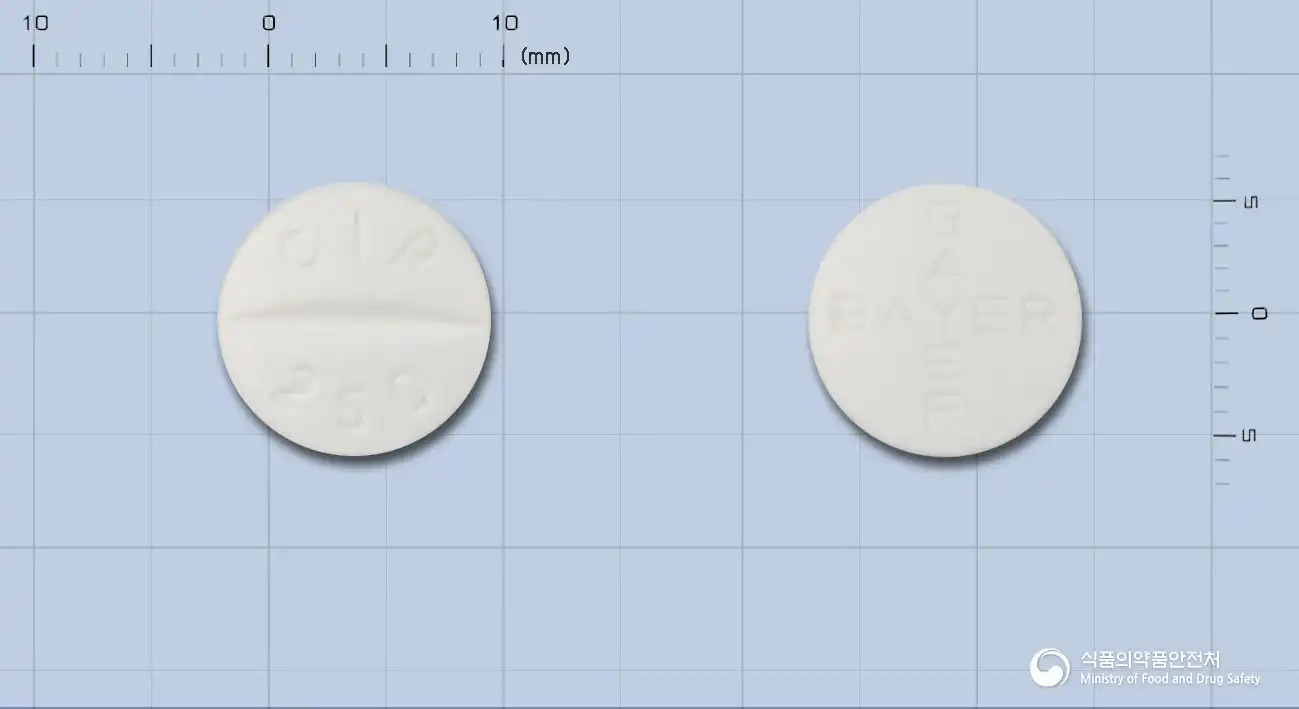
Ciprobay 250mg (Ciprofloxacin Hydrochloride Hydrate)
Ciprofloxacin Hydrochloride Hydrate 291mg
Tablet · Prescription medication
Bayer Korea Co., Ltd.
MFDS item code 201905731 · Approved 2019.08.14 · Insurance code 641106100
Treatment of genitourinary infections, respiratory tract infections, and other infections (of the intestines, skin, eyes, etc.)
This medication is used to treat infections caused by various bacteria. It is effective against respiratory infections except for acute bronchitis and community-acquired pneumonia. It is also used for infections of the ear, nose, and throat, as well as bacterial prostatitis, acute cystitis, and pyelonephritis, among other urinary infections. It is suitable for treating infections in various other areas such as gastrointestinal and biliary tract infections, skin and soft tissue infections, and bone and joint infections. Additionally, it is applicable for gonococcal cervicitis and urethritis, gynecological infections, peritonitis, and paraurethral gland infections. However, since it is a fluoroquinolone antibiotic, it should be used cautiously for some mild infections (such as acute non-sinusitis and chronic bronchitis) only when no other treatment options exist.
○ Adults: Administer 250 ~ 500 mg of ciprofloxacin orally per dose twice daily between meals. For severe complicated infections, the dose may be increased to 750 mg per dose twice daily. For acute infections, treatment is usually given for 5 ~ 10 days, and should continue for at least 3 days after symptoms have disappeared. ○ Patients with renal impairment 1) Creatinine clearance > 50 mL/min: Administer the usual dose 2) 30 ~ 50 mL/mn: Administer 250 ~ 500 mg per dose twice daily 3) 5 ~ 29 mL/min: Administer 250 ~ 500 mg every 18 hours 4) Patients receiving hemodialysis or peritoneal dialysis: Administer 250 ~ 500 mg per dose once daily after dialysis 5) If only serum creatinine is known, creatinine clearance can be calculated using the following formulas. Men: {body weight (kg) × (140-age)}/ {72 × serum creatinine (mg/dL)} Women: 0.85 × the value calculated for men 6) For severe infections, the dose may be increased to 750 mg per dose even in patients with severe renal impairment; however, the patient's condition should be monitored carefully after administration. Adjust the dose as appropriate according to symptoms. If you miss a dose, take it as soon as you remember if more than 6 hours remain before the next scheduled dose. If less than 6 hours remain before the next dose, skip the missed dose and take the next dose at the scheduled time as prescribed. Do not take a double dose to make up for a missed dose.
This medication can cause serious side effects such as tendonitis or tendon rupture, peripheral neuropathy, and central nervous system effects, so caution is needed. In particular, patients with myasthenia gravis may experience exacerbation of symptoms and should not use this medication. This medication is used to treat certain bacterial infections and is recommended to be administered only when no other treatment options are available. Elderly patients, those with reduced kidney function, and patients receiving certain immunosuppressive therapies may be at higher risk for tendon rupture when taking this medication; therefore, caution is advised. Co-administration with corticosteroids should be avoided, and if tendon pain or inflammation occurs, administration should be stopped immediately and rest taken. This medication has neuromuscular blocking effects, which can worsen symptoms of myasthenia gravis, so it should be used cautiously in these patients. Those with an allergy to this medication, pregnant or breastfeeding women, children under 18 years of age, and patients with epilepsy should not be administered this medication. Patients with a history of seizures, severe renal impairment, elderly patients, and those with central nervous system diseases should use this medication cautiously. This medication can cause various side effects, and if symptoms such as rash, difficulty breathing, psychiatric symptoms, visual disturbances, muscle pain, or renal abnormalities occur, immediate consultation with a physician is necessary. Additionally, this medication has many drug interactions, so caution is needed depending on other medications being taken, especially with blood glucose-regulating drugs, anticoagulants, and CNS drugs. It is not recommended during pregnancy or breastfeeding, and if breastfeeding, either discontinuation of breastfeeding or avoidance of administration is necessary. Safety has not been established in children and adolescents in growth; therefore, it is not to be used in this population. Elderly patients may have increased drug concentrations due to reduced kidney function; hence, dosage and dosing intervals should be adjusted cautiously. In cases of overdose, renal toxicity may occur, requiring appropriate treatment along with measures to reduce drug absorption during emergencies. This medication should be stored away from direct sunlight and ultraviolet light, and out of reach of children.
tendonitis, tendon rupture, peripheral neuropathy, central nervous system effects, exacerbation of myasthenia gravis, fungal superinfection, antibiotic-associated colitis, eosinophilia, thrombophlebitis, leukopenia, anemia, neutropenia, leukocytosis, thrombocytopenia, thrombocytosis, decreased erythrocytes, decreased hemoglobin, decreased hematocrit, decreased granulocytes, leukolysis, hemolytic anemia, agranulocytosis, pancytopenia, bone marrow suppression, increased INR, syndrome of inappropriate antidiuretic hormone secretion, allergic reactions, allergic edema, angioedema, anaphylactic reactions, shock resembling anaphylaxis, serum sickness-like reactions, decreased appetite, reduced food intake, increased serum alkaline phosphatase, hyperglycemia, hypoglycemia, elevated lipase, abnormal prothrombin levels, increased amylase, psychomotor agitation, anxiety, confusion, disorientation, emotional instability, abnormal dreams, depression, hallucinations, psychotic reactions, toxic psychosis, headache, dizziness, sleep disorders, taste disorders, insomnia, sensory disturbances, sensory loss, loss of taste, tremors, convulsions, vertigo, mental confusion, seizures, drowsiness, migraine, coordination disorders, olfactory disorders, anosmia, sensory hyperreactivity, elevated intracranial pressure, ataxia, polyneuropathy, visual disturbances, chromatopsia, diplopia, tinnitus, hearing loss, transient hearing loss, hearing impairment, tachycardia, vasodilation, hypotension, syncope, vasculitis, QT prolongation, ventricular tachycardia, Torsades de Pointes, dyspnea, laryngeal edema, nausea, diarrhea, anorexia, gastric discomfort, vomiting, gastrointestinal and abdominal pain, abdominal distension, dyspepsia, colitis with bloody stools, stomatitis, oral candidiasis, gastrointestinal candidiasis, pancreatitis, abnormal liver function tests, increased bilirubin, liver impairment, jaundice, hepatitis, cholestatic jaundice, hepatic necrosis, rash, itching, urticaria, photosensitivity, vesicles, petechiae, erythema multiforme, Stevens-Johnson syndrome, toxic epidermal necrolysis, fixed drug eruption, acute generalized pustular exanthema, arthralgia, musculoskeletal pain, myalgia, arthritis, increased muscle tension and cramping, joint swelling, muscle weakness, part or complete tendon rupture, renal impairment, elevated BUN, elevated serum creatinine, acute renal failure, hematuria, crystalluria, interstitial nephritis, vaginal candidiasis, undetermined pain, discomfort, fever, asthenia, edema, sweating, gait disturbances, petechial rash, purpuric rash, injection site rash, injection site itching, injection site urticaria, aneurysm, aortic dissection, valvular regurgitation, valvular insufficiency, shock, hypotension, feeling of chest pressure, myalgia, malaise, elevated creatine kinase, increased serum and urinary myoglobin, rhabdomyolysis, cough, abnormal chest X-ray, eosinophilia, interstitial pneumonia, visual impairment
Not everyone experiences these, and they can vary from person to person.
This medication should be stored in a tightly closed container that is impervious to air, at a temperature between 1 and 30 degrees Celsius. Proper storage will help maintain the drug's efficacy and prevent deterioration.
White to light yellow round film-coated tablets
10 tablets/box, 100 tablets/box [(10 tablets/PPT*10)]
Even with the same ingredient, strength, dosage form and how it is taken can differ.
Viewing nowCiprofloxacin Hydrochloride Hydrate 291mg
Tablet · Prescription medication
Bayer Korea Co., Ltd.
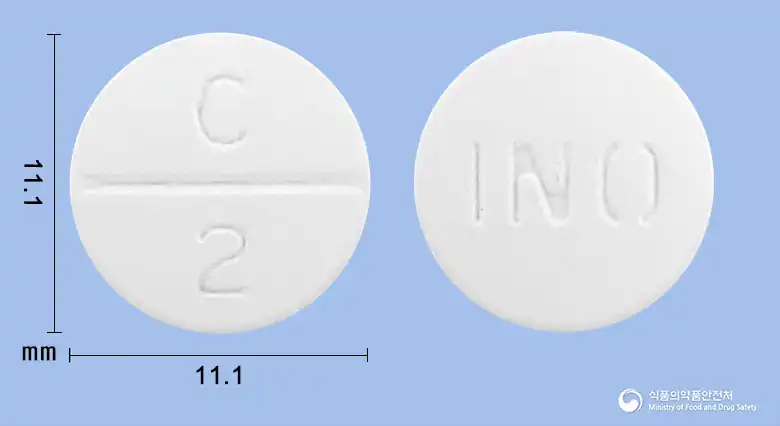
Ciprofloxacin Hydrochloride 291.5mg
Tablet · Prescription medication
HK inno.N Co., Ltd.
Ciprofloxacin Hydrochloride
Prescription medication
Dongkwang Pharmaceutical Co., Ltd.
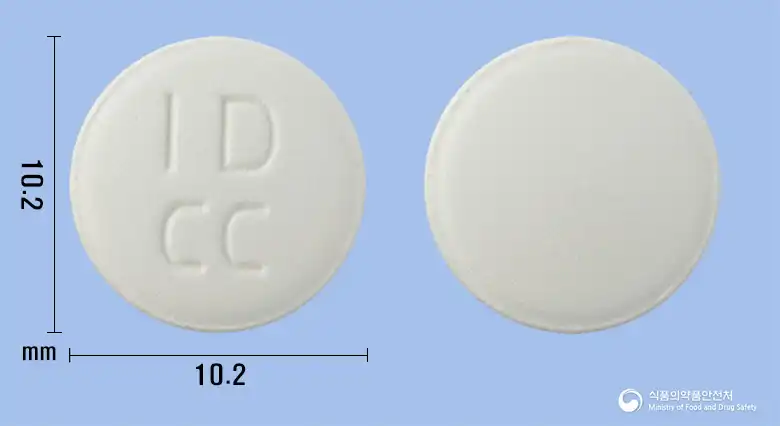
Ciprofloxacin Hydrochloride 291mg
Tablet · Prescription medication
Il Dong Pharmaceutical Co., Ltd.

Ciprofloxacin Hydrochloride 582mg
Tablet · Prescription medication
Il Dong Pharmaceutical Co., Ltd.
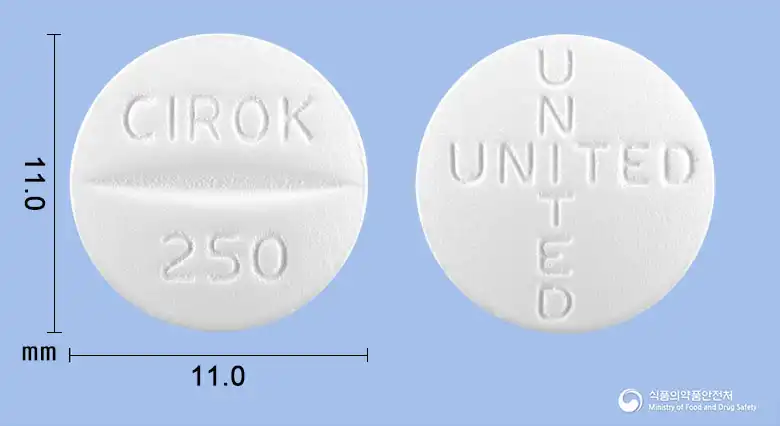
Ciprofloxacin Hydrochloride Hydrate 291mg
Tablet · Prescription medication
Korea United Pharm, Inc.
Ciprofloxacin Hydrochloride Hydrate 291mg
Tablet · Prescription medication
SK Chemicals Co., Ltd.

Ciprofloxacin Hydrochloride Hydrate 291mg
Tablet · Prescription medication
Donghwa Pharmaceutical Co., Ltd.
Even with the same ingredient, the dose and directions can differ by strength and dosage form. Talk to a doctor or pharmacist before switching from a medication you are already taking.
No questions yet.
For anything that needs medical judgment, consult a doctor or pharmacist.
This drug information is based on data provided by the Korea Ministry of Food and Drug Safety.
Consult a doctor or pharmacist for accurate dosage, administration, and usage instructions.