
 한국어
 English
 日本語
 中文(简体)
 Viewing nowCombination
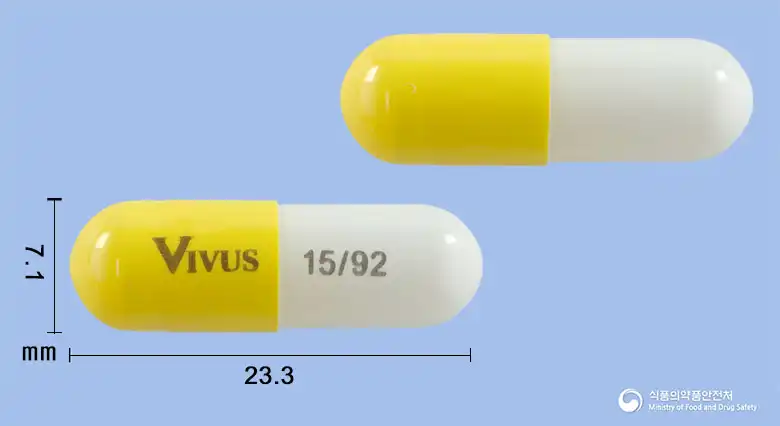
Qsymia Capsule 15mg/92mg
Phentermine Hydrochloride 18.66mg · Topiramate 92.05mg
Hard capsule · Prescription medication · Combination
Albagen Korea Co., Ltd.
MFDS item code 201905407 · Approved 2019.07.31
Improvement of overweight in adults with obesity- or weight-related comorbidities
This medicine is intended for adult patients with a body mass index (BMI) of 30 or greater, or those with a BMI of 27 or greater who have weight-related comorbidities such as hypertension, type 2 diabetes, or dyslipidemia. It is used as an adjunct to a low-calorie diet and to increase physical activity for chronic weight management. Additionally, this medication should only be used alone without combining it with other appetite suppressants. It effectively aids in weight management and helps control weight safely.
Take this medicine every morning, with or without food; avoid taking it in the evening because it may cause insomnia. 1) Take the initial dose of this medicine, 3.75mg/23mg, daily for 14 days. 2) After 14 days, take the recommended dose of 7.5mg/46mg for 12 weeks. 3) Assess weight loss. If taking 7.5mg/46mg does not result in a loss of at least 3% of body weight compared with the weight before the start of treatment, discontinue treatment or increase the dose. 4) If the dose is increased, take 11.25mg/69mg daily for 14 days. 5) After 14 days, take 15mg/92mg for 12 weeks. 6) Assess weight loss. If taking 15mg/92mg does not result in a loss of at least 5% of body weight compared with the weight before the start of treatment, discontinue treatment. *The 3.75mg/23mg and 11.25mg/69mg doses are for titration only. Discontinuation Because abrupt discontinuation may cause seizures, gradually discontinue the 15mg/92mg dose by taking it every other day for at least 1 week before completely stopping treatment. Patients with renal impairment Do not exceed 7.5mg/46mg once daily in patients with moderate (creatinine clearance [CrCl] of 30 or more and less than 50 mL/min) or severe (CrCl less than 30 mL/min) renal impairment. Renal impairment is determined by calculating CrCl using the Cockcroft-Gault equation with actual body weight. Patients with hepatic impairment Do not exceed 7.5mg/46mg once daily in patients with moderate hepatic impairment (Child-Pugh score 7-9).
This medication should not be used in combination with other appetite suppressants, as it is not safe to combine with other medications taken for weight loss. Taking this medication during pregnancy may harm the fetus. In particular, exposure to this medication in early pregnancy increases the risk of malformations of the lips or palate. Women who are pregnant or planning to become pregnant should consult with their doctor and have regular pregnancy tests, and effective contraception should be used during treatment. One of the components of this medication can cause serious skin reactions. If a severe rash or blistering occurs, you must discontinue use immediately and inform your healthcare provider. Patients who are pregnant, have glaucoma, hyperthyroidism, are taking certain medications, are under the age of 18, or have cardiovascular diseases should not take this medication. Patients with kidney or liver function problems, or allergies to certain dyes should use this medication with caution. Common side effects include dizziness, headache, altered taste, insomnia, constipation, and dry mouth. These symptoms typically appear within the first 12 weeks of use. This medication can increase heart rate, so patients with heart diseases need to be cautious. If there are significant changes in heart rate, consult with your healthcare provider. Additionally, it may affect mental health, leading to symptoms such as depression, anxiety, and sleep disturbances. If any unusual symptoms occur, they should be reported immediately. Regular blood tests are necessary as electrolyte imbalances or changes in kidney function may appear. It is important to consult immediately with a doctor or pharmacist if any adverse reactions are severe or suspected.
Not everyone experiences these, and they can vary from person to person.
This medication should be stored in a tightly sealed container to protect it from air and moisture. It is also recommended to store the medication at room temperature, between 1 and 30 degrees Celsius, and not in extremely hot or cold places.
An opaque yellow hard capsule with an opaque white bottom containing white or nearly white granules
28 capsules/bottle
Even with the same ingredient, strength, dosage form and how it is taken can differ.
Viewing nowCombinationPhentermine Hydrochloride 18.66mg · Topiramate 92.05mg
Hard capsule · Prescription medication · Combination
Albagen Korea Co., Ltd.
 Combination
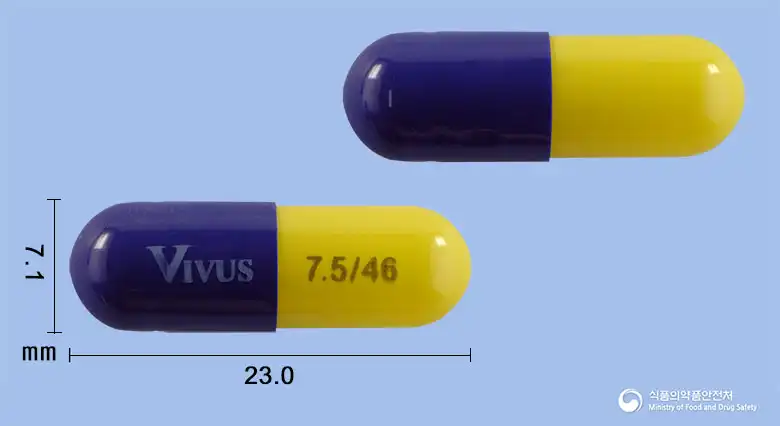
Phentermine Hydrochloride 9.34mg · Topiramate 46.03mg
Hard capsule · Prescription medication · Combination
Albozen Korea Co., Ltd.
 Combination
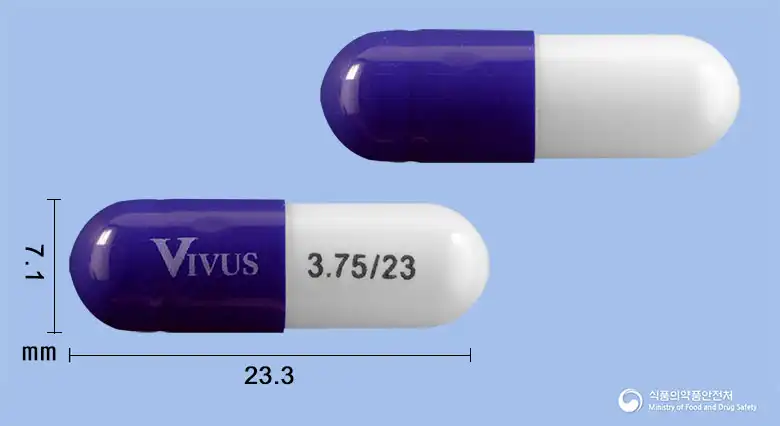
Phentermine Hydrochloride 4.67mg · Topiramate 23mg
Hard capsule · Prescription medication · Combination
Albozen Korea Co., Ltd.
 Combination
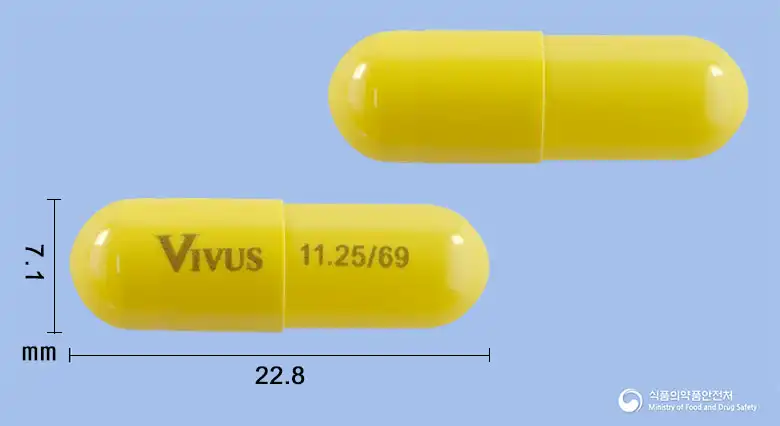
Phentermine Hydrochloride 14mg · Topiramate 68.85mg
Hard capsule · Prescription medication · Combination
Alvogen Korea Co., Ltd.
Even with the same ingredient, the dose and directions can differ by strength and dosage form. Talk to a doctor or pharmacist before switching from a medication you are already taking.
No questions yet.
For anything that needs medical judgment, consult a doctor or pharmacist.
This drug information is based on data provided by the Korea Ministry of Food and Drug Safety.
Consult a doctor or pharmacist for accurate dosage, administration, and usage instructions.