
 한국어
 English
 日本語
 中文(简体)
 Viewing now
Venetoclax 50 mg Tablets (Venetoclax)
Venetoclax 50mg
Tablet · Prescription medication
AbbVie Korea, Co., Ltd.
MFDS item code 201903544 · Approved 2019.05.29 · Insurance code 624900350
Treatment of chronic lymphocytic leukemia and acute myeloid leukemia
This medication is used in adult patients with chronic lymphocytic leukemia depending on various treatment situations. It is administered in combination with obinutuzumab for previously untreated patients. For patients with prior treatment experience, it is used in combination with rituximab, and in cases of relapse or resistance to chemotherapy or B-cell receptor pathway inhibitors, it is used as monotherapy. Additionally, for patients with acute myeloid leukemia who are over 75 years old or have co-morbidities that make intensive induction chemotherapy unsuitable, it is used in combination with azacitidine or decitabine. This medication effectively treats chronic lymphocytic leukemia and acute myeloid leukemia.
This medicine should be taken once daily at the same time with food and water. Swallow this medicine whole; do not chew, crush, or break it into pieces before swallowing. Treatment with this medicine should begin at 20mg once daily for 7 days, followed by weekly dose increases over 5 weeks according to the doses shown in Table 1, until a daily dose of 400mg is reached. Week 1: 20mg Week 2: 50mg Week 3: 100mg Week 4: 200mg Week 5: 400mg This medicine is administered for a total of 12 cycles: together with obinutuzumab for 6 cycles, followed by this medicine alone for the remaining 6 cycles. Obinutuzumab is administered at 100mg on Day 1 of Cycle 1, followed by 900mg on Day 1 (consecutive) or Day 2. Administer 1000mg on Days 8 and 15 of Cycle 1 and on Day 1 of each of the following five cycles (a total of 6 cycles, each consisting of 28 days). This medicine is administered according to the dose escalation schedule from Day 22 of Cycle 1 through Day 28 of Cycle 2 (see Table 1). After completing the dose escalation schedule, administer 400mg of this medicine once daily from Day 1 of Cycle 3, when obinutuzumab is administered, through Cycle 12. After completing 7 days of treatment with 400mg of this medicine according to its dose escalation schedule (Table 1), begin rituximab treatment. Rituximab is administered on Day 1 of each cycle for a total of 6 cycles (1 cycle = 28 days): 375mg/m2 on Day 1 of Cycle 1, and 500mg/m2 on Day 1 of each of Cycles 2 through 6. Continue administering 400mg of this medicine once daily for 24 months, starting on Day 1 of the first rituximab treatment cycle. The recommended maintenance dose of this medicine is 400mg once daily after completing the 5-week dose escalation schedule (Table 1). This medicine should be administered orally once daily until disease progression or unacceptable toxicity occurs. Day 1: 100mg Day 2: 200mg Day 3: 400mg Day 4 and thereafter: 400mg This medicine is started in combination with azacitidine or decitabine on Day 1 of Cycle 1. Azacitidine should be administered intravenously or subcutaneously at 75mg/m2 on Days 1-7 of each 28-day cycle. Decitabine should be administered intravenously at 20mg/m2 on Days 1-5 of each 28-day cycle. When this medicine is used in combination with azacitidine or decitabine, treatment should continue until disease progression or unacceptable toxicity occurs. If a dose is missed and it is within 8 hours of the scheduled dosing time, take the dose as soon as possible and resume the usual once-daily dosing schedule. If more than 8 hours have passed since the missed dose, do not take the missed dose; resume the usual once-daily dosing schedule the next day. If the patient vomits after taking a dose, do not take an additional dose on the same day. Take the next prescribed dose at the usual time. All lymph nodes <5 cm and ALC <25 x109/L: Oral intake (1.5-2 L); allopurinolb; first doses of 20 mg and 50 mg: before dosing, 6-8 hours, 24 hours. Dose escalation phase: before dosing. Any lymph node ≥5 cm and <10 cm or ALC ≥25 x109/L: Oral intake (1.5-2 L) and consider additional intravenous fluids; allopurinolb; first doses of 20 mg and 50 mg: before dosing, 6-8 hours, 24 hours. Dose escalation phase: before dosing. First doses of 20 mg and 50 mg: consider hospitalization for patients with CLcr <80ml/min; if hospitalized, refer to the monitoring below. Any lymph node ≥10 cm or ALC ≥25 x109/L and lymph node ≥5 cm: Oral intake (1.5-2 L) and intravenous fluids (as much as possible at 150-200 mL/hour); allopurinolb; consider rasburicase if baseline uric acid is elevated; hospitalized patients receiving the first doses of 20 mg and 50 mg: before dosing, 4, 8, 12, 24 hours. Outpatients during dose escalation: before dosing, 6-8 hours, 24 hours. When this medicine is used in combination with azacitidine or decitabine: 3 days. Start allopurinol or a xanthine oxidase inhibitor 2-3 days before starting this medicine. For patients who have interrupted treatment for more than 1 week during the first 5 weeks of dose escalation, or for more than 2 weeks after completing the dose escalation period, reassess the risk of TLS to determine whether treatment should be restarted at a reduced dose (at any or all steps of the dose escalation schedule). If resolution occurs within 24-48 hours after the last dose, restart treatment with this medicine at the same dose. If blood chemistry changes require more than 48 hours to resolve, restart treatment at a reduced dose (see Table 5). If clinical TLSb occurs, restart treatment at a reduced dose after resolution (see Table 5). If the toxicity resolves to Grade 1 or baseline levels, treatment with this medicine may be resumed at the same dose. No dose adjustment is necessary. When resuming treatment with this medicine after resolution of toxicity, follow the dose reduction guidelines shown in Table 5. A greater dose reduction may be made at the physician's discretion. Dose at interruption 400mg: Restart dose 300 Dose at interruption 300: Restart dose 200 Dose at interruption 200: Restart dose 100 Dose at interruption 100: Restart dose 50 Dose at interruption 50: Restart dose 20 Dose at interruption 20: Restart dose 10 aContinue the reduced dose for 1 week before increasing the dose. Assess remission at the end of Cycle 1. Thereafter, and as needed during treatment, bone marrow assessment is recommended, and blood counts should be monitored frequently to allow cytopenias to resolve. See Table 6 for dose adjustments for Grade 4 neutropenia (absolute neutrophil count [ANC] <500/microliter), with or without fever or infection, or Grade 4 thrombocytopenia (platelet count <25,000/microliter). In most cases before remission is achieved, cycles of this medicine with azacitidine or decitabine should not be temporarily interrupted due to cytopenias. Delay the next cycle of this medicine with azacitidine or decitabine and monitor blood counts. If the toxicity resolves to Grade 1 or 2, resume administration of this medicine in combination with azacitidine or decitabine at the same dose. If the toxicity resolves to Grade 1 or 2, resume administration of this medicine in combination with azacitidine or decitabine at the same dose, and shorten the duration of this medicine by 7 days during each subsequent cycle (i.e., 21 days instead of 28 days). For Grade 3 or 4 nonhematologic toxicity that does not resolve with supportive care, temporarily interrupt this medicine; when the toxicity resolves to Grade 1 or baseline levels, resume this medicine at the same dose. Resume this medicine at the dose used before starting concomitant treatment with the CYP3A inhibitor or P-gp inhibitor, starting 2-3 days after discontinuing the CYP3A inhibitor or P-gp inhibitor. Strong CYP3A inhibitor, chronic lymphocytic leukemia: Contraindicated; reduce the dose of this medicine to 100mg or less. Strong CYP3A inhibitor, acute myeloid leukemia: Day 1 – 10mg; Day 2 – 20mg; Day 3 – 50mg; Day 4 – 100mg or less. Moderate CYP3A inhibitor: Reduce the dose of this medicine by at least 50%.
This drug may cause a serious side effect known as tumor lysis syndrome (TLS), so frequent blood tests should be performed during the initiation of treatment and the period of dose escalation, and necessary preventive measures must be thoroughly taken. Moreover, neutropenia may occur during the use of this drug, leading to an increased risk of infection; therefore, blood counts should be monitored consistently and any symptoms of infection should be immediately reported to a healthcare professional. Cases of serious infections, particularly fatal infections like pneumonia or sepsis, have been reported; thus, prompt treatment is required if fever or symptoms of infection arise, and drug administration may be discontinued in certain situations. Live vaccines should not be administered during treatment, and it is safe to avoid vaccinations until B-cell recovery before and after treatment. The risk of side effects may increase when this drug is used in combination with certain other medications, particularly when taken with CYP3A inhibitors or P-gp inhibitors, necessitating dosage adjustments and close monitoring. This drug should not be administered to pregnant women, and women of childbearing potential should undergo pregnancy testing before starting treatment and use effective contraception during and after treatment. Nursing mothers should discontinue breastfeeding while taking this drug, as it may be excreted in breast milk and pose a risk to infants. Safety in children under 18 years has not been established, and special caution is required for elderly patients or those with impaired kidney or liver function. In the case of overdose, there is no antidote, so symptoms should be closely monitored, and appropriate supportive measures should be taken, as this drug is difficult to remove through dialysis. Fatigue may occur during treatment, so caution is recommended when driving or operating machinery. This drug should be stored out of reach of children and in its original container at temperatures below 30 degrees Celsius to maintain its effectiveness and prevent degradation.
Not everyone experiences these, and they can vary from person to person.
This drug must be stored in a tightly sealed container to prevent exposure to air or moisture. It is important to maintain a storage temperature between 1 and 30 degrees Celsius. This will help maintain the drug's efficacy and prevent degradation.
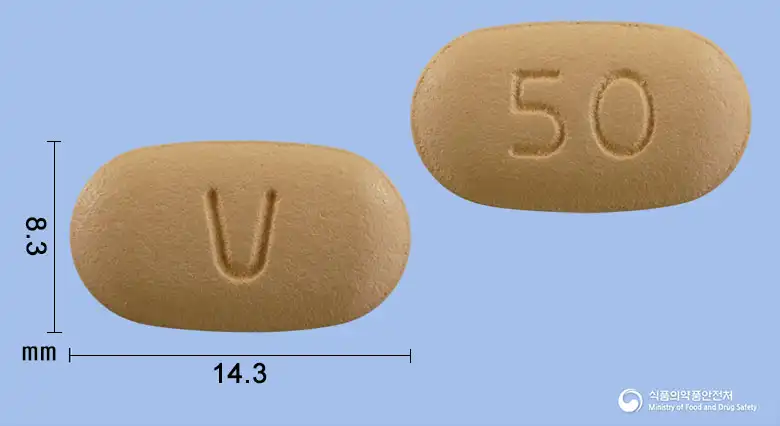
A beige, biconvex, rectangular film-coated tablet engraved with 'V' on one side and '50' on the other.
7 tablets/box [7 tablets/PTP*1]
Even with the same ingredient, strength, dosage form and how it is taken can differ.
Viewing nowVenetoclax 50mg
Tablet · Prescription medication
AbbVie Korea, Co., Ltd.
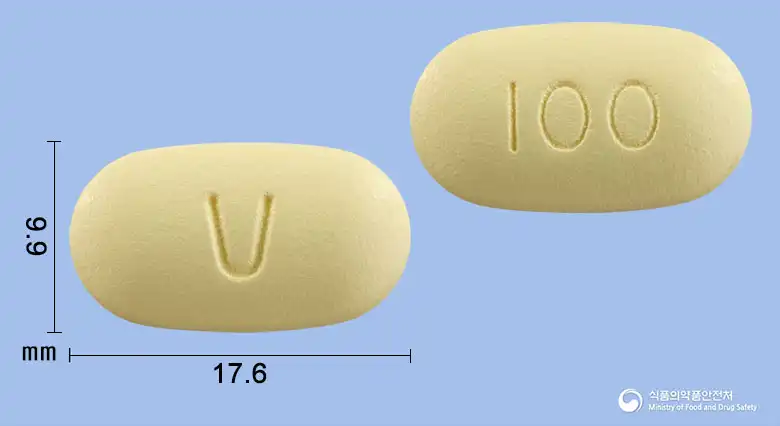
Venetoclax 100mg
Tablet · Prescription medication
AbbVie Korea Co., Ltd.
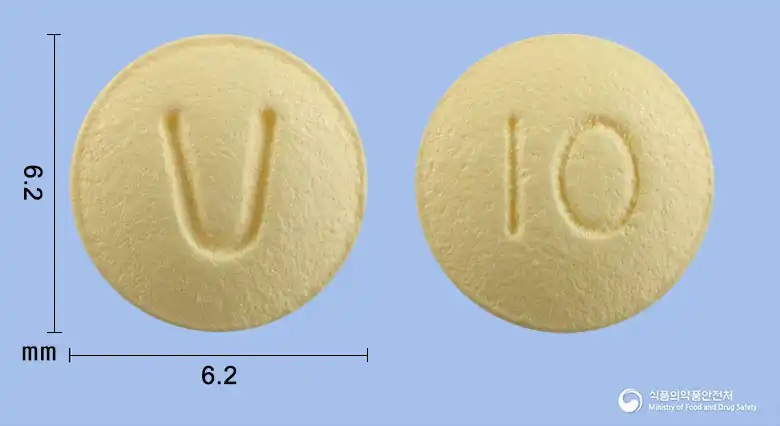
Venetoclax 10mg
Tablet · Prescription medication
AbbVie Korea Co., Ltd.
Even with the same ingredient, the dose and directions can differ by strength and dosage form. Talk to a doctor or pharmacist before switching from a medication you are already taking.
No questions yet.
For anything that needs medical judgment, consult a doctor or pharmacist.
This drug information is based on data provided by the Korea Ministry of Food and Drug Safety.
Consult a doctor or pharmacist for accurate dosage, administration, and usage instructions.