
 한국어
 English
 日本語
 中文(简体)
 Viewing now
Venetoclax 100 mg Tablet (Venetoclax)
Venetoclax 100mg
Tablet · Prescription medication
AbbVie Korea Co., Ltd.
MFDS item code 201903542 · Approved 2019.05.29 · Insurance code 624900330
Treatment of chronic lymphocytic leukemia and acute myeloid leukemia
This medication is used for the treatment of blood cancer known as chronic lymphocytic leukemia. In adult patients who have not received prior treatment, it is administered in conjunction with obinutuzumab to enhance efficacy, and in patients who have already been treated, it can be expected to have a therapeutic effect when used in combination with rituximab. It is also utilized as a monotherapy for patients who have relapsed or are refractory to chemotherapeutics or B-cell receptor pathway inhibitors. In the case of acute myeloid leukemia, it is used in combination with azacitidine or decitabine for patients aged 75 or older or those with comorbidities that make intensive induction chemotherapy difficult. Thus, it is effectively utilized in various situations in the treatment of blood cancers to improve patients' therapeutic outcomes.
This medication should be taken once daily at the same time with food and water. It must be swallowed whole and must not be chewed, crushed, or broken into pieces before swallowing. Chronic lymphocytic leukemia Treatment with this medication should be initiated at 20mg once daily for 7 days, followed by the weekly dose-escalation schedule over 5 weeks according to the doses of this medication shown in Table 1, until a daily dose of 400mg is reached. Week 1: Daily dose of this medication: 20mg Week 2: Daily dose of this medication: 50mg Week 3: Daily dose of this medication: 100mg Week 4: Daily dose of this medication: 200mg Week 5: Daily dose of this medication: 400mg In combination with obinutuzumab This medication is administered for a total of 12 cycles: 6 cycles in combination with obinutuzumab, followed by the remaining 6 cycles as monotherapy. Obinutuzumab is administered at 100mg on Day 1 of Cycle 1, followed by 900mg on Day 1 (consecutively) or Day 2. A dose of 1000mg is administered on Days 8 and 15 of Cycle 1 and on Day 1 of each of the next five cycles (a total of 6 cycles, each consisting of 28 days). This medication is administered according to the dose-escalation schedule from Day 22 of Cycle 1 through Day 28 of Cycle 2 (see Table 1). After completion of the dose-escalation schedule, administer 400mg of this medication once daily from Day 1 of Cycle 3 of obinutuzumab treatment through Cycle 12. In combination with rituximab After completing 7 days of treatment with 400mg of this medication according to its dose-escalation schedule (Table 1), start rituximab treatment. Rituximab is administered on Day 1 of each cycle for a total of 6 cycles (1 cycle = 28 days): 375mg/m2 on Day 1 of the first cycle and 500mg/m2 on Day 1 of each cycle during Cycles 2–6. Continue administering 400mg of this medication once daily for 24 months, starting on Day 1 of the first rituximab treatment cycle. Monotherapy The recommended maintenance dose of this medication is 400mg once daily after completing the 5-week dose-escalation schedule (Table 1). This medication should be taken orally once daily until disease progression or unacceptable toxicity is observed. Acute myeloid leukemia Day 1: Daily dose of this medication: 100mg Day 2: Daily dose of this medication: 200mg Day 3: Daily dose of this medication: 400mg Day 4 and thereafter: Daily dose of this medication: 400mg When administered in combination with azacitidine or decitabine This medication is initiated on Day 1 of Cycle 1 together with azacitidine or decitabine. Azacitidine should be administered intravenously or subcutaneously at 75mg/m2 on Days 1-7 of each 28-day cycle. Decitabine should be administered intravenously at 20mg/m2 on Days 1-5 of each 28-day cycle. When this medication is administered in combination with azacitidine or decitabine, treatment should continue until disease progression or unacceptable toxicity is observed. Missed dose If the patient realizes that a dose was missed within 8 hours of the scheduled dosing time, take the missed dose as soon as possible and resume the usual daily dosing schedule. If more than 8 hours have passed since the missed dose, do not take the missed dose; resume the usual daily dosing schedule the next day. If the patient vomits after taking a dose, do not take an additional dose on the same day. Take the next prescribed dose at the usual time. Dose modifications for toxicity in chronic lymphocytic leukemia Changes in blood chemistry or symptoms suggestive of TLS: Withhold the next dose of this medication each time. If the changes resolve within 24-48 hours after the last dose, resume treatment with this medication at the same dose. If changes in blood chemistry take more than 48 hours to resolve, resume treatment at a reduced dose (see Table 5). If clinical TLSb occurs, resume treatment at a reduced dose after it resolves (see Table 5). Grade 3 or 4 nonhematologic toxicity, first occurrence: Temporarily withhold this medication. Once the toxicity resolves to Grade 1 or baseline levels, treatment with this medication may be resumed at the same dose. No dose modification is necessary. Grade 3 or 4 nonhematologic toxicity, second or subsequent occurrence: Temporarily withhold this medication. When treatment with this medication is resumed after the toxicity resolves, follow the dose-reduction guidelines in Table 5. A greater dose reduction may be made at the physician's discretion. Grade 3 neutropenia with infection or fever, or Grade 4 hematologic toxicity (excluding lymphopenia), first occurrence: Temporarily withhold this medication. Granulocyte colony-stimulating factor (G-CSF) may be administered with this medication if clinically necessary to reduce the risk of infection associated with neutropenia. Once the toxicity resolves to Grade 1 or baseline levels, treatment with this medication may be resumed at the same dose. Grade 3 neutropenia with infection or fever, or Grade 4 hematologic toxicity (excluding lymphopenia), second or subsequent occurrence: Temporarily withhold this medication. Consider using G-CSF as clinically indicated. When treatment with this medication is resumed after the toxicity resolves, follow the dose-reduction guidelines in Table 5. A greater dose reduction may be made at the physician's discretion. Consider discontinuing this medication in patients who require a dose reduction to less than 100mg for more than 2 weeks. Dose at interruption 400mg: Restart dose 300mg Dose at interruption 300mg: Restart dose 200mg Dose at interruption 200mg: Restart dose 100mg Dose at interruption 100mg: Restart dose 50mg Dose at interruption 50mg: Restart dose 20mg Dose at interruption 20mg: Restart dose 10mg Maintain the reduced dose for 1 week before increasing the dose. Acute myeloid leukemia For Grade 3 or 4 nonhematologic toxicity that does not resolve with supportive care, temporarily withhold this medication; once the toxicity resolves to Grade 1 or baseline levels, resume treatment with this medication at the same dose. Dose modifications when administered with CYP3A inhibitors or P-gp inhibitors In patients with chronic lymphocytic leukemia, this medication must not be coadministered with strong CYP3A inhibitors at treatment initiation or during the dose-escalation period. Strong CYP3A inhibitor, chronic lymphocytic leukemia: Contraindicated; reduce the dose of this medication to 100mg or less Strong CYP3A inhibitor, acute myeloid leukemia: Day 1 – 10mg; Day 2 – 20mg; Day 3 – 50mg; Day 4 – 100mg or less Moderate CYP3A inhibitor: Reduce the dose of this medication by at least 50% For all patients, if a CYP3A inhibitor or P-gp inhibitor must be used, follow Table 7 to manage drug interactions. Resume this medication at the dose used before starting coadministration with the CYP3A inhibitor or P-gp inhibitor, 2-3 days after discontinuing the CYP3A inhibitor or P-gp inhibitor.
This drug is used for cancer treatment, and during treatment, a serious side effect known as tumor lysis syndrome may occur. Tumor lysis syndrome can cause electrolyte imbalances and renal dysfunction due to the rapid destruction of cancer cells, so particular attention should be paid during the initial dosing and the period of dose escalation. During the use of this medicine, it is necessary to ensure adequate fluid intake and frequently monitor electrolyte levels through blood tests, and any abnormalities detected should be treated immediately. Additionally, patients with decreased kidney function or those with large tumor sizes are at an increased risk of tumor lysis syndrome, thus requiring more intensive management. This drug can reduce the number of neutrophils among white blood cells, raising the risk of infections. Therefore, during treatment, routine blood tests to monitor neutrophil counts are necessary, and in severe cases, the administration of the drug should be halted or the dosage reduced. If symptoms of infection appear, prompt medical attention should be sought. Life-threatening infections such as pneumonia or sepsis may occur, so rapid consultation with healthcare professionals is essential when experiencing fever or signs of infection. During treatment, vaccination with live vaccines should be avoided, and live vaccines should not be administered until B-cell recovery post-treatment. This drug may increase the risk of side effects when used with certain other medicines; therefore, careful dose adjustment and monitoring are necessary, particularly in combination with CYP3A inhibitors or P-gp inhibitors. It should not be taken during pregnancy, and women must undergo pregnancy testing before starting treatment and ensure effective contraception for at least 30 days during and after treatment. Breastfeeding should also be discontinued during the use of this drug. The safety and efficacy of this drug have not been established in individuals under 18 years of age, and it may be used in older adults without special dose adjustments, but caution is warranted for patients with reduced renal or hepatic function. In cases of overdose, no antidote is available, so symptoms should be closely monitored, and supportive therapy should be administered as needed, as dialysis is not effective for removing this drug. This medication may cause fatigue, so caution is required when driving or operating machinery. Lastly, this medication must be stored out of reach of children and should be kept in the original container at temperatures below 30 degrees Celsius.
Not everyone experiences these, and they can vary from person to person.
This medication must be stored in a tightly sealed container to avoid exposure to air and moisture. The appropriate storage temperature is room temperature between 1 degree and 30 degrees. Proper storage will help maintain the efficacy of the medicine.
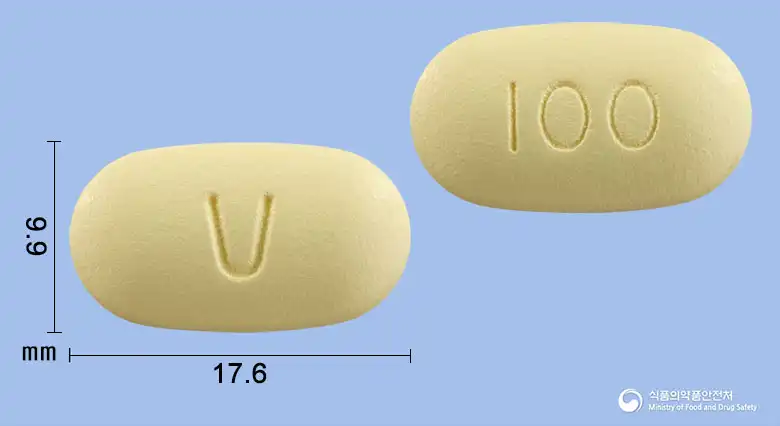
A light yellow, biconvex rectangular film-coated tablet imprinted with “V” on one side and “100” on the other side.
7 tablets/box [7 tablets/PTP*1], 14 tablets/box [14 tablets/PTP*1], 120 tablets/box [120 tablets/bottle*1]
Even with the same ingredient, strength, dosage form and how it is taken can differ.
Viewing nowVenetoclax 100mg
Tablet · Prescription medication
AbbVie Korea Co., Ltd.
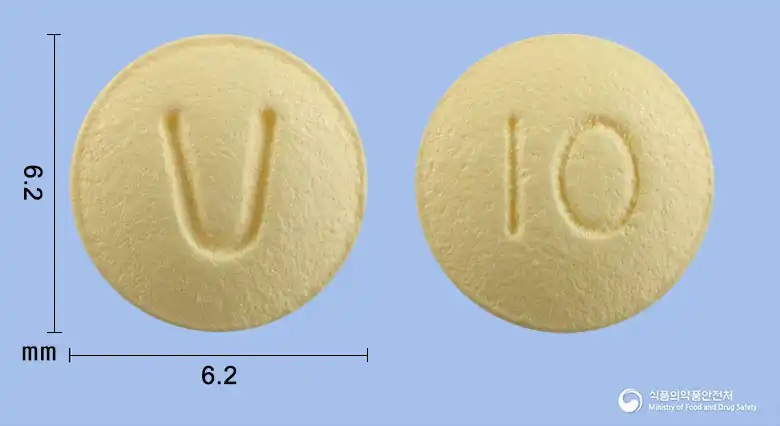
Venetoclax 10mg
Tablet · Prescription medication
AbbVie Korea Co., Ltd.
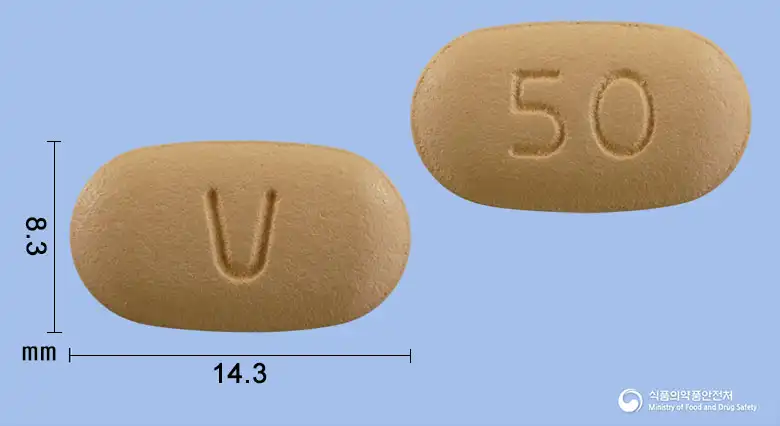
Venetoclax 50mg
Tablet · Prescription medication
AbbVie Korea, Co., Ltd.
Even with the same ingredient, the dose and directions can differ by strength and dosage form. Talk to a doctor or pharmacist before switching from a medication you are already taking.
No questions yet.
For anything that needs medical judgment, consult a doctor or pharmacist.
This drug information is based on data provided by the Korea Ministry of Food and Drug Safety.
Consult a doctor or pharmacist for accurate dosage, administration, and usage instructions.