
 한국어
 English
 日本語
 中文(简体)
Dosage form image
Viewing nowVergenio Tablet 200 mg (Abemaciclib)
Abemaciclib 200mg
Tablet · Prescription medication
Eli Lilly Korea, Ltd.
MFDS item code 201902828 · Approved 2019.05.01
Treatment of HR+/HER2- advanced or metastatic breast cancer and high-risk early breast cancer
This medication is used as adjuvant therapy in combination with endocrine therapy for patients with hormone receptor positive and HER2 negative early breast cancer, particularly in those with high risk of recurrence who have positive lymph nodes. It is most effective when combined with aromatase inhibitors in premenopausal or perimenopausal women. Additionally, for patients with advanced or metastatic breast cancer, it is administered as primary endocrine therapy in conjunction with aromatase inhibitors for women who are hormone receptor positive and HER2 negative, and in cases where the disease progresses after endocrine therapy, it is used together with fulvestrant. Appropriate combination therapy is important for women before and after menopause, helping to establish a treatment plan suited to the patient's condition. This medication is used for the treatment of hormone receptor positive, HER2 negative breast cancer.
Combination of endocrine therapy and this drug ⦁ The recommended dose of this drug in combination with endocrine therapy is 150 mg orally twice daily. ⦁ Refer to the prescribing information for the individual endocrine therapy for its recommended dose and administration when used in combination with this drug. Duration of treatment Early breast cancer This drug should be administered continuously for 2 years, or until disease recurrence or unacceptable toxicity occurs. Advanced or metastatic breast cancer Continue treatment until disease progression or unacceptable toxicity occurs. This drug may be administered with or without food. Advise patients to take this drug at approximately the same time each day. If a patient vomits or misses a dose of this drug, advise the patient to take the next dose at the next scheduled time. Advise patients to swallow the tablets whole and not to chew, crush, or divide them before swallowing. Advise patients not to take tablets of this drug that are broken, cracked, or otherwise not intact. 2. Dose modifications Dose modifications for adverse reactions Recommended dose modifications of this drug for adverse reactions are presented in Tables 1–7. Discontinue this drug if the patient is unable to tolerate a dose of 50 mg twice daily. Table 1: Dose modifications of this drug for adverse reactions Dose level Dose of this drug in combination with endocrine therapy Recommended starting dose 150 mg twice daily First dose reduction 100 mg twice daily Second dose reduction 50 mg twice daily Third dose reduction Not applicable Table 2: Dose modification and management of this drug — hematologic toxicitya Monitor complete blood counts before starting this drug, every 2 weeks for the first 2 months, monthly for the next 2 months, and as clinically indicated. CTCAE grade Dose modification of this drug Grade 1 or 2 No dose modification is required. Grade 3 Withhold treatment until toxicity resolves to Grade 2 or lower. No dose reduction is required. Recurrent Grade 3 or Grade 4 Withhold treatment until toxicity resolves to Grade 2 or lower. Resume treatment at the next lower dose. a If a hematopoietic growth factor is required, withhold this drug for at least 48 hours after the last dose of the growth factor and until toxicity resolves to Grade 2 or lower. Resume at the next lower dose, unless this has already been done for toxicity that led to use of a growth factor. Use of growth factors should follow current treatment guidelines. Table 3: Dose modification and management of this drug — diarrhea At the first sign of loose stools, start antidiarrheal treatment and increase fluid intake. CTCAE grade Dose modification of this drug Grade 1 No dose modification is required. Grade 2 If toxicity does not resolve to Grade 1 or lower within 24 hours, withhold treatment until it resolves. No dose reduction is required. Persistent or recurrent Grade 2 after resuming the same dose despite optimal supportive care Withhold treatment until toxicity resolves to Grade 1 or lower. Resume treatment at the next lower dose. Grade 3 or 4, or requiring hospitalization Withhold treatment until toxicity resolves to Grade 1 or lower. Resume treatment at the next lower dose. Table 4: Dose modification and management of this drug — hepatotoxicity Monitor ALT, AST, and serum bilirubin before starting this drug, every 2 weeks for the first 2 months, monthly for the next 2 months, and as clinically indicated. CTCAE grade for ALT and AST Dose modification of this drug Grade 1 (>ULN-3.0 x ULN) Grade 2 (>3.0-5.0 x ULN), with no increase in total bilirubin to > 2 x ULN No dose modification is required. Persistent or recurrent Grade 2, or Grade 3 (>5.0-20.0 x ULN), with no increase in total bilirubin to > 2 x ULN Withhold treatment until toxicity resolves to baseline or Grade 1. Resume treatment at the next lower dose. Increase in AST and/or ALT >3 x ULN with an increase in total bilirubin >2 x ULN, in the absence of cholestasis Discontinue this drug. Grade 4 (>20.0 x ULN) Discontinue this drug. Table 5: Dose modification and management of this drug for interstitial lung disease (ILD)/pneumonitis CTCAE grade Dose modification of this drug Grade 1 or 2 No dose modification is required. Persistent or recurrent Grade 2 toxicity that does not resolve to baseline or Grade 1 within 7 days despite optimal supportive care Withhold treatment until toxicity resolves to baseline or Grade 1 or lower. Resume treatment at the next lower dose. Grade 3 or 4 Discontinue this drug. Table 6: Recommended management of venous thromboembolic events (VTE) Toxicitya Recommended management Early breast cancer All grades (Grade 1, 2, 3, 4) Withhold treatment and treat as clinically indicated. Treatment with this drug may be resumed if the patient is clinically stable. Advanced or metastatic breast cancer Grade 1 or 2 No dose modification is required. Grade 3 or 4 Withhold treatment and treat as clinically indicated. Treatment with this drug may be resumed if the patient is clinically stable. Table 7: Dose modification and management of this drug for other toxicitiesa CTCAE grade Dose modification of this drug Grade 1 or 2 No dose modification is required. Persistent or recurrent Grade 2 toxicity that does not resolve to baseline or Grade 1 within 7 days despite optimal supportive care Withhold treatment until toxicity resolves to baseline or Grade 1 or lower. Resume treatment at the next lower dose. Grade 3 or 4 Withhold treatment until toxicity resolves to baseline or Grade 1 or lower. Resume treatment at the next lower dose. Refer to the prescribing information for dose modifications and other relevant safety information for the concomitantly administered aromatase inhibitor or fulvestrant. Dose modification with strong and moderate CYP3A inhibitors Avoid concomitant use of ketoconazole, a strong CYP3A inhibitor. For patients whose recommended starting dose is 150 mg twice daily, reduce the dose of this drug to 100 mg twice daily when used concomitantly with strong CYP3A inhibitors other than ketoconazole. For patients whose dose was reduced to 100 mg twice daily due to adverse reactions, further reduce the dose of this drug to 50 mg twice daily. If a patient taking this drug discontinues a CYP3A inhibitor, increase the dose of this drug (after 3-5 half-lives of the inhibitor have elapsed) to the dose used before starting the strong inhibitor. When a moderate CYP3A inhibitor is used concomitantly, monitor for adverse reactions and, if necessary, consider reducing the dose of this drug by 50 mg as shown in Table 1. Dose modification for patients with severe hepatic impairment For patients with severe hepatic impairment (Child Pugh-C), reduce the frequency of administration of this drug to once daily. Refer to the prescribing information for dose modification requirements for the concomitantly administered aromatase inhibitor or fulvestrant in severe hepatic impairment.
This medication can reduce the neutrophil count in blood, weakening the resistance to infections; therefore, regular blood tests to monitor neutrophil levels are necessary. When administered to pregnant women, it may be harmful to the fetus, so women who could become pregnant must use effective contraception during and for at least 3 weeks after taking this medication. There is a risk of interstitial lung disease or interstitial pneumonia that can cause inflammation or damage to the lungs, so if symptoms like difficulty breathing or cough appear, consult medical personnel immediately. Patients with lactose intolerance should not take this medication due to the lactose content. Diarrhea can occur frequently, so adequate hydration should be maintained to prevent dehydration, and notify medical personnel if diarrhea is severe. It can impact liver function, so regular liver function tests should be conducted; if liver enzyme levels increase, medication dosage may be adjusted. There is a risk of blood clots in the blood, so if symptoms like leg pain or swelling, or sudden difficulty breathing appear, notify medical personnel immediately. This medication may interact with other drugs, so inform medical personnel of any other medications being taken and remain cautious. Lactating women should avoid breastfeeding during and for at least 3 weeks after taking this medication, as it could affect the baby. Older adults can also be administered this drug, but they may be more sensitive to side effects; thus, immediately consult medical personnel if any abnormal symptoms occur. Patients with severely impaired kidney or liver function should consult medical personnel before administration, and dosages might be adjusted accordingly. There is no specific antidote for overdose; therefore, immediate medical attention should be sought for appropriate supportive treatment. This medication should be stored in a secure place out of reach of children, and transferring it to another container can compromise its quality, so care is required.
Not everyone experiences these, and they can vary from person to person.
This medication must be stored in a tightly sealed container to avoid exposure to air or moisture. Additionally, it is advisable to avoid excessively hot or cold places and to store it at room temperature between 1 degree and 30 degrees.
Beige oval shaped film-coated tablet inscribed with 'Lilly' on one side and '200' on the other side.
70 Tablets/Box [(14 Tablets/Blister * 5)]
Even with the same ingredient, strength, dosage form and how it is taken can differ.
Abemaciclib 200mg
Tablet · Prescription medication
Eli Lilly Korea, Ltd.
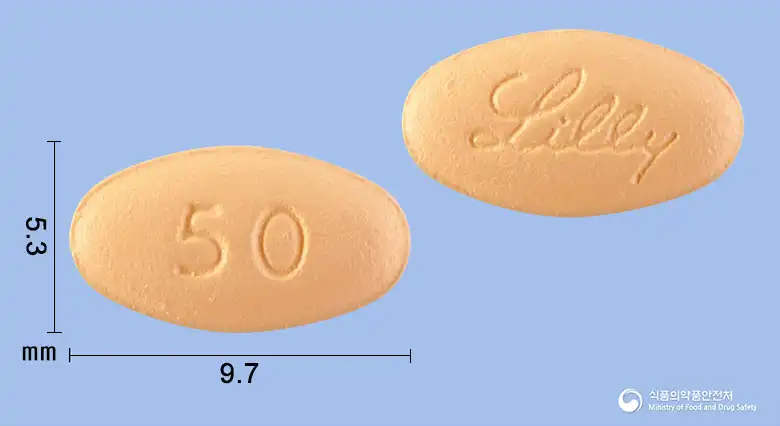
Abemaciclib 50mg
Tablet · Prescription medication
Korea Lilly Co., Ltd.
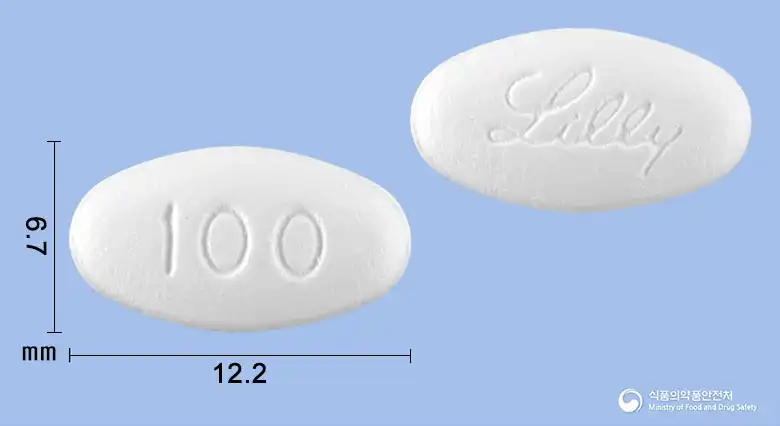
Abemaciclib 100mg
Tablet · Prescription medication
Eli Lilly Korea, Co., Ltd.
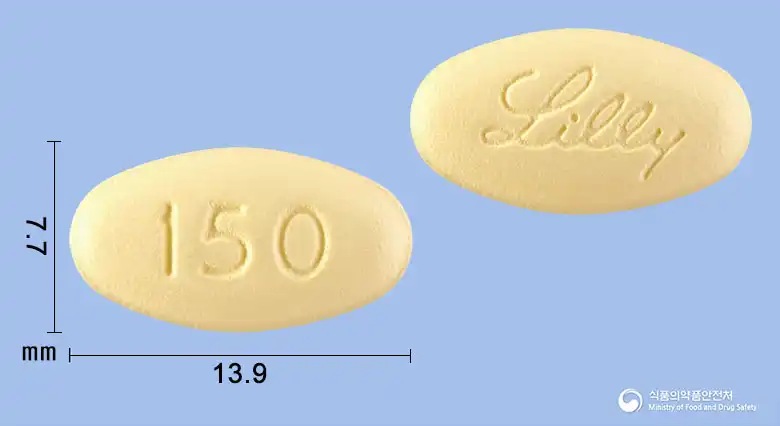
Abemaciclib 150mg
Tablet · Prescription medication
Eli Lilly Korea LLC
Even with the same ingredient, the dose and directions can differ by strength and dosage form. Talk to a doctor or pharmacist before switching from a medication you are already taking.
No questions yet.
For anything that needs medical judgment, consult a doctor or pharmacist.
This drug information is based on data provided by the Korea Ministry of Food and Drug Safety.
Consult a doctor or pharmacist for accurate dosage, administration, and usage instructions.