
 한국어
 English
 日本語
 中文(简体)
Dosage form image
Viewing nowEliquis 5 mg (Apixaban)
Apixaban 5mg
Tablet · Prescription medication
Kujoo Pharmaceutical Co., Ltd.
MFDS item code 201902236 · Approved 2019.04.11
Prevention of stroke and embolism; treatment of thrombosis and prevention of recurrence; prevention of thrombosis after joint surgery
This medication is primarily used to prevent venous thromboembolism in adult patients who have undergone hip or knee replacement surgery. It is also effective in reducing the risk of stroke and systemic embolism in patients with non-valvular atrial fibrillation. It is suitable for the treatment of deep vein thrombosis and pulmonary embolism, helping to reduce the risk of recurrence. This efficacy is utilized for the effective management and prevention of thromboembolism-related diseases.
Directions for use: Take this medicine with water, with or without food. If a patient forgets to take a dose, they should take it as soon as possible and continue taking it twice daily as before. 1. Adults 1) Prevention of venous thromboembolism in adult patients who have undergone hip or knee replacement surgery The recommended dose is 2.5 mg orally twice daily. The first dose is administered 12 ~ 24 hours after surgery. The recommended duration of treatment in patients who have undergone hip replacement surgery is 32 ~ 38 days. The recommended duration of treatment in patients who have undergone knee replacement surgery is 10 ~ 14 days. 2) Reduction in the risk of stroke and systemic embolism in patients with nonvalvular atrial fibrillation The recommended dose is 5 mg orally twice daily. However, the recommended dose for patients with nonvalvular atrial fibrillation who have at least 2 of the following characteristics is 2.5 mg orally twice daily; age ≥80 years, body weight ≤60kg, or serum creatinine ≥1.5 mg/dL (133 micromole/L). Treatment should be continued for a long term. There is limited experience with coadministration of the recommended dose of this medicine and antiplatelet agents after hemostasis has been achieved in patients with nonvalvular atrial fibrillation accompanied by acute coronary syndrome and/or percutaneous coronary intervention. (Refer to ‘5. General Precautions, 1) Interactions with other drugs that affect hemostasis’ and ‘12. Clinical Trial Information, 2) Reduction in the risk of stroke and systemic embolism in patients with nonvalvular atrial fibrillation, AUGUSTUS trial’ under Precautions for Use.) 3) Treatment of deep vein thrombosis and pulmonary embolism The recommended dose of this medicine for the treatment of acute deep vein thrombosis and pulmonary embolism is 10mg orally twice daily for 7 days, followed by 5mg orally twice daily. 4) Reduction in the risk of recurrence of deep vein thrombosis and pulmonary embolism The recommended dose is 2.5mg orally twice daily, to be administered after completion of at least 6 months of treatment with this medicine or another anticoagulant. 2. Switching therapy When switching from parenteral anticoagulant therapy to this medicine or from this medicine to a parenteral anticoagulant, the switch may be made at the time of the next scheduled dose. 1) Switching from vitamin K antagonist therapy to this medicine To switch from vitamin K antagonist therapy to this medicine, discontinue warfarin or other vitamin K antagonist therapy and initiate this medicine when the International Normalized Ratio (INR) is less than 2.0. 2) Switching from this medicine to vitamin K antagonist therapy To switch from this medicine to vitamin K antagonist therapy, continue this medicine for 2 days after starting the vitamin K antagonist. After 2 days of concomitant treatment with this medicine and a vitamin K antagonist, measure the INR just before the scheduled dose of this medicine, and continue concomitant treatment with this medicine and the vitamin K antagonist until the INR is 2.0 or higher. 3. Renal impairment Administration of this medicine is not recommended in patients on dialysis or in patients with creatinine clearance less than 15 mL/min because there is no clinical experience in these patients. 1) Prevention of venous thromboembolism in adult patients who have undergone hip or knee replacement surgery No dose adjustment is necessary in patients with mild or moderate renal impairment. Limited clinical experience in patients with severe renal impairment (creatinine clearance 15-29 mL/min) indicates that plasma concentrations of this medicine were increased in these patients; therefore, this medicine should be administered with caution in these patients. 2) Reduction in the risk of stroke and systemic embolism in patients with nonvalvular atrial fibrillation No dose adjustment is necessary in patients with mild or moderate renal impairment. However, patients with serum creatinine ≥1.5 mg/dL (133 micromole/L) who are aged ≥ 80 years or weigh ≤ 60kg should receive 2.5 mg of this medicine twice daily. Patients with severe renal impairment (creatinine clearance 15-29 mL/min) should receive 2.5 mg of this medicine twice daily, regardless of age or body weight. 3) Treatment of deep vein thrombosis and pulmonary embolism/ Reduction in the risk of recurrence of deep vein thrombosis and pulmonary embolism No dose adjustment is necessary in patients with mild or moderate renal impairment. Limited clinical experience in patients with severe renal impairment (creatinine clearance 15-29 mL/min) indicates that plasma concentrations of this medicine were increased in these patients; therefore, this medicine should be administered with caution in these patients. 4. Hepatic impairment This medicine should not be administered to patients with liver disease associated with coagulopathy and a clinically significant risk of bleeding. No dose adjustment is necessary in patients with mild or moderate hepatic impairment (Child Pugh A or B), but this medicine should be administered with caution. Administration of this medicine is not recommended in patients with severe hepatic impairment. Patients with hepatic ALT/AST levels exceeding 2 times the upper limit of normal or total bilirubin levels ≥1.5 times the upper limit of normal were excluded from clinical trials; therefore, caution should be exercised when administering this medicine to such patients. Liver function tests should be performed before initiating treatment with this medicine. 5. Patients unable to swallow tablets For patients unable to swallow tablets, this medicine may be crushed and mixed with water or a beverage such as applesauce for oral administration immediately before use. This medicine may also be crushed, mixed with 60mL of water, and administered through a nasogastric tube.
This medication is an anticoagulant that prevents excessive blood clotting and thrombus formation. During the course of treatment, there is a risk of bleeding; therefore, it is essential to monitor for any signs of bleeding closely. It must be used with particular caution in patients at high risk of bleeding. In case of severe bleeding, the use of this medication should be discontinued immediately and appropriate treatment should be sought if necessary. While this medication does not require routine blood tests, checking blood concentration may be helpful in cases of overdose or if urgent surgery is needed. Due to the increased risk of bleeding, it should not be used in patients with pre-existing bleeding or conditions that increase bleeding risk. Additionally, patients with allergies to this medication or genetic issues such as lactose intolerance should not take this medication. Caution is advised in patients with significantly impaired kidney or liver function, elderly patients, or underweight patients as this can increase drug concentration in the blood. Patients undergoing spinal or epidural anesthesia should consult healthcare professionals due to the risk of nerve damage and the concomitant use of other anticoagulants or blood coagulation-affecting medications could further elevate the bleeding risk. Before surgical or invasive procedures, this medication should be discontinued for a certain period, and post-procedure, the risk of bleeding and need for treatment should be considered before resuming. Pregnant or nursing women are advised to avoid this medication, especially during breastfeeding, due to the possibility of the drug passing into breast milk and posing a risk to the newborn. The safety and efficacy of this medication in children have not been adequately confirmed, so it should be administered to children with caution. In cases of overdose, the risk of bleeding significantly increases; therefore, medical personnel should be informed immediately, and appropriate treatment should be given. While taking this medication, symptoms related to bleeding (e.g., nosebleeds, gum bleeding, hematuria, bruising, etc.) should be monitored closely, and if any abnormalities occur, consult a doctor or pharmacist immediately.
Not everyone experiences these, and they can vary from person to person.
This medication can be sensitive to air and humidity; therefore, it should be stored in a sealed container. It is recommended to maintain a storage temperature of room temperature between 1 degree and 30 degrees Celsius. Proper storage will help maintain the medication's effectiveness over time.
Pink, oval-shaped, film-coated tablets with a convex appearance on both sides
60 tablets (10 tablets/PTPX6)
Even with the same ingredient, strength, dosage form and how it is taken can differ.
Apixaban 5mg
Tablet · Prescription medication
Kujoo Pharmaceutical Co., Ltd.
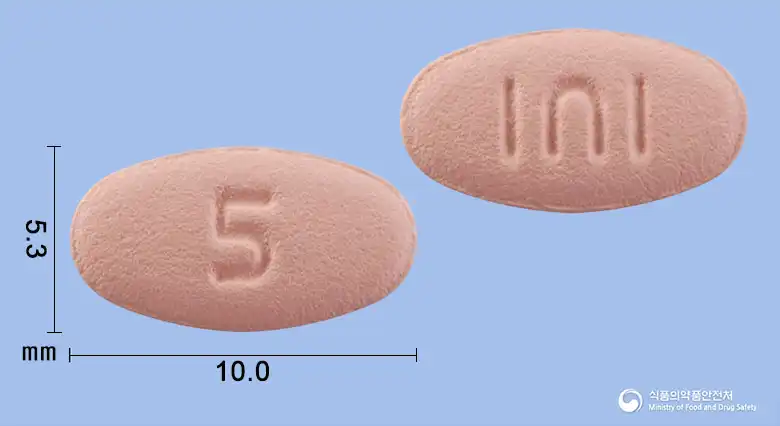
Apixaban 5mg
Tablet · Prescription medication
Bivagon Pharmaceutical Co., Ltd.
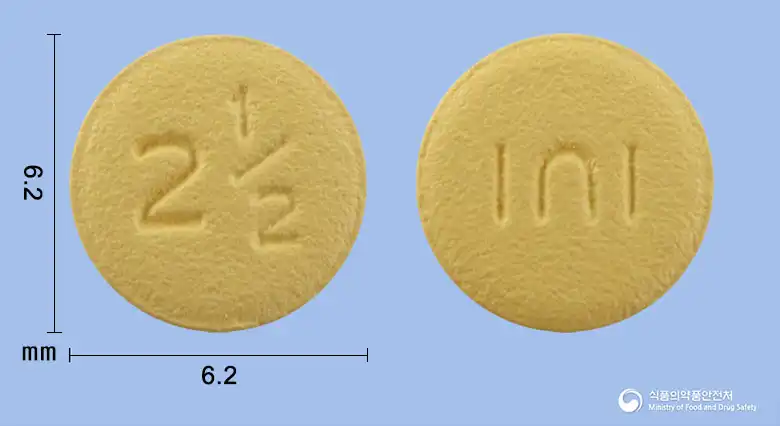
Apixaban 2.5mg
Tablet · Prescription medication
Vivozon Pharmaceuticals Co., Ltd.
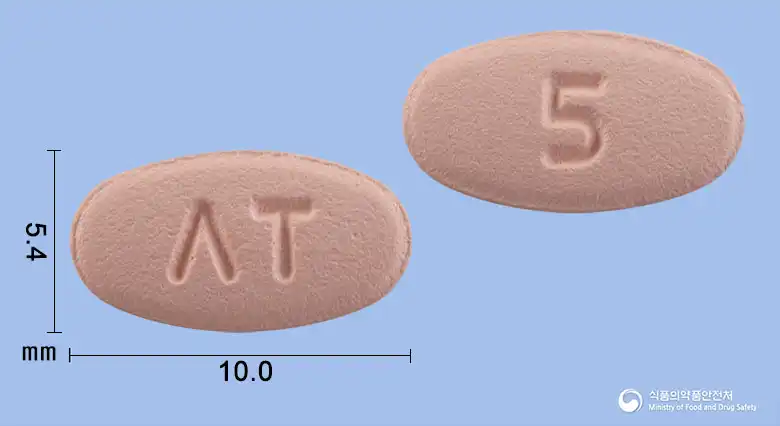
Apixaban 5mg
Tablet · Prescription medication
HuTex Pharmaceuticals Co., Ltd.
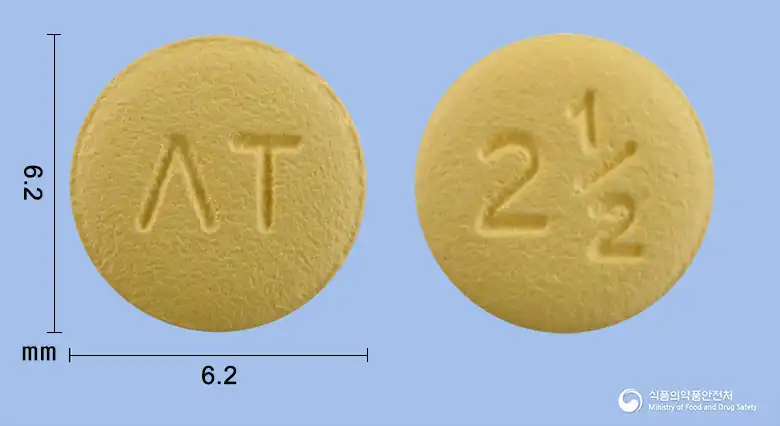
Apixaban 2.5mg
Tablet · Prescription medication
Korea HuTechs Pharmaceutical Co., Ltd.
Apixaban 5mg
Tablet · Prescription medication
Jinyang Pharmaceutical Co., Ltd.
Apixaban 2.5mg
Tablet · Prescription medication
Jinyang Pharmaceutical Co., Ltd.
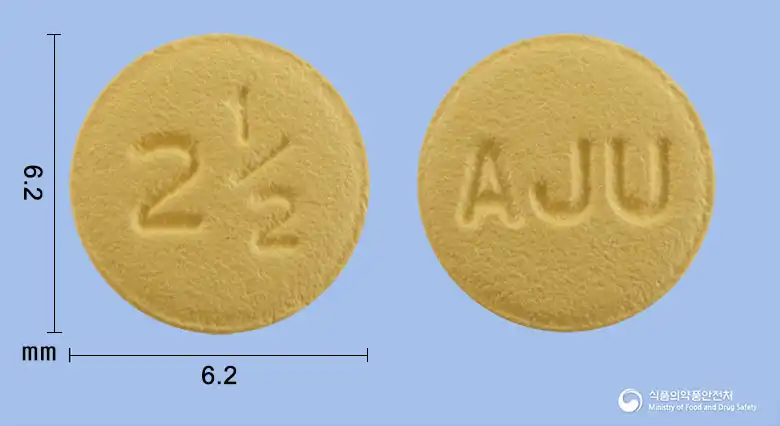
Apixaban 2.5mg
Tablet · Prescription medication
Ajou Pharmaceuticals Co., Ltd.
Even with the same ingredient, the dose and directions can differ by strength and dosage form. Talk to a doctor or pharmacist before switching from a medication you are already taking.
No questions yet.
For anything that needs medical judgment, consult a doctor or pharmacist.
This drug information is based on data provided by the Korea Ministry of Food and Drug Safety.
Consult a doctor or pharmacist for accurate dosage, administration, and usage instructions.