
 한국어
 English
 日本語
 中文(简体)
 Viewing now
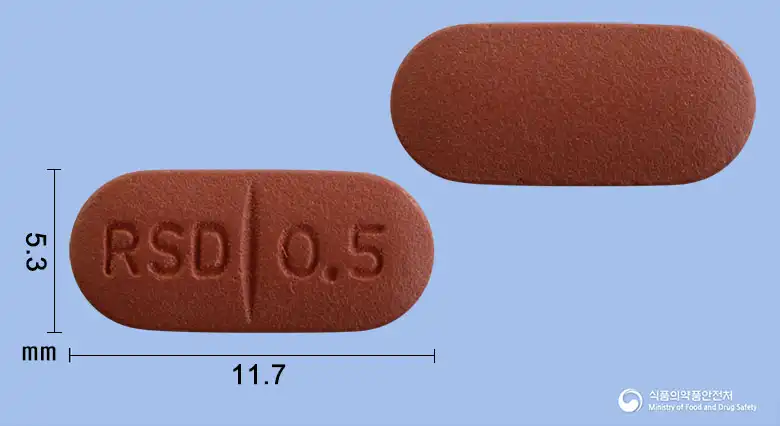
Risdon 0.5 mg (Risperidone)
Risperidone 0.5mg
Tablet · Prescription medication
Korea Pharma Co., Ltd.
MFDS item code 201801664 · Approved 2018.04.17 · Insurance code 653006180
Treatment of mental disorders (schizophrenia and mania), short-term treatment of behavioral and psychological symptoms of dementia, and treatment of behavioral disorders in intellectual disability
This medication is used to relieve the symptoms of schizophrenia. It is also effective for the short-term treatment of agitation, aggression, or psychotic symptoms in patients with moderate to severe Alzheimer's-type dementia. It is utilized as an adjunct therapy for mood stabilizers in treating manic episodes associated with bipolar disorder. Additionally, it assists in treating destructive behavior in children, adolescents, and adults with intellectual disability or low intellectual capabilities who exhibit behavioral disturbances or other disruptive behaviors. It is used for various mental and behavioral disorders.
The therapeutic dose of this medicine should be adjusted according to the patient's clinical condition, and the lowest effective dose possible should be administered. 1. Schizophrenia 1) Adults (1) Initial dose: Administer 1 mg of risperidone orally twice daily, and increase the dose gradually. (2) Maintenance dose: Administer 1∼3 mg twice daily. Adjust the dose appropriately according to age and symptoms. (3) No additional effect was observed with doses of 10 mg or more per day compared with lower doses, and such doses may increase the risk of extrapyramidal symptoms. Doses of 10 mg or more per day should be administered only when the benefits to the individual patient are judged to outweigh the risks. (4) Do not administer doses of 16 mg or more per day, as safety has not been established. (5) A benzodiazepine may be administered concomitantly if additional sedation is needed. 2) Dosing in special populations · Elderly patients and patients predisposed to hypotension The initial dose is 0.5 mg twice daily. Depending on the patient's condition, increase the dose by 0.5 mg twice daily until a dose of 1~2 mg twice daily is reached. In general, increases to doses of 1.5 mg or more twice daily should be made at intervals of at least 1 week. 3) Switching from an existing antipsychotic to this medicine When medically appropriate, initiate treatment with this medicine while gradually reducing the dose of the existing medicine. Also, when medically appropriate, when switching from an existing depot antipsychotic, initiate treatment with this medicine in place of the next scheduled injection of the depot formulation. The need to continue concomitant antiparkinsonian medication should be reassessed regularly. 2. Agitation, aggression, or psychotic symptoms in patients with dementia of the Alzheimer's type The initial dose is 0.25 mg of this medicine twice daily. If needed, depending on the patient, the dose may be increased by 0.25 mg twice daily at intervals of at least 2 days. The optimal dose for most patients is 0.5 mg twice daily, but depending on the patient, the dose may be increased to 1 mg twice daily. Once the patient has reached the optimal dose, a once-daily dosing regimen may also be considered. As with symptomatic treatment, the justification for continued use of this medicine should be evaluated. 3. Adjunctive treatment of manic episodes in bipolar disorder · An initial dose of 2 mg of this medicine once daily is recommended. Depending on the patient, the dose may be increased by up to 1 mg per day at intervals of at least 24 hours. For most patients, the optimal dose is within the range of 2∼6 mg per day. As with symptomatic treatment, the justification for continued use of this medicine should be evaluated. 4. Behavioral disorders and other disruptive behavior disorders As with symptomatic treatment, the justification for continued use of this medicine should be evaluated. Renal and hepatic impairment In patients with renal or hepatic impairment, administer half the initial and maintenance doses and adjust the dose more gradually. Use this medicine with caution in these patients (see 5. General precautions)
· There is limited clinical experience in children and adolescents under 15 years of age. · There is limited clinical experience in children and adolescents under 15 years of age. - Body weight 50 kg or more: The initial dose is 0.5 mg of this medicine once daily. If needed, depending on the patient, the dose may be increased by 0.5 mg per day at intervals of at least 2 days. The optimal dose for most patients is 1 mg once daily. Depending on the patient, 0.5∼1.5 mg may be administered once daily. - Body weight less than 50 kg: The initial dose is 0.25 mg once daily. If needed, depending on the patient, the dose may be increased by 0.25 mg per day at intervals of at least 2 days. The optimal dose for most patients is 0.5 mg once daily. Depending on the patient, 0.25∼0.75 mg may be administered once daily. · There is limited clinical experience in children under 5 years of age.
This medication may increase mortality when used in elderly dementia patients, so caution should be exercised during administration. Particularly, the risk of mortality can increase when this medication is used in conjunction with furosemide, so the decision for such combination must be thoroughly evaluated. Patients receiving this medication may have a risk of venous thrombosis; factors contributing to thromboembolism should be identified and preventive measures must be taken before administration. It should not be used in patients with known allergies to this medication or its components, severe central nervous system depression, or in a state of coma, nor in patients receiving epinephrine. Patients with lactose intolerance or specific genetic metabolic disorders should also avoid this medication. Patients with a history of cardiac disease, dehydration, arrhythmia, or hepatic or renal impairment should use this medication with caution, and dosage adjustments may be necessary. Those with a risk of suicide, Parkinson’s disease, Lewy body dementia, diabetes, elderly patients, or pregnant or breastfeeding women should exercise caution when using this medication. This medication can cause neurological symptoms such as drowsiness, dizziness, hypotension, or Parkinsonism, and patients should consult a doctor if such symptoms occur. During medication, serious side effects such as weight gain, hyperglycemia, seizures, or neuroleptic malignant syndrome may occur; regular monitoring of patient status is necessary. Caution is needed when taken with other central nervous system depressants or alcohol as the sedative effect may be enhanced. Since this medication is metabolized in the liver, combining it with drugs that inhibit or induce liver enzymes may alter drug concentration, requiring dosage adjustments. Using this medication during pregnancy may cause adverse effects in newborns; women of childbearing potential should consult a doctor before use. Breastfeeding mothers are advised to discontinue breastfeeding as this medication can pass into breast milk. When prescribing to children or adolescents, more caution is needed due to insufficient clinical experience; there is especially little experience in children under 5 years of age. Elderly patients are at a higher risk of renal function decline; dosage adjustments and careful monitoring are required. In case of overdose, medical attention should be sought immediately, as there is no antidote and supportive care according to symptoms is necessary. This medication should be stored out of reach of children and should not be transferred to other containers for safety.
Increased mortality, cerebrovascular adverse reactions, venous thrombosis, oropharyngitis, upper respiratory infection, sinusitis, urinary tract infection, anemia, hypersensitivity reactions, insomnia, anxiety, nervous hyperactivity, Parkinsonism, akathisia, drowsiness, dizziness, sedation, tremors, muscle rigidity, somnolence, positional dizziness, dyskinesia, syncope, blurred vision, ear pain, orthostatic hypotension, tachycardia, hypotension, nasal congestion, dyspnea, epistaxis, sinus congestion, nausea, constipation, dyspepsia, vomiting, diarrhea, excessive salivation, dry mouth, abdominal discomfort, abdominal pain, gastrointestinal discomfort, epigastric pain, rash, dry skin, dandruff, seborrheic dermatitis, keratosis pilaris, back pain, arthralgia, limb pain, urinary incontinence, ejaculation disorder, fatigue, asthenia, fever, chest pain, elevated blood creatinine phosphokinase, increased heart rate, pneumonia, soft tissue infection, decreased appetite, confusion, transient ischemic attack, altered consciousness, drooling, cerebrovascular accident, conjunctivitis, cough, runny nose, dysphagia, fecal impaction, erythema, abnormal posture, joint swelling, peripheral edema, gait disturbance, dependent edema, fever, rhinitis, influenza, increased appetite, middle insomnia, lethargy, headache, stuttering, attention deficit, balance disorder, excessive sleep, palpitations, pharyngolaryngeal pain, pulmonary congestion, itching, acne, myalgia, neck pain, enuresis, frequency of urination, galactorrhea, mood disturbances, lethargy, chest discomfort, weight gain, elevated blood prolactin, anxiety, diminished affect, sleep disorders, decreased libido, sexual dysfunction, depression, nightmares, unresponsiveness to stimuli, coordination abnormalities, loss of consciousness, language disorder, sensory deficits, motor disturbances, tardive dyskinesia, cerebral ischemia, cerebrovascular accident disorders, neuroleptic malignant syndrome, diabetic coma, head tremors, seizures, psychomotor hyperactivity, delayed motor dysfunction, cerebrovascular disorders, sensory abnormalities, eye conjunctival injection, eye discharge, eye movement, eyelid swelling, photophobia, eyelid crusting, dry eyes, increased tearing, glare, glaucoma, decreased vision, tinnitus, vertigo, bradycardia, tachycardia, palpitations, I degree AV block, left bundle branch block, right bundle branch block, complete heart block, flushing, conduction disorders, ECG abnormalities, prolonged QT interval on ECG, right pulmonary vein, bradycardia, wheezing, aspiration pneumonia, voice disorders, wet cough, airway congestion, crackles, respiratory disorders, nasal cavity swelling, hyperventilation, fecal incontinence, gastritis, lip swelling, cheilitis, saliva deficiency, abdominal distention, enteritis, tongue swelling, toothache, skin discoloration, skin lesions, skin disorders, erythematous rash, papular rash, generalized rash, papulopustular rash, eczema, musculoskeletal chest pain, joint stiffness, muscle weakness, rhabdomyolysis, urinary disorders, amenorrhea, gynecomastia, vaginal discharge, erectile dysfunction, ejaculation disorder, menstrual disorders, breast engorgement, sexual dysfunction, retrograde ejaculation, nipple discharge, thirst, influenza-like syndrome, edema, fatigue, facial edema, discomfort, generalized edema, chills, peripheral coldness, withdrawal syndrome, adverse drug reactions, decreased body temperature, procedure-related pain, increased ALT, ECG abnormalities, eosinophilia, increased AST, leukopenia, increased blood glucose, decreased hemoglobin, decreased hematocrit, decreased body temperature, hypotension, increased transaminases, increased gamma-glutamyl transferase, increased liver enzymes, agranulocytosis, thrombocytopenia, abnormal secretion of antidiuretic hormone, diabetic ketoacidosis, diabetes mellitus, hypoglycemia, water intoxication, increased blood cholesterol, increased blood triglycerides, mania, dysgeusia, intraoperative iris hypotonicity syndrome, atrial fibrillation, deep vein thrombosis, pulmonary embolism, sleep apnea syndrome, bowel obstruction, pancreatitis, jaundice, vascular edema, hair loss, neonatal drug withdrawal syndrome, urinary retention, priapism, hypothermia, chest pain, liver function abnormalities, hepatitis, thirst, dry mouth, urinary retention, polyuria, pain, hiccups, increased sweating, urinary disorders, leukopenia, arrhythmia, epistaxis, anemia, diarrhea, hangover, ocular motor seizures, acne, dysphagia, enuresis, tic disorders, dyspnea, Rabbit syndrome, suicide attempt, accident anomaly, delusion, hallucination, exacerbation of auditory symptoms, delayed dyskinesia, extrapyramidal symptoms, hyperthermia, muscle rigidity, autonomic nervous anxiety syndrome, altered consciousness, elevated serum creatine phosphokinase, myoglobinuria, acute renal failure, confusion, desensitization, postural instability, frequent falls, leukopenia, neutropenia, agranulocytosis, intraoperative iris hypotonicity syndrome, priapism, orthostatic hypotension, syncope, decreased deep body temperature, extrapyramidal disorders, musculoskeletal rigidity, cogwheel rigidity, akinesia, bradycardia, hypoactivity, mask-like facies, muscle rigidity, restlessness, muscle cramps, involuntary contractions of muscles, muscle contracture, eye rotation, tongue paralysis, tremors, chorea, choreoathetosis, motor disorders, muscle spasticity, falls
Not everyone experiences these, and they can vary from person to person.
This medication should be stored in a tightly closed container to prevent exposure to air and moisture, and it is safe to store at room temperature between 1 to 30 degrees Celsius. Storing in this way will maintain the drug's effectiveness and prevent degradation.
Oblong reddish-brown film-coated tablets
30 tablets/bottle, 200 tablets/bottle
Even with the same ingredient, strength, dosage form and how it is taken can differ.
Viewing nowRisperidone 0.5mg
Tablet · Prescription medication
Korea Pharma Co., Ltd.

Risperidone 2mg
Tablet · Prescription medication
Myungin Pharmaceutical Co., Ltd.

Risperidone 1mg
Tablet · Prescription medication
Han-in Pharmaceutical Co., Ltd.

Risperidone 2mg
Tablet · Prescription medication
Ildong Pharmaceutical Co., Ltd.

Risperidone 1mg
Tablet · Prescription medication
Myungin Pharmaceutical Co., Ltd.
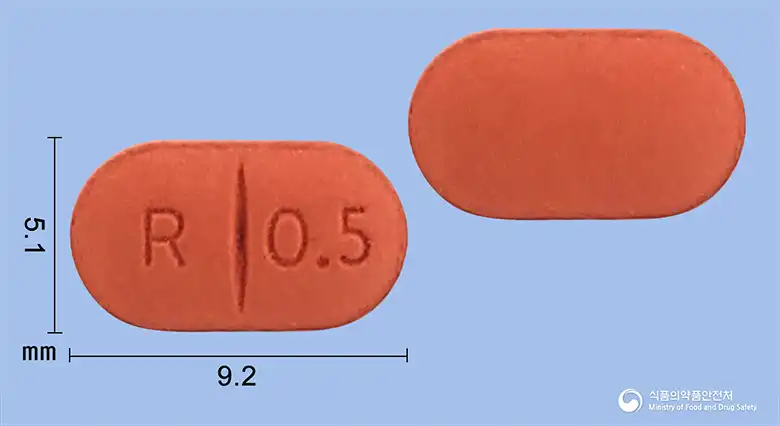
Risperidone 0.5mg
Tablet · Prescription medication
Hwanin Pharmaceutical Co., Ltd.

Risperidone 2mg
Tablet · Prescription medication
Unimed Pharmaceuticals Co., Ltd.

Risperidone 3mg
Tablet · Prescription medication
Myungjin Pharmaceutical Co., Ltd.
Even with the same ingredient, the dose and directions can differ by strength and dosage form. Talk to a doctor or pharmacist before switching from a medication you are already taking.
No questions yet.
For anything that needs medical judgment, consult a doctor or pharmacist.
This drug information is based on data provided by the Korea Ministry of Food and Drug Safety.
Consult a doctor or pharmacist for accurate dosage, administration, and usage instructions.