
 한국어
 English
 日本語
 中文(简体)
Dosage form image
Viewing nowDabigatran Capsule 110 mg (Dabigatran Etexilate Mesilate)
Dabigatran Etexilate Mesylate
Prescription medication
Aju Pharmaceutical Co., Ltd.
MFDS item code 201801371 · Approved 2018.03.28
This product's status changed to Expired on 2023.03.28. It may no longer be sold, so consult a doctor or pharmacist before taking it.
Prevention of stroke and embolism; treatment of venous thrombosis and pulmonary embolism and prevention of recurrence; prevention of thrombosis after joint replacement surgery
This medication reduces the risk of stroke and systemic embolism in patients with non-valvular atrial fibrillation and is used for the treatment of venous thromboembolism and pulmonary embolism. It also reduces the risk of recurrence of venous thromboembolism and pulmonary embolism, and helps prevent venous thromboembolism in patients who have undergone hip or knee replacement surgery. It is effectively used to prevent and treat complications caused by thrombosis.
This medicine should be taken with water, with or without food. 1. Adults (1) Reduction in the risk of stroke and systemic embolism in patients with non-valvular atrial fibrillation Take 150 mg orally twice daily. (2) Treatment of deep vein thrombosis and pulmonary embolism/reduction in the risk of recurrence of deep vein thrombosis and pulmonary embolism After at least 5 days of parenteral anticoagulant therapy, take 150mg orally twice daily. (3) For patients who may be at increased risk of bleeding for the three indications above, administration of 110 mg orally twice daily may be considered. (4) Prevention of venous thromboembolism in patients who have undergone hip or knee replacement surgery ① Patients who have undergone knee replacement surgery Take 220mg (2 capsules of 110mg) orally once daily. Start with 1 capsule of 110mg of this medicine within 1~4 hours after completion of surgery, then take 220mg (2 capsules of 110mg) once daily for a total of 10 days. ② Patients who have undergone hip replacement surgery Take 220mg (2 capsules of 110mg) orally once daily. Start with 1 capsule of 110mg of this medicine within 1~4 hours after completion of surgery, then take 220mg (2 capsules of 110mg) once daily for a total of 28~35 days. ③ For patients who may be at increased risk of bleeding, administration of 150 mg (2 capsules of 75mg) orally twice daily may be considered. Start with 1 capsule of 75mg of this medicine within 1~4 hours after completion of surgery, then take 150mg (2 capsules of 75mg) once daily for a total of 10 days (for knee replacement surgery) or a total of 28~35 days (for hip replacement surgery). ④ Bioequivalence has not been established between coadministration of 2 capsules of 75mg of this medicine and administration of 1 capsule of 150mg of this medicine; therefore, when administering 150mg of this medicine, 2 capsules of 75mg must be administered. ⑤ For both types of surgery, initiation of this medicine should be delayed if hemostasis has not been adequately achieved. If administration cannot be started on the day of surgery, begin with 2 capsules once daily. 2. Switching therapy (1) Switching from this medicine to a parenteral anticoagulant ① Reduction in the risk of stroke and systemic embolism in patients with non-valvular atrial fibrillation, treatment of deep vein thrombosis and pulmonary embolism/reduction in the risk of recurrence of deep vein thrombosis and pulmonary embolism Start the parenteral anticoagulant 12 hours after the last dose of this medicine. ② Prevention of venous thromboembolism in patients who have undergone hip or knee replacement surgery Start the parenteral anticoagulant 24 hours after the last dose of this medicine. (2) Switching from a parenteral anticoagulant to this medicine For patients currently receiving a parenteral anticoagulant, administer this medicine 0~2 hours before the next scheduled dose of the parenteral anticoagulant, or at the time of discontinuation of continuous administration (e.g., intravenous administration of unfractionated heparin). (3) Switching from this medicine to a vitamin K antagonist ① Reduction in the risk of stroke and systemic embolism in patients with non-valvular atrial fibrillation, treatment of deep vein thrombosis and pulmonary embolism/reduction in the risk of recurrence of deep vein thrombosis and pulmonary embolism Adjust the time to start the vitamin K antagonist according to creatinine clearance (Creatinine Clearance, CrCl) as follows. • CrCl 50 mL/min or higher: Start the vitamin K antagonist 3 days before discontinuing this medicine. • CrCl ≥ 30~<50 mL/min: Start the vitamin K antagonist 2 days before discontinuing this medicine. Because this medicine may increase the INR, an INR test at least 2 days after discontinuation of this medicine better reflects the effect of the vitamin K antagonist; until then, INR values should be interpreted with caution. (4) Switching from a vitamin K antagonist to this medicine ① Reduction in the risk of stroke and systemic embolism in patients with non-valvular atrial fibrillation, treatment of deep vein thrombosis and pulmonary embolism/reduction in the risk of recurrence of deep vein thrombosis and pulmonary embolism Discontinue the vitamin K antagonist. This medicine may be administered immediately when the INR is less than 2.0. 3. Patients with renal impairment (1) Reduction in the risk of stroke and systemic embolism in patients with non-valvular atrial fibrillation, treatment of deep vein thrombosis and pulmonary embolism/reduction in the risk of recurrence of deep vein thrombosis and pulmonary embolism No dosage adjustment is necessary in patients with mild renal impairment (50 ≤ CrCL ≤ 80 mL/min). In patients with moderate renal impairment (30 ≤ CrCL < 50 mL/min), administration of 110 mg twice daily may be considered because the risk of bleeding may be increased. This medicine is contraindicated in patients with severe renal impairment (CrCL < 30 mL/min). (2) Prevention of venous thromboembolism in patients who have undergone hip or knee replacement surgery In patients with moderate renal impairment (30 ≤ CrCL < 50 mL/min), administration of 150mg (2 capsules of 75mg) once daily may be considered because the risk of bleeding may be increased. For patients with moderate renal impairment who are receiving this medicine concomitantly with verapamil, administration of 75mg once daily may be considered. This medicine is contraindicated in patients with severe renal impairment (CrCL < 30 mL/min). 4. Elderly patients aged 75 years or older (1) Reduction in the risk of stroke and systemic embolism in patients with non-valvular atrial fibrillation, treatment of deep vein thrombosis and pulmonary embolism/reduction in the risk of recurrence of deep vein thrombosis and pulmonary embolism Administration of 110 mg twice daily may be considered because the risk of bleeding may be increased. (2) Prevention of venous thromboembolism in patients who have undergone hip or knee replacement surgery Administration of 150mg (2 capsules of 75mg) once daily may be considered because the risk of bleeding may be increased. 5. If you forget to take this medicine (1) Reduction in the risk of stroke and systemic embolism in patients with non-valvular atrial fibrillation, treatment of deep vein thrombosis and pulmonary embolism/reduction in the risk of recurrence of deep vein thrombosis and pulmonary embolism If you forget to take this medicine, take it as soon as possible on the same day, but no later than 6 hours before the next scheduled dose. Do not take twice the recommended daily dose to make up for a missed dose. (2) Prevention of venous thromboembolism in patients who have undergone hip or knee replacement surgery Take the recommended daily dose of this medicine at the same time the following day. Do not take twice the recommended daily dose to make up for a missed dose.
This medication prevents blood from clotting excessively, thereby preventing thrombus formation. However, there is a risk of bleeding when taking this medication, so it must be used with caution. Especially, it should not be used in cases where there is a condition or disease that increases the likelihood of bleeding. It is also safest not to administer this medication to patients with severely reduced kidney function, those with heavy bleeding, recent surgical or traumatic patients, and those with certain vascular diseases. Additionally, there is an increased risk of bleeding when taken with other anticoagulants or antiplatelet agents, so it is essential to consult a physician. During treatment, signs of bleeding or anemia should be carefully monitored, and if bleeding is suspected, the patient should seek medical attention immediately. If acute renal failure occurs, the medication should be discontinued, and regular kidney function tests are important. When undergoing surgery or invasive procedures, the risk of bleeding may increase, so this medication should be temporarily discontinued before surgery and resumed only after complete hemostasis has been achieved. Moreover, special caution is needed when performing spinal anesthesia or epidural anesthesia due to the risk of nerve damage from bleeding. It is advised to avoid using this medication during pregnancy and breastfeeding should be discontinued. It is also not recommended for children under 18 as safety and effectiveness have not been established. Elderly patients or those with decreased kidney function may have increased concentrations of this medication in their bodies, leading to a higher risk of bleeding, thus requiring dose adjustments and monitoring of kidney function. Patients with severely impaired liver function should also not use this medication. Overdosing on this medication can significantly increase the risk of bleeding, so the dosage must be strictly followed, and if bleeding symptoms appear, a physician should be consulted immediately. To reduce the risk of bleeding, gastric protectants like proton pump inhibitors may be used together. This medication has many interactions with other drugs, especially potent P-glycoprotein inhibitors or inducers, other anticoagulants, antiplatelet agents, non-steroidal anti-inflammatory drugs, and selective serotonin reuptake inhibitors, which can increase the risk of bleeding, so consultation with a physician or pharmacist is required. Capsules should never be opened or crushed and must be stored in a cool, dry place out of reach of children.
Not everyone experiences these, and they can vary from person to person.
This medication is sensitive to air and moisture; therefore, it must be stored in a tightly sealed container. The storage temperature should be maintained between 1 and 30 degrees Celsius. It should also be stored in a location that avoids moisture for optimal effectiveness.
A hard capsule with a white upper part and white lower part containing white pellets and yellow granules
50 capsules (10 capsules/PTP x 5)
Even with the same ingredient, strength, dosage form and how it is taken can differ.
Dabigatran Etexilate Mesylate
Prescription medication
Aju Pharmaceutical Co., Ltd.
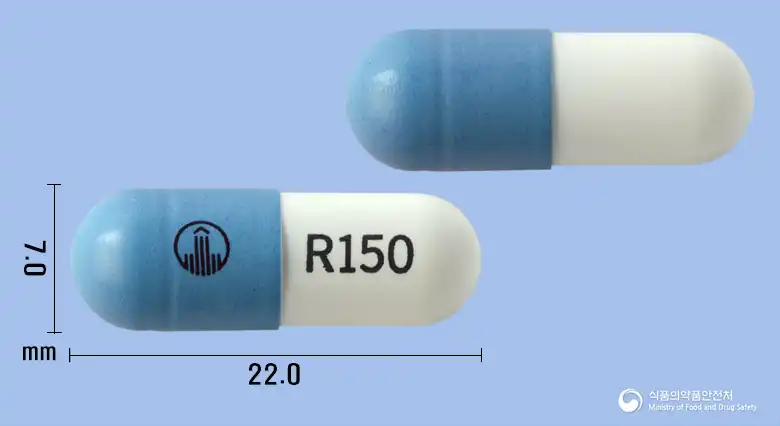
Dabigatran Etexilate Mesylate 172.95mg
Hard capsule · Prescription medication
Boehringer Ingelheim Korea Co., Ltd.
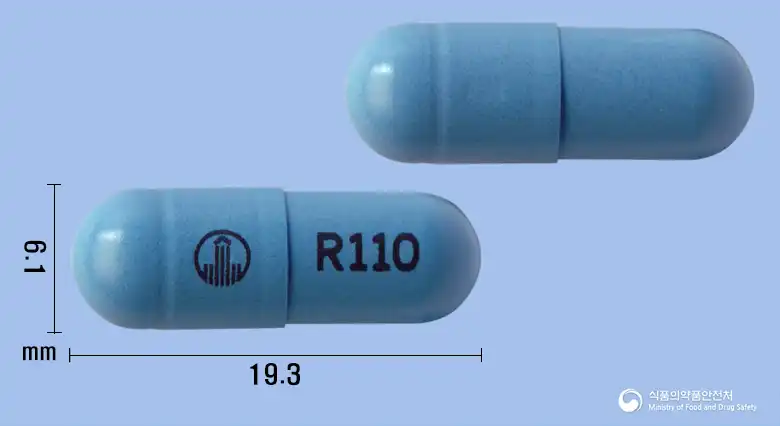
Dabigatran Etexilate Mesylate 126.83mg
Hard capsule · Prescription medication
Boehringer Ingelheim Korea Co., Ltd.
Dabigatran Etexilate Mesylate
Prescription medication
Huons Co., Ltd.
Dabigatran Etexilate Mesylate
Prescription medication
Huons Co., Ltd.
Dabigatran Etexilate Mesylate
Prescription medication
Aju Pharmaceutical Co., Ltd.
Dabigatran Etexilate Mesylate
Prescription medication
Jinyang Pharmaceutical Co., Ltd.
Dabigatran Etexilate Mesylate
Prescription medication
Jinyang Pharmaceutical Co., Ltd.
Even with the same ingredient, the dose and directions can differ by strength and dosage form. Talk to a doctor or pharmacist before switching from a medication you are already taking.
No questions yet.
For anything that needs medical judgment, consult a doctor or pharmacist.
This drug information is based on data provided by the Korea Ministry of Food and Drug Safety.
Consult a doctor or pharmacist for accurate dosage, administration, and usage instructions.