
 한국어
 English
 日本語
 中文(简体)
Dosage form image
Viewing nowElix 5 mg (Apixaban)
Apixaban 5mg
Tablet · Prescription medication
Jinyang Pharmaceutical Co., Ltd.
MFDS item code 201800501 · Approved 2018.01.29
Prevention of embolism in atrial fibrillation; treatment of venous thrombosis and pulmonary embolism and prevention of recurrence; prevention of thrombosis after joint replacement surgery
This medication is used to prevent venous thromboembolism in adult patients who have undergone hip or knee replacement surgery. Additionally, it reduces the risk of stroke and systemic embolism in patients with non-valvular atrial fibrillation. It not only treats deep vein thrombosis and pulmonary embolism but also decreases the risk of their recurrence. It effectively helps prevent and treat thrombosis in various situations related to thrombosis.
This medication should be taken with water, with or without food. If a patient forgets to take a dose, they should take this medication as soon as possible and then continue taking it twice daily as before. 1. Adults 1) Prevention of venous thromboembolism in adult patients who have undergone hip or knee replacement surgery The recommended dose is 2.5 mg orally twice daily. The first dose should be administered 12 ~ 24 hours after surgery. The recommended duration of treatment for patients who have undergone hip replacement surgery is 32 ~ 38 days. The recommended duration of treatment for patients who have undergone knee replacement surgery is 10 ~ 14 days. 2) Reduction of the risk of stroke and systemic embolism in patients with nonvalvular atrial fibrillation The recommended dose is 5 mg orally twice daily. However, for patients with nonvalvular atrial fibrillation who have at least 2 of the following characteristics, the recommended dose is 2.5 mg orally twice daily; age≥80 years, body weight ≤60kg, or serum creatinine ≥1.5 mg/dL (133 micromole/L). Treatment should be continued long-term. There is limited experience with coadministration of the recommended dose of this medication with antiplatelet agents after hemostasis has been achieved in patients with nonvalvular atrial fibrillation who have acute coronary syndrome and/or have undergone percutaneous coronary intervention. (Refer to “5. General Precautions, 1) Interactions with Other Drugs That Affect Hemostasis” and “12. Clinical Trial Information, 2) Reduction of the Risk of Stroke and Systemic Embolism in Patients with Nonvalvular Atrial Fibrillation, AUGUSTUS Trial” under Precautions for Use.) 3) Treatment of deep vein thrombosis and pulmonary embolism The recommended dose of this medication for the treatment of acute deep vein thrombosis and pulmonary embolism is 10mg orally twice daily for 7 days, followed by 5mg orally twice daily. 4) Reduction of the risk of recurrence of deep vein thrombosis and pulmonary embolism The recommended dose is 2.5mg orally twice daily, to be administered after completion of at least 6 months of treatment with this medication or another anticoagulant. 2. Switching medications When switching from parenteral anticoagulant therapy to this medication or from this medication to a parenteral anticoagulant, the switch can be made at the time of the next scheduled dose. 1) Switching from vitamin K antagonist therapy to this medication To switch from vitamin K antagonist therapy to this medication, discontinue warfarin or other vitamin K antagonist therapy and start this medication when the International Normalized Ratio (INR) is less than 2.0. 2) Switching from this medication to vitamin K antagonist therapy To switch from this medication to vitamin K antagonist therapy, continue this medication for 2 days after starting the vitamin K antagonist. After 2 days of concomitant treatment with this medication and a vitamin K antagonist, measure the INR immediately before the scheduled dose of this medication, and continue concomitant treatment with this medication and the vitamin K antagonist until the INR is 2.0 or greater. 3. Renal impairment As there is no clinical experience in patients receiving dialysis or in patients with creatinine clearance less than 15 mL/min, use of this medication is not recommended. 1) Prevention of venous thromboembolism in adult patients who have undergone hip or knee replacement surgery No dose adjustment is necessary in patients with mild or moderate renal impairment. Limited clinical experience in patients with severe renal impairment (creatinine clearance 15-29 mL/min) indicates that the blood concentration of this medication increased in these patients; therefore, this medication should be administered with caution in these patients. 2) Reduction of the risk of stroke and systemic embolism in patients with nonvalvular atrial fibrillation No dose adjustment is necessary in patients with mild or moderate renal impairment. However, patients with serum creatinine ≥1.5 mg/dL (133 micromole/L) who are aged ≥ 80 years or have a body weight ≤ 60kg should receive this medication at a dose of 2.5 mg twice daily. Patients with severe renal impairment (creatinine clearance 15-29 mL/min) should receive this medication at a dose of 2.5 mg twice daily, regardless of age or body weight. 3) Treatment of deep vein thrombosis and pulmonary embolism/ Reduction of the risk of recurrence of deep vein thrombosis and pulmonary embolism No dose adjustment is necessary in patients with mild or moderate renal impairment. Limited clinical experience in patients with severe renal impairment (creatinine clearance 15-29 mL/min) indicates that the blood concentration of this medication increased in these patients; therefore, this medication should be administered with caution in these patients. 4. Hepatic impairment This medication should not be administered to patients with liver disease associated with coagulopathy and a clinically significant risk of bleeding. No dose adjustment is necessary in patients with mild or moderate hepatic impairment (Child Pugh A or B), but this medication should be administered with caution. Use of this medication is not recommended in patients with severe hepatic impairment. Patients with hepatic ALT/AST greater than 2 times the upper limit of normal or total bilirubin levels at least 1.5 times the upper limit of normal were excluded from clinical trials; therefore, caution should be exercised when administering this medication to these patients. Liver function tests should be performed before starting this medication. 5. Patients unable to swallow tablets For patients unable to swallow tablets, this medication may be crushed immediately before use, mixed with water or a beverage such as applesauce, and administered orally. This medication may also be crushed, mixed with 60mL of water, and administered through a nasogastric tube.
This medication is used to thin the blood to prevent or treat thrombosis. Bleeding may occur during treatment with this medication, so signs of bleeding should be monitored carefully. If severe bleeding occurs, treatment should be discontinued immediately. This medication should not be administered to certain patients. For example, those who are allergic to this medication or its components, patients with current bleeding, those with severe liver impairment, patients with recent gastrointestinal ulcers or a history of intracranial hemorrhage, those with vascular abnormalities or diseases with a high risk of bleeding, and patients who are using other anticoagulants should not use this medication. Additionally, patients with genetic issues such as lactose intolerance should also avoid this medication. Patients with very poor kidney function or slightly impaired liver function should use this medication with caution, and the risk of bleeding may increase when used with certain antidepressants or NSAIDs. Elderly patients or those with low body weight may also face an increased risk of bleeding. Patients receiving spinal or epidural anesthesia are at risk for serious neurological complications such as spinal hematoma due to the use of this medication, so special precautions are necessary before and after administration. This medication has reported side effects in clinical trials, including bleeding, bruising, and nasal bleeding, with bleeding being the most common adverse reaction. If any bleeding occurs, medical personnel should be informed immediately. This medication may interact with other drugs, so particularly when taken with antifungals, antivirals, anticoagulants, antiplatelet agents, some antidepressants, and anti-inflammatory painkillers, healthcare providers should be consulted. Use during pregnancy or breastfeeding is not recommended, and if breastfeeding, either breastfeeding should be discontinued or the medication should be stopped. Safety and efficacy in pediatric patients have not yet been established, so it is advisable not to use this medication in children. This medication does not significantly affect driving or operating machinery; however, if dizziness or bleeding symptoms occur, caution should be exercised. Patients scheduled for surgery or invasive procedures should discontinue this medication at least 24-48 hours before the procedure to reduce the risk of bleeding, and upon stopping treatment, the risk of thrombosis may increase, so the medication should be resumed as soon as possible. Overdosing with this medication increases the risk of bleeding; therefore, in the case of overdose, immediate medical attention should be sought. There is no specific antidote for this medication, but specific emergency treatments may be necessary for severe bleeding.
Not everyone experiences these, and they can vary from person to person.
This medication may be sensitive to air or moisture, so it should be stored in a tightly closed container. The storage temperature should maintain room temperature between 1 to 30 degrees Celsius.
Pink, oval-shaped, biconvex film-coated tablet
60 tablets/PTP (10 tablets/PTP × 6)
Even with the same ingredient, strength, dosage form and how it is taken can differ.
Apixaban 5mg
Tablet · Prescription medication
Jinyang Pharmaceutical Co., Ltd.
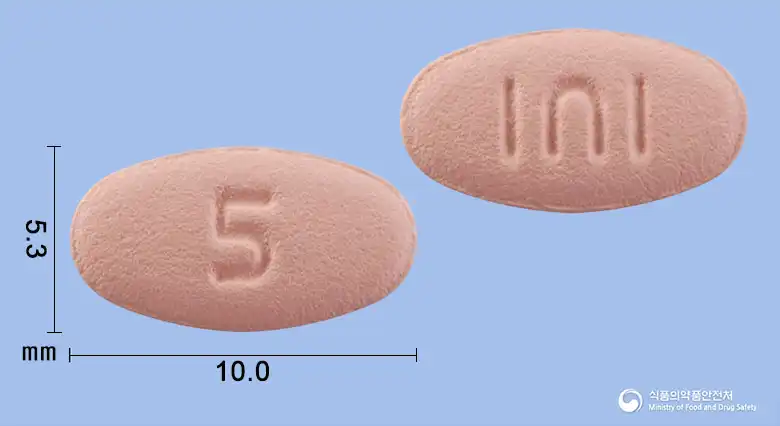
Apixaban 5mg
Tablet · Prescription medication
Bivagon Pharmaceutical Co., Ltd.
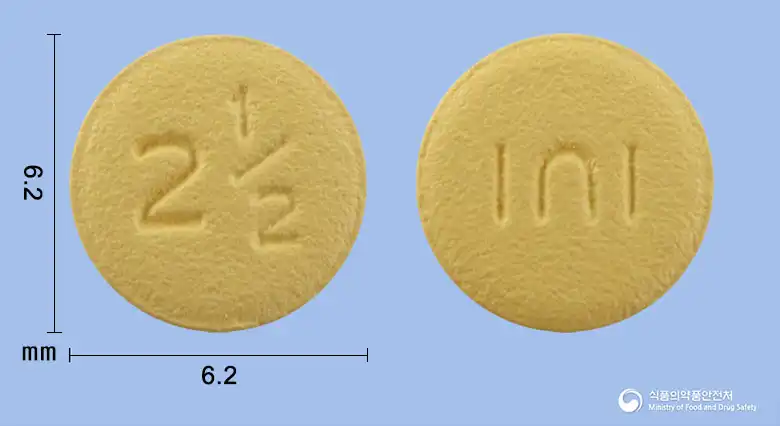
Apixaban 2.5mg
Tablet · Prescription medication
Vivozon Pharmaceuticals Co., Ltd.
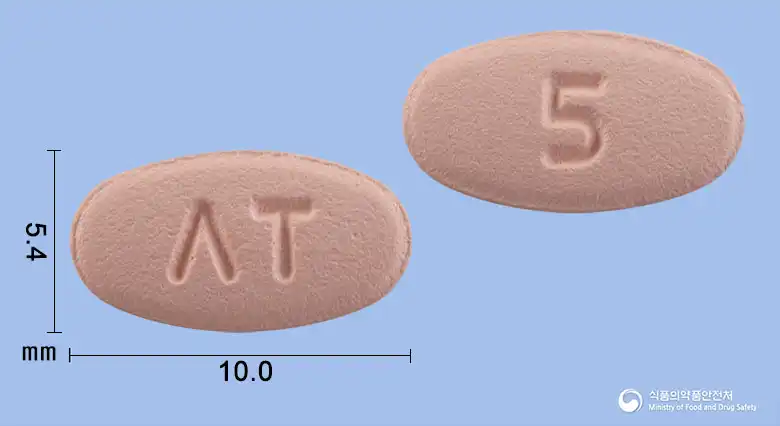
Apixaban 5mg
Tablet · Prescription medication
HuTex Pharmaceuticals Co., Ltd.
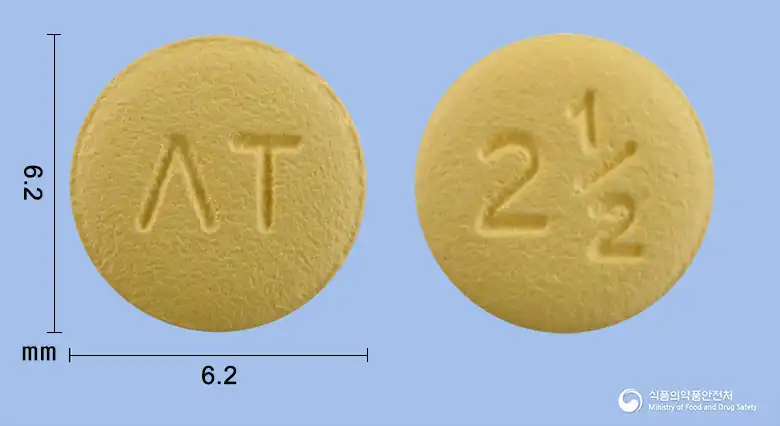
Apixaban 2.5mg
Tablet · Prescription medication
Korea HuTechs Pharmaceutical Co., Ltd.
Apixaban 2.5mg
Tablet · Prescription medication
Jinyang Pharmaceutical Co., Ltd.
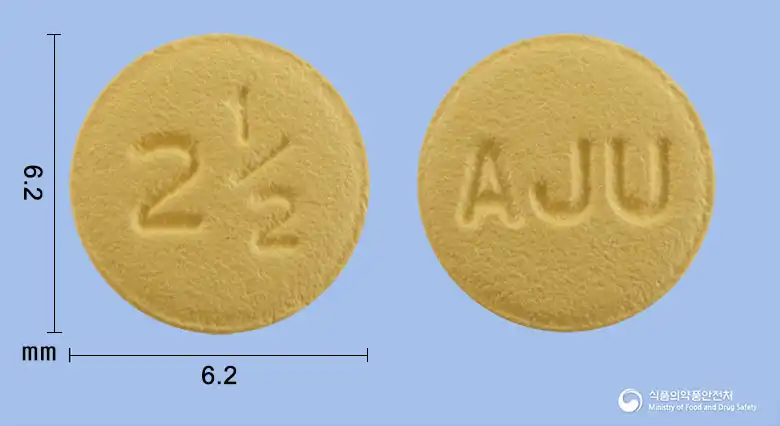
Apixaban 2.5mg
Tablet · Prescription medication
Ajou Pharmaceuticals Co., Ltd.
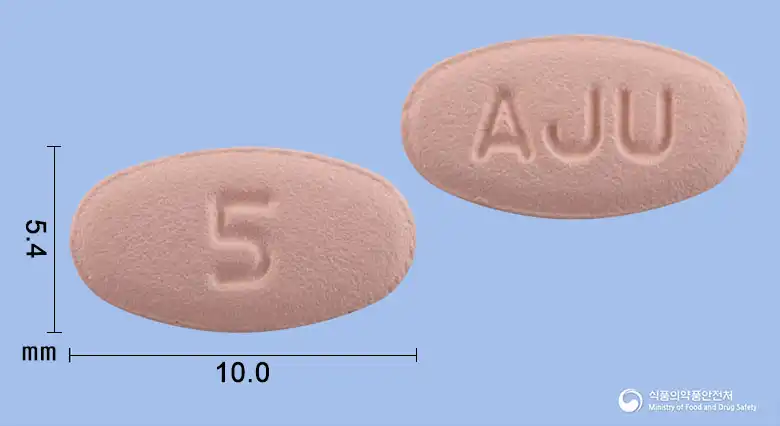
Apixaban 5mg
Tablet · Prescription medication
Aju Pharmaceutical Co., Ltd.
Even with the same ingredient, the dose and directions can differ by strength and dosage form. Talk to a doctor or pharmacist before switching from a medication you are already taking.
No questions yet.
For anything that needs medical judgment, consult a doctor or pharmacist.
This drug information is based on data provided by the Korea Ministry of Food and Drug Safety.
Consult a doctor or pharmacist for accurate dosage, administration, and usage instructions.