
 한국어
 English
 日本語
 中文(简体)
 Viewing now
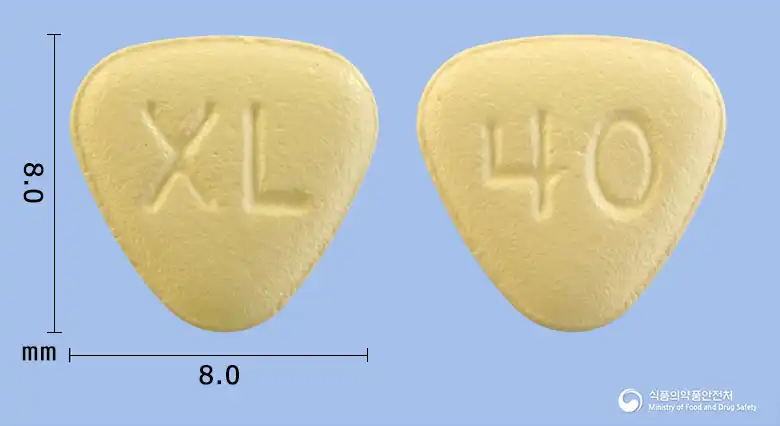
Cabometyx 40 mg (Cabozantinib)
Cabozantinib (S)-malate 50.69mg
Tablet · Prescription medication
Ipsen Korea Co., Ltd.
MFDS item code 201707241 · Approved 2017.09.26 · Insurance code 681400120
Treatment of renal cell carcinoma, hepatocellular carcinoma, differentiated thyroid cancer, and neuroendocrine tumors
This medication is used to treat renal cell carcinoma and is administered as a first-line treatment in patients who have previously received VEGF-targeted therapy or in combination with nivolumab. It is also effective in treating hepatocellular carcinoma in patients who have previously been treated with sorafenib. In the case of differentiated thyroid cancer, it is used as a monotherapy for patients with progressive or metastatic disease who have experience with VEGF-targeted therapies or cannot receive radioactive iodine therapy. This medication is also indicated for the treatment of locally advanced or metastatic highly differentiated neuroendocrine tumors with a history of systemic therapy. In summary, this medication is used to treat renal cell carcinoma, hepatocellular carcinoma, differentiated thyroid carcinoma, and highly differentiated neuroendocrine tumors.
Treatment with this medicine should be initiated by a healthcare professional experienced in administering anticancer agents. Monotherapy The recommended dose is 60mg once daily. Treatment with this medicine should continue until the patient no longer derives clinical benefit or unacceptable toxicity occurs. First-line treatment in combination with nivolumab for advanced renal cell carcinoma The recommended dose of this medicine in combination therapy is 40mg once daily, and nivolumab is administered by intravenous injection at 240mg every 2 weeks or 480mg every 4 weeks. Treatment with this medicine should continue until disease progression or unacceptable toxicity occurs. Nivolumab should be administered until disease progression or unacceptable toxicity occurs, or for a maximum of 24 months in patients without disease progression. (Refer to the prescribing information for nivolumab.) Dose modification Temporary interruption of treatment with this medicine or dose reduction may be required to manage suspected adverse reactions (see Table 1). If dose reduction is required, it is recommended that the dose of this medicine be reduced to 40mg once daily for monotherapy, and then to 20mg once daily if further dose modification is required. In combination therapy with nivolumab, it is recommended that the dose be reduced to 20mg once daily, and then to 20mg every other day if further dose modification is required. (For dose modification of nivolumab, refer to its prescribing information.) Treatment interruption is recommended for CTCAE Grade 3 or higher toxicity, or intolerable Grade 2 toxicity. Dose reduction is recommended if severe or intolerable toxicity persists. If a patient misses a dose, the missed dose should not be taken if it is within 12 hours of the next dose. Table 1. Recommended dose modifications for adverse drug reactions Adverse drug reaction and severity Dose modification Grade 1 and Grade 2 Tolerable and easily manageable Usually, no dose modification is required. Consider adding appropriate supportive care. Grade 2 Intolerable and not manageable with dose reduction or supportive care Interrupt treatment until symptoms improve to Grade 1 or lower. Add appropriate supportive care. Consider restarting at a reduced dose. Grade 3 (excluding laboratory abnormalities that are not clinically relevant) Interrupt treatment until symptoms improve to Grade 1 or lower. Add appropriate supportive care. Consider restarting at a reduced dose. Grade 4 (excluding laboratory abnormalities that are not clinically relevant) Discontinue treatment. Provide appropriate medical treatment. If symptoms improve to Grade 1 or lower, restart at a reduced dose. If symptoms do not improve, permanently discontinue this medicine. Elevated liver enzymes in patients with renal cell carcinoma treated with cabozantinib in combination with nivolumab ALT or AST >3 times and ≤10 times the ULN, with total bilirubin <2 times the ULN Interrupt treatment with cabozantinib and nivolumab until symptoms improve to Grade 1 or lower. Corticosteroid therapy may be considered if an immune-mediated reaction is suspected (refer to the prescribing information for nivolumab). Restarting with monotherapy, or sequentially restarting combination therapy after recovery, may be considered. If restarting nivolumab, refer to its prescribing information. ALT or AST >10 times the ULN, or >3 times the ULN with total bilirubin ≥2 times the ULN Permanently discontinue cabozantinib and nivolumab. Corticosteroid therapy may be considered if an immune-mediated reaction is suspected (refer to the prescribing information for nivolumab). Note: Toxicity grades are based on the National Cancer Institute Common Terminology Criteria for Adverse Events, version 4.0 (NCI-CTCAE v4). Permanently discontinue treatment with this medicine in the event of the following adverse reactions: • Gastrointestinal perforation or fistula that is not adequately managed • Severe hemorrhage • Arterial thromboembolic events (e.g., myocardial infarction, cerebral infarction) • Hypertensive crisis or severe hypertension despite appropriate treatment • Nephrotic syndrome • Reversible posterior leukoencephalopathy syndrome Concomitant medications Concomitant medications that are strong CYP3A4 inhibitors should be used with caution, and chronic use of concomitant medications that are strong CYP3A4 inducers should be avoided (refer to section ‘1. Patients requiring caution’ under Precautions for Use). Consider selecting alternative medications with no or minimal potential to induce or inhibit CYP3A4. Special populations Patients with renal impairment This medicine should be used with caution in patients with mild or moderate renal impairment. Use is not recommended in patients with severe renal impairment because the safety and efficacy of this medicine have not been established. Patients with hepatic impairment No dose adjustment is required in patients with mild hepatic impairment; however, the recommended dose for patients with moderate hepatic impairment is 40mg once daily. Patients should be monitored for adverse drug reactions, and dose adjustment or treatment interruption should be considered as necessary (refer to ‘10. Information for healthcare professionals’ under Precautions for Use). Cabozantinib is not recommended in patients with severe hepatic impairment because its safety and efficacy have not been established. Patients with cardiac disorders Data in patients with cardiac disorders are limited. No specific dose recommendation can be made. Method of administration For oral administration. This medicine must be swallowed whole and must not be crushed. Patients should not eat for at least 2 hours before and 1 hour after taking this medicine.
This medication should not be used in patients with allergies to the active ingredients or additives. It contains lactose, so patients with lactose intolerance or genetic metabolic disorders should not take it. Various side effects such as diarrhea, fatigue, nausea, decreased appetite, and hypertension may occur during treatment, and any symptoms should be discussed with a healthcare professional immediately. Serious side effects such as pneumonia, gastrointestinal perforation, bleeding, and thrombosis have been reported, and caution is required. Particularly, liver function abnormalities or thyroid dysfunction may occur; regular blood tests and thyroid function tests are recommended. As gastrointestinal perforation or bleeding may occur, careful monitoring of symptoms before and during treatment is necessary. This medication is metabolized by the liver; therefore, it is best to avoid administering it to patients with severely impaired liver function. Patients with hypertension or a history of thromboembolic events should be particularly cautious while taking this medication. Patients planning dental surgery or invasive treatments should discontinue this medication at least 28 days prior and confirm wound healing status. Women who are pregnant or may become pregnant, as well as partners of men taking this medication, should avoid pregnancy and use effective contraception. Nursing women should avoid breastfeeding while taking this medication. This medication is metabolized by the CYP3A4 enzyme; therefore, caution is required as drug interactions may occur when used in combination with specific medications. Caution is also needed when driving or operating machinery due to symptoms such as fatigue and weakness. There is no specific antidote for overdose; if overdose occurs, discontinue the medication immediately and receive supportive treatment as directed by a healthcare professional. This medication has not been established for safety and efficacy in children; elderly patients can use it without special dose adjustments. There are no special storage conditions required, but it should be kept out of reach of children and avoided transferring to other containers.
Pneumonia, gastrointestinal perforation, lupus, bleeding, thromboembolism, diarrhea, pleural effusion, pulmonary embolism, anemia, deep vein thrombosis, hypertension, hypocalcemia, jaw bone necrosis, pain, palmoplantar erythrodysesthesia syndrome, vomiting, renal dysfunction, hypertension, fatigue, nausea, cardiac arrest, embolism, hypoxia, decreased appetite, hypomagnesemia, hypokalemia, hypoalbuminemia, dehydration, hypophosphatemia, hyponatremia, hyperkalemia, hyperbilirubinemia, hyperglycemia, hypoglycemia, taste disorder, headache, dizziness, seizures, cerebrovascular accident, tinnitus, acute myocardial infarction, hypertensive crisis, arterial thrombosis, arterial embolism, aneurysm and arterial dissection, arterial rupture, voice disorder, respiratory distress, cough, allergic rhinitis, pneumothorax, nausea, stomatitis, constipation, abdominal pain, dyspepsia, gastroesophageal reflux disease, hemorrhoids, oral pain, dysphagia, dry mouth, bloating, glossalgia, hepatic encephalopathy, cholestatic hepatitis, rash, pruritus, hair loss, dry skin, pigmentation changes, excessive keratosis, erythema, cutaneous vasculitis, limb pain, back pain, arthralgia, muscle cramps, proteinuria, mucosal inflammation, asthenia, peripheral edema, fever, weight loss, increased serum ALT, increased AST, increased serum alkaline phosphatase, increased GGT, increased serum creatinine, increased amylase, increased lipase, increased blood cholesterol, decreased white blood cell count, increased blood triglycerides, wound complications, pulmonary inflammation, hyponatremia, adrenal insufficiency, dehydration, upper respiratory infection, eosinophilia, hypersensitivity, infusion-related hypersensitivity reaction, hyperthyroidism, pituitary inflammation, thyroiditis, autoimmune encephalitis, Guillain-Barré syndrome, myasthenic syndrome, dry eyes, blurred vision, uveitis, atrial fibrillation, tachycardia, myocarditis, thrombosis, nasal bleeding, pleural effusion, colitis, gastritis, oral pain, hemorrhoids, small bowel perforation, hepatitis, biliary loss syndrome, psoriasis, urticaria, myopathy, arthritis, renal failure, acute kidney injury, nephritis, fever, edema, pain, chest pain, hypophosphatemia, hypercalcemia, hypermagnesemia, hypernatremia, hypertriglyceridemia, depression, diabetes, decreased intake, thyroid disorders, benign prostatic hyperplasia, eye swelling, hip fractures, hematuria, chronic kidney disease, cerebral infarction, perceptual disturbances, hepatic coma, hemoptysis, hiccups, vesicles, eczema, skin erosion, skin desquamation, increased blood thyroid-stimulating hormone, increased C-reactive protein, left ventricular dysfunction
Not everyone experiences these, and they can vary from person to person.
This medication should be stored in a tightly sealed container to protect it from air and moisture, and it is recommended to be kept at room temperature between 1°C and 30°C. Proper storage ensures the medication's efficacy.
Yellow triangular film-coated tablet
30 tablets/bottle
Even with the same ingredient, strength, dosage form and how it is taken can differ.
Viewing nowCabozantinib (S)-malate 50.69mg
Tablet · Prescription medication
Ipsen Korea Co., Ltd.
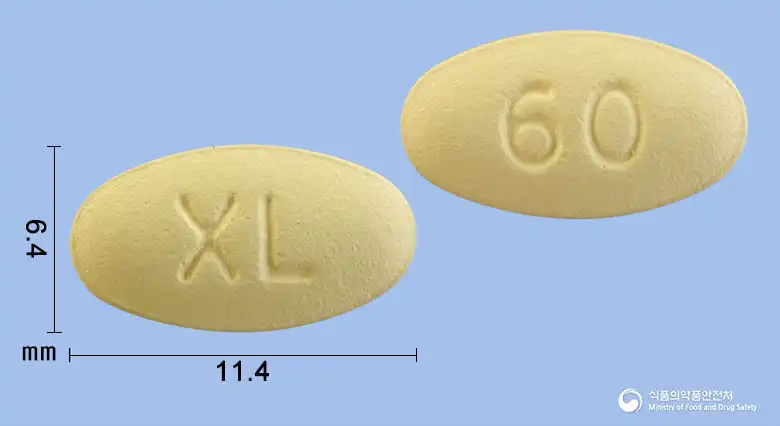
Cabozantinib (S)-malate 76.03mg
Tablet · Prescription medication
Ipsen Korea Co., Ltd.
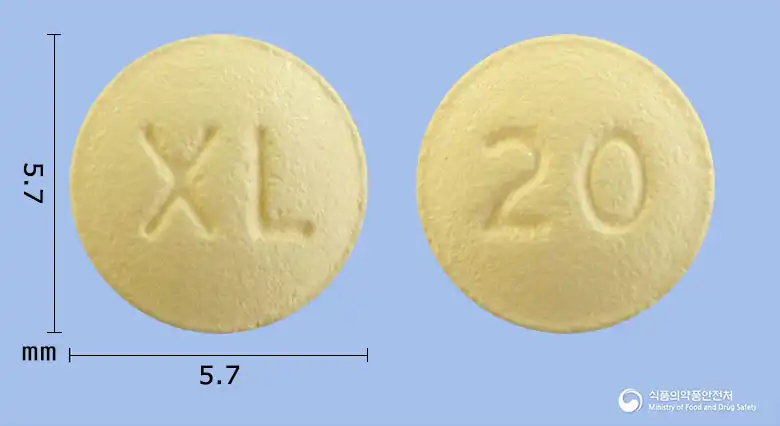
Cabozantinib (S)-malate 25.34mg
Tablet · Prescription medication
Ipsen Korea Co., Ltd.
Even with the same ingredient, the dose and directions can differ by strength and dosage form. Talk to a doctor or pharmacist before switching from a medication you are already taking.
No questions yet.
For anything that needs medical judgment, consult a doctor or pharmacist.
This drug information is based on data provided by the Korea Ministry of Food and Drug Safety.
Consult a doctor or pharmacist for accurate dosage, administration, and usage instructions.