
 한국어
 English
 日本語
 中文(简体)
 Viewing now
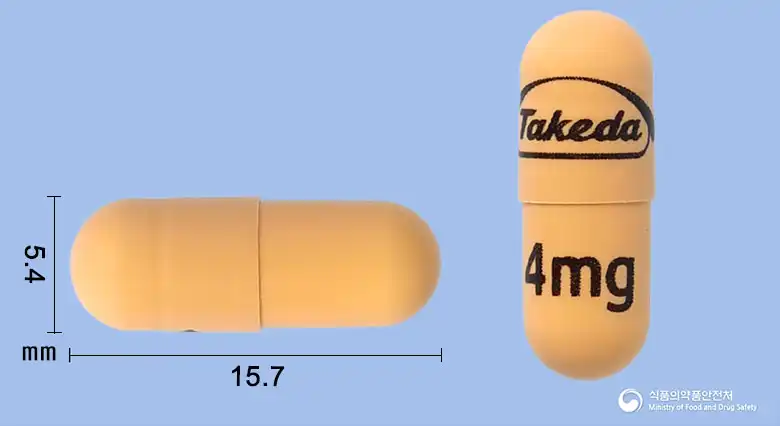
Ninlaro Capsule 4 mg (Ixazomib Citrate)
Ixazomib Citrate 5.7mg
Hard capsule · Prescription medication
Takeda Pharmaceuticals Korea Co., Ltd.
MFDS item code 201706292 · Approved 2017.07.28 · Insurance code 696300470
Combination treatment of multiple myeloma; maintenance treatment after autologous transplantation and in patients who have not undergone transplantation
This medication is used for the treatment of patients with multiple myeloma. It is used in combination therapy with lenalidomide and dexamethasone for patients with multiple myeloma who have received one or more prior treatments and is indicated for maintenance therapy in patients who have and have not undergone autologous stem cell transplantation. This drug helps control the progression of multiple myeloma and improve treatment outcomes at various stages of therapy.
1. Recommended Dosage 1) Combination therapy with lenalidomide and dexamethasone for patients with multiple myeloma who have received one or more prior therapies This drug is administered in combination with lenalidomide and dexamethasone in 28-day cycles. The recommended starting dose of this drug is 4 mg, administered orally once weekly on Days 1, 8, and 15 of each 28-day cycle. The recommended starting dose of lenalidomide is 25 mg, administered orally once daily on Days 1 through 21 of each 28-day cycle. The recommended starting dose of dexamethasone is 40 mg, administered orally once weekly on Days 1, 8, 15, and 22 of each 28-day cycle. Continue treatment until disease progression or unacceptable toxicity occurs. Refer to the respective prescribing information for additional information on lenalidomide and dexamethasone. 2) Maintenance therapy for patients with multiple myeloma who have undergone autologous hematopoietic stem cell transplantation and patients with multiple myeloma who have not undergone autologous hematopoietic stem cell transplantation This drug is administered as maintenance therapy in 28-day cycles. The recommended starting dose of this drug is 3 mg, administered orally once weekly on Days 1, 8, and 15 of each 28-day cycle, and maintained through Cycle 4. If the drug is well tolerated through Cycle 4, increase the dose to 4 mg on Day 1 of Cycle 5. Treatment should continue for 24 months or until disease progression or unacceptable toxicity occurs. 2. Method of Administration This drug should be administered once weekly on the same day at approximately the same time during the first 3 weeks of each 4-week cycle. It should be taken at least 1 hour before or 2 hours after a meal. Do not crush or open the capsules. Swallow whole with water without chewing. If a dose is missed, take the dose only if at least 72 hours remain before the next scheduled dose. If fewer than 72 hours remain, do not take the missed dose, and do not take a double dose at the next scheduled administration to make up for the missed dose. If vomiting occurs after administration, do not take the dose again; resume administration at the next scheduled time. Before starting a new cycle of treatment, the following criteria must be met. Absolute neutrophil count of at least 1,000/mm3 Platelet count of at least 75,000/mm3 Nonhematologic toxicities should have resolved to the patient's baseline or Grade 1 or lower, as determined by the physician. 3. Dosage Modification Guidelines 1) Combination therapy with lenalidomide and dexamethasone for patients with multiple myeloma who have received one or more prior therapies For combination therapy with this drug, follow the dose reduction steps in Table 2 below; refer to Table 3 below for dosage modification guidelines. Recommended starting dose* 4mg 1st dose reduction 3mg 2nd dose reduction 2.3mg Discontinue * The recommended starting dose is 3mg for patients with moderate or severe hepatic impairment, severe renal impairment, or end-stage renal disease requiring dialysis. If thrombocytopenia, neutropenia, or rash occurs, dosage modification of this drug and lenalidomide is recommended. Dosage modification guidelines for this drug are described in Table 3. If a dosage modification of lenalidomide is required, refer to the prescribing information for lenalidomide. Thrombocytopenia (platelet count) Platelet count below 30,000/mm3 Interrupt administration of this drug and lenalidomide until the platelet count is at least 30,000/mm3. After platelet count recovery, resume lenalidomide at one dose level lower according to the prescribing information for lenalidomide, and resume this drug at the most recently administered dose. If the platelet count again decreases to below 30,000/mm3, interrupt administration of this drug and lenalidomide until the platelet count is at least 30,000/mm3. After recovery, resume this drug at one dose level lower and resume lenalidomide at the most recently administered dose.1) Neutropenia (absolute neutrophil count) below 500/mm3 Interrupt administration of this drug and lenalidomide until the absolute neutrophil count is at least 500/mm3. Consider adding G-CSF according to clinical guidelines. After recovery, resume lenalidomide at one dose level lower according to the prescribing information for lenalidomide, and resume this drug at the most recently administered dose. If the absolute neutrophil count again decreases to below 500/mm3, interrupt administration of this drug and lenalidomide until the absolute neutrophil count is at least 500/mm3. After recovery, resume this drug at one dose level lower and resume lenalidomide at the most recently administered dose.1) Rash Grade 2 or 3 2) Interrupt administration of lenalidomide until the rash resolves to Grade 1 or lower. After recovery, resume lenalidomide at one dose level lower according to the prescribing information for lenalidomide. If Grade 2 or 3 rash recurs, interrupt administration of this drug and lenalidomide until the rash resolves to Grade 1 or lower. After recovery, resume this drug at one dose level lower and resume lenalidomide at the most recently administered dose.1) Grade 4 Discontinue treatment. Peripheral neuropathy Grade 1 peripheral neuropathy with pain or Grade 2 peripheral neuropathy Interrupt administration of this drug until the condition resolves to Grade 1 or lower without pain or to the patient's baseline. After recovery, resume this drug at the most recently administered dose. Grade 2 peripheral neuropathy with pain or Grade 3 peripheral neuropathy Discontinue administration of this drug. Before resuming this drug, toxicity should generally resolve to the patient's baseline or Grade 1 or lower, as determined by the physician. After recovery, resume this drug at one dose level lower. Grade 4 peripheral neuropathy Discontinue treatment. Other nonhematologic toxicity Other Grade 3 or 4 nonhematologic toxicity Discontinue administration of this drug. Before resuming this drug, toxicity should generally resolve to the patient's baseline or Grade 1 or lower, as determined by the physician. If the toxicity is attributable to this drug, resume this drug at one dose level lower after recovery. 1) For subsequent occurrences, alternate dose reductions of this drug and lenalidomide. 2) Grade is based on the National Cancer Institute Common Terminology Criteria (CTCAE). 2) Maintenance therapy for patients with multiple myeloma who have undergone autologous hematopoietic stem cell transplantation and patients with multiple myeloma who have not undergone autologous hematopoietic stem cell transplantation For maintenance therapy with this drug, follow the dose reduction steps in Table 4 below; refer to Table 5 below for dosage modification guidelines. Cycles 1–4: Recommended starting dose* 3mg, 1st dose reduction 2.3mg, 2nd dose reduction Discontinue Cycle 5 onward: Recommended starting dose* 4mg, 1st dose reduction 3mg, 2nd dose reduction 2.3mg, Discontinue * For patients with moderate or severe hepatic impairment, severe renal impairment, or end-stage renal disease requiring dialysis, the recommended starting dose is 2.3mg for Cycles 1–4, followed by 3mg or higher in Cycle 5. Thrombocytopenia (platelet count) Platelet count 50,000/mm3 or lower Interrupt administration of this drug until the platelet count is at least 75,000/mm3. After platelet count recovery, resume treatment at one dose level lower. Neutropenia (absolute neutrophil count 750mm3 or lower) Interrupt administration of this drug until the absolute neutrophil count is at least 1000/mm3. After recovery, resume treatment at one dose level lower. Rash Grade 2 1) Provide oral or topical symptomatic treatment. If ineffective, reduce the dose of this drug by one dose level. Grade 3 Interrupt administration of this drug until the rash resolves to Grade 1 or lower. After recovery, resume treatment at one dose level lower. Grade 4 Discontinue treatment. Peripheral neuropathy Grade 1 peripheral neuropathy with pain or Grade 2 peripheral neuropathy Interrupt administration of this drug until the condition resolves to Grade 1 or lower without pain or to the patient's baseline. After recovery, resume this drug at the most recently administered dose. Grade 2 peripheral neuropathy with pain or Grade 3 peripheral neuropathy Discontinue administration of this drug. Before resuming this drug, toxicity should generally resolve to the patient's baseline or Grade 1 or lower, as determined by the physician. After recovery, resume this drug at one dose level lower. Grade 4 peripheral neuropathy Discontinue treatment. Other nonhematologic toxicity Grade 2 or 3 nonhematologic toxicity Discontinue administration of this drug. Before resuming this drug, toxicity should generally resolve to the patient's baseline or Grade 1 or lower, as determined by the physician. After recovery, resume this drug at one dose level lower. Grade 4 nonhematologic toxicity Consider permanent discontinuation of the drug unless, in the physician's judgment, the patient is deriving clinical benefit. In such cases, resume this drug at one dose level lower. 1) Grade is based on the National Cancer Institute Common Terminology Criteria (CTCAE). 4. Administration to Patients with Hepatic Impairment Mild (total bilirubin<ULN, AST> ULN or total bilirubin>ULN 1~1.5 times, any AST): No dosage adjustment for maintenance therapy; no dosage adjustment for combination therapy with lenalidomide and dexamethasone Moderate (total bilirubin > ULN 1.5~3 times) or severe (total bilirubin > ULN 3 times): Maintenance therapy: start at 2.3mg and, if tolerated during the first 4 cycles, increase to 3mg on Day 1 of the next Cycle 5. Combination therapy with lenalidomide and dexamethasone: 3mg *ULN (Upper Limit of Normal) = upper limit of the normal range, AST = Aspartate Aminotransferase 5. Administration to Patients with Renal Impairment Mild or moderate (creatinine clearance (CrCl) ≥ 30mL/min): No dosage adjustment for maintenance therapy; no dosage adjustment for combination therapy with lenalidomide and dexamethasone Severe (creatinine clearance (CrCl) < 30mL/min) or end-stage renal disease (ESRD) requiring dialysis: Maintenance therapy: start at 2.3mg and, if tolerated during the first 4 cycles, increase to 3mg on Day 1 of the next Cycle 5. Combination therapy with lenalidomide and dexamethasone: 3mg This drug is not removed by dialysis and may therefore be administered regardless of the timing of dialysis. For the lenalidomide dose in patients with renal impairment receiving combination therapy, refer to the prescribing information for lenalidomide.
This drug should not be administered to patients with an allergy to the active ingredient or excipients. During administration, platelet count may decrease, so platelet levels should be regularly monitored. In cases of severe thrombocytopenia, dosage adjustment or platelet transfusion may be necessary. Gastrointestinal side effects such as diarrhea, constipation, nausea, and vomiting may occur frequently; if symptoms worsen, dosage adjustment or appropriate treatment should be undertaken. Symptoms of peripheral neuropathy may appear or worsen; therefore, neurological symptoms should be carefully monitored, and dosage adjusted if necessary. Peripheral edema may occur; if symptoms are severe, it is important to evaluate the cause and receive appropriate treatment. Skin rashes may occur, and in severe cases, fatal skin reactions such as Stevens-Johnson syndrome or toxic epidermal necrolysis can develop, necessitating immediate discontinuation of the medication and medical treatment. Liver function may be affected, so liver enzyme levels should be monitored regularly, and dosage adjustment may be needed in the presence of abnormal findings. This medication can be harmful to the fetus, so it should not be used by pregnant women, and men and women of childbearing potential must use effective contraception during and for 90 days after therapy. This medication may interact with certain drugs; therefore, it should be avoided in combination with strong CYP3A4 inducers. Nursing mothers are advised to discontinue breastfeeding, as this medication may pass into breast milk. Patients with severely impaired liver or kidney function should reduce the initial dosage of this medication, and dosage adjustment may be necessary for dialysis patients. Overdose may result in severe side effects; therefore, strict adherence to prescribed dosage and schedule is essential, and immediate consultation with a healthcare provider is recommended in cases of overdose. This drug is cytotoxic, therefore, do not open or crush the capsules, and avoid contact of the contents with skin or eyes; if contact occurs, rinse immediately with clean water.
Thrombocytopenia, neutropenia, diarrhea, constipation, peripheral neuropathy, peripheral edema, rash, vomiting, bronchitis, upper respiratory tract infection, low back pain, shingles, cataract, conjunctivitis, blurred vision, dry eyes, arthralgia, pneumonia, acute febrile neutrophilic dermatosis, Stevens-Johnson syndrome, transverse myelitis, reversible posterior leukoencephalopathy syndrome, tumor lysis syndrome, thrombotic thrombocytopenic purpura, thrombotic microangiopathy, toxic epidermal necrolysis, anaphylaxis, angioedema, febrile neutropenia, anemia, weakness, fatigue, pruritus, paresthesia, decreased appetite, reduced food intake, insomnia, facial flushing, pneumonia, COVID-19 pneumonia, gastroenteritis, sepsis, dyspepsia, abdominal discomfort, stomatitis, upper abdominal pain, hemorrhoids, decreased platelet count, acute kidney injury, chronic kidney disease, spinal fracture, pulmonary inflammation, cough, angioedema, erythema multiforme, purpura, urticaria, arthralgia, muscle weakness, dizziness, sensory loss, somnolence, hyperkalemia, deep vein thrombosis, thrombosis, vertigo, drug-induced liver injury, hepatocyte damage, fatty liver, cholestasis, liver dysfunction, drug-induced liver toxicity, severe nausea, aspiration pneumonia, multiple organ failure, death
Not everyone experiences these, and they can vary from person to person.
This medication should be stored in a tightly closed container to protect from air and moisture. Additionally, it is advisable to store the medication at room temperature, neither too hot nor too cold, ideally between 1°C and 30°C.
Hard capsule with bright orange upper and lower parts
3 capsules (1 capsule/PTP packaging x 3)/box, 1 capsule (1 capsule/PTP packaging)/box, 3 capsules (3 capsules/PTP packaging)/box
Even with the same ingredient, strength, dosage form and how it is taken can differ.
Viewing nowIxazomib Citrate 5.7mg
Hard capsule · Prescription medication
Takeda Pharmaceuticals Korea Co., Ltd.
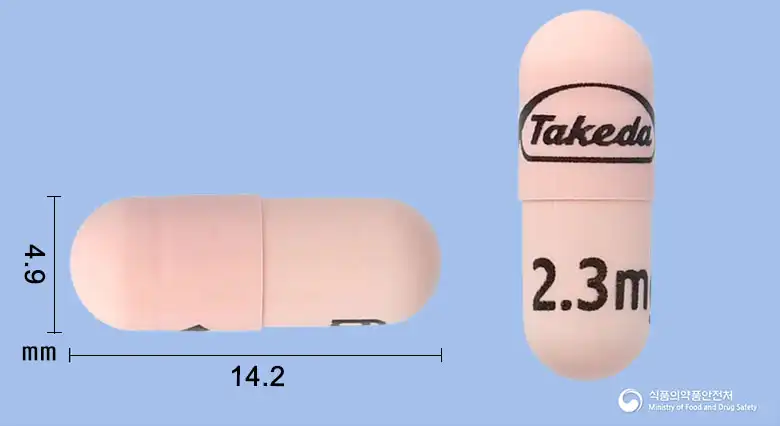
Ixazomib Citrate 3.29mg
Hard capsule · Prescription medication
Takeda Korea Pharmaceutical Co., Ltd.
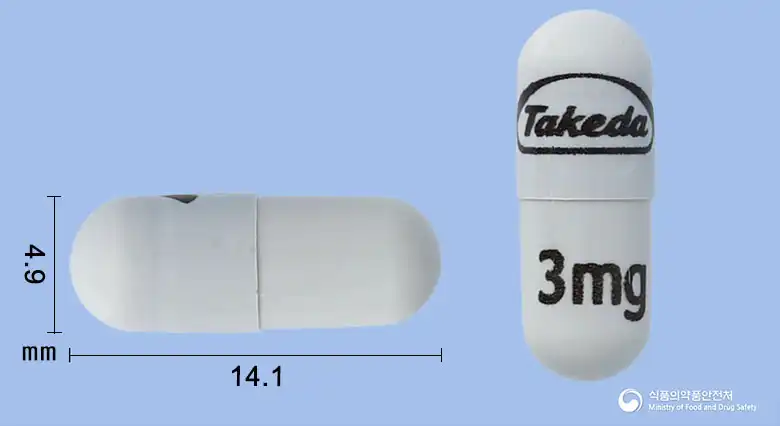
Ixazomib Citrate 4.3mg
Hard capsule · Prescription medication
Takeda Korea Pharmaceutical Co., Ltd.
Even with the same ingredient, the dose and directions can differ by strength and dosage form. Talk to a doctor or pharmacist before switching from a medication you are already taking.
No questions yet.
For anything that needs medical judgment, consult a doctor or pharmacist.
This drug information is based on data provided by the Korea Ministry of Food and Drug Safety.
Consult a doctor or pharmacist for accurate dosage, administration, and usage instructions.