한국어
 English
 日本語
 中文(简体)
 Viewing now
Iclusig 45 mg (Ponatinib Hydrochloride)
Ponatinib Hydrochloride 48.08mg
Tablet · Prescription medication
Otsuka Pharmaceutical Co., Ltd.
MFDS item code 201704777 · Approved 2017.06.26 · Insurance code 649900460
Treatment of chronic myeloid leukemia and Ph+ acute lymphoblastic leukemia
This medication is used to treat adult patients with acute lymphoblastic leukemia (Ph+ ALL) confirmed to be Philadelphia chromosome positive, and is effectively combined with chemotherapy for treatment. It is also used in patients with chronic myeloid leukemia (CML) in chronic, accelerated, or blast phases who are difficult to treat with other tyrosine kinase inhibitors (TKIs). In particular, it is effective for patients with CML and Ph+ ALL who have T315I mutations. This medication improves the rate of negative minimal residual disease (MRD) complete remission, enhancing the treatment success rate. Overall, it significantly aids in the treatment of refractory leukemia, improving patients' conditions.
Newly diagnosed Ph+ ALL: The recommended starting dose of this drug is 30mg orally once daily, reduced to 15 mg orally once daily upon achieving complete remission (CR) with minimal residual disease (MRD)-negative status (≤0.01% BCR::ABL1/ABL1) at the end of induction. Continue this drug in combination with chemotherapy for up to 20 cycles (each cycle is 28 days) until loss of response or unacceptable toxicity occurs. Chronic-phase CML (CP-CML): The recommended starting dose is 45mg orally once daily, reduced to 15 mg orally once daily upon achieving ≤1% BCR::ABL1IS. In patients who lose response, the dose of this drug may be increased again to the previously tolerated dose of 30mg or 45mg orally once daily. Continue this drug at the re-escalated dose until loss of response or unacceptable toxicity occurs. Consider discontinuing this drug if no hematologic response is achieved by 3 months. Accelerated-phase CML (AP-CML), blast-phase CML (BP-CML), and Ph+ ALL: The optimal dose of this drug has not been established. The recommended starting dose is 45mg once daily. Dose reduction of this drug should be considered for patients with accelerated-phase CML who achieve a major cytogenetic response. Continue this drug until loss of response or unacceptable toxicity occurs. If there is no response by 3 months, discontinuation of this drug should be considered. This drug may be taken with or without food. Swallow the tablets whole; do not crush, break, cut, or chew the tablets. If a dose is missed, skip that dose and take the prescribed dose at the regularly scheduled time the next day. Dosage modifications for adverse reactions: Arterial occlusive events (AOE): cardiovascular or cerebrovascular — Grade 1: Temporarily withhold this drug until resolved, then resume at the same dose. Grade 2: Temporarily withhold this drug until Grade 0 or 1, then resume at the next lower dose. If the event recurs, discontinue this drug. Grade 3 or 4: Discontinue this drug. Arterial occlusive events (AOE): peripheral vascular and other, or venous thromboembolic events (VTE) — Grade 1: Temporarily withhold this drug until resolved, then resume at the same dose. Grade 2: Temporarily withhold this drug until Grade 0 or 1, then resume at the same dose. If the event recurs, temporarily withhold this drug until Grade 0 or 1, then resume at the next lower dose. Grade 3: Temporarily withhold this drug until Grade 0 or 1, then resume at the next lower dose. If the event recurs, discontinue this drug. Grade 4: Discontinue this drug. Heart failure — Grade 2 or 3: Temporarily withhold this drug until Grade 0 or 1, then resume at the next lower dose. If the event recurs, discontinue this drug. Grade 4: Discontinue this drug. Hepatotoxicity — AST or ALT greater than 3 times the ULN: Temporarily withhold this drug until Grade 0 or 1, then resume at the next lower dose. AST or ALT at least 3 times the ULN and, at the same time, bilirubin greater than 2 times the ULN and alkaline phosphatase less than 2 times the ULN: Discontinue this drug. Pancreatitis and lipase elevation — Serum lipase 1 - 1.5 times the ULN: Consider temporarily withholding this drug until resolved, then resume at the same dose. Serum lipase 1.5 - 2 times the ULN, or asymptomatic at 2 - 5 times the ULN, or asymptomatic pancreatitis with radiographic findings: Temporarily withhold this drug until Grade 0 or 1 (less than 1.5 times the ULN), then resume at the next lower dose. Symptomatic with serum lipase 2 - 5 times the ULN, symptomatic Grade 3 pancreatitis, or asymptomatic with serum lipase greater than 5 times the ULN: Temporarily withhold this drug until symptoms have completely resolved and lipase elevation has recovered to Grade 0 or 1, then resume at the next lower dose. Asymptomatic pancreatitis and serum lipase greater than 5 times the ULN: Discontinue this drug. Myelosuppression — ANC less than 1 x 10⁹/L or platelets less than 50 x 109/L: Temporarily withhold this drug until ANC is at least 1.5 x 10⁹/L and platelets are at least 75 x 109/L, then resume at the same dose. If the event recurs, temporarily withhold this drug until resolved, then resume at the next lower dose. Other non-hematologic adverse reactions — Grade 1: Temporarily withhold this drug until resolved, then resume at the same dose. Grade 2: Temporarily withhold this drug until Grade 0 or 1, then resume at the same dose. If the event recurs, temporarily withhold this drug until Grade 0 or 1, then resume at the next lower dose. Grade 3 or 4: Temporarily withhold this drug until Grade 0 or 1, then resume at the next lower dose. If the event recurs, discontinue this drug. CTCAE v5.0 criteria: Grade 1 mild, Grade 2 moderate, Grade 3 severe, Grade 4 life-threatening Dose reduction — Doses for patients with AP-CML, BP-CML, CP-CML, and Ph+ ALL receiving monotherapy: First reduction: 30mg orally once daily; second reduction: 15mg orally once daily; further reduction: Patients unable to tolerate 15mg orally once daily should permanently discontinue this drug. Dose for patients with newly diagnosed Ph+ ALL: First reduction: 15mg orally once daily; patients unable to tolerate 15mg orally once daily should permanently discontinue this drug. Concomitant use with strong CYP3A inhibitors: Avoid concomitant use of this drug with strong CYP3A inhibitors. If concomitant use with a strong CYP3A inhibitor cannot be avoided, reduce the dose of this drug as follows. Discontinue the strong CYP3A inhibitor for 3 – 5 times its elimination half-life, then resume this drug at the dose tolerated before starting the strong CYP3A inhibitor. Current dose of this drug 45mg orally once daily: The recommended dose of this drug when used with a strong CYP3A inhibitor is 30mg orally once daily. Current dose of this drug 30mg orally once daily: The recommended dose of this drug when used with a strong CYP3A inhibitor is 15mg orally once daily. Current dose of this drug 15mg orally once daily: Avoid concomitant use of this drug with a strong CYP3A inhibitor. Dosage adjustment in patients with hepatic impairment: For patients with CP-CML, AP-CML, BP-CML, and Ph+ ALL receiving monotherapy, reduce the starting dose of this drug from 45mg orally once daily to 30 mg orally once daily in patients with pre-existing hepatic impairment (Child-Pugh A, B, or C). For patients with newly diagnosed Ph+ ALL, no dosage adjustment is recommended when administering this drug to patients with mild hepatic impairment (Child-Pugh A). Closely monitor patients with moderate or severe hepatic impairment (Child-Pugh B or C) and adjust the dose of this drug if adverse reactions occur.
This medication is used for the treatment of hematologic cancer and can cause serious side effects related to cardiovascular diseases. Particularly, cases of arterial occlusion have been reported, which can lead to serious issues such as myocardial infarction or stroke, hence caution is advised. Additionally, during the course of this medication, blood pressure may increase; if hypertension is not controlled, treatment may need to be temporarily interrupted or the dosage adjusted. Venous thromboembolism may also occur due to the formation of clots, so symptoms need to be monitored. There is also a risk of cardiac function weakening, so if symptoms of heart failure appear, immediate consultation with medical personnel is necessary. Furthermore, it may affect liver function, necessitating regular liver function tests due to potential liver toxicity. This medication contains lactose and should not be administered to patients with lactose intolerance. Pregnant women should avoid it due to potential harm to the fetus, and breastfeeding women are also advised to discontinue nursing. During treatment, regular blood tests and monitoring of cardiovascular status, liver function, pancreatitis symptoms, neurological issues, ocular problems, and bleeding should be conducted; any abnormal symptoms must be reported to medical professionals immediately. Care must also be taken regarding drug interactions, particularly with medications that inhibit or induce the CYP3A enzyme involved in drug metabolism, as this may alter efficacy; consultation with a physician is crucial. Elderly patients or those with liver impairment are at higher risk for side effects and thus require more careful monitoring and dosage adjustments. It is essential to discuss and ensure safety with medical professionals before and during treatment with this medication.
Arterial occlusive events, myocardial infarction, peripheral arterial occlusive disease, angina pectoris, cerebrovascular accident, sudden death, venous thromboembolic events, deep vein thrombosis, superficial vein thrombosis, embolism, pulmonary embolism, internal jugular vein thrombosis, retinal vein occlusion, heart failure, increased brain natriuretic peptide, left ventricular hypertrophy, hepatic toxicity, hepatic failure, elevated alanine aminotransferase, elevated aspartate aminotransferase, elevated gamma-glutamyl transferase, increased bilirubin, elevated alkaline phosphatase, decreased albumin, decreased fibrinogen, rash, arthralgia, abdominal pain, headache, constipation, dry skin, hypertension, fatigue, fluid retention, edema, fever, nausea, pancreatitis, elevated lipase, bleeding, anemia, liver dysfunction, diarrhea, vomiting, oral mucositis, peripheral neuropathy, sensory disturbances, deep vein thrombosis, febrile neutropenia, impaired glucose tolerance, hyperlipidemia, decreased appetite, sepsis, pneumonia, cough, dyspnea, atrial fibrillation, ventricular tachycardia, syncope, cardiac arrest, atrial flutter, sinus bradycardia, complete heart block, loss of consciousness, dysfunction of the sinus node, exfoliative dermatitis, pruritus, urticaria, dermatitis, contact dermatitis, skin irritation, optic neuritis, multiple sclerosis, muscle rigidity, atypical pneumonia, fungal pneumonia, Pseudomonas infection, speech disturbance, acute kidney injury, hyperbilirubinemia, hyperkalemia, dehydration, severe skin reactions, wound healing impairment, panniculitis, vesicle formation, desquamation, mucosal involvement, systemic symptoms, thrombotic microangiopathy, aneurysm, arterial dissection, gastrointestinal perforation, lupus, hyperthyroidism, fluid retention, pericardial effusion, pleural effusion, angioedema, myalgia, bone marrow suppression, tumor lysis syndrome, reversible posterior leukoencephalopathy syndrome, upper respiratory tract infection, urinary tract infection, nasopharyngitis, soft tissue infection, secondary cancer, hypothyroidism, insomnia, anxiety, dizziness, chills, hair loss, bone pain, muscle spasm, bone marrow suppression, decreased platelet count, leukopenia, lymphopenia, decreased hemoglobin, decreased calcium, decreased phosphate, decreased potassium, decreased albumin, increased glucose, increased creatinine, decreased sodium, increased potassium, decreased magnesium, increased amylase, decreased appetite, weight loss, insomnia, anxiety
Not everyone experiences these, and they can vary from person to person.
This medication should be stored in a tightly sealed container to avoid exposure to air or moisture. Additionally, it should be kept at room temperature between 1°C and 30°C, away from extreme heat or cold.
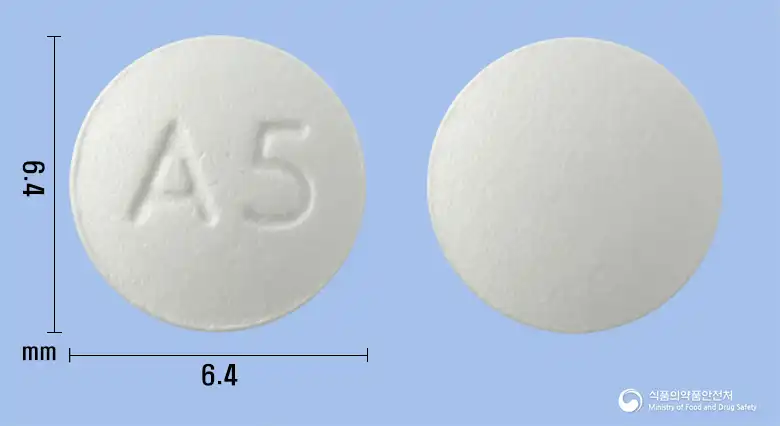
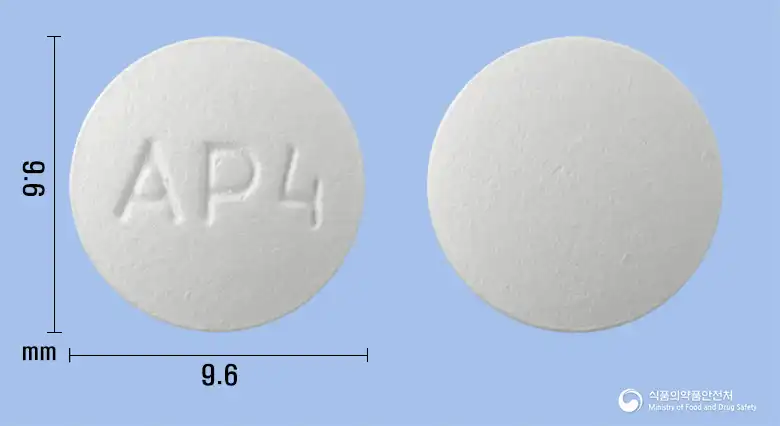
White, bi-convex, round film-coated tablet
30 tablets/bottle
Even with the same ingredient, strength, dosage form and how it is taken can differ.
Even with the same ingredient, the dose and directions can differ by strength and dosage form. Talk to a doctor or pharmacist before switching from a medication you are already taking.
No questions yet.
For anything that needs medical judgment, consult a doctor or pharmacist.
This drug information is based on data provided by the Korea Ministry of Food and Drug Safety.
Consult a doctor or pharmacist for accurate dosage, administration, and usage instructions.