
 한국어
 English
 日本語
 中文(简体)
 Viewing now
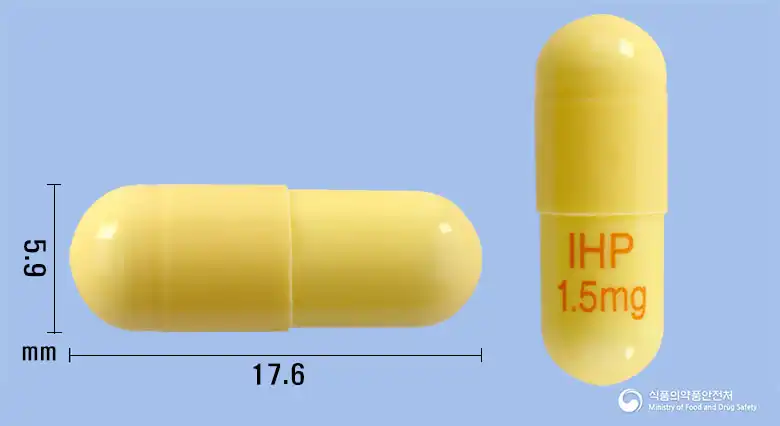
Listicapsule 1.5mg (Rivastigmine Tartrate)
Rivastigmine Tartarate 2.4mg
Hard capsule · Prescription medication
Ilhwa Co., Ltd.
MFDS item code 201701435 · Approved 2017.03.27 · Insurance code 640903370
Treatment of symptoms of mild to moderate Alzheimer-type dementia and dementia associated with Parkinson’s disease
This medication is used for the treatment of mild to moderate symptoms of Alzheimer's type dementia and mild to moderate symptoms of Parkinson's disease-related dementia.
Administration: Rivastigmine is administered orally twice daily with the morning and evening meals. ○ Adults: 1. Treatment of symptoms of mild to moderate Alzheimer-type dementia The initial dose is 3 mg of rivastigmine per day. Increase the dose for each patient at intervals of at least 2 weeks to the highest tolerated dose or the maximum recommended dose of 12 mg per day. Since clinical trials showed greater efficacy at doses of 6 mg per day and above, a target dose range of 6~12 mg per day is recommended for most patients. Recommended dose titration schedule Administer 1.5mg of this drug twice daily for at least 2 weeks. If well tolerated, the dose may be increased to 3mg twice daily. Subsequent increases may be made to 4.5mg twice daily, and, if well tolerated, to 6mg twice daily after at least 2 weeks. If adverse reactions (e.g., nausea, vomiting, abdominal pain, or loss of appetite) or weight loss occur, one or more doses may be omitted. However, if adverse reactions or weight loss persist, reduce the daily dose to the previous well-tolerated dose. 2. Treatment of symptoms of mild to moderate dementia associated with Parkinson's disease In a controlled clinical trial in patients with dementia associated with Parkinson's disease, rivastigmine was administered at 3~12mg per day in 2 divided doses (1.5~6mg per dose twice daily). The initial dose is 1.5mg of this drug twice daily. Depending on the patient's tolerability, subsequent doses may be increased at intervals of at least 4 weeks, first to 3mg twice daily, then to 4.5mg twice daily, and then to 6mg twice daily. If adverse reactions (e.g., nausea, vomiting, abdominal pain, or loss of appetite), weight gain, or extrapyramidal symptoms (e.g., tremor) occur during treatment, withholding one or more doses may reduce these symptoms. If adverse reactions persist, the daily dose may be temporarily reduced to the previous well-tolerated dose, or discontinuation of treatment may be considered. 3. Maximum recommended dose Administer 6 mg of this drug orally twice daily. 4. Resumption of treatment The incidence and severity of adverse reactions generally increase at higher doses. If treatment is interrupted for more than 3 days, restart at the lowest daily dose and titrate as described above. ○ Patients with hepatic or renal impairment: 1. Exposure is increased in patients with moderate renal impairment and mild to moderate hepatic impairment, and more adverse reactions may occur. Therefore, take particular care when titrating the dose according to individual tolerability. 2. Do not administer to patients with severe hepatic impairment, as no studies have been conducted in these patients.
○ Children: This drug has not been studied in children; therefore, its use in children is not recommended.
This medication should not be used by patients with known allergies to any of its components. It should also not be administered to patients with severe liver dysfunction. Patients with heart disease, a history of gastric ulcers, asthma, urinary retention, seizures, etc., should use this medication with caution. During treatment, gastrointestinal symptoms such as nausea, vomiting, and diarrhea may appear, which can be alleviated by dosage adjustment. This medication may affect heart rate, thus caution is required for individuals with heart-related conditions. Additionally, this medication can interact with other drugs, so it is essential to consult a doctor or pharmacist if currently taking other medications. Women who are pregnant or breastfeeding should consult healthcare professionals before taking this medication. It is not recommended for children, and in cases of overdose, symptoms like nausea, vomiting, dizziness, confusion may develop, necessitating an immediate visit to a medical facility. During treatment, regular checks of body weight should be conducted, and caution should be exercised if dizziness or drowsiness occurs while driving or operating machinery. If a rash or allergic reactions occur during treatment, use should be stopped immediately and healthcare professionals consulted. This medication should be kept out of reach of children, and it is advisable not to transfer it to other containers during storage.
Not everyone experiences these, and they can vary from person to person.
This medication may be sensitive to air and moisture, thus it should be stored in a tightly sealed container. It is also recommended to store at room temperature between 1 to 30 degrees Celsius. Proper storage will help maintain the medication’s effectiveness for a longer period.
A hard capsule containing white to yellow powder with a yellow hard shell.
28 capsules (14 capsules/PTP × 2)
Even with the same ingredient, strength, dosage form and how it is taken can differ.
Viewing nowRivastigmine Tartarate 2.4mg
Hard capsule · Prescription medication
Ilhwa Co., Ltd.
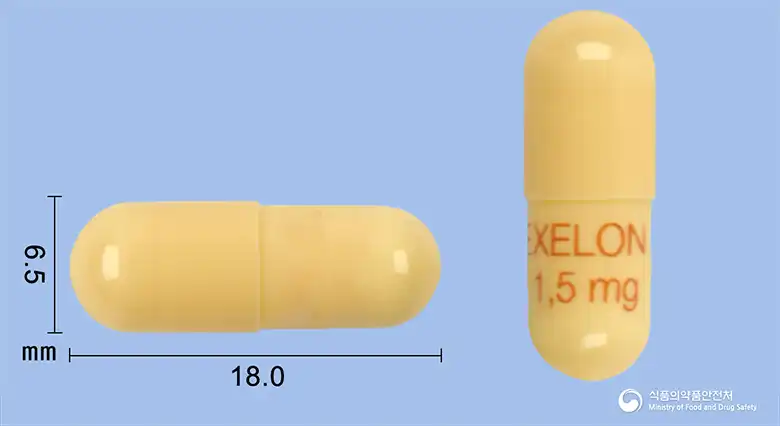
Rivastigmine Tartarate 2.4mg
Hard capsule · Prescription medication
Novartis Korea Co., Ltd.
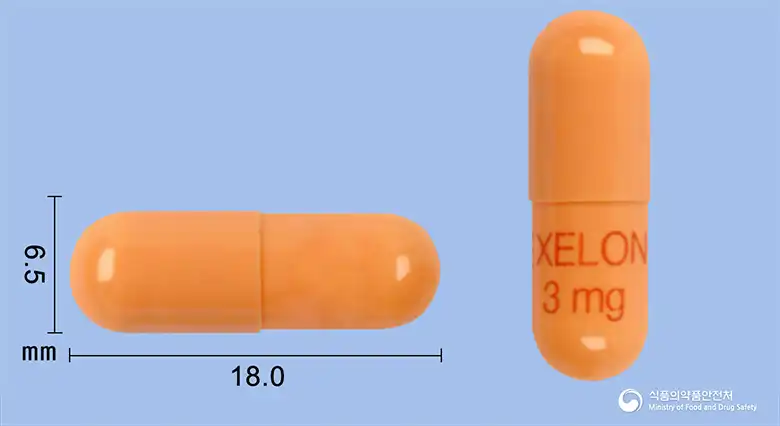
Rivastigmine Tartarate 4.8mg
Hard capsule · Prescription medication
Novartis Korea Co., Ltd.
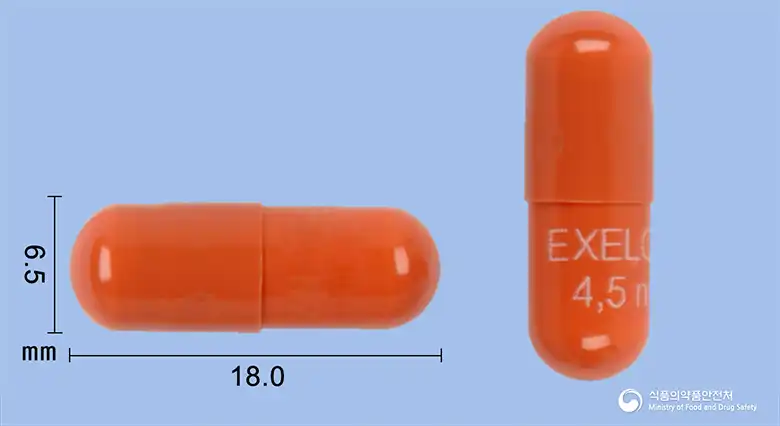
Rivastigmine Tartarate 7.2mg
Hard capsule · Prescription medication
Novartis Korea Co., Ltd.
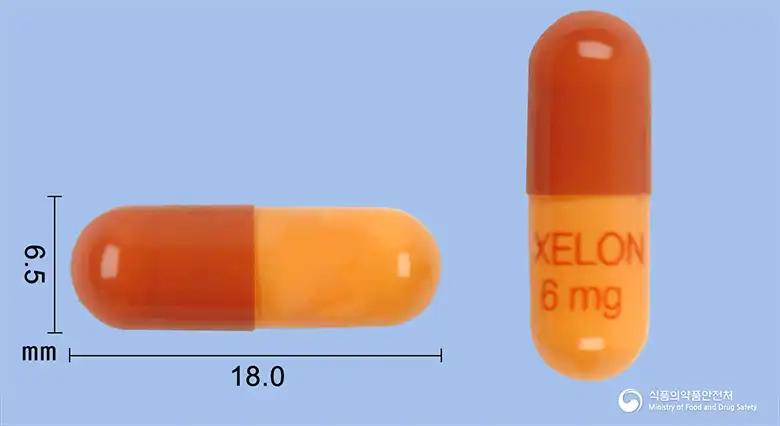
Rivastigmine Tartarate 9.6mg
Hard capsule · Prescription medication
Novartis Korea Co., Ltd.
Rivastigmine Tartarate
Prescription medication
Korea Sandos Co., Ltd.
Rivastigmine Tartarate
Prescription medication
Korea Sandose Co., Ltd.
Rivastigmine Tartarate
Prescription medication
Korea Sandos Co., Ltd.
Even with the same ingredient, the dose and directions can differ by strength and dosage form. Talk to a doctor or pharmacist before switching from a medication you are already taking.
No questions yet.
For anything that needs medical judgment, consult a doctor or pharmacist.
This drug information is based on data provided by the Korea Ministry of Food and Drug Safety.
Consult a doctor or pharmacist for accurate dosage, administration, and usage instructions.