
 한국어
 English
 日本語
 中文(简体)
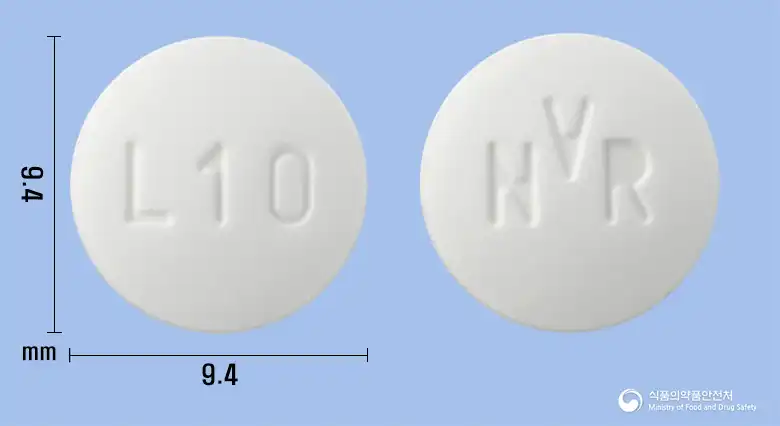 Viewing now
Jakavi 10 mg (Ruxolitinib Phosphate)
Ruxolitinib Phosphate 13.2mg
Tablet · Prescription medication
Novartis Korea Co., Ltd.
MFDS item code 201606813 · Approved 2016.11.29 · Insurance code 653602900
Treatment of myelofibrosis, polycythemia vera, and graft-versus-host disease
This medication is used for the treatment of myelofibrosis, particularly primary myelofibrosis in intermediate or high-risk groups, and myelofibrosis occurring after polycythemia vera and essential thrombocythemia. Additionally, it is effective for patients with polycythemia vera who are resistant to or intolerant of hydroxyurea. Furthermore, it is utilized in the treatment of acute or chronic graft-versus-host disease in patients aged 12 years and older who do not show adequate response to corticosteroid treatment. The effectiveness of this medication has been demonstrated through spleen volume reduction. Therefore, this medication plays an important role in the treatment of various hematological disorders and transplant-related complications.
Treatment with this medicine should be initiated by a physician experienced in administering anticancer agents. This medicine is taken orally and may be taken with or without food. If a dose is missed, the patient should not take an additional dose and should take the next prescribed dose. Treatment with this medicine may be continued for myelofibrosis and polycythemia vera as long as the benefit-risk ratio remains positive. However, if there is no reduction in spleen size or improvement in symptoms after 6 months of treatment, treatment with this medicine should be discontinued. For patients with graft-versus-host disease who respond to treatment, tapering the dose of this medicine may be considered after discontinuation of corticosteroids. It is recommended that the dose of this medicine be reduced by 50% every 2 months. If signs or symptoms of graft-versus-host disease recur during or after tapering, an increase in the dose should be considered. 1. Monitoring guidelines Blood cell counts: A complete blood count (CBC) must be measured before starting treatment with this medicine. In addition, CBC should be monitored every 2 weeks ∼ 4 weeks until the dose is stabilized, and thereafter as clinically indicated. 2. Recommended initial dose Myelofibrosis: The recommended initial dose of this medicine is based on platelet count. Platelet count Recommended initial dose 50,000∼100,000/mm3 10mg twice daily 100,000∼200,000/mm3 15mg twice daily >200,000/mm3 20mg twice daily Polycythemia vera and graft-versus-host disease: 10mg twice daily 3. Dose adjustment The dose should be adjusted based on safety and efficacy. ○ Myelofibrosis and polycythemia vera If the response is considered inadequate and blood cell counts are adequate, the dose may be increased by up to 5mg twice daily, and the maximum dose of this medicine is 25mg twice daily. The initial dose should be maintained for the first 4 weeks after starting treatment; thereafter, the dose should not be increased more frequently than every 2 weeks. Treatment should be interrupted if the platelet count is less than 50,000/mm3 or the absolute neutrophil count is less than 500/mm3. When used to treat polycythemia vera, treatment should be interrupted if hemoglobin is less than 8 g/dL. When blood cell counts recover to at least these levels, treatment should be resumed at 5 mg twice daily, with careful monitoring of blood cell counts and gradual dose escalation. In myelofibrosis, if the platelet count decreases as shown in the following table, dose reduction should be considered to prevent treatment interruption due to thrombocytopenia. Table 1. Recommended dose in case of decreased platelet count in myelofibrosis Dose in case of decreased platelet count Platelet count 25 mg twice daily 20 mg twice daily 15 mg twice daily 10 mg twice daily 5mg twice daily New dose New dose New dose New dose New dose At least 100,000/mm3 and less than 125,000/mm3: 20 mg twice daily, 15 mg twice daily, 15 mg twice daily, 10 mg twice daily, 5 mg twice daily At least 75,000/mm3 and less than 100,000/mm3: 10 mg twice daily, 10 mg twice daily, 10 mg twice daily, 10 mg twice daily, 5 mg twice daily At least 50,000/mm3 and less than 75,000/mm3: 5 mg twice daily, 5 mg twice daily, 5 mg twice daily, 5 mg twice daily, 5 mg twice daily Less than 50,000/mm3: Temporary interruption, temporary interruption, temporary interruption, temporary interruption, temporary interruption When used to treat polycythemia vera, dose reduction should be considered if hemoglobin decreases to less than 12 g/dL, and dose reduction is recommended if hemoglobin is less than 10 g/dL. Table 2. Recommended dose in case of decreased hemoglobin and platelet count in polycythemia vera Hemoglobin / platelet count Recommended dose Hemoglobin at least 12 g/dL and platelet count at least 100,000/mm3: No dose adjustment required Hemoglobin at least 10 g/dL and less than 12 g/dL and platelet count at least 75,000/mm3 and less than 100,000/mm3: Consider dose reduction to prevent treatment interruption due to anemia and thrombocytopenia Hemoglobin at least 8 g/dL and less than 10 g/dL or platelet count at least 50,000/mm3 and less than 75,000/mm3: - Reduce to 5mg twice daily - For patients already receiving 5mg twice daily, reduce to 5mg once daily Hemoglobin less than 8 g/dL or platelet count less than 50,000/mm3: Interrupt treatment ○ Graft-versus-host disease In patients with graft-versus-host disease, dose reduction and temporary interruption may be necessary if thrombocytopenia, neutropenia, or increased total bilirubin occurs despite standard supportive care, including growth factors, anti-infective therapy, and transfusions. A one-level dose reduction is recommended (reduce from 10 mg twice daily to 5mg twice daily, or from 5mg twice daily to 5mg once daily). Treatment should be discontinued in patients who do not tolerate a dose of 5mg once daily of this medicine. Details of the recommended doses are provided in the following table. Table 3. Recommended dose in case of thrombocytopenia, neutropenia, or increased total bilirubin in graft-versus-host disease Laboratory parameter Recommended dose Platelet count less than 20,000/mm3 Reduce the dose level of this medicine by one level. If the platelet count is at least 20,000/mm3 within 7 days, the dose may be increased to the initial dose level; otherwise, maintain the reduced dose. Platelet count less than 15,000/mm3 Interrupt treatment with this medicine until the platelet count is at least 20,000/mm3, then resume treatment at one dose level lower. Absolute neutrophil count (ANC) at least 500/mm3 and less than 750/mm3 Reduce the dose level of this medicine by one level. Resume treatment at the initial dose if ANC exceeds 1,000/mm3. Absolute neutrophil count (ANC) less than 500/mm3 Interrupt treatment with this medicine until ANC exceeds 500/mm3, then resume treatment at one dose level lower. Treatment may be resumed at the initial dose if ANC exceeds 1,000/mm3. Increased total bilirubin in patients without hepatic graft-versus-host disease Greater than 3.0 x ULN and less than or equal to 5.0 x ULN: Continue treatment with this medicine at one dose level lower until total bilirubin is 3.0 x ULN or less. Greater than 5.0 x ULN and less than or equal to 10.0 x ULN: Interrupt treatment with this medicine for up to 14 days until total bilirubin is 3.0 x ULN or less. If total bilirubin is 3.0 x ULN or less, treatment may be resumed at the current dose. If it is not 3.0 x ULN or less after 14 days, resume treatment at one dose level lower. Greater than 10.0 x ULN: Interrupt treatment with this medicine until total bilirubin is 3.0 x ULN or less, then resume treatment at one dose level lower. Increased total bilirubin in patients with hepatic graft-versus-host disease Greater than 3.0 x ULN: Continue treatment with this medicine at one dose level lower until total bilirubin is 3.0 x ULN or less. Dose adjustment when used with a strong CYP3A4 inhibitor or fluconazole In patients with myelofibrosis and polycythemia vera, when this medicine is used concomitantly with a strong CYP3A4 inhibitor, or in patients with myelofibrosis, polycythemia vera, and graft-versus-host disease, when it is used concomitantly with a dual moderate inhibitor of CYP2C9 and CYP3A4 enzymes, such as fluconazole, the total daily dose of this medicine should be reduced by approximately 50%. This adjustment should be made by reducing the twice-daily dose or, if twice-daily administration is not possible, by reducing the dosing frequency to the corresponding once-daily dose. When this medicine is used concomitantly with fluconazole, fluconazole should not exceed 200mg per day. When this medicine is used concomitantly with a strong CYP3A4 inhibitor or a dual moderate inhibitor of CYP2C9 and CYP3A4 enzymes, hematologic parameters and clinical signs or symptoms of adverse reactions caused by this medicine should be monitored more frequently. No dose adjustment is required when this medicine is used concomitantly with mild or moderate CYP3A4 inhibitors. Patients with renal impairment The recommended initial dose for myelofibrosis in patients with moderate (creatinine clearance at least 30 mL/min and less than 50 mL/min) or severe renal impairment (creatinine clearance less than 30 mL/min) is 10mg twice daily. The recommended initial dose for polycythemia vera and graft-versus-host disease in patients with moderate or severe renal impairment is 5mg twice daily. Safety and efficacy should be carefully monitored during treatment with this medicine, and additional dose adjustment may be necessary. Data are limited for determining the optimal dose for myelofibrosis in patients with end-stage renal disease (ESRD) requiring hemodialysis. Available results for these patients indicate that the recommended initial dose is a single dose of 15mg for patients with a platelet count of 100,000∼200,000/mm3 and a single dose of 20mg for patients with a platelet count greater than 200,000/mm3. The dose should be administered only on a dialysis day, after dialysis, and should not be administered more than once daily. Dose adjustment should be made with careful monitoring of safety and efficacy. There are no data on administration to patients undergoing peritoneal dialysis or continuous venovenous hemofiltration. The recommended initial dose for polycythemia vera and graft-versus-host disease in patients with ESRD requiring hemodialysis is a single dose of 10mg, to be administered only on a dialysis day, after dialysis; safety and efficacy should be carefully monitored. Patients with hepatic impairment The recommended initial dose for myelofibrosis in patients with hepatic impairment should be reduced to 10mg twice daily, and the recommended initial dose for polycythemia vera should be reduced to 5mg twice daily. Subsequent doses should be adjusted with careful monitoring of safety and efficacy. No change in the initial dose is recommended for patients with graft-versus-host disease who have hepatic impairment, including hepatic graft-versus-host disease. In patients with hepatic involvement of graft-versus-host disease and total bilirubin levels greater than 3 x ULN, toxicity and blood counts should be monitored more frequently, and a one-level dose reduction may be considered. Elderly patients No dose adjustment is required in elderly patients.
In pediatric patients 12 years of age and older with graft-versus-host disease, the dosage of this drug is the same as that in adults. The safety and efficacy of this drug have not been established in patients under 12 years of age.
This medication can decrease platelet, red blood cell, and neutrophil counts in the blood. Blood cell counts must be checked before administration, and if platelet counts are too low or neutrophil counts are very low, treatment should be discontinued. This medication contains lactose and should not be administered to patients with lactose intolerance or certain genetic metabolic abnormalities. During treatment, blood-related adverse reactions such as anemia, thrombocytopenia, and neutropenia may occur frequently, leading to symptoms such as fatigue, bruising, dizziness, and infections. Periodic liver function tests are needed as liver function abnormalities may lead to increased ALT and AST levels. The risk of infections may increase; therefore, any symptoms of infection should be reported to medical staff immediately for appropriate treatment. Special care is required for infections such as tuberculosis or herpes zoster. Sudden discontinuation of this medication may cause a recurrence of myelofibrosis symptoms; therefore, when stopping, the dosage should be gradually reduced under a physician's guidance. There may be an increased risk of skin cancer, hence regular skin examinations are recommended. This medication may elevate blood lipid levels; therefore, cholesterol and triglyceride levels should be checked periodically, and treatment should be administered if necessary. Elderly patients, smokers, or patients with cardiovascular risk factors should be carefully monitored for cardiovascular symptoms before and after using this medication. The risk of thromboembolism may increase; if symptoms of thromboembolism appear, immediate evaluation and treatment are needed. The use of this medication is not recommended during pregnancy, and women of childbearing age should use effective contraceptive methods while taking this medication. In breastfeeding cases, consideration should be given to stopping breastfeeding or discontinuing the medication as it may pass into breast milk. This medication can interact with other drugs; therefore, especially when used in conjunction with CYP3A4 inhibitors or inducers, dosage adjustment may be necessary. In case of overdose, there is no antidote, and serious side effects such as bone marrow suppression may occur, requiring immediate assistance from medical personnel. This medication should be kept out of reach of children and should not be transferred to other containers.
Not everyone experiences these, and they can vary from person to person.
This medication may be sensitive to air and humidity; therefore, it should be kept in a tightly sealed container. It is best stored at room temperature between 1°C and 25°C. This helps maintain the efficacy of the medication.
White to off-white round tablets
56 tablets (14 tablets/PTP packaging * 4)
Even with the same ingredient, strength, dosage form and how it is taken can differ.
Viewing nowRuxolitinib Phosphate 13.2mg
Tablet · Prescription medication
Novartis Korea Co., Ltd.
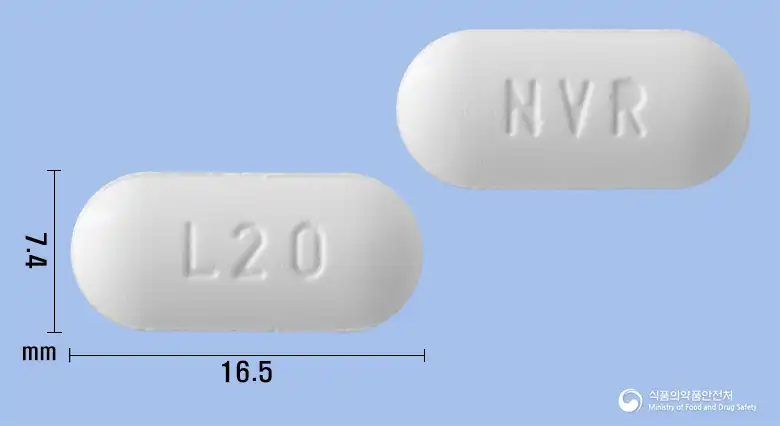
Ruxolitinib Phosphate 26.4mg
Tablet · Prescription medication
Novartis Korea Co., Ltd.
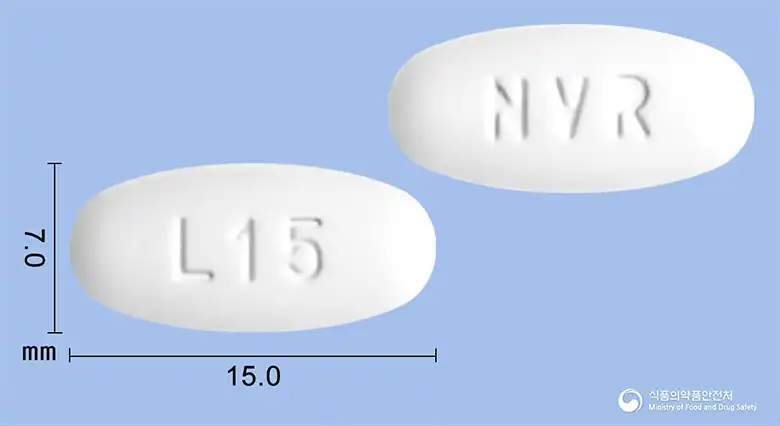
Ruxolitinib Phosphate 19.8mg
Tablet · Prescription medication
Novartis Korea Co., Ltd.
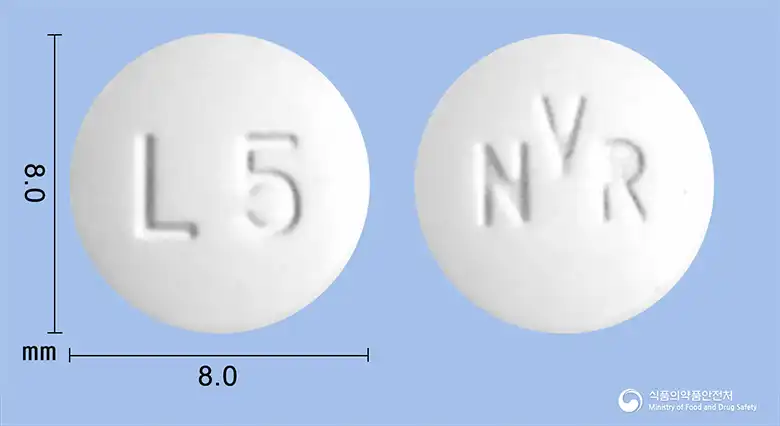
Ruxolitinib Phosphate 6.6mg
Tablet · Prescription medication
Korea Novartis Co., Ltd.
Even with the same ingredient, the dose and directions can differ by strength and dosage form. Talk to a doctor or pharmacist before switching from a medication you are already taking.
No questions yet.
For anything that needs medical judgment, consult a doctor or pharmacist.
This drug information is based on data provided by the Korea Ministry of Food and Drug Safety.
Consult a doctor or pharmacist for accurate dosage, administration, and usage instructions.