
 한국어
 English
 日本語
 中文(简体)
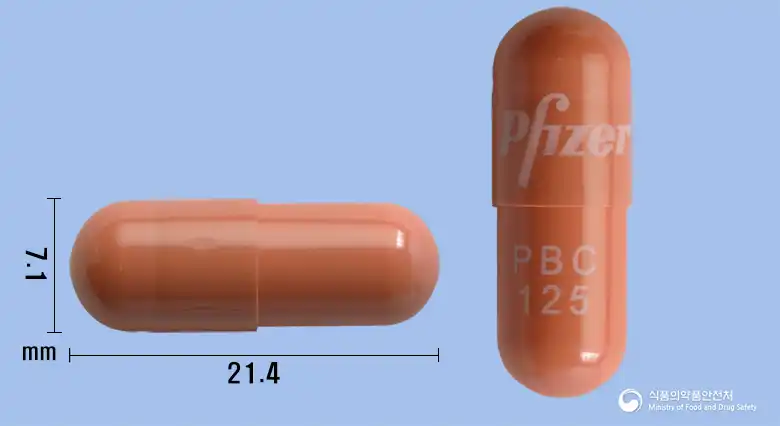 Viewing now
Ibrance Capsules 125 mg (Palbociclib)
Palbociclib 125mg
Hard capsule · Prescription medication
Pfizer Pharmaceuticals Korea Co., Ltd.
MFDS item code 201605162 · Approved 2016.08.29 · Insurance code 648902940
Combination treatment of HR-positive, HER2-negative advanced or metastatic breast cancer
This drug is used in patients with hormone receptor-positive (HR+) and HER2-negative advanced or metastatic breast cancer. Specifically, it is administered in combination with aromatase inhibitors as a first-line endocrine therapy in female patients or, after progression of the disease following endocrine therapy, it is treated in combination with fulvestrant. This combination helps effectively suppress the progression of breast cancer.
1. Recommended Dosage and Administration Schedule The recommended dosage of this drug is 125 mg orally once daily for 21 consecutive days, followed by 7 days off treatment, in a 28-day cycle. This drug should be taken with food. When this drug is administered with an aromatase inhibitor, administer the recommended dose of the aromatase inhibitor (refer to the prescribing information for the aromatase inhibitor being administered). When this drug is administered with fulvestrant, the recommended dose of fulvestrant is 500 mg administered on days 1, 15, and 29, and once monthly thereafter (refer to the prescribing information for fulvestrant). Patients should be encouraged to take this drug at the same time each day. If a patient vomits after taking this drug or misses a dose, an additional dose of this drug should not be taken. The next dose should be taken at the scheduled time. This drug should be swallowed whole (do not chew or crush; do not open the capsule before swallowing). Do not take the capsule if it is broken, cracked, or otherwise not intact. Premenopausal and perimenopausal women receiving this drug in combination with endocrine therapy should also receive a luteinizing hormone-releasing hormone (LHRH) agonist in accordance with local clinical practice guidelines. 2. Dose Modification The recommended dose modifications for adverse reactions are shown in Tables 1, 2, and 3 below. [Table 1] Recommended Dose Modifications for Adverse Reactions Dose level Dose Recommended starting dose 125 mg/day First dose reduction 100 mg/day Second dose reduction 75 mg/day* * Discontinue treatment if further dose reduction below 75 mg/day is required. [Table 2] Dose Modification and Management - Hematologic Toxicitya Monitor complete blood counts before starting treatment with this drug, at the beginning of each treatment cycle, on day 15 of each of the first two cycles, and as clinically indicated. For patients who experience a maximum of Grade 1 or Grade 2 neutropenia during the first 6 cycles, monitor complete blood counts before the start of a treatment cycle and every 3 months thereafter, as clinically indicated. CTCAE Grade Dose Modification Grade 1 or 2 No dose modification required Grade 3 Day 1 of a cycle: • Withhold this drug and repeat complete blood count monitoring after 1 week. • If recovery to Grade 2 or lower occurs, start the next cycle at the same dose. Day 15 of each of the first two cycles: • If Grade 3 on day 15, continue this drug at the current dose through the end of the cycle and repeat complete blood count measurement on day 22. • If Grade 4 on day 22, refer to the Grade 4 dose modification below. • Consider dose reduction if recovery from Grade 3 neutropenia is delayed (>1 week) by day 1 of the next cycle or if Grade 3 neutropenia recurs. Grade 3 neutropenia with fever of 38.5 °C or higherb and/or infection Any time: Withhold this drug until recovery to Grade 2 or lower. Resume treatment at the next lower dose level. Grade 4 Any time: Withhold this drug until recovery to Grade 2 or lower. Resume treatment at the next lower dose level. Grading according to CTCAE 4.0 CTCAE = Common Terminology Criteria for Adverse Events, LLN = lower limit of normal. a The table above applies to all hematologic adverse reactions except lymphopenia (unless associated with clinical events such as opportunistic infections). b ANC = absolute neutrophil count: Grade 1: ANC < LLN - 1500/mm 3, Grade 2: ANC 1000-<1500/mm 3, Grade 3: ANC 500-<1000/mm 3, Grade 4: ANC<500/mm 3 [Table 3] Dose Modification and Management - Nonhematologic Toxicity CTCAE Grade Dose Modification Grade 1 or 2 No dose modification required Grade 3 or higher nonhematologic toxicity (persistent despite medical treatment) Withhold treatment until symptoms recover as follows: • Grade 1 or lower • Grade 2 or lower (if not considered a risk to patient safety) Resume treatment at the next lower dose level. Grading according to CTCAE 4.0 CTCAE = Common Terminology Criteria for Adverse Events For the concomitantly administered endocrine therapy drug, refer to its prescribing information (dose modification guidance for toxicities, other relevant safety information, or contraindications). 3. Dose Modification for Concomitant Use with Strong CYP3A Inhibitors Avoid concomitant use with strong CYP3A inhibitors and consider alternative concomitant medications with no or minimal CYP3A inhibitory effects. If a patient must be coadministered a strong CYP3A inhibitor, reduce the dose of this drug to 75 mg once daily. If the strong inhibitor is discontinued, increase the dose of this drug to the dose used before starting the strong CYP3A inhibitor after 3-5 half-lives of the inhibitor. 4. Dose Modification for Patients with Hepatic Impairment No dose modification is required for patients with mild or moderate hepatic impairment (Child-Pugh A and B). For patients with severe hepatic impairment (Child-Pugh C), the recommended dose of this drug is 75 mg once daily for 3 weeks on treatment/1 week off treatment (see 11. Other, (3) Pharmacokinetics). 5. Permanently discontinue this drug in patients with severe interstitial lung disease or pneumonitis.
This drug may cause neutropenia, so blood tests should be periodically performed to check neutrophil counts before and during treatment. This drug may harm the fetus if administered to pregnant women; thus, women of childbearing age must use effective contraception during treatment and for at least 3 weeks after the last dose. Serious pulmonary conditions such as interstitial lung disease or pneumonia may occur during treatment with this drug, so if symptoms like shortness of breath, cough, or fever appear, patients must immediately inform healthcare professionals. Patients with genetic metabolic disorders such as galactose intolerance should not take this drug. Patients with a history of interstitial lung disease must be cautious when using this drug, as it may exacerbate lung disease. This drug can make patients susceptible to infections; hence, patients must report any symptoms of infection to healthcare professionals immediately and receive proper treatment. For patients with liver impairment, dose adjustments are necessary for severe liver impairment, while patients with kidney impairment usually do not require dose adjustments. This drug may interact with certain medications, so patients must inform their doctor or pharmacist if they are taking other medications. Breastfeeding mothers must discontinue breastfeeding during treatment and for 3 weeks after taking this drug, as it may affect nursing infants. It can be administered to the elderly, but monitoring for adverse reactions is necessary. In case of overdose, there is no specific antidote, and general treatment will be given. This drug should be kept out of the reach of children and stored in its original container.
Neutropenia, infection, leukopenia, fatigue, nausea, alopecia, stomatitis, diarrhea, anemia, rash, asthenia, thrombocytopenia, vomiting, decreased appetite, skin dryness, fever, taste disturbance, increased aspartate aminotransferase, increased alanine aminotransferase, epistaxis, increased tearing, dry eyes, blurred vision, febrile neutropenia, stomatitis, hand-foot syndrome with erythema and sensory disturbances, skin erythematosus lupus, erythema multiforme, venous thromboembolism, increased serum creatinine, pulmonary inflammation, cough, pulmonary embolism, febrile neutropenia, pancytopenia, pneumonia, asthenia, nausea, abdominal pain, gastroesophageal reflux disease, gastric ulcer, gingival swelling, hepatitis, decreased appetite, myalgia, back pain, flank pain, plantar fasciitis, headache, dizziness, sensory decline, peripheral neuropathy, peripheral sensory neuropathy, hyperhidrosis, increased C-reactive protein, blood calcium abnormalities, vasculitis, tinnitus
Not everyone experiences these, and they can vary from person to person.
This drug should be stored in a tightly closed container to protect it from air and moisture, preferably at a temperature between 1 to 30 degrees Celsius. Proper storage allows for prolonged effectiveness of the medication.
An opaque capsule of caramel color containing a powder that is off-white to yellow.
Blister: 21 capsules, Bottle: 21 capsules
Even with the same ingredient, strength, dosage form and how it is taken can differ.
Viewing nowPalbociclib 125mg
Hard capsule · Prescription medication
Pfizer Pharmaceuticals Korea Co., Ltd.
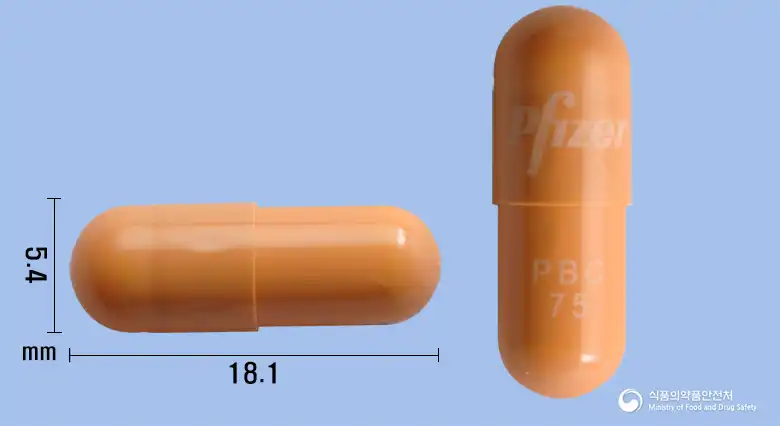
Palbociclib 75mg
Hard capsule · Prescription medication
Pfizer Pharmaceuticals Korea Co., Ltd.
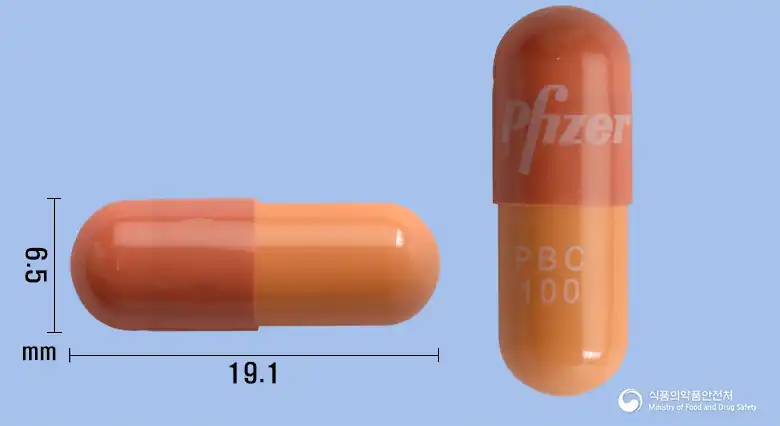
Palbociclib 100mg
Hard capsule · Prescription medication
Pfizer Korea, Co., Ltd.
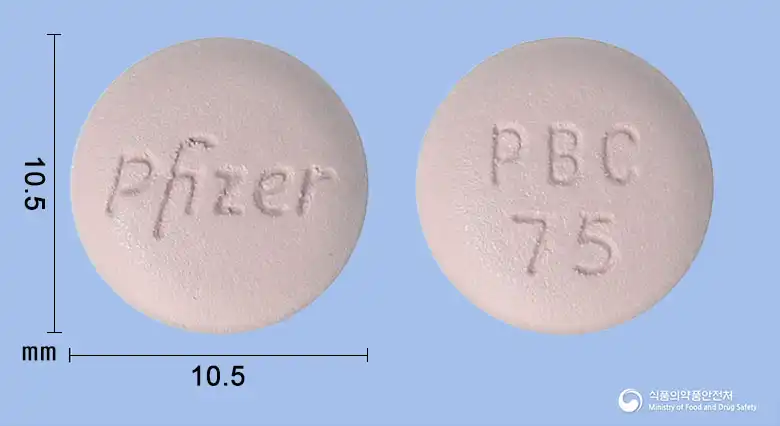
Palbociclib 75mg
Tablet · Prescription medication
Pfizer Korea Ltd.
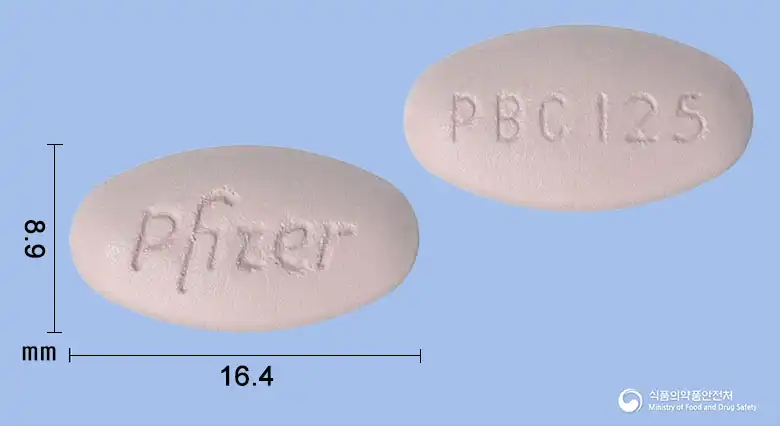
Palbociclib 125mg
Tablet · Prescription medication
Pfizer Pharmaceuticals Korea Co., Ltd.
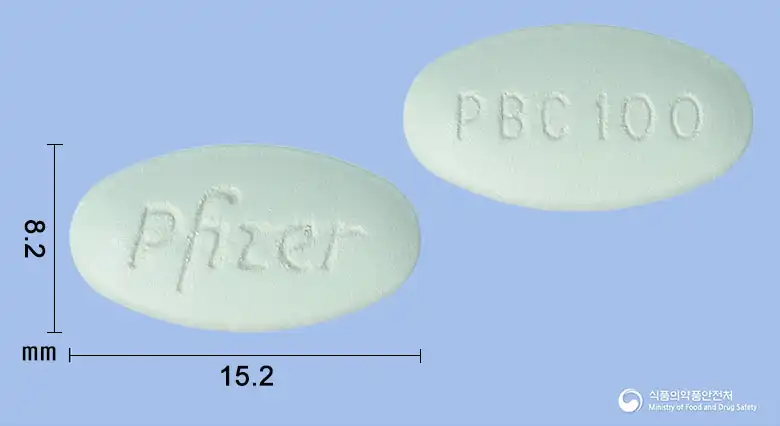
Palbociclib 100mg
Tablet · Prescription medication
Pfizer Korea Co., Ltd.
Palbociclib 75mg
Prescription medication
Kwangdong Pharmaceutical Co., Ltd.
Palbociclib 100mg
Prescription medication
Kwangdong Pharmaceutical Co., Ltd.
Even with the same ingredient, the dose and directions can differ by strength and dosage form. Talk to a doctor or pharmacist before switching from a medication you are already taking.
No questions yet.
For anything that needs medical judgment, consult a doctor or pharmacist.
This drug information is based on data provided by the Korea Ministry of Food and Drug Safety.
Consult a doctor or pharmacist for accurate dosage, administration, and usage instructions.