
 한국어
 English
 日本語
 中文(简体)
 Viewing now
Tagrisso Tablet 40 mg (Osimertinib Mesylate)
Osimertinib Mesylate 47.7mg
Tablet · Prescription medication
AstraZeneca Korea Co., Ltd.
MFDS item code 201602777 · Approved 2016.05.19 · Insurance code 650700990
Monotherapy for EGFR mutation-positive non-small cell lung cancer; combination therapy with anticancer agents
This medication is used for the treatment of non-small cell lung cancer (NSCLC) patients with EGFR mutations. It may be used as adjuvant therapy after complete surgical removal of the tumor and in cases where the disease has not progressed after chemoradiotherapy for advanced local non-small cell lung cancer. It is also effective as first-line treatment for patients with locally advanced or metastatic non-small cell lung cancer with mutations. Additionally, it is helpful for patients with T790M mutation positivity confirmed after previous EGFR-TKI treatment. This drug is used in combination with pemetrexed and platinum-based chemotherapy for the treatment of non-squamous non-small cell lung cancer. Therefore, this drug is utilized to improve the treatment of various stages and types of non-small cell lung cancer.
Monotherapy The recommended dose of this drug is 80 mg of osimertinib once daily. Combination therapy When administered in combination with pemetrexed and platinum-based chemotherapy, the recommended dose of this drug is 80 mg of osimertinib once daily. For dosage information for pemetrexed and either cisplatin or carboplatin, refer to the prescribing information for the respective drugs (see 13. Information for Healthcare Professionals). Take this drug at the same time each day, with or without food. Duration of treatment Patients receiving adjuvant therapy should continue taking this drug until disease recurrence or unacceptable toxicity occurs. Treatment durations exceeding 3 years have not been studied. Patients with locally advanced or metastatic lung cancer should continue taking this drug until disease progression or unacceptable toxicity occurs. Method of administration This drug is administered orally and should be swallowed whole with water. Do not crush, split, or chew the tablets. If a patient is unable to swallow the tablet, first disperse it in 50 mL of non-carbonated water. Place the tablet in the water without crushing it, stir until dispersed, and drink immediately. Then add approximately 100 mL of water to ensure no residue remains and drink immediately. Do not add any other liquids. If administration through a nasogastric tube is required, follow the same procedure, using 15 mL of water for the initial dispersion and 15 mL to rinse any residue. The dispersion and the rinse used to clear any residue must be administered within 30 minutes after the tablet is placed in water. Missed dose If a dose of this drug is missed, take it immediately if 12 hours or more remain before the next dose. Dose adjustment Treatment interruption and/or dose reduction may be necessary based on the safety and tolerability of each patient. If dose reduction is necessary, reduce the dose of this drug to 40 mg once daily. Dose reduction guidelines for adverse reaction toxicity are presented in Table 1. Table 1. Recommended dose modifications Lungb Interstitial lung disease (ILD)/pneumonitis Permanently discontinue this drug. ILD/pneumonitis following definitive platinum-based chemoradiation: asymptomatic (Grade 1) Continue this drug as appropriate, or temporarily interrupt and resume treatment. ILD/pneumonitis following definitive platinum-based chemoradiation: Grade 2 or higher Permanently discontinue this drug. Cardiacb QTc interval greater than 500 msec on at least 2 separate ECGs Interrupt this drug until the QTc interval is below 481msec, or until it returns to baseline if the baseline QTc is 481msec or greater, then resume at a reduced dose (40mg). QTc interval prolongation accompanied by signs/symptoms of serious arrhythmia Permanently discontinue this drug. Asymptomatic, with a decrease in left ventricular ejection fraction of 10 percentage points or more from baseline and to below 50% Interrupt this drug for up to 4 weeks. If it returns to baseline, resume treatment. If it does not return to baseline, permanently discontinue this drug. Symptomatic congestive heart failure Permanently discontinue this drug. Skinb Stevens-Johnson syndrome and toxic epidermal necrolysis Permanently discontinue this drug. Blood and lymphatic systemb Aplastic anemia Permanently discontinue this drug. Other Grade 3 or higher adverse reaction Interrupt this drug for up to 3 weeks. Grade 3 or higher adverse reaction improves to Grade 0-2 after interruption of this drug for up to 3 weeks Treatment may be resumed at the same dose (80 mg) or a lower dose (40 mg). Grade 3 or higher adverse reaction that does not improve to Grade 0-2 after interruption of this drug for up to 3 weeks Permanently discontinue this drug. Combination therapy: If an adverse reaction occurs when this drug is administered in combination with pemetrexed and platinum-based chemotherapy, the administration of any of the drugs may need to be adjusted appropriately. Refer to Table 1 for dose adjustments of this drug. Pemetrexed, cisplatin, or carboplatin should be interrupted, dose-reduced, or permanently discontinued according to their respective prescribing information.
This medication may cause interstitial lung disease such as inflammation or fibrosis in the lungs, so use should be immediately discontinued and a doctor's evaluation sought if symptoms such as difficulty breathing, cough, or fever occur. This drug can cause severe skin reactions such as Stevens-Johnson syndrome, erythema multiforme, or toxic epidermal necrolysis, so treatment should be stopped immediately and medical attention sought if symptoms like skin rash, blisters, or mucosal damage appear. It can affect heart health, potentially leading to arrhythmias or decreased ejection fraction. Therefore, it is important to consult a physician and undergo cardiac function testing if there is a history of heart disease or symptoms arise. This drug can cause inflammation in the eyes, leading to keratitis. If there are symptoms like eye pain, redness, or blurred vision, an eye specialist should be consulted. Blood cell counts may decrease, increasing the risk of infections. If fever, bleeding, or easy bruising occurs, immediate medical attention is required. Women who are pregnant or planning to become pregnant should not take this medication and should use effective contraception during and for some time after treatment. The safety of this medication is not established for patients with severe liver and kidney impairment; thus, caution is necessary. Additionally, elderly patients have a higher risk of adverse reactions and should be monitored closely. Also, this drug may interact with other medications. Patients should inform healthcare providers of all medications they are taking to ensure safe co-administration. Lastly, this drug is not recommended for use in children and should be stored out of reach of children.
Not everyone experiences these, and they can vary from person to person.
This medication should be stored at room temperature between 1°C and 30°C in a tightly sealed container to prevent exposure to air. This helps maintain the medication's effectiveness for a longer duration.
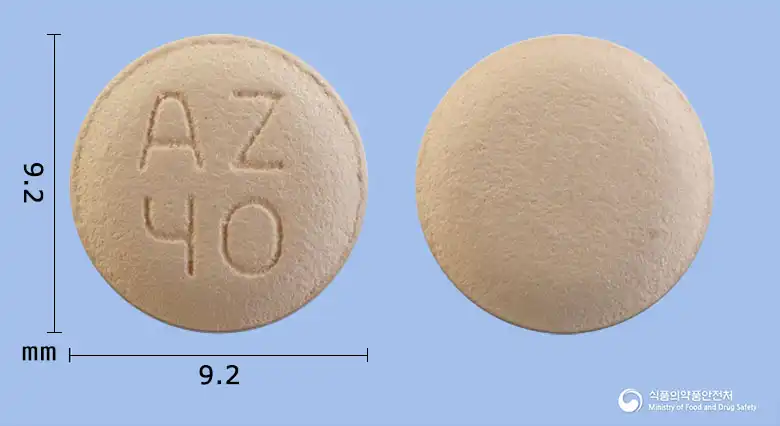
Beige, double convex, round film-coated tablet
28 tablets (7 tablets/PTP x 4)
Even with the same ingredient, strength, dosage form and how it is taken can differ.
Viewing nowOsimertinib Mesylate 47.7mg
Tablet · Prescription medication
AstraZeneca Korea Co., Ltd.
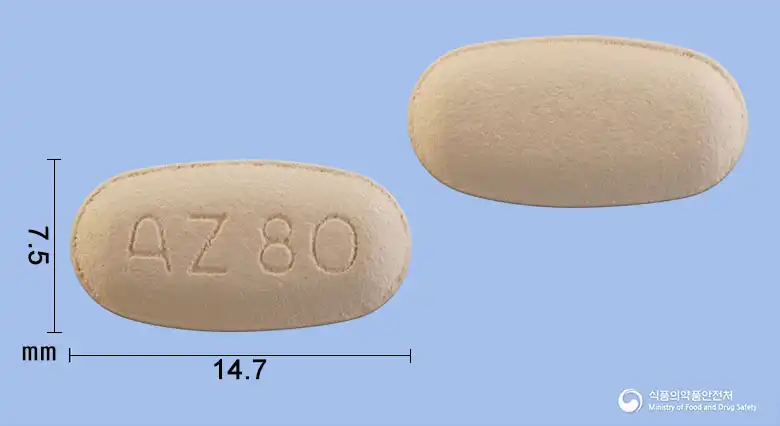
Osimertinib Mesylate 95.4mg
Tablet · Prescription medication
AstraZeneca Korea Co., Ltd.
Osimertinib Mesylate 47.7mg
Tablet · Prescription medication
Jongkundang Co., Ltd.
Osimertinib Mesylate 95.4mg
Tablet · Prescription medication
Korea Korus Co., Ltd.
Even with the same ingredient, the dose and directions can differ by strength and dosage form. Talk to a doctor or pharmacist before switching from a medication you are already taking.
No questions yet.
For anything that needs medical judgment, consult a doctor or pharmacist.
This drug information is based on data provided by the Korea Ministry of Food and Drug Safety.
Consult a doctor or pharmacist for accurate dosage, administration, and usage instructions.