
 한국어
 English
 日本語
 中文(简体)
 Viewing now
PentaKan Sulha Tablet 133 Micrograms (Fentanyl Citrate)
Fentanyl Citrate 0.21mg
Sublingual Tablet · Prescription medication
Korea Pharmbio Co., Ltd.
MFDS item code 201601710 · Approved 2016.03.31 · Insurance code 659901120
Relief of breakthrough pain in opioid-tolerant patients with cancer
This medication is used to help control continuous pain in cancer patients, especially for sudden breakthrough pain that can occur even in patients with tolerance to opioid medications. It enables more effective pain management for the patient. This medication works rapidly on breakthrough pain to reduce discomfort and improve quality of life.
After removing this medicine from the blister, place it under the tongue. Do not chew, suck, or swallow it; allow the tablet to dissolve completely. Do not eat or drink until the tablet has completely dissolved. If any of this medicine remains after 30 minutes, it may be swallowed. Patients with dry mouth should moisten the mouth with water before taking this medicine. For each patient, determine a dose that provides adequate analgesia while minimizing adverse reactions. This medicine has a different pharmacokinetic profile and dosage regimen from other rapid-acting fentanyl products used for cancer breakthrough pain; therefore, it cannot be converted on a dose-for-dose (㎍) basis. Patients should not use two different fentanyl products simultaneously to treat breakthrough pain. When switching to this medicine, the other fentanyl product should be discontinued. To prevent confusion and the possibility of overdose, always minimize the number of tablets available at each strength. 1. Dose titration 1) Initiation of treatment The initial dose of this medicine for the treatment of cancer breakthrough pain is 133㎍. This medicine has a different absorption profile from other fentanyl products and should not be converted at a 1:1 ratio; follow the dose titration below. 2) Repeat dosing for a single episode of pain If adequate analgesia is not achieved within 15 ∼ 30 minutes, a second dose may be administered. Patients should not take more than 2 tablets of this medicine for a single episode of breakthrough pain. This medicine should not be administered for another episode of breakthrough pain until at least 2 hours later. 3) Dose escalation If more than one dose is required to treat breakthrough pain, consider increasing to the next dose according to the table below. Continue sequential dose escalation until adequate analgesia is achieved. At 533㎍, increase the additional (second) dose to 133㎍~267㎍. Once an adequate dose has been identified, maintain that dose. Titration process Start with 133㎍ Is adequate pain relief achieved within 15~30 minutes· Yes: Use this dose for subsequent episodes of breakthrough pain No: Administer a second dose*(see table below) Increase to the next higher dose for the next episode of breakthrough pain. * Administration of the second dose Initial sublingual tablet dose (㎍) used for the episode of breakthrough pain / Additional dose (㎍) to be taken 15∼30 minutes after the initial dose 133 / 133 267 / 133 400 / 133 533 / 267 800 / - 4) Maximum daily dose If breakthrough pain occurs more than 4 times per day, the dose of the long-acting opioid used for persistent cancer pain should be readjusted. Use of this medicine should be limited to no more than 4 times per day. 2. Dose readjustment If there is a significant change in the response to the adjusted dose of this medicine, dose adjustment may be necessary to identify the optimal dose. (For dose adjustment, see 3) Dose escalation.) If breakthrough pain occurs more than 4 times per day, the dose of the regularly taken opioid should be reassessed. The dose of this medicine should also be reassessed and retitrated if there is a change in the regularly taken opioid or its dose. If pain is not adequately controlled, consider the possibility of hyperalgesia, tolerance, and progression of the underlying disease. 3. Discontinuation If breakthrough pain no longer occurs, discontinue this medicine immediately. Treatment for persistent background pain should be maintained. If it is necessary to discontinue all opioid medicines, closely monitor the patient to avoid sudden withdrawal effects.
This medication is a potent opioid analgesic used for relieving breakthrough pain in cancer patients. It should only be used in patients who are tolerant to opioid medications, as administering it to patients without tolerance can result in serious respiratory depression and risk of death. This medicine must be stored safely to prevent access by children or non-patients, and any remaining medication after opening should be disposed of properly. Caution should be taken when used in conjunction with other central nervous system depressants or alcohol, as the risk of severe sedation and respiratory depression increases, necessitating avoidance or very careful use of these combinations. Continuous opioid therapy is necessary during the use of this medication, and treatment should be managed by a specialist experienced in cancer pain management. Serious side effects such as respiratory depression, hypotension, coma, and allergic reactions can occur, so symptoms must be closely monitored. Common side effects like drowsiness, dizziness, nausea, and constipation may also occur, requiring caution in daily activities. Risky activities such as driving or operating machinery should be avoided during the use of this medication, and regular monitoring and counseling are important due to the potential for drug abuse and dependence. Women who are pregnant or breastfeeding should consult with a specialist before using this medication, as it may pose risks to the fetus or newborn. It should not be used in children under 18 years of age, as safety and efficacy have not been established in this population. Elderly patients may be more sensitive to the medication, thus requiring dose adjustment and careful monitoring. In case of overdose, immediate medical assistance is required, and respiratory support and appropriate emergency care may be necessary. This medication is metabolized by the CYP3A4 enzyme, so caution is needed when taken with drugs that inhibit or induce this enzyme, as drug concentration and effects may vary. It is essential to follow the instructions of a healthcare professional before and after using this medication and to promptly notify them of any side effects or unusual symptoms.
Not everyone experiences these, and they can vary from person to person.
This medication may be sensitive to light; therefore, it should be stored in a light-blocking container. Additionally, it is best stored at room temperature between 1°C and 30°C, avoiding extremely hot or cold places. This storage method helps maintain the drug's efficacy and ensures safe use.
A white, convex triangular-shaped film-coated tablet
30 tablets (3 tablets x 10 PTP) per box
Even with the same ingredient, strength, dosage form and how it is taken can differ.
Viewing nowFentanyl Citrate 0.21mg
Sublingual Tablet · Prescription medication
Korea Pharmbio Co., Ltd.
Fentanyl Citrate 0.0785mg
Solution · Prescription medication
Myungmoon Pharmaceutical Co., Ltd.
Fentanyl Citrate
Prescription medication
DaeWon Pharmaceutical Co., Ltd.
Fentanyl Citrate 78.5μg
Injections · Prescription medication
BC World Pharmaceutical Co., Ltd.
Fentanyl Citrate 0.0785mg
Prescription medication
Gujoo Pharmaceutical Co., Ltd.
Fentanyl Citrate 0.0785mg
Injections · Prescription medication
Hana Pharmaceutical Co., Ltd.
Fentanyl Citrate 78.5μg
Injections · Prescription medication
Halim Pharmaceuticals Co., Ltd.
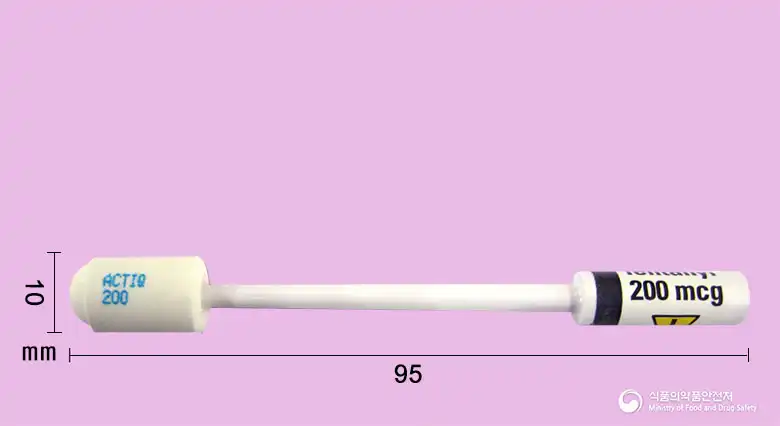
Fentanyl Citrate 0.3142mg
Prescription medication
Hyundai Pharmaceutical Co., Ltd.
Even with the same ingredient, the dose and directions can differ by strength and dosage form. Talk to a doctor or pharmacist before switching from a medication you are already taking.
No questions yet.
For anything that needs medical judgment, consult a doctor or pharmacist.
This drug information is based on data provided by the Korea Ministry of Food and Drug Safety.
Consult a doctor or pharmacist for accurate dosage, administration, and usage instructions.