
 한국어
 English
 日本語
 中文(简体)
 Viewing now
Diterin Tablet 100 mg (Sapropterin Dihydrochloride)
Sapropterin Dihydrochloride 100mg
Tablet · Prescription medication
Albogen Korea Co., Ltd.
MFDS item code 201507382 · Approved 2015.10.27 · Insurance code 652606220
Reduction of blood phenylalanine levels in patients with BH4-responsive phenylketonuria
Administering Tetrahydrobiopterin (BH4) to patients with phenylketonuria results in a reduction of blood phenylalanine concentrations. This is because BH4 participates in the metabolism of phenylalanine, helping to regulate its levels in the body. Therefore, BH4 is used in the treatment of specific types of phenylketonuria to improve the patients' condition.
The recommended starting dose of this medication is 10 mg/kg/day once daily. After taking this medication at 10 mg/kg/day for 1 month, measure the response to treatment based on changes in blood phenylalanine levels. Blood phenylalanine levels should be checked periodically from 1 week to 1 month after starting this medication. If blood phenylalanine levels do not decrease from baseline at 10 mg/kg/day, the dose may be increased to 20 mg/kg/day. Discontinue this medication in non-responders whose blood phenylalanine levels do not decrease after 1 month of treatment at 20 mg/kg/day. If the patient responds to this medication, the dose may be adjusted within the range of 5∼20 mg/kg/day according to the degree of response. Take this medication with food at the same time each day, and do not take it twice daily. If a dose is missed at the scheduled time, take it as soon as possible, but do not take it more than 2 times on the same day. Swallow this medication as a whole tablet or dissolve it in 120∼240mL of water or apple juice and take it within 15 minutes.
This medication should not be used in patients allergic to its active ingredient or other components. Caution should be exercised when using this medication in children under 4 years old or in elderly patients aged 65 or older, as its safety and efficacy have not been sufficiently established. For pregnant women, there is no clinical data on the use of this medication, and dietary restrictions on phenylalanine intake should be prioritized under strict medical supervision before and during pregnancy, using this drug only cautiously if necessary. Patients taking this medication must continue their phenylalanine-restricted diet and should have regular checks on blood phenylalanine and tyrosine levels, nutritional status, and mental and motor development. An imbalance in blood phenylalanine and tyrosine levels can lead to neurological issues, so protein and phenylalanine intake should be actively managed during drug therapy. This medication may cause seizures or worsen symptoms if taken with Levodopa, so patients on Levodopa should be particularly cautious. The safety and efficacy of this drug have not been established in patients with kidney or liver dysfunction; careful administration is necessary. During the use of this medication, side effects such as headaches, runny nose, sore throat, cough, diarrhea, vomiting, and abdominal pain may occur, and rarely, severe allergic reactions such as anaphylaxis may also arise. Gastrointestinal inflammation symptoms such as gastritis or esophagitis may appear after taking the drug; if gastrointestinal discomfort or pain persists, immediate consultation with healthcare professionals is advised. In case of overdose, symptoms such as headache and dizziness may occur, and symptomatic relief treatment should be administered. This medication should be stored out of reach of children, and maintaining the original packaging is important for the preservation of quality and safety. There are no studies on its effects on driving or operating machinery, so caution is advised during use.
Not everyone experiences these, and they can vary from person to person.
This medication should be stored in a tightly closed container to protect it from air and moisture, at a temperature between 1 and 30 degrees Celsius. Storing it this way helps maintain the drug's effectiveness for a longer period.
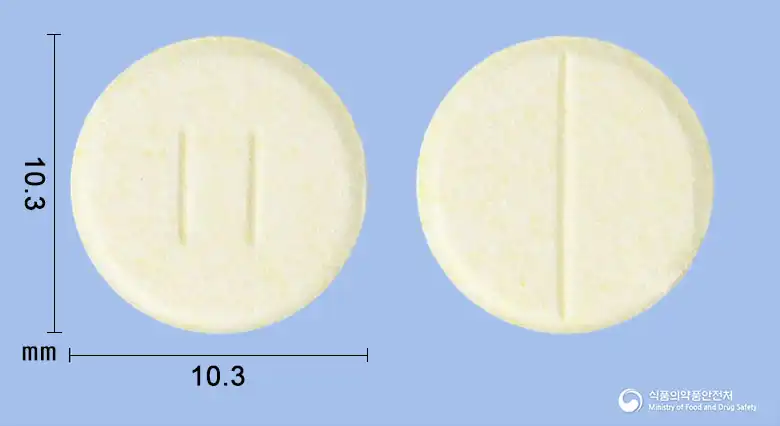
White to nearly white round tablets
30 tablets/bottle
Even with the same ingredient, strength, dosage form and how it is taken can differ.
Viewing nowSapropterin Dihydrochloride 100mg
Tablet · Prescription medication
Albogen Korea Co., Ltd.
Sapropterin Dihydrochloride 100mg
Prescription medication
Samoh Pharmaceutical Co., Ltd.
Even with the same ingredient, the dose and directions can differ by strength and dosage form. Talk to a doctor or pharmacist before switching from a medication you are already taking.
No questions yet.
For anything that needs medical judgment, consult a doctor or pharmacist.
This drug information is based on data provided by the Korea Ministry of Food and Drug Safety.
Consult a doctor or pharmacist for accurate dosage, administration, and usage instructions.