한국어
 English
 日本語
 中文(简体)
 Viewing now
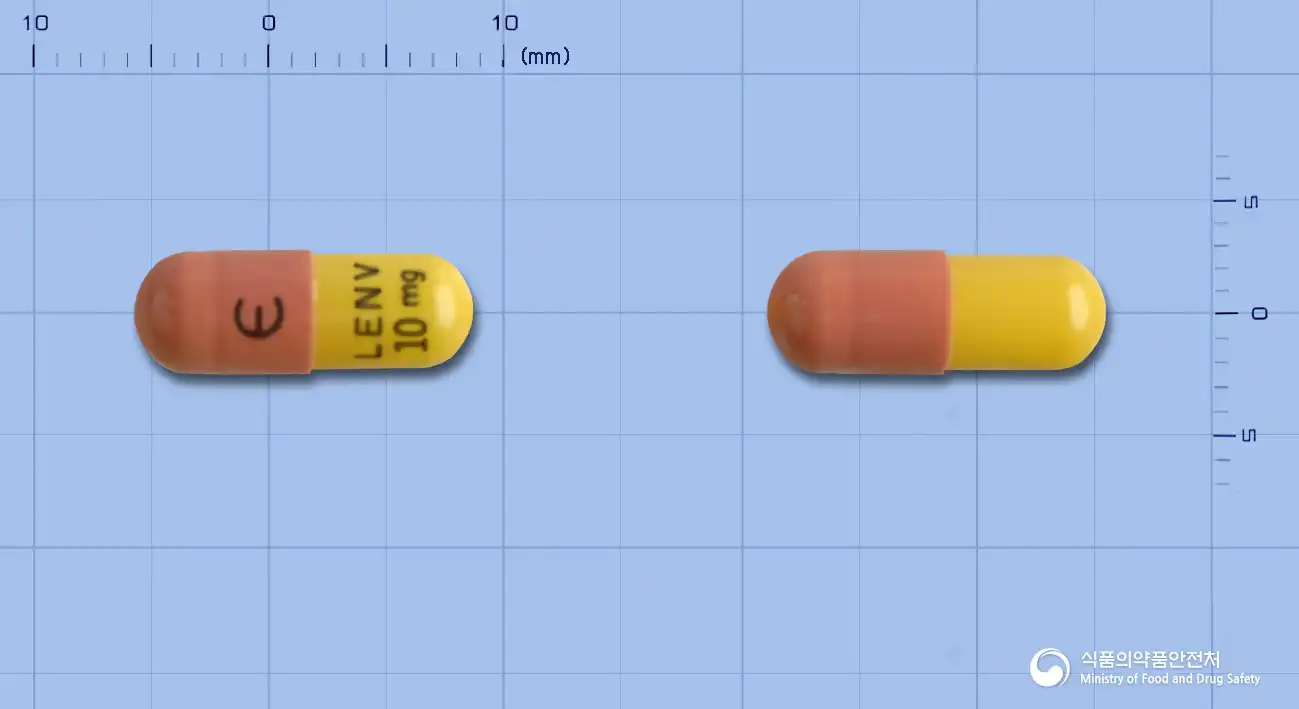
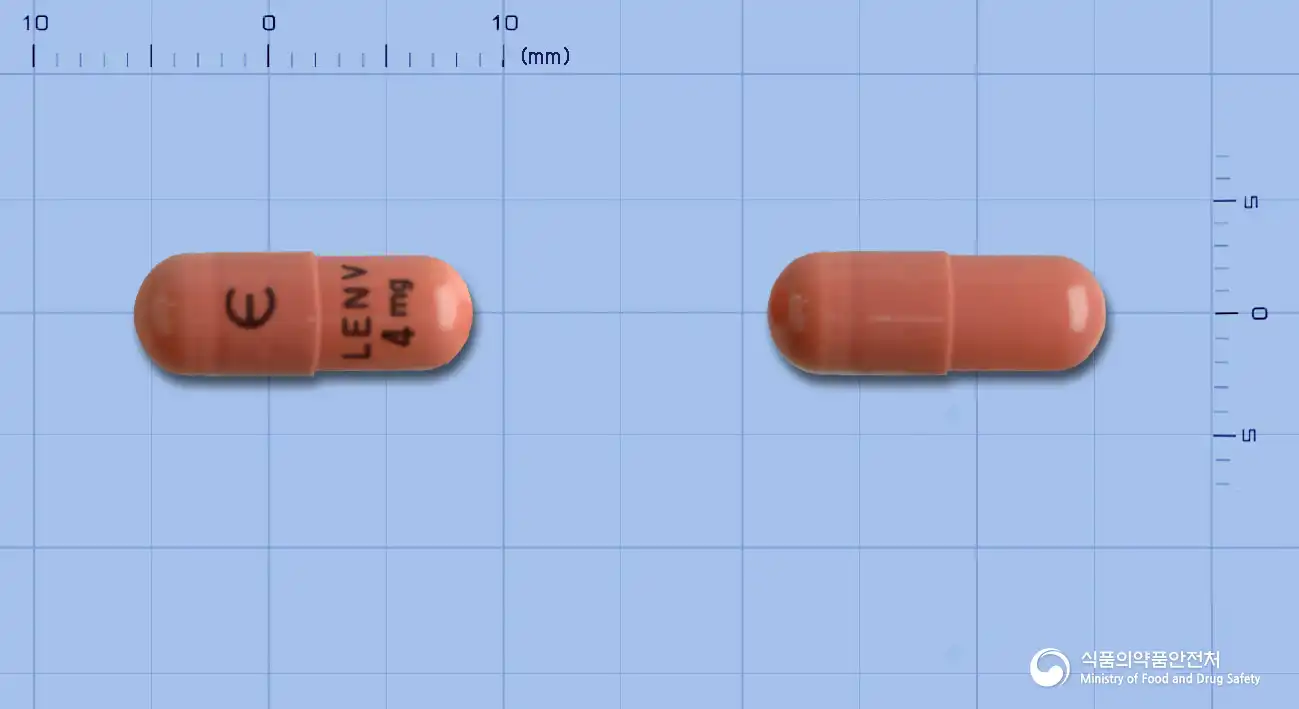
Lenvima Capsule 4 mg (Lenvatinib mesylate)
Lenvatinib Mesylate 4.9mg
Hard capsule · Prescription medication
Eisai Co., Ltd.
MFDS item code 201507059 · Approved 2015.10.07 · Insurance code 621100150
Treatment of solid tumors (thyroid cancer, hepatocellular carcinoma, endometrial cancer, etc.)
This medication is used for patients with locally recurrent or metastatic progressive differentiated thyroid cancer that does not respond to radioactive iodine. It is also indicated for first-line treatment of unresectable hepatocellular carcinoma. It has efficacy as a combination therapy with pembrolizumab for patients with progressive endometrial cancer who are not MSI-H or dMMR status and where surgery or radiation therapy is difficult. Additionally, it aids in the first-line treatment of progressive renal cell carcinoma in combination with pembrolizumab. In summary, it is widely used for the treatment of various types of progressive cancer, improving patient treatment outcomes.
Differentiated thyroid cancer: The recommended dose of this drug in adults is 24mg once daily. The daily dose may be adjusted as needed to manage adverse reactions. Hepatocellular carcinoma: Patients weighing 60kg or more: 12mg; patients weighing less than 60kg: 8mg. Continue administering this drug once daily. There is no clinical evidence supporting the use of a 10mg dose for hepatocellular carcinoma. Endometrial cancer: Administer 20mg orally once daily. Pembrolizumab administered in combination is given by intravenous infusion over 30 minutes at a dose of 200mg every 3 weeks. Renal cell carcinoma: Administer this drug orally at 20mg once daily in combination with pembrolizumab 200mg, given by intravenous infusion over 30 minutes every 3 weeks. Administer the combination for up to 2 years. After 2 years of combination therapy, this drug may be administered as a single agent. Differentiated thyroid cancer dose reductions: First dose reduction 20mg once daily; second dose reduction 14mg once daily; third dose reduction 10mg once daily. Hepatocellular carcinoma dose reductions, body weight ≥ 60kg: First dose reduction 8mg once daily; second dose reduction 4mg once daily; third dose reduction 4mg every other day. Hepatocellular carcinoma dose reductions, body weight < 60kg: First dose reduction 4mg once daily; second dose reduction 4mg every other day; third dose reduction discontinue treatment. Endometrial cancer dose reductions: First dose reduction 14mg once daily; second dose reduction 10mg once daily; third dose reduction 8mg once daily. Renal cell carcinoma dose reductions: First dose reduction 14mg once daily; second dose reduction 10mg once daily; third dose reduction 8mg once daily. Differentiated thyroid cancer, hepatic impairment: No initial dose adjustment based on liver function is required in patients with mild (Child-Pugh A) or moderate (Child-Pugh B) hepatic impairment. An initial dose of 14mg daily is recommended for patients with severe (Child-Pugh C) hepatic impairment. Hepatocellular carcinoma, hepatic impairment: Dose adjustment is not recommended for patients with mild hepatic impairment. This drug has not been studied in patients with moderate or severe hepatic impairment. Endometrial cancer, hepatic impairment: Dose adjustment is not recommended for patients with mild or moderate (Child-Pugh A or B) hepatic impairment. The recommended dose of this drug in patients with severe (Child-Pugh C) hepatic impairment is 10mg orally once daily. Renal cell carcinoma, hepatic impairment: Dose adjustment is not recommended for patients with mild or moderate (Child-Pugh A or B) hepatic impairment. The recommended dose of this drug in patients with severe (Child-Pugh C) hepatic impairment is 10mg orally once daily. Differentiated thyroid cancer, renal impairment: No initial dose adjustment based on renal function is required in patients with mild or moderate renal impairment. An initial dose of 14mg daily is recommended for patients with severe renal impairment. Patients with end-stage renal disease have not been studied, and administration of this drug is not recommended. Hepatocellular carcinoma, renal impairment: Patients with severe renal impairment and patients with end-stage renal disease have not been studied. Endometrial cancer, renal impairment: Dose adjustment is not recommended in patients with mild or moderate renal impairment. The recommended dose of this drug in patients with severe renal impairment is 10mg orally once daily. Renal cell carcinoma, renal impairment: Dose adjustment is not recommended in patients with mild or moderate renal impairment. The recommended dose of this drug in patients with severe renal impairment (creatinine clearance less than 30mL/min according to the Cockcroft-Gault formula) is 10mg orally once daily. Older adults: No initial dose adjustment based on age is required. Available data in patients aged 75 years or older are limited. Take orally once daily at the same time each day, with or without food. If a dose is missed at the scheduled time, skip that day's dose if less than 12 hours remain until the next day's dose. Do not take a double dose the next day.
Under 2 years of age: This drug should not be administered to children under 2 years of age due to safety concerns identified in animal studies. From 2 years to under 18 years of age: No data are available, and safety and efficacy have not been established.
This medicine should not be used in patients with allergies to the active ingredient or excipients of this medication or in breastfeeding patients. Caution is advised for patients with hypertension, a history of thromboembolism, patients with brain metastasis, patients whose surgical wounds have not completely healed, and patients with tumor invasion of the carotid or jugular veins. Serious side effects such as hypertension, bleeding, decreased heart function, renal impairment, liver dysfunction, and gastrointestinal perforation may occur during treatment, requiring regular monitoring. Blood pressure, in particular, should be measured frequently after treatment initiation, and if hypertension occurs, immediate appropriate treatment should be received. This medication can cause hypothyroidism, so it is essential to regularly monitor thyroid function and receive treatment if necessary. Common side effects during treatment include diarrhea, vomiting, loss of appetite, weight loss, fatigue, and sensory disturbances in the hands and feet; patients should consult healthcare providers if these symptoms worsen. This medication may delay wound healing, so administration should be paused for a certain period before and after scheduled surgeries, and re-administration should be cautiously decided until the wound is fully healed. Women of childbearing potential should use effective contraception during and for at least one month after taking this medication, and it should not be used during pregnancy. This medication can cause severe side effects such as heart failure, arterial thromboembolism, hepatotoxicity, renal failure, and rarely, reversible posterior leukoencephalopathy syndrome; if these symptoms occur, treatment should be stopped immediately and healthcare providers should be notified. Elderly patients or those with low body weight may have a higher risk of side effects and require more careful management. Caution is advised when driving or operating machinery while taking this medication.
This medicine should be stored in a tightly closed container to protect it from air and moisture. Additionally, it is best to store the medication at room temperature between 1 degree and 30 degrees. Do not place it in excessively hot or cold locations.
Orange-colored capsule filled with white to off-white granules
(10 capsules/blister) × 3
Even with the same ingredient, strength, dosage form and how it is taken can differ.
Even with the same ingredient, the dose and directions can differ by strength and dosage form. Talk to a doctor or pharmacist before switching from a medication you are already taking.
No questions yet.
For anything that needs medical judgment, consult a doctor or pharmacist.
This drug information is based on data provided by the Korea Ministry of Food and Drug Safety.
Consult a doctor or pharmacist for accurate dosage, administration, and usage instructions.