
 한국어
 English
 日本語
 中文(简体)
Dosage form image
Viewing nowLynparza Capsules 50mg (Olaparib)
Olaparib 50mg
Hard capsule · Prescription medication
AstraZeneca Korea Co., Ltd.
MFDS item code 201505353 · Approved 2015.08.05
This product's status changed to Approval withdrawn on 2024.01.05. It may no longer be sold, so consult a doctor or pharmacist before taking it.
Maintenance treatment of recurrent ovarian cancer with BRCA mutations (including fallopian tube and peritoneal cancer)
This medication is used as a single-agent maintenance therapy for adult patients with platinum-sensitive recurrent high-grade serous ovarian cancer, fallopian tube cancer, or primary peritoneal cancer who have responded to two or more lines of platinum-based chemotherapy.
This medicine is administered orally at 400mg (8 capsules) twice daily. It is recommended that treatment continue until disease progression. Lynparza capsules (50 mg) and Lynparza tablets (100 mg and 150 mg) differ in dose and bioavailability by dosage form; therefore, Lynparza tablets (100 mg and 150 mg) must not be substituted for Lynparza capsules (50 mg) on a milligram-for-milligram basis. If a patient misses a dose of this medicine, the patient should take the next normal dose at the scheduled time. Treatment may be interrupted to manage adverse reactions, and dose reduction may be considered. The recommended dose-reduction regimen is 200mg twice daily (equivalent to a total daily dose of 400mg). If further dose reduction is required, reduction to 100mg twice daily (equivalent to a total daily dose of 200 mg) is recommended. Concomitant administration with strong or moderate CYP3A inhibitors is not recommended; consider an alternative treatment. If concomitant administration with a strong CYP3A inhibitor is essential, a dose reduction of this medicine to 150 mg twice daily (equivalent to a total daily dose of 300 mg) is recommended. If concomitant administration with a moderate CYP3A inhibitor is essential, a dose reduction of this medicine to 200 mg twice daily (equivalent to a total daily dose of 400 mg) is recommended. (Refer to section 4. Drug interactions)
This medication may lead to serious blood disorders such as aplastic anemia or acute myeloid leukemia, so blood status should be carefully monitored during treatment. Venous thromboembolism, especially pulmonary embolism, may occur, so patients should immediately notify healthcare providers if they experience symptoms such as shortness of breath or leg swelling. Pneumonia may rarely occur, so patients should receive prompt examination and treatment if respiratory symptoms or fever arise. This medication may harm the fetus if used during pregnancy, thus women who are pregnant or planning to become pregnant must consult with healthcare providers and practice effective contraception during treatment and for 6 months following treatment. Hematological side effects such as anemia, leukopenia, and thrombocytopenia may occur with this medication, so regular blood tests are necessary. Common symptoms may include fatigue, dizziness, headache, loss of appetite, nausea, vomiting, diarrhea, cough, and shortness of breath, and patients should inform healthcare providers if symptoms are severe. This medication may interact with other anticancer agents or specific drugs, so patients should be sure to inform about any concomitant medications and it is advisable to avoid grapefruit juice consumption. Care should be taken when driving or operating machinery as symptoms such as fatigue and dizziness may occur. Use of this medication is not recommended for patients with severely impaired kidney or liver function, and dosage adjustment may be necessary based on healthcare provider's instructions. In case of an overdose, as there is no specific antidote, patients should promptly visit a medical facility for appropriate treatment. This medication can be stored unopened at temperatures between 1°C and 30°C for a maximum of 3 months; expired medications should not be used.
Not everyone experiences these, and they can vary from person to person.
This medication should be stored in a tightly closed container to protect it from air, and it is best stored at refrigerated temperatures between 2°C and 8°C. Care should be taken to avoid freezing the medication, as its efficacy may decrease if frozen. Additionally, it can be stored for up to 3 months at temperatures between 1°C and 30°C.
A white to pale yellow powder in a hard capsule that is white on the top and bottom.
448 capsules (112 capsules/bottle x 4)
Even with the same ingredient, strength, dosage form and how it is taken can differ.
Olaparib 50mg
Hard capsule · Prescription medication
AstraZeneca Korea Co., Ltd.
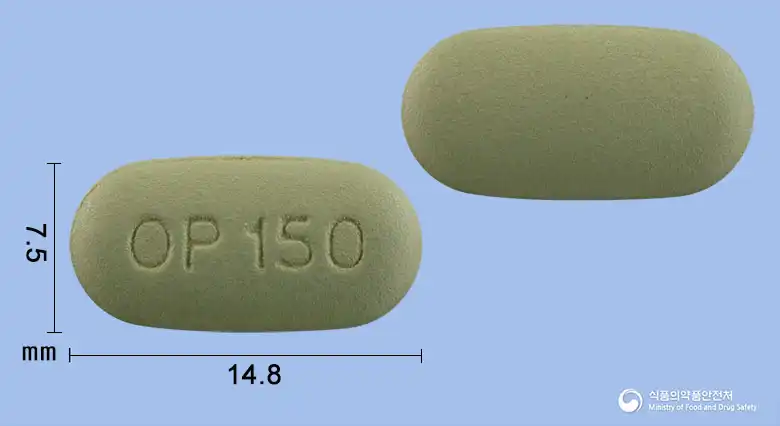
Olaparib 150mg
Tablet · Prescription medication
AstraZeneca Korea Co., Ltd.
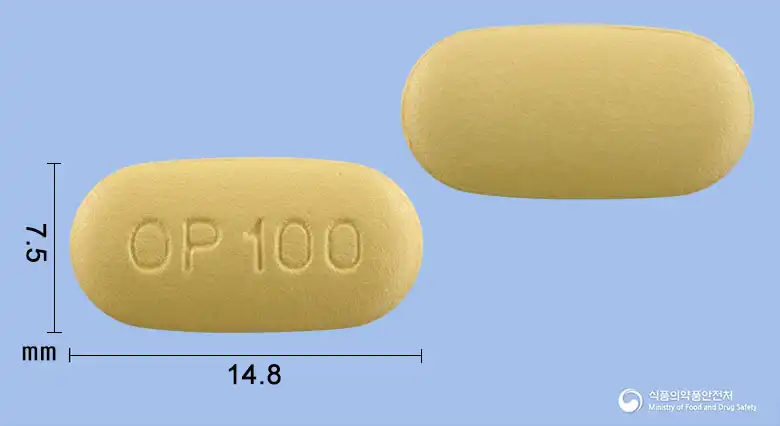
Olaparib 100mg
Tablet · Prescription medication
AstraZeneca Korea Co., Ltd.
Even with the same ingredient, the dose and directions can differ by strength and dosage form. Talk to a doctor or pharmacist before switching from a medication you are already taking.
No questions yet.
For anything that needs medical judgment, consult a doctor or pharmacist.
This drug information is based on data provided by the Korea Ministry of Food and Drug Safety.
Consult a doctor or pharmacist for accurate dosage, administration, and usage instructions.