
 한국어
 English
 日本語
 中文(简体)
 Viewing now
Hydrin Capsule 250 mg (Hydroxyurea)
Hydroxyurea 250mg
Hard capsule · Prescription medication
Korea United Pharmaceutical Co., Ltd.
MFDS item code 201501759 · Approved 2015.03.31 · Insurance code 644308890
Treatment of resistant chronic myeloid leukemia and head and neck squamous cell carcinoma (in combination with radiation therapy)
This drug is used for local treatment of primary squamous cell carcinoma of the head and neck, excluding the lips, in conjunction with radiation therapy. It is also effective for the treatment of resistant chronic myelogenous leukemia. This drug can be expected to show therapeutic effects in these two major conditions.
Determine the dose based on the lower of the patient's actual body weight and ideal body weight. Dose adjustment may be necessary when this drug is administered concomitantly with other bone marrow-suppressive agents. 1. Solid tumors 1) Intermittent therapy: Administer hydroxyurea 80 mg per kg of body weight orally once daily every 3 days. 2) Combination therapy with radiation therapy (head and neck cancer) Administer this drug 80 mg per kg of body weight orally once daily every 3 days. Start administration of this drug at least 7 days before initiation of radiation therapy, and continue during radiation therapy and after radiation therapy, with continuous monitoring of the patient, unless signs of toxicity or severe adverse reactions occur. In general, it is not necessary to adjust the radiation dose when used in combination. 2. Resistant chronic myeloid leukemia Until an intermittent dosing regimen is established, continuous therapy (administer this drug 20 ~ 30 mg per kg of body weight orally once daily, every day) is recommended.
This drug should not be administered to patients with significantly reduced bone marrow function. Specifically, it should not be used if the white blood cell count is below 2,500/㎣ or the platelet count is below 100,000/㎣. In patients with severe anemia, complete blood replacement therapy must be performed before administering this drug. Patients with a history of allergic reactions to this drug or its components, pregnant women or women of childbearing potential, and breastfeeding mothers should also avoid this drug. Patients who have undergone radiation therapy or cytotoxic chemotherapy in the past are at higher risk for bone marrow suppression and should be administered with caution, as post-radiation erythema may worsen. In patients with decreased kidney function, elimination of this drug may become difficult, thus the initial dosage should be reduced, and the patient's condition should be monitored carefully through blood tests. The same monitoring should be applied for liver function impairment patients. Patients taking other myelosuppressive drugs may require dosage adjustments. Furthermore, since this drug has immunosuppressive effects, it may increase the risk of infection when used in combination with live vaccines. This drug can decrease the number of blood cells, leading to symptoms such as leukopenia, anemia, and thrombocytopenia. Regular blood tests should be performed during treatment, and if any abnormalities occur, the administration should be discontinued or adjusted. Gastrointestinal side effects may include stomatitis, loss of appetite, nausea, vomiting, diarrhea, and constipation, while skin effects may include rash, skin ulcers, skin changes similar to dermatomyositis, erythema (peripheral, facial), hyperpigmentation of the skin and nails, atrophy of the skin and nails, scaling, and purplish papules, as well as hair loss. High doses may occasionally lead to central nervous system side effects such as drowsiness, headaches, dizziness, hallucinations, or seizures. Kidney and liver functions may be affected, so regular tests for renal and hepatic function should be performed along with blood tests. This drug has carcinogenic potential, and regular examinations are necessary for the possible occurrence of secondary tumors like skin cancer with long-term administration. Women who are pregnant or breastfeeding should avoid using this drug, as it may harm the fetus or newborn, and caution is also necessary if planning for pregnancy. Safety and efficacy in pediatric patients have not been established, and elderly patients are at a higher risk for decreased kidney function, thus careful observation and dosage adjustments are needed. In case of overdose, acute skin toxicity and stomatitis may occur, necessitating immediate gastric lavage and appropriate treatment, with long-term monitoring of blood status. For patients who have difficulty swallowing the capsules, the contents can be mixed with water and taken immediately, but caution is required when handling this drug, and wearing gloves and handwashing is essential to avoid exposure. Lastly, this drug may affect blood glucose results from continuous glucose monitors, potentially yielding false readings; thus, alternative methods for blood glucose management should be discussed with healthcare providers.
Not everyone experiences these, and they can vary from person to person.
This drug should be stored in a tightly sealed container as it may degrade due to air and light. It is best stored at room temperature between 15 and 30 degrees Celsius.
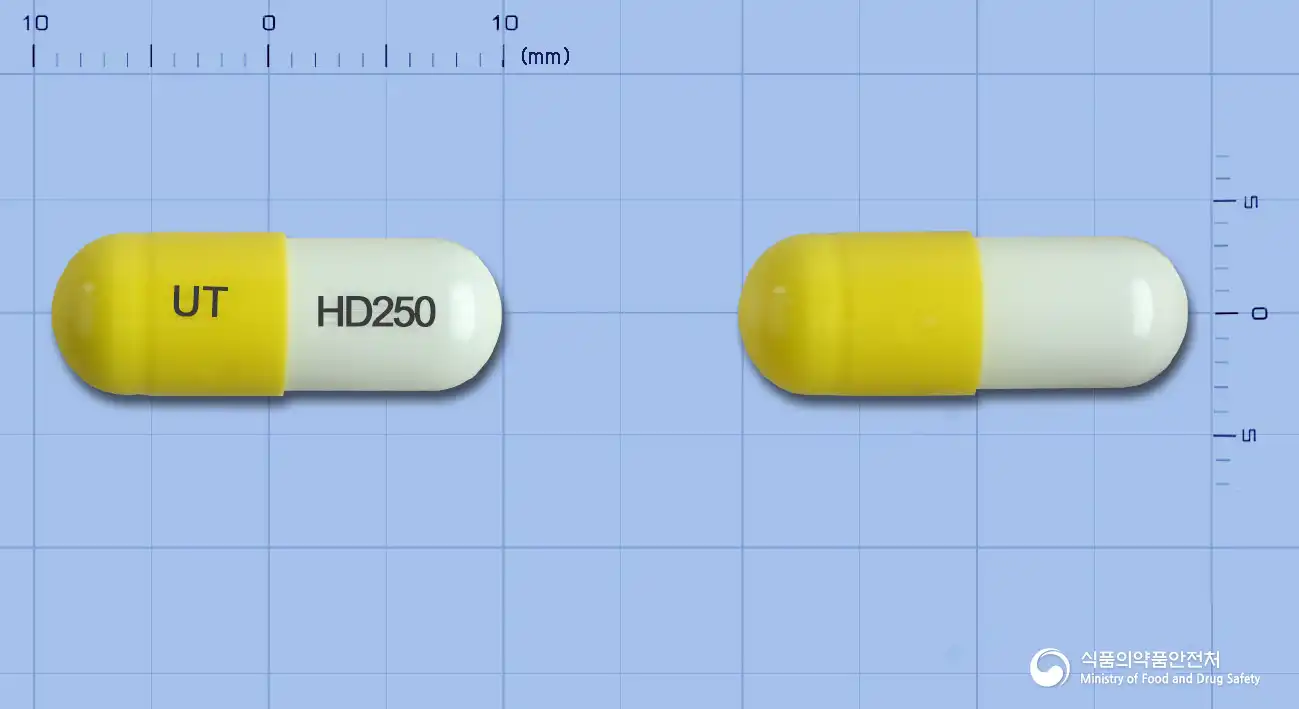
A hard capsule with a yellow upper part and a white lower part containing a white to grayish-white powder.
30 capsules (10 capsules/PTP x 3)
Even with the same ingredient, strength, dosage form and how it is taken can differ.
Even with the same ingredient, the dose and directions can differ by strength and dosage form. Talk to a doctor or pharmacist before switching from a medication you are already taking.
No questions yet.
For anything that needs medical judgment, consult a doctor or pharmacist.
This drug information is based on data provided by the Korea Ministry of Food and Drug Safety.
Consult a doctor or pharmacist for accurate dosage, administration, and usage instructions.