
 한국어
 English
 日本語
 中文(简体)
Summary
- Main use
- Treatment of blood cancers (such as leukemia, lymphoma, and Waldenström macroglobulinemia)
- Who takes it
- Adults
- Adult dose
- This medicine should be administered orally once daily at the same time each day with 1 cup of water. The capsule should be swallowed whole with water; do not open, crush, or chew the capsule. This medicine should not be taken with grapefruit juice. This medicine should be continued until the disease progresses or the patient can no longer tolerate treatment. Mantle cell lymphoma (MCL) The recommended dose of this medicine is 560 mg once daily (four 140 mg capsules), taken until the disease progresses or the patient can no longer tolerate treatment. Chronic lymphocytic leukemia (CLL) and small lymphocytic lymphoma (SLL) The recommended dose of this medicine is 420 mg once daily (three 140 mg capsules). For chronic lymphocytic leukemia and small lymphocytic lymphoma, this medicine is administered as monotherapy or in combination with an anti-CD20 agent (rituximab or obinutuzumab) until the disease progresses or the patient can no longer tolerate treatment (see Indications and Usage). When used in combination with venetoclax, this medicine is administered as monotherapy for 3 cycles (1 cycle is 28 days), followed by combination therapy with this medicine and venetoclax for 12 cycles. For additional information about rituximab, obinutuzumab, or venetoclax used in combination with this medicine, refer to the Korean prescribing information for each drug. When this medicine is used in combination with an anti-CD20 agent and administration on the same day is required, it is recommended that this medicine be administered before the anti-CD20 agent. Waldenström macroglobulinemia (WM) The recommended dose of this medicine is 420 mg once daily (three 140 mg capsules), taken until the disease progresses or the patient can no longer tolerate treatment. For Waldenström macroglobulinemia, this medicine is administered as monotherapy or in combination with rituximab (see Indications and Usage). For additional information about rituximab used in combination with this medicine, refer to the Korean prescribing information for each drug. When this medicine is used in combination with an anti-CD20 agent and administration on the same day is required, it is recommended that this medicine be administered before rituximab. Dose modifications Concomitant administration with moderate or strong CYP3A inhibitors may increase exposure to this medicine; therefore, dose modification is required. Interrupt treatment with this medicine if new or worsening Grade 2 heart failure, Grade 3 cardiac arrhythmia, Grade 3 or higher nonhematologic toxicity, Grade 3 or higher infection or febrile neutropenia, or Grade 4 hematologic toxicity occurs. Once the symptoms of toxicity have resolved to Grade 1 or baseline (recovery), treatment with this medicine may be resumed at the doses recommended in the table below. Adverse reaction1 Occurrence of toxicity MCL dose modification after recovery; starting dose = 560 mg CLL/SLL, WM dose modification after recovery; starting dose = 420 mg Grade 2 heart failure2 1st occurrence: Resume at 420 mg once daily / resume at 280 mg once daily 2nd occurrence: Resume at 280 mg once daily / resume at 140 mg once daily 3rd occurrence: Discontinue treatment Grade 3 cardiac arrhythmia2 1st occurrence: Resume at 420 mg once daily / resume at 280 mg once daily 2nd occurrence: Discontinue treatment Grade 3 or 4 heart failure, Grade 4 cardiac arrhythmia 1st occurrence: Discontinue treatment Grade 3 or 4 nonhematologic toxicity3, Grade 3 or 4 infection or febrile neutropenia, Grade 4 hematologic toxicity 1st occurrence: Resume at 420 mg once daily / resume at 280 mg once daily 2nd occurrence: Resume at 280 mg once daily / resume at 140 mg once daily 3rd occurrence: Discontinue treatment 1. Classified according to the National Cancer Institute Common Terminology Criteria for Adverse Events (NCI-CTCAE) or the International Workshop on Chronic Lymphocytic Leukemia (iwCLL) criteria for hematologic toxicity grading in CLL/SLL 2. Assess the benefit-risk balance before resuming treatment following Grade 2 heart failure or Grade 3 cardiac arrhythmia 3. Assess the benefit-risk balance before resuming treatment following Grade 4 nonhematologic toxicity Missed dose If a dose is missed at the scheduled time, the missed dose may be taken as soon as possible on the same day, and the normal dosing schedule may be resumed the following day. Patients should not take additional capsules to make up for a missed dose. Patients with renal impairment No dose adjustment of this medicine is required for patients with mild or moderate renal impairment (creatinine clearance≥30mL/min); however, hydration should be maintained and serum creatinine levels should be monitored regularly. Patients with hepatic impairment A study in patients with hepatic impairment who did not have cancer showed increased blood concentrations of this medicine. The recommended dose for patients with mild hepatic impairment (Child-Pugh class A) is 140 mg once daily (1 capsule). Monitor for signs of toxicity from this medicine and follow the dose modification guidance if necessary. Administration of this medicine is not recommended in patients with moderate hepatic impairment (Child-Pugh Class B) or severe hepatic impairment (Child-Pugh class C).
Ingredients
- Importer
- Janssen Korea Ltd.
Efficacy & effects
Treatment of blood cancers (such as leukemia, lymphoma, and Waldenström macroglobulinemia)
- Mantle cell lymphoma
- chronic lymphocytic leukemia
- small lymphocytic lymphoma
- Waldenström macroglobulinemia
View approved original textHide original text
This medication is used for the treatment of hematological malignancies such as mantle cell lymphoma, chronic lymphocytic leukemia, and small lymphocytic lymphoma, as well as Waldenström macroglobulinemia. It can be used as monotherapy in patients with mantle cell lymphoma who have prior treatment experience. For patients with chronic lymphocytic leukemia and small lymphocytic lymphoma, it can be effectively used either as monotherapy or in combination with rituximab, obinutuzumab, or venetoclax. It can be safely used especially in patients aged 65 or older or those with comorbidities. In patients with Waldenström macroglobulinemia, it is effective when used alone or in combination with rituximab. It is widely used in the treatment of various forms of hematological cancers and improves patient conditions.
How to take
Adult dose
This medicine should be administered orally once daily at the same time each day with 1 cup of water. The capsule should be swallowed whole with water; do not open, crush, or chew the capsule. This medicine should not be taken with grapefruit juice. This medicine should be continued until the disease progresses or the patient can no longer tolerate treatment. Mantle cell lymphoma (MCL) The recommended dose of this medicine is 560 mg once daily (four 140 mg capsules), taken until the disease progresses or the patient can no longer tolerate treatment. Chronic lymphocytic leukemia (CLL) and small lymphocytic lymphoma (SLL) The recommended dose of this medicine is 420 mg once daily (three 140 mg capsules). For chronic lymphocytic leukemia and small lymphocytic lymphoma, this medicine is administered as monotherapy or in combination with an anti-CD20 agent (rituximab or obinutuzumab) until the disease progresses or the patient can no longer tolerate treatment (see Indications and Usage). When used in combination with venetoclax, this medicine is administered as monotherapy for 3 cycles (1 cycle is 28 days), followed by combination therapy with this medicine and venetoclax for 12 cycles. For additional information about rituximab, obinutuzumab, or venetoclax used in combination with this medicine, refer to the Korean prescribing information for each drug. When this medicine is used in combination with an anti-CD20 agent and administration on the same day is required, it is recommended that this medicine be administered before the anti-CD20 agent. Waldenström macroglobulinemia (WM) The recommended dose of this medicine is 420 mg once daily (three 140 mg capsules), taken until the disease progresses or the patient can no longer tolerate treatment. For Waldenström macroglobulinemia, this medicine is administered as monotherapy or in combination with rituximab (see Indications and Usage). For additional information about rituximab used in combination with this medicine, refer to the Korean prescribing information for each drug. When this medicine is used in combination with an anti-CD20 agent and administration on the same day is required, it is recommended that this medicine be administered before rituximab. Dose modifications Concomitant administration with moderate or strong CYP3A inhibitors may increase exposure to this medicine; therefore, dose modification is required. Interrupt treatment with this medicine if new or worsening Grade 2 heart failure, Grade 3 cardiac arrhythmia, Grade 3 or higher nonhematologic toxicity, Grade 3 or higher infection or febrile neutropenia, or Grade 4 hematologic toxicity occurs. Once the symptoms of toxicity have resolved to Grade 1 or baseline (recovery), treatment with this medicine may be resumed at the doses recommended in the table below. Adverse reaction1 Occurrence of toxicity MCL dose modification after recovery; starting dose = 560 mg CLL/SLL, WM dose modification after recovery; starting dose = 420 mg Grade 2 heart failure2 1st occurrence: Resume at 420 mg once daily / resume at 280 mg once daily 2nd occurrence: Resume at 280 mg once daily / resume at 140 mg once daily 3rd occurrence: Discontinue treatment Grade 3 cardiac arrhythmia2 1st occurrence: Resume at 420 mg once daily / resume at 280 mg once daily 2nd occurrence: Discontinue treatment Grade 3 or 4 heart failure, Grade 4 cardiac arrhythmia 1st occurrence: Discontinue treatment Grade 3 or 4 nonhematologic toxicity3, Grade 3 or 4 infection or febrile neutropenia, Grade 4 hematologic toxicity 1st occurrence: Resume at 420 mg once daily / resume at 280 mg once daily 2nd occurrence: Resume at 280 mg once daily / resume at 140 mg once daily 3rd occurrence: Discontinue treatment 1. Classified according to the National Cancer Institute Common Terminology Criteria for Adverse Events (NCI-CTCAE) or the International Workshop on Chronic Lymphocytic Leukemia (iwCLL) criteria for hematologic toxicity grading in CLL/SLL 2. Assess the benefit-risk balance before resuming treatment following Grade 2 heart failure or Grade 3 cardiac arrhythmia 3. Assess the benefit-risk balance before resuming treatment following Grade 4 nonhematologic toxicity Missed dose If a dose is missed at the scheduled time, the missed dose may be taken as soon as possible on the same day, and the normal dosing schedule may be resumed the following day. Patients should not take additional capsules to make up for a missed dose. Patients with renal impairment No dose adjustment of this medicine is required for patients with mild or moderate renal impairment (creatinine clearance≥30mL/min); however, hydration should be maintained and serum creatinine levels should be monitored regularly. Patients with hepatic impairment A study in patients with hepatic impairment who did not have cancer showed increased blood concentrations of this medicine. The recommended dose for patients with mild hepatic impairment (Child-Pugh class A) is 140 mg once daily (1 capsule). Monitor for signs of toxicity from this medicine and follow the dose modification guidance if necessary. Administration of this medicine is not recommended in patients with moderate hepatic impairment (Child-Pugh Class B) or severe hepatic impairment (Child-Pugh class C).
Precautions
This medication should not be administered to patients who have had hypersensitivity reactions to the active ingredient or any excipients. During treatment with this medication, common side effects may include diarrhea, bleeding, fatigue, myalgia, nausea, infections, rash, and others. In severe cases, there may be a decrease in blood cell counts or serious adverse reactions such as pneumonia, anemia, or renal failure; therefore, regular blood counts and renal function tests are necessary. There is a risk of bleeding, especially when taken with anticoagulants or antiplatelet agents, which increases the risk of bleeding. This medication should be discontinued at least 3 to 7 days before and after surgery, and bleeding symptoms should always be monitored. There may be an increased risk of infections, so symptoms of infection should be closely observed, and preventive measures should be taken if necessary. Liver dysfunction or reactivation of hepatitis may occur, so symptoms related to liver function should be regularly tested and monitored. Inflammatory diseases may occur in the lungs; if respiratory symptoms appear, immediate consultation with a healthcare provider is required. There is a risk of heart disease, so a prior evaluation of heart health status is necessary, and heart function should be closely monitored during treatment. This medication should not be taken during pregnancy, and women of childbearing age should ensure effective contraception during and after treatment for a specified period. Breastfeeding women are recommended to discontinue breastfeeding while on this medication. This medication may interact with other drugs that can affect blood concentrations, so inform your healthcare provider if you are taking other medications. Elderly patients may have a higher risk of side effects such as pneumonia or thrombocytopenia, necessitating careful observation. Symptoms such as fatigue, dizziness, and weakness may occur when driving or operating machinery, so caution is advised.
Side effects
- Diarrhea
- bleeding
- fatigue
- musculoskeletal pain
- nausea
- upper respiratory infection
- cough
- rash
- neutropenia
- thrombocytopenia
Show 83 moreCollapse
- pneumonia
- anemia
- urinary tract infection
- sinusitis
- dehydration
- hyperuricemia
- loss of appetite
- dizziness
- headache
- dyspnea
- epistaxis
- abdominal pain
- vomiting
- stomatitis
- constipation
- dyspepsia
- muscle cramp
- myalgia
- arthralgia
- back pain
- limb pain
- fever
- asthenia
- peripheral edema
- contusion
- atrial fibrillation
- subdural hematoma
- neutropenic fever
- acute kidney failure
- conjunctivitis
- muscle rigidity
- skin infection
- infusion-related reactions
- insomnia
- peripheral neuropathy
- leukopenia
- hepatic failure
- liver cirrhosis
- interstitial lung disease
- tumor lysis syndrome
- anaphylactic shock
- angioedema
- urticaria
- Stevens-Johnson syndrome
- nail damage
- panniculitis
- neutrophilic dermatosis
- pyogenic granuloma
- cutaneous vasculitis
- heart failure
- acute kidney injury
- reactivation of hepatitis B
- peripheral neuropathy
- ocular hemorrhage
- hemophagocytic lymphohistiocytosis
- leukopenia
- thrombocytopenia
- decreased hemoglobin
- hypernatremia
- hypocalcemia
- hypomagnesemia
- increased bilirubin
- hyperkalemia
- increased AST
- increased ALP
- increased ALT
- increased creatinine
- decreased creatinine clearance
- hypoalbuminemia
- hypokalemia
- hyponatremia
- ventricular arrhythmia
- ventricular fibrillation
- ventricular flutter
- ventricular tachycardia
- cerebrovascular accident
- ischemic stroke
- cerebral ischemia
- transient ischemic attack
- blurred vision
- decreased vision
- non-melanoma skin cancer
- hemophagocytic lymphohistiocytosis
Not everyone experiences these, and they can vary from person to person.
Storage
This medication should be stored in a tightly sealed container to protect it from air and moisture, and it is best kept at room temperature between 1 and 30 degrees Celsius. Storing it this way will maintain the medication's effectiveness and prevent degradation.
Appearance and packaging
Appearance
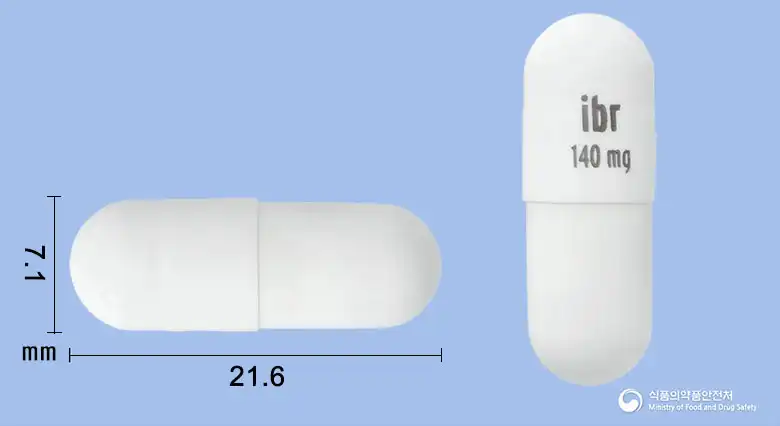
An opaque white capsule containing a white to off-white powder
Package unit
120 capsules/bottle, 90 capsules/bottle
Questions about this medicine
No questions yet.
For anything that needs medical judgment, consult a doctor or pharmacist.