
 한국어
 English
 日本語
 中文(简体)
 Viewing now
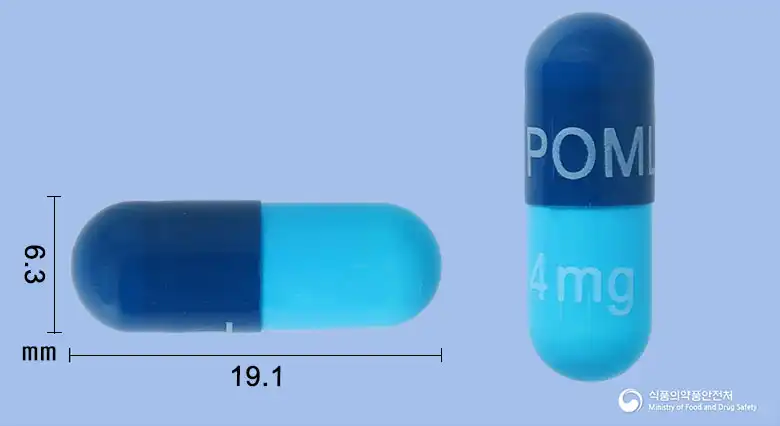
Pomallist Capsule 4 mg (Pomalidomide)
Pomalidomide 4mg
Hard capsule · Prescription medication
Korea BMS Pharmaceutical Co., Ltd.
MFDS item code 201403606 · Approved 2014.08.04 · Insurance code 658700900,691800100
Combination therapy for multiple myeloma in patients who have received prior treatment
This medication is used to enhance the therapeutic effect in multiple myeloma patients who have previously been treated with therapies such as lenalidomide and bortezomib, in combination with dexamethasone. It can be effectively applied, especially to patients who are relapsing or unresponsive to treatment. This helps suppress the progression of multiple myeloma and improve the patient's condition.
This medicine must be taken with water. The capsule must not be opened, broken, or chewed, and it may be taken with or without food. The dose is continued or adjusted based on clinical and laboratory findings. 1. In combination with bortezomib and dexamethasone for the treatment of patients with multiple myeloma who have received one or more prior therapies, including lenalidomide The recommended starting dose of this medicine is 4mg orally once daily on Days 1–14 of repeated 21-day cycles. The recommended starting dose of bortezomib is 1.3mg/m2 once daily by intravenous or subcutaneous injection, and the recommended starting dose of dexamethasone is 20mg once daily. Combination treatment with this medicine, bortezomib, and dexamethasone should continue until disease progression or unacceptable toxicity occurs. Cycles 1–8 (21-day cycles): This medicine (4mg) on Days 1–14, bortezomib (1.3mg/m2) on Days 1, 4, 8, 11, dexamethasone (20mg) on Days 1, 2, 4, 5, 8, 9, 11, 12. Cycle 9 and beyond (21-day cycles): This medicine (4mg) on Days 1–14, bortezomib (1.3mg/m2) on Days 1, 8, dexamethasone (20mg) on Days 1, 2, 8, 9. To start a new cycle of treatment with this medicine, the neutrophil count must be ≥1 x 10⁹/L and the platelet count must be ≥50 x 109/L. Neutropenia: If ANC* is <0.5 x 10⁹/L or febrile neutropenia occurs (fever ≥38.5℃ and ANC <1 x 10⁹/L), interrupt treatment with this medicine and continue to monitor the complete blood count at 1-week intervals. When ANC recovers to ≥1 x 10⁹/L, restart treatment with this medicine at a dose one level below the previous dose. Interrupt treatment with this medicine for each subsequent decrease to <0.5 x 10⁹/L. When ANC recovers to ≥1 x 10⁹/L, restart treatment with this medicine at a dose one level below the previous dose. Thrombocytopenia: If the platelet count is <25 x 109/L, interrupt treatment with this medicine and continue to monitor the complete blood count at 1-week intervals. When the platelet count recovers to ≥50 x 109/L, restart treatment with this medicine at a dose one level below the previous dose. Interrupt treatment with this medicine for each subsequent decrease to <25 x 109/L. When the platelet count recovers to ≥50 x 109/L, restart treatment with this medicine at a dose one level below the previous dose. Grade 2-3 rash: Consider interrupting or discontinuing this medicine. Grade 4 or blistering (suspected angioedema, anaphylactic reaction, exfoliative or bullous rash, Stevens-Johnson syndrome, toxic epidermal necrolysis, or drug reaction with eosinophilia and systemic symptoms (DRESS syndrome)): Permanently discontinue treatment. Other grade 3 or higher adverse reactions related to this medicine: Interrupt treatment with this medicine until the adverse reaction resolves to ≤Grade 2. Resume treatment at a dose reduced by 1 level. Starting dose: 4 mg. First dose reduction: 3 mg. Second dose reduction: 2 mg. Third dose reduction: 1 mg. If an adverse reaction occurs after reduction to 1 mg, the medicine should be discontinued. Dexamethasone dose adjustment: Dyspepsia = Grade 1-2: Maintain the dose and treat with a histamine (H2) blocker or equivalent medicine. If symptoms persist, reduce the dose by 1 level. Dyspepsia ≥Grade 3: Interrupt treatment until symptoms are controlled. Add a histamine (H2) blocker or equivalent medicine and, when treatment is resumed, reduce the dose by 1 level. Edema ≥Grade 3: Use a diuretic if needed and reduce the dose by 1 level. Confusion or mood changes ≥Grade 2: Interrupt treatment until symptoms resolve. When treatment is resumed, reduce the dose by 1 level. Muscle weakness ≥Grade 2: Interrupt treatment until muscle weakness is ≤Grade 1. Resume treatment at a dose reduced by 1 level. Hyperglycemia ≥Grade 3: Reduce the dose by 1 level. Treat with insulin or an oral hypoglycemic agent if needed. Acute pancreatitis: Discontinue the patient's dexamethasone regimen. Other adverse reactions related to dexamethasone that are ≥Grade 3: Interrupt dexamethasone until the adverse reaction resolves to ≤Grade 2. Resume treatment at a dose reduced by 1 level. If recovery from toxicity takes more than 14 days, resume treatment at a dose one level below the previous dose. Dexamethasone dose reduction levels: ≤75 years of age, Cycles 1–8: Days 1, 2, 4, 5, 8, 9, 11, 12 of each 21-day treatment cycle; Cycle 9 and beyond: Days 1, 2, 8, 9 of each 21-day treatment cycle. >75 years of age, Cycles 1–8: Days 1, 2, 4, 5, 8, 9, 11, 12 of each 21-day treatment cycle; Cycle 9 and beyond: Days 1, 2, 8, 9 of each 21-day treatment cycle. Initial dose: 20mg, 10mg. First dose reduction: 12mg, 6mg. Second dose reduction: 8mg, 4mg. If patients aged 75 years or younger cannot tolerate dexamethasone 8mg, or patients aged over 75 years cannot tolerate dexamethasone 4mg, dexamethasone should be discontinued. 2. In combination with dexamethasone for the treatment of patients who have received at least 2 prior therapies, including lenalidomide and bortezomib, and have relapsed or are refractory The recommended starting dose of this medicine is 4mg orally once daily on Days 1–21 of repeated 28-day cycles. The recommended dose of dexamethasone is 40mg orally once daily on Days 1, 8, 15, and 22 of each 28-day treatment cycle. Combination treatment with this medicine and dexamethasone should continue until disease progression or unacceptable toxicity occurs. Follow Tables 2 and 3 for guidance on interruption and dose reduction of this medicine related to adverse reactions. Dexamethasone dose reduction levels: ≤75 years of age, Days 1, 8, 15, and 22 of each 28-day treatment cycle. >75 years of age, Days 1, 8, 15, and 22 of each 28-day treatment cycle. Initial dose: 40mg, 20mg. First dose reduction: 20mg, 12mg. Second dose reduction: 10mg, 8mg. If patients aged 75 years or younger cannot tolerate dexamethasone 10mg, or patients aged over 75 years cannot tolerate dexamethasone 8mg, dexamethasone should be discontinued.
This medication should not be taken during pregnancy as it may cause severe fetal malformations. Women who are capable of becoming pregnant should undergo several pregnancy tests before and during treatment with this medication, and must use two or more effective contraceptive methods concurrently. Male patients must also use condoms during and for a certain period after taking this medication, and should not donate semen or sperm. Common hematological side effects such as neutropenia, anemia, and thrombocytopenia may occur, so regular blood tests are necessary. There is an increased risk of thromboembolic events, so if signs of thrombosis appear, immediate notification to medical personnel and careful observation are required. Peripheral neuropathy symptoms may arise, so neurological symptoms should be closely monitored. Symptoms such as dizziness or confusion may occur, so if these symptoms arise, one should avoid driving or operating machinery. Severe skin reactions or allergic responses may occur, so if symptoms such as rash, swelling, or difficulty in breathing occur, treatment should be discontinued immediately and medical advice should be sought. Symptoms of liver dysfunction or hepatitis may appear, thus liver function tests are necessary during treatment. The risk of infections such as pneumonia may increase, so if signs of infection occur, notify medical personnel promptly. This medication should be taken in capsule form at designated times; do not open or chew the capsule, and take it with water. In case of overdose, there are no specific antidotes, so symptomatic treatment according to the symptoms is required. When handling this medication, care should be taken to avoid direct skin contact; if contact occurs, wash immediately with soap and water.
Teratogenicity, neutropenia, anemia, thrombocytopenia, fever, lower respiratory tract infection, influenza, acute kidney injury, dizziness, confusion, vascular edema, anaphylactic reaction, Stevens-Johnson syndrome, toxic epidermal necrolysis, drug reaction with eosinophilia and systemic symptoms (DRESS syndrome), pneumonia, upper respiratory tract infection, sepsis, septic shock, Clostridium difficile colitis, airway infection, lung infection, urethral infection, basal cell carcinoma, leukopenia, lymphopenia, hypokalemia, hyperglycemia, hypomagnesemia, hypocalcemia, hypophosphatemia, hyperkalemia, hypercalcemia, insomnia, depression, tremor, syncope, sensory disturbance, taste disturbance, cataract, atrial fibrillation, deep vein thrombosis, hypotension, hyperemia, dyspnea, cough, pulmonary embolism, diarrhea, vomiting, nausea, constipation, abdominal pain, epigastric pain, stomatitis, dry mouth, abdominal distension, rash, muscle weakness, back pain, muscle cramps, chronic kidney damage, urinary retention, fatigue, peripheral edema, edema, increased alanine aminotransferase, weight loss, falls, neutropenic sepsis, bronchopneumonia, nasopharyngitis, decreased appetite, altered mental status, decreased level of consciousness, dizziness, deep vein thrombosis, neutropenic sepsis, pancytopenia, decreased appetite, pruritus, muscle cramps, kidney failure, pelvic pain, non-cardiac chest pain, hyperhidrosis, seborrheic dermatitis, pancytopenia, tumor lysis syndrome, allergic reaction, solid organ transplant rejection, elevated liver enzyme levels, liver failure, reactivation of hepatitis B virus, herpes zoster, gastrointestinal bleeding, squamous cell carcinoma of the skin, subarachnoid hemorrhage, asthenia, generalized edema, COVID-19, aspiration pneumonia, candidiasis, boil, Pneumocystis pneumonia, Klebsiella pneumonia, death, facial edema, deterioration of condition, hypercalcemia, hypocalcemia, type 2 diabetes, hemorrhagic diathesis, pleural effusion, lung inflammation, exertional dyspnea, pneumothorax, colitis, dyspepsia, hemorrhoids, abdominal discomfort, anal inflammation, dry mouth, gastritis, gastroesophageal reflux disease, oral pain, toxic kidney disease, increased blood creatinine, increased blood urea, decreased hemoglobin, decreased blood pressure, pelvic pain, low back pain, muscle weakness, myalgia, jaw pain, headache, delirium, sleep disturbance, hepatic toxicity
Not everyone experiences these, and they can vary from person to person.
This medication may be sensitive to air and moisture, so it must be stored in a tightly sealed container. It is important to maintain the storage temperature between 1 and 30 degrees Celsius. This helps maintain the effectiveness of the medication for an extended period.
This medicine is a hard capsule with a dark blue upper part and a blue lower part containing yellow powder.
7 capsules/ PTP [pack], 21 capsules/ PTP [pack]
Even with the same ingredient, strength, dosage form and how it is taken can differ.
Viewing nowPomalidomide 4mg
Hard capsule · Prescription medication
Korea BMS Pharmaceutical Co., Ltd.
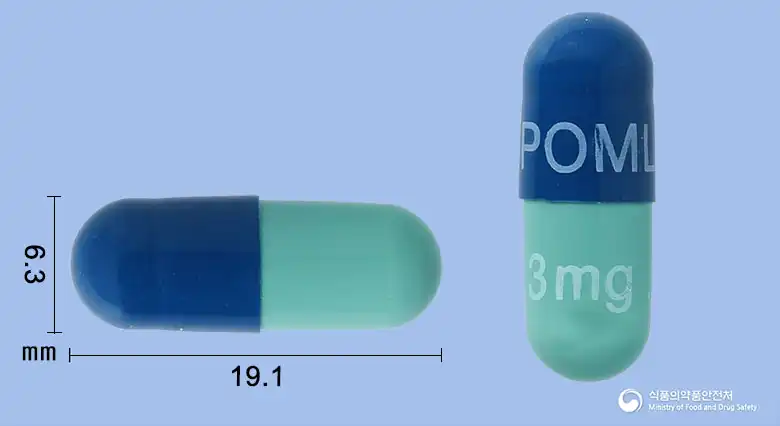
Pomalidomide 3mg
Hard capsule · Prescription medication
Korea BMS Pharmaceutical Co., Ltd.
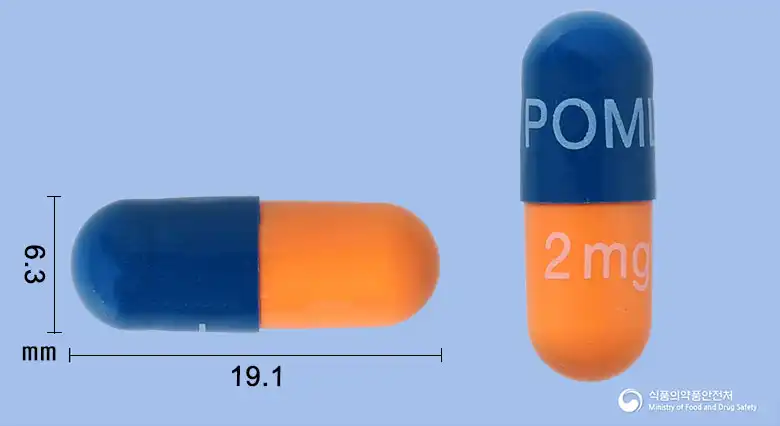
Pomalidomide 2mg
Hard capsule · Prescription medication
Korea BMS Pharmaceutical Co., Ltd.
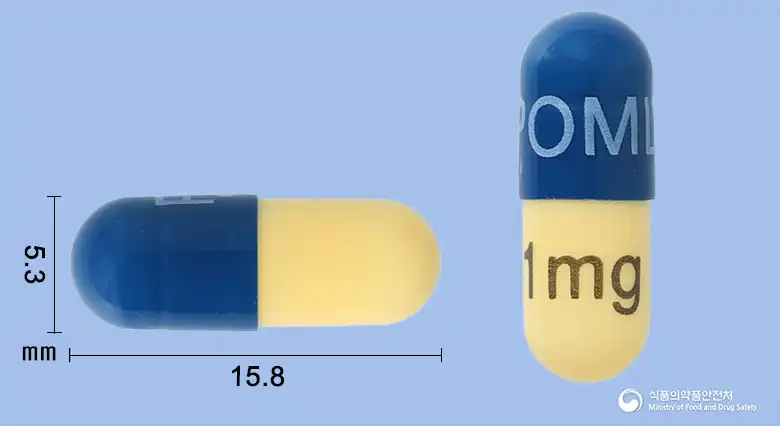
Pomalidomide 1mg
Hard capsule · Prescription medication
Korea BMS Pharmaceutical Co., Ltd.
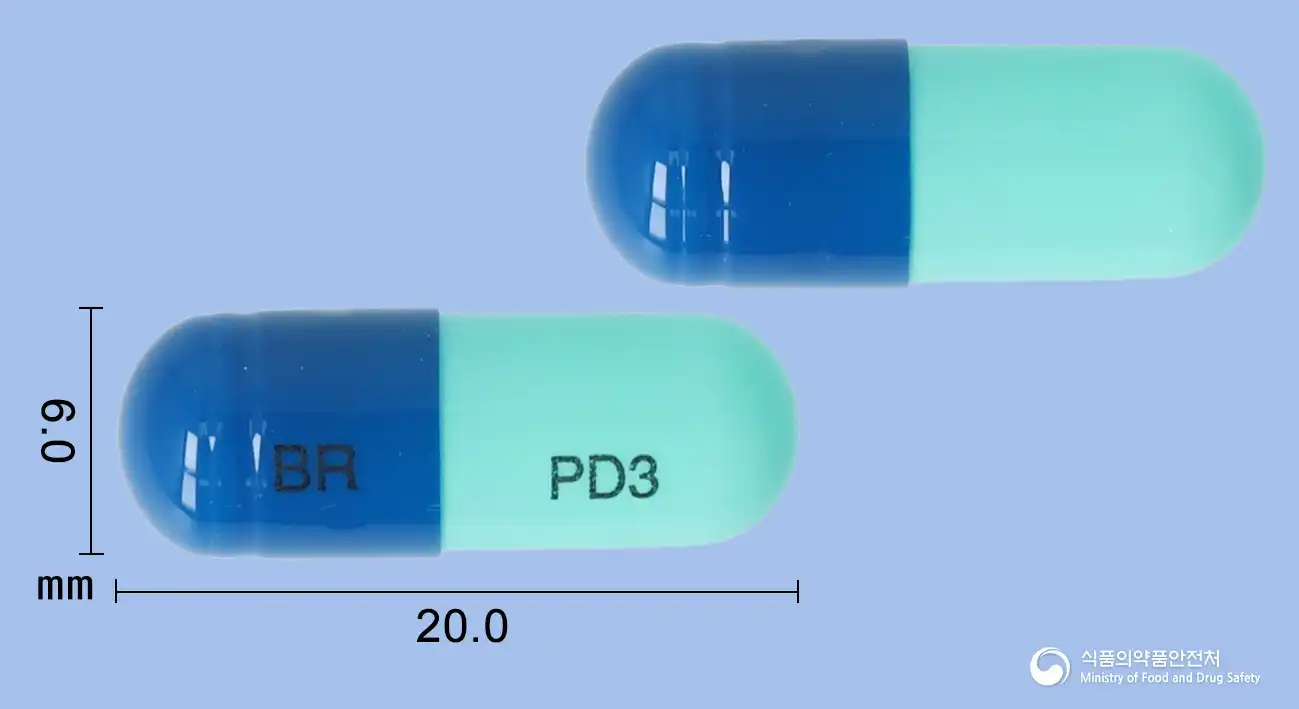
Pomalidomide 3mg
Prescription medication
Boryung Pharma Co., Ltd.
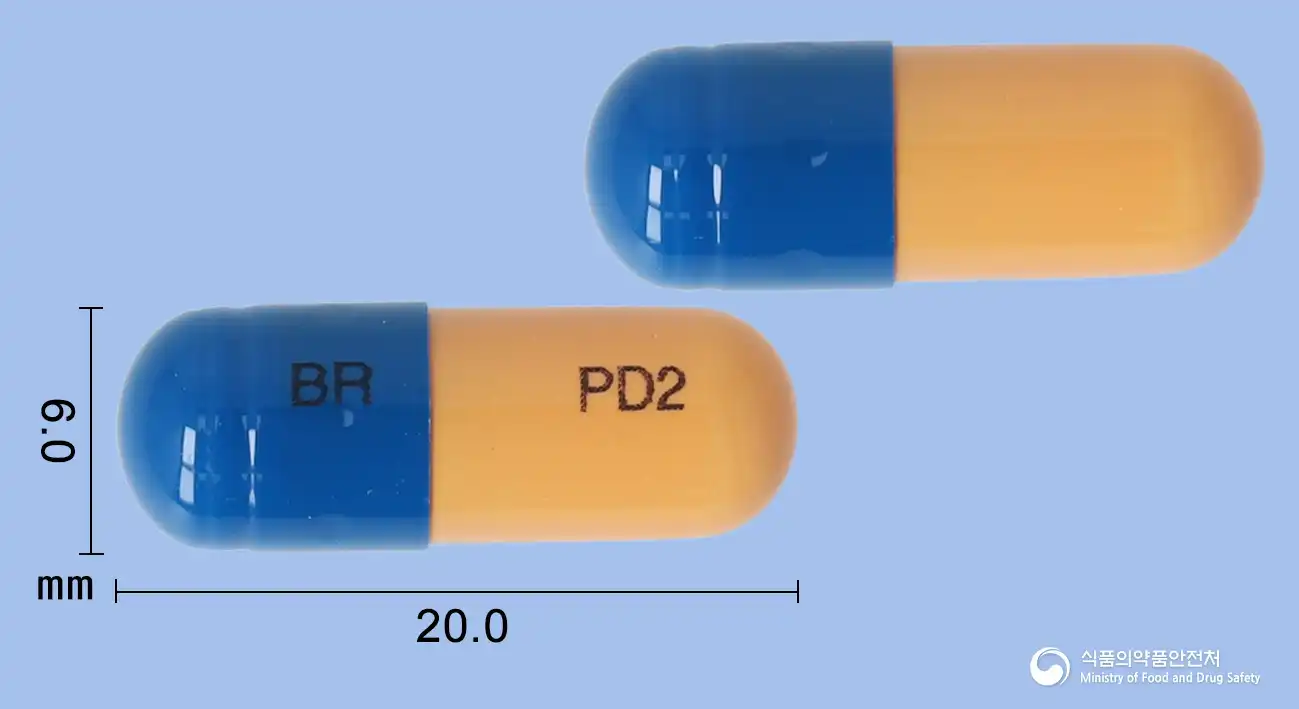
Pomalidomide 2mg
Prescription medication
Boryung Co., Ltd.
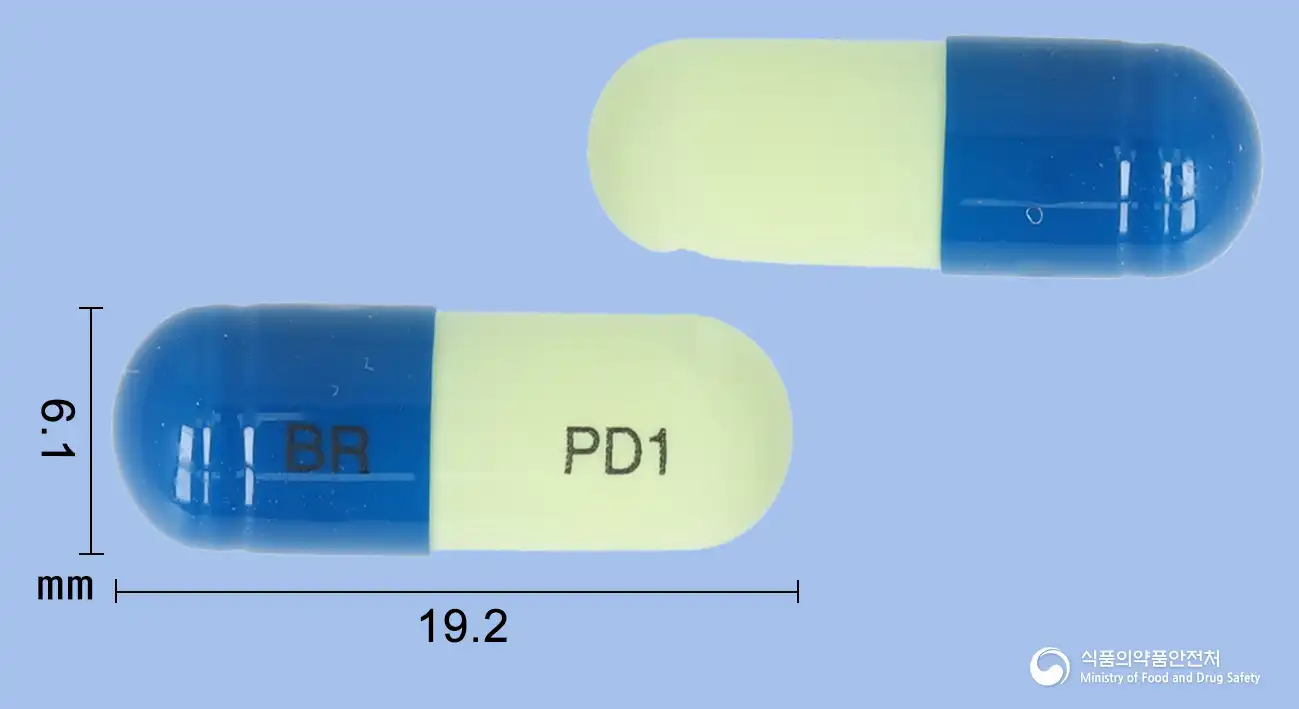
Pomalidomide 1mg
Prescription medication
Boryung Pharmaceutical Co., Ltd.
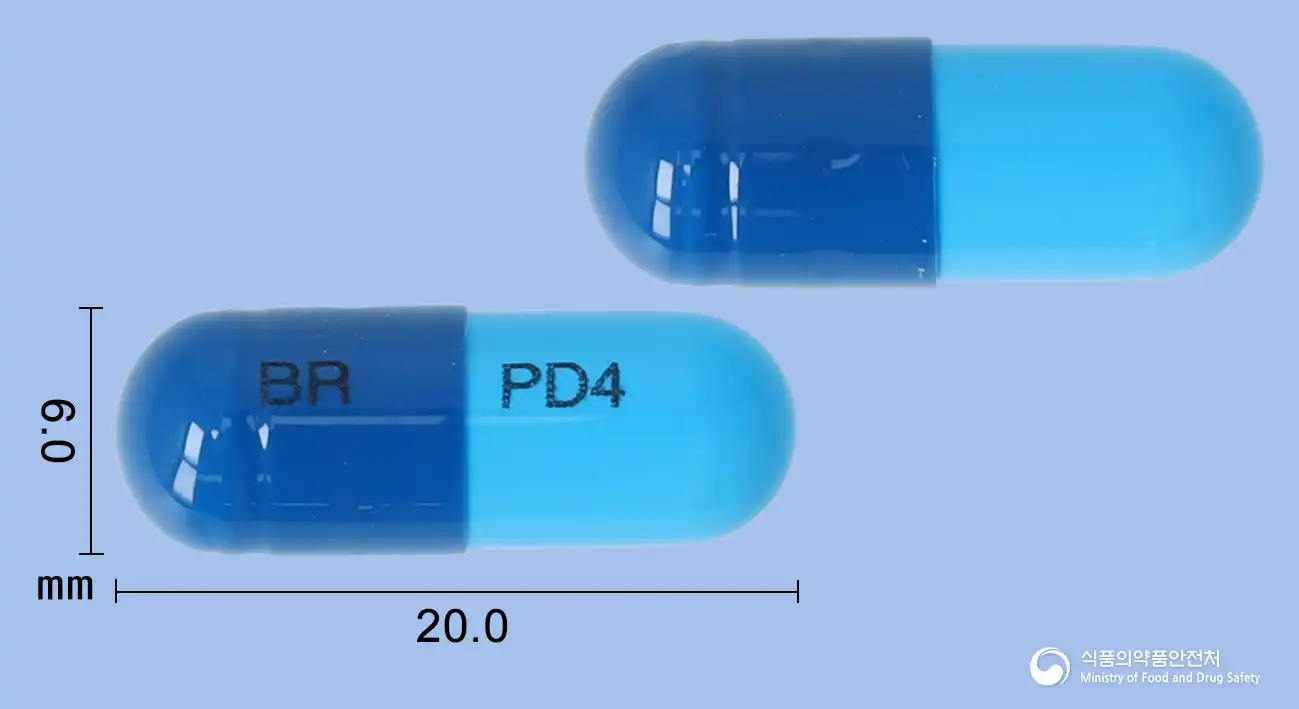
Pomalidomide 4mg
Prescription medication
Boryung Co., Ltd.
Even with the same ingredient, the dose and directions can differ by strength and dosage form. Talk to a doctor or pharmacist before switching from a medication you are already taking.
No questions yet.
For anything that needs medical judgment, consult a doctor or pharmacist.
This drug information is based on data provided by the Korea Ministry of Food and Drug Safety.
Consult a doctor or pharmacist for accurate dosage, administration, and usage instructions.