
 한국어
한국어 English
 日本語
日本語 中文(简体)
 Viewing now
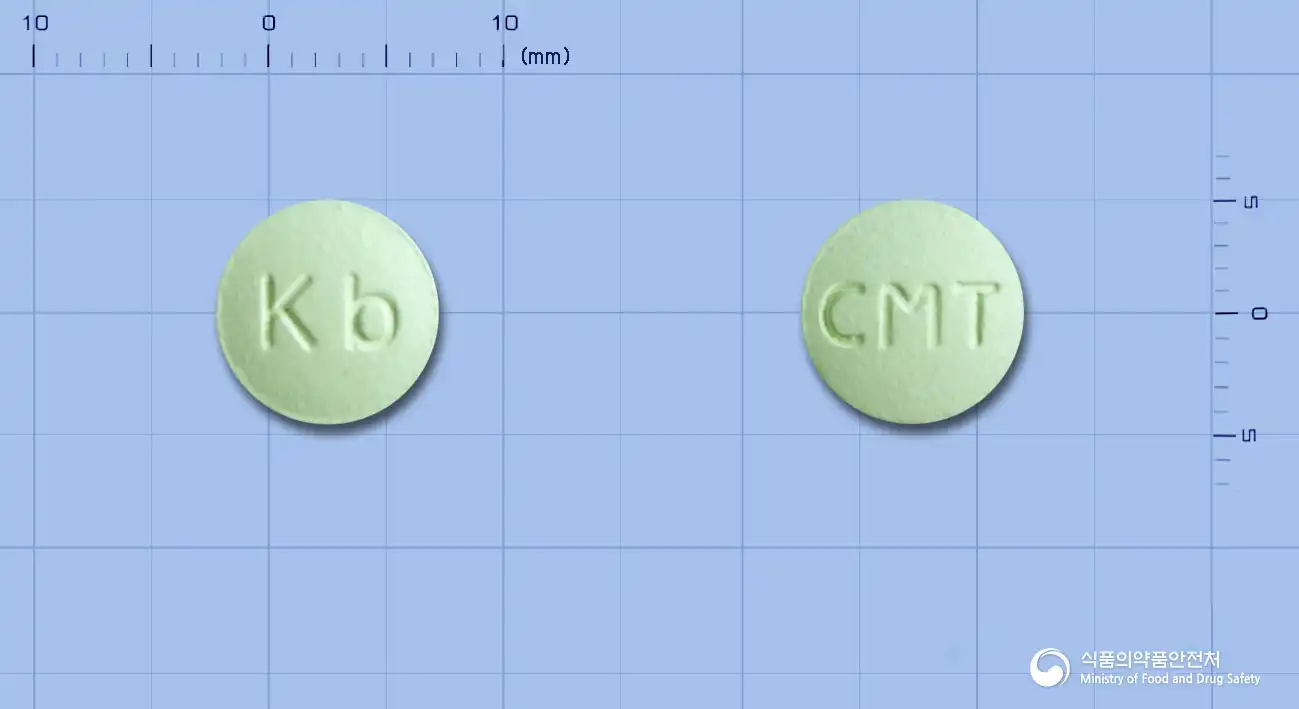
CMT Tablet (Cimetidine)
Cimetidine 200mg
Tablet · Prescription medication
Kyungbo Pharmaceutical Co., Ltd.
MFDS item code 201402013 · Approved 2014.04.25
Treatment of gastric and duodenal ulcers and gastroesophageal reflux disease, improvement of gastric mucosal lesions
This medication is used for ulcers occurring in the stomach and duodenum, gastroesophageal reflux disease, recurrent ulcers, ulcers at surgical anastomosis sites, and Zollinger-Ellison syndrome. It also helps improve gastric mucosal lesions such as erosion, bleeding, redness, and swelling during acute exacerbations of acute gastritis and chronic gastritis. Overall, it protects the gastric mucosa and alleviates symptoms of gastrointestinal diseases, effectively improving the patient's symptoms.
Adults: Cimetidine 400 mg orally twice daily (morning and at bedtime) or 800 mg once daily (at bedtime). Additionally, 300 mg may be administered orally four times daily (after meals and at bedtime). Increase to 400 mg four times daily (after meals and at bedtime) for a total of 1.6 g may be considered. For improvement of gastric mucosal lesions (erosion, bleeding, redness, swelling) in the following conditions: acute gastritis, acute exacerbation of chronic gastritis use 200 mg twice daily or 400 mg once daily.
Children: Administer 20-40 mg per kg of body weight daily in divided oral doses.
This medication contains the ingredient cimetidine and should be avoided in certain patients. It should not be administered to patients with a history of allergic reactions to cimetidine or other components of this medication, and should not be used in patients taking dofetilide due to increased risk of cardiac arrhythmia. Patients with impaired renal function, poor liver function, history of drug allergy, elderly patients, children under 19 years of age, and patients undergoing hemodialysis should use this medication cautiously. Especially in renal impairment patients, drug concentration may increase, necessitating dosage reduction or increased dosing intervals, and it is advisable to administer the drug after dialysis for patients on hemodialysis. This medication may mask symptoms of stomach cancer, so it should only be used after confirming it is not due to gastric cancer, and patients with Helicobacter pylori-associated gastric or duodenal ulcers require bacterial eradication therapy. Various side effects such as leukopenia, liver function abnormalities, kidney problems, allergic reactions, gynecomastia, dyspepsia, neuropsychiatric symptoms, cardiac rhythm abnormalities, and severe skin reactions may occur while taking this medication, so it is important to consult a doctor immediately if any abnormal symptoms arise. In particular, elderly patients or those with impaired renal function may more easily exhibit neuropsychiatric symptoms such as confusion or seizures, so caution is needed. This medication may interact with many others; therefore, dosage adjustments or cessation may be needed when taken with warfarin, midazolam, diazepam, propranolol, theophylline, phenytoin, certain antibiotics, and antifungal agents. Pregnant women or those who may become pregnant should only use this medication when the therapeutic effects outweigh the risks, as its safety has not been established; moreover, this medication crosses the placenta and is excreted in breast milk, so caution is warranted during breastfeeding. The safety of this medication in children has not been fully confirmed, so it should be used only when necessary, and elderly patients should use caution as drug concentrations may increase due to impaired renal function, necessitating dosage reduction or increased dosing intervals. Overdose may lead to severe symptoms such as respiratory depression and may require emergency treatment such as mechanical ventilation or gastric lavage. This medication should be kept out of reach of children and transferring it to other containers may pose a risk of accidents and may compromise quality, so caution is advised. Finally, this medication should be used at the minimal effective dose while observing the patient's condition, and if no effect is seen, it is advisable to switch to other treatment methods. Regular blood tests and liver and kidney function tests should be conducted to monitor for abnormalities.
General malaise, weakness, subcutaneous hemorrhage, mucosal bleeding, fever (initial symptom of hematologic abnormalities), jaundice, abnormal kidney function tests (elevation of BUN and creatinine), shock, anaphylactic-like reactions (generalized rash, difficulty breathing), rash, altered consciousness, seizures, Stevens-Johnson syndrome, toxic epidermal necrolysis, epidermal necrosis, erythema multiforme, exanthematous erythema, severe respiratory distress, and cyanosis of the lips.
Not everyone experiences these, and they can vary from person to person.
This medication should be stored in an airtight container that is well-sealed, ideally at room temperature between 1 and 30 degrees Celsius. Storing it this way helps maintain the efficacy of the medication for a longer period.
Light green round film-coated tablet
500 tablets/bottle
Even with the same ingredient, strength, dosage form and how it is taken can differ.
Viewing nowCimetidine 200mg
Tablet · Prescription medication
Kyungbo Pharmaceutical Co., Ltd.
Cimetidine 200mg
Tablet · Prescription medication
Ildong Pharmaceutical Co., Ltd.

Cimetidine 200mg
Tablet · Prescription medication
International Pharmaceutical Co., Ltd.
Cimetidine 100mg
Prescription medication
(Company) Yuhan Corporation

Cimetidine 200mg
Tablet · Prescription medication
Donghwa Pharmaceutical Co., Ltd.

Cimetidine 200mg
Tablet · Prescription medication
Bukwang Pharmaceutical Co., Ltd.
Cimetidine 200mg
Tablet · Prescription medication
Bionex Co., Ltd.

Cimetidine 300mg
Tablet · Prescription medication
Bukwang Pharmaceuticals Co., Ltd.
Even with the same ingredient, the dose and directions can differ by strength and dosage form. Talk to a doctor or pharmacist before switching from a medication you are already taking.
No questions yet.
For anything that needs medical judgment, consult a doctor or pharmacist.
This drug information is based on data provided by the Korea Ministry of Food and Drug Safety.
Consult a doctor or pharmacist for accurate dosage, administration, and usage instructions.