
 한국어
 English
 日本語
 中文(简体)
Dosage form image
Viewing nowMylept Powder for Suspension 1g/5ml (Mycophenolate Mofetil)
Mycophenolate Mofetil 34.98g
Prescription medication
(Co., Ltd.) Chong Kun Dang
MFDS item code 201401967 · Notified 2014.04.23 · Insurance code 643306751
Prevention of acute rejection after organ transplantation (kidney, heart, etc.)
This medication is used in combination with cyclosporine and corticosteroids to prevent acute organ rejection in patients who have received kidney, heart, or liver transplants. Therefore, taking this medication helps to maintain the transplanted organ without rejection.
Oral administration of this medicine should be started as soon as possible after kidney, heart, or liver transplantation. Adults with kidney transplants: Administer mycophenolate mofetil 1 g (5 mL as a suspension) orally twice daily. In clinical trials, a dose of 3 g/day (1.5 g twice daily) demonstrated efficacy and safety, but a benefit in efficacy was not established in kidney transplant recipients. Adults with heart transplants: Administer 1.5 g of this medicine orally twice daily (total daily dose of 3 g). Adults with liver transplants: Administer 1.5 g of this medicine orally twice daily (3 g/day). In patients with severe chronic renal impairment (glomerular filtration rate < 25 mL/min/1.73 m2), do not administer more than 1 g of this medicine twice daily unless immediately after transplantation. No dose adjustment is necessary in patients with delayed graft function after transplantation. There are no data for heart transplant recipients with severe chronic renal impairment. Use this medicine in such patients only if the expected benefit outweighs the potential risk. Elderly patients may be treated with the recommended doses of 1 g twice daily after kidney transplantation and 1.5 g twice daily after heart transplantation. However, the risk of adverse reactions may generally be increased in these elderly patients. The risk of adverse reactions may also be increased in patients receiving this medicine concomitantly with other immunosuppressants (see Adverse Reactions). No dose adjustment is necessary in kidney transplant recipients with severe hepatic parenchymal disease; however, there are no data for heart transplant recipients with severe hepatic parenchymal disease. If neutropenia (ANC [absolute neutrophil count] < 1.3 x 10³/㎕) is observed, interrupt or reduce the dose of this medicine, perform appropriate diagnostic tests, and provide necessary treatment. Kidney transplant rejection does not alter the pharmacokinetics of MPA; interruption or dose reduction of this medicine is not necessary.
Children and adolescents: Administer mycophenolate mofetil 600mg/m2 orally twice daily (up to a maximum of 2g/10mL per day). Infants under 2 years of age: Use of this medicine is not recommended because safety and efficacy data in patients under 2 years of age are limited.
Women of childbearing potential must use contraception while taking this medication, as taking it during pregnancy may increase the risk of miscarriage or congenital malformations. Immunosuppression increases the risk of infections and the possibility of tumor development such as lymphoma; thus, it should be prescribed by an experienced specialist and taken with appropriate medical support in kidney, heart, and liver transplant patients. The artificial sweetener aspartame contained in this medication should not be administered to patients with phenylketonuria, a specific genetic disorder. Patients with hypersensitivity, certain genetic disorders, pregnant women, breastfeeding mothers, and those with hereditary fructose intolerance should not use this medication. In patients with severe renal impairment or active severe gastrointestinal diseases, as well as those with delayed organ function recovery after renal transplant, it should be administered with caution due to the risk of increased blood concentration and adverse reactions. Common side effects include diarrhea, leukopenia, sepsis, vomiting, weakness, headache, fever, abdominal pain, lumbago, irregular pain, edema, peripheral edema, anemia, hypochromic anemia, leukocytosis, thrombocytopenia, urinary tract infections, hematuria, diminished renal function, oliguria, hypertension, arrhythmia, bradycardia, hypotension, acute heart failure, pericardial effusion, cardiovascular disease, tachycardia, hypercholesterolemia, hyperglycemia, hyperkalemia, hypokalemia, hypophosphatemia, bilirubinemia, elevated BUN, and others. Particularly in children and the elderly, the risk of adverse reactions such as infections and gastrointestinal bleeding is higher, so caution is needed. Additionally, during treatment with this medication, B and C hepatitis viruses may be reactivated due to the immunosuppressive effect, so liver function and viral status should be continuously monitored. This medication may interact with other drugs; caution is especially needed when used in combination with azathioprine, acyclovir, antacids, proton pump inhibitors, cholestyramine, cyclosporine, and tacrolimus. Pregnant or potentially pregnant women must use effective contraceptive methods before, during, and after treatment for a certain period, and men are also advised to use condoms for a certain period. Breastfeeding mothers should avoid taking this medication, and it is not recommended for children under 2 years of age as safety and efficacy have not been established. In case of overdose, serious adverse effects such as excessive immunosuppression and bone marrow suppression may occur, therefore, immediate consultation with medical personnel is advised in such cases. Do not crush or split the capsules or tablets when taking this medication, and ensure to prepare exactly according to prescribed methods. Store in a sealed container to protect from air or moisture, and keep in a cool place below 30 degrees Celsius away from children's reach.
Diarrhea, leukopenia, sepsis, vomiting, tuberculosis, atypical mycobacterial infections, meningitis, infectious endocarditis, lymphoma, skin malignancies, lymphoproliferative disorders, candidiasis, cytomegalovirus viremia, herpes simplex, anemia, infections, anemia, hypochromic anemia, leukocytosis, thrombocytopenia, urinary tract infections, hematuria, tubular necrosis, renal dysfunction, oliguria, hypertension, arrhythmia, bradycardia, hypotension, acute heart failure, pericardial effusion, cardiovascular disease, tachycardia, hypercholesterolemia, hyperglycemia, hyperkalemia, hypokalemia, hypophosphatemia, bilirubinemia, increased BUN, increased creatinine, elevated enzyme levels, hyperlipidemia, hyperuricemia, hypervolemia, hypomagnesemia, hyponatremia, weight gain, constipation, dyspepsia, oral moniliasis, nausea, increased coughing, dyspnea, pharyngitis, bronchitis, pneumonia, acne, herpes simplex infection, shingles infection, rash, pruritus, sweating, dizziness, sleep disorders, tremors, anxiety, restlessness, confusion, depression, tension increase, paresthesia, drowsiness, delirium, insomnia, leg cramps, myalgia, myasthenia, amblyopia, abdominal distension, cyst formation, influenza-like symptoms, facial edema, hemorrhage, lethargy, pelvic pain, hernia, soft tissue infection, neck pain, pallor, abscess, petechiae, increased prothrombin, prolonged thromboplastin time, pancytopenia, dysuria, erectile dysfunction, frequent urges to urinate, proteinuria, hydronephrosis, pyelonephritis, hematuria, nocturia, renal failure, incontinence, urinary retention, acute renal failure, scrotal swelling, polyuria, angina, atrial fibrillation, postural hypotension, thrombosis, vasodilation, palpitations, cardiac arrest, chronic heart failure, pulmonary hypertension, syncope, vasospasm, increased venous pressure, arterial thrombosis, dehydration, acidosis, hypercalcemia, impaired healing, alkalosis, gout, hypochloremia, decreased blood volume, hypoxemia, respiratory acidosis, thirst, weight loss, elevated liver function test results, gastric distention, gingivitis, gingival hyperplasia, gastroenteritis, esophagitis, stomatitis, enteritis, gastrointestinal bleeding, gastrointestinal candidiasis, hepatitis, bowel obstruction, gastritis, anorexia, dysphagia, jaundice, hematochezia, dysphagia, gastric ulcer, rectal abnormalities, oral ulcers, pulmonary edema, apnea, atelectasis, epistaxis, hemoptysis, whooping cough, tumors, pneumothorax, increased sputum production, voice changes, fungal skin diseases, skin hypertrophy, skin ulcers, hair loss, hirsutism, anxiety, seizures, emotional instability, hallucinations, neuropathy, abnormal thoughts, convulsions, delirium, dry mouth, psychosis, arthralgia, osteoporosis, conjunctivitis, visual disturbances, hearing loss, otalgia, retinal hemorrhage, tinnitus, diabetes mellitus, hyperparathyroid dysfunction, Cushing's syndrome, hypothyroidism, moniliasis, prostate disease, congestive heart failure, taste disorders, overflow incontinence, toothache, external genital pruritus, perineal edema, liver failure due to reactivation of hepatitis B
Not everyone experiences these, and they can vary from person to person.
This medication should be stored in a sealed container to protect it from air and moisture. The storage temperature is suitable between 1 and 30 degrees Celsius. Storing it this way helps to maintain the medication's effectiveness.
A white or nearly white powder contained in a white high-density polyethylene container
1 bottle - 110 grams/bottle
Even with the same ingredient, strength, dosage form and how it is taken can differ.
Mycophenolate Mofetil 34.98g
Prescription medication
(Co., Ltd.) Chong Kun Dang
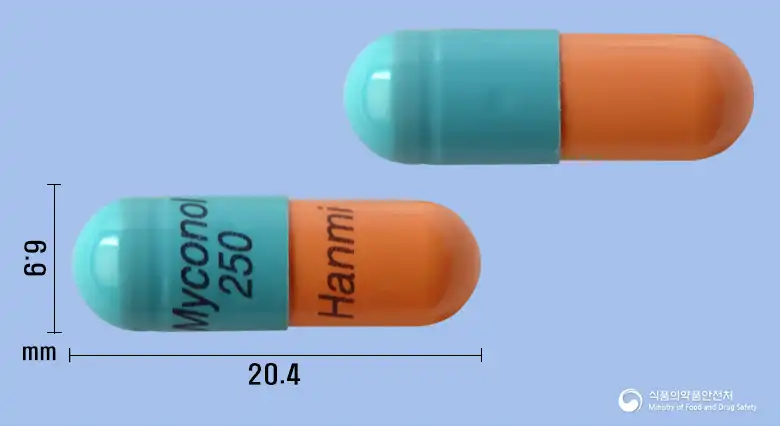
Mycophenolate Mofetil 250mg
Hard capsule · Prescription medication
Hanmi Pharmaceutical Co., Ltd.
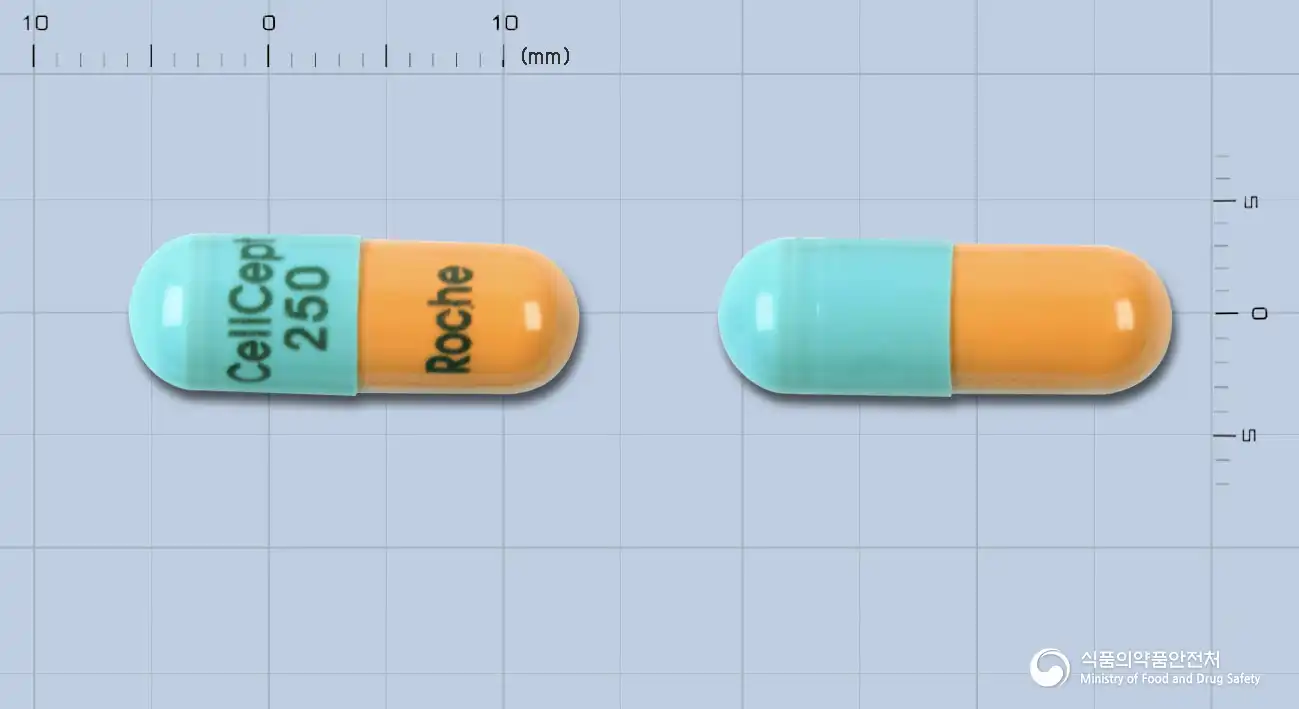
Mycophenolate Mofetil 250mg
Hard capsule · Prescription medication
Roche Korea, Co., Ltd.
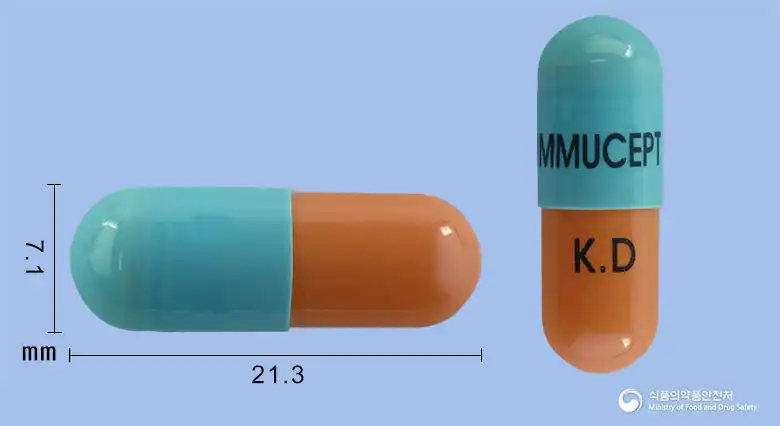
Mycophenolate Mofetil 250mg
Hard capsule · Prescription medication
Kwangdong Pharmaceutical Co., Ltd.
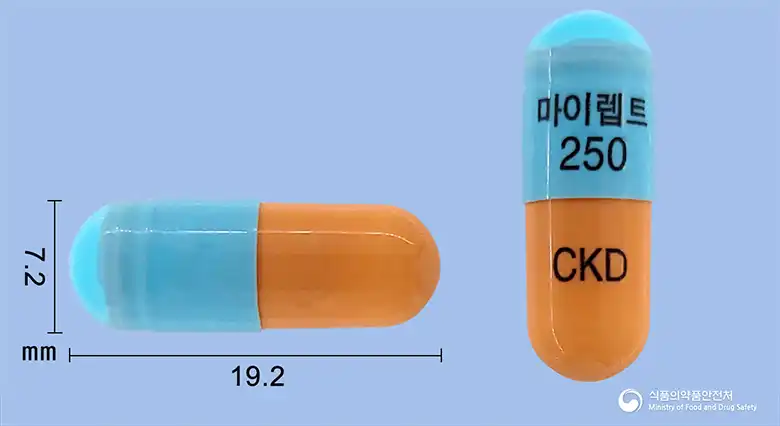
Mycophenolate Mofetil 250mg
Hard capsule · Prescription medication
Jongkundang Co., Ltd.
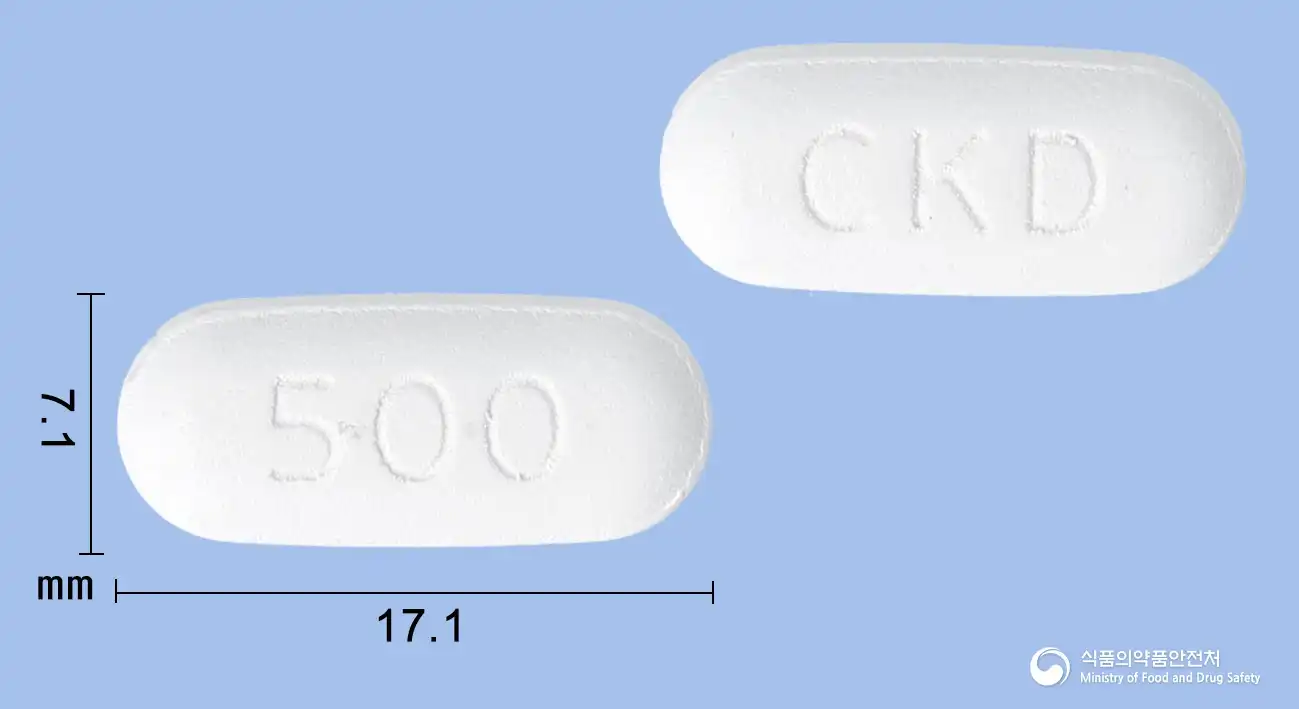
Mycophenolate Mofetil 500mg
Tablet · Prescription medication
Jong Kun Dang Co., Ltd.
Mycophenolate Mofetil
Prescription medication
Korea Roche Co., Ltd.
Even with the same ingredient, the dose and directions can differ by strength and dosage form. Talk to a doctor or pharmacist before switching from a medication you are already taking.
No questions yet.
For anything that needs medical judgment, consult a doctor or pharmacist.
This drug information is based on data provided by the Korea Ministry of Food and Drug Safety.
Consult a doctor or pharmacist for accurate dosage, administration, and usage instructions.