
 한국어
 English
 日本語
 中文(简体)
Dosage form image
Viewing nowInstanyl Nasal Spray 200 Micrograms (Fentanyl Citrate)
Fentanyl Citrate 3.14mg
Prescription medication
Daewoong Pharmaceutical Co., Ltd.
MFDS item code 201400643 · Approved 2014.02.13 · Insurance code 641605791
Relief of breakthrough pain in adult cancer patients tolerant to opioid medications
This medication is used in adults 18 years of age and older who are currently receiving opioid therapy for persistent pain. It is particularly effective in relieving breakthrough pain experienced by cancer patients. That is, it helps manage severe pain that suddenly occurs despite the use of existing analgesics. By managing breakthrough pain, it contributes to reducing patients' pain and improving their quality of life.
This medicine should be administered by the nasal route only. It is recommended that this medicine be administered while sitting or standing upright. When using this medicine for the first time, spray it into the air 3 ~ 4 times before use to ensure that a uniform spray is produced. If it has not been used for 7 days or longer, spray it into the air once before use to clear any residue. Clean the tip of the nasal spray after each dose. Each spray of this medicine contains 200 µg of fentanyl. This medicine may be used for up to 4 episodes of breakthrough pain per day. For a single episode of breakthrough pain, no more than 2 doses of this medicine should be administered, with an interval of at least 10 minutes between doses. A dose for another episode of breakthrough pain should be administered at least 4 hours later. The initial dose is 50 µg administered as 1 spray into one nostril. For an episode of breakthrough pain, titrate the dose (50, 100, 200 µg) until a single dose of this medicine provides adequate pain relief while minimizing adverse reactions. If adequate pain relief is not achieved, a second dose may be administered after 10 minutes. No more than 2 doses of this medicine should be administered for a single episode of breakthrough pain. A dose for another episode of breakthrough pain should be administered at least 4 hours later. If adequate pain relief is not achieved, the same dose may be readministered after at least 10 minutes. No more than 2 doses of this medicine should be administered for a single episode of breakthrough pain. A dose for another episode of breakthrough pain should be administered at least 4 hours later. In general, if more than one dose is required during several consecutive episodes of breakthrough pain, increase the maintenance dose of this medicine. If breakthrough pain occurs more than 4 times per day, the dose of the opioid used as the baseline treatment for persistent pain should be adjusted. If this medicine is not tolerated or adverse reactions persist, reduce the dose or replace treatment with another analgesic. If breakthrough pain no longer occurs, discontinue this medicine immediately. Treatment for persistent background pain should be maintained. If it is necessary to discontinue all opioid medicines, the dose should be tapered gradually under the physician's instructions to avoid effects from sudden discontinuation.
This medication is a potent opioid used to treat breakthrough pain in cancer patients. It should only be used in patients who are tolerant to opioid medications and can be dangerous in patients who have not been using opioids for a long time. It should not be used to treat acute pain or postoperative pain. This medication should only be used to treat cancer patients by healthcare professionals with specialized knowledge and experience. It must be stored in a safe place out of the reach of children, and any remaining medication should be disposed of appropriately. Caution should be exercised, as combining it with narcotics, central nervous system depressants, and alcohol can lead to severe respiratory depression, coma, or death. When used in combination with antihistamines or certain antibiotics, the risks of sedation and respiratory depression may increase. There is a risk of life-threatening serotonin syndrome when used in combination with certain antidepressants, so caution is required. Careful monitoring of dose adjustment and adverse reactions is necessary when using this medication. Activities such as driving or operating machinery should be avoided during treatment with this medication. Since there is a risk of abuse and addiction, careful management and monitoring of medication use are needed. The risks and benefits to the fetus must be carefully considered during pregnancy, and it should not be used during breastfeeding. Safety and efficacy have not been established in pediatric patients under 18 years of age. Elderly patients may be more sensitive to the medication, so dosages should be adjusted and closely monitored. In cases of overdose, respiratory depression is the most severe symptom, requiring immediate emergency treatment. This medication should only be used for pain control in cancer patients and should be stored below 25 degrees Celsius, avoiding humidity and freezing.
Not everyone experiences these, and they can vary from person to person.
This medication should be stored in a tightly closed container to prevent air or moisture from entering, and it is safe to store at room temperature between 1 and 30 degrees Celsius. Proper storage will help maintain the effectiveness of the medication for a long time.
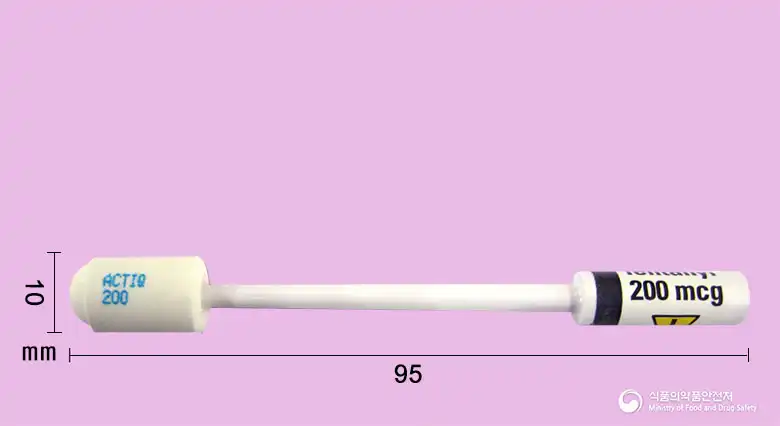
A colorless and transparent nasal spray solution contained in a measurable brown glass bottle that dispenses a specific amount per spray.
10 doses (1.8 mL)
Even with the same ingredient, strength, dosage form and how it is taken can differ.
Fentanyl Citrate 3.14mg
Prescription medication
Daewoong Pharmaceutical Co., Ltd.
Fentanyl Citrate 0.0785mg
Solution · Prescription medication
Myungmoon Pharmaceutical Co., Ltd.
Fentanyl Citrate
Prescription medication
DaeWon Pharmaceutical Co., Ltd.
Fentanyl Citrate 78.5μg
Injections · Prescription medication
BC World Pharmaceutical Co., Ltd.
Fentanyl Citrate 0.0785mg
Prescription medication
Gujoo Pharmaceutical Co., Ltd.
Fentanyl Citrate 0.0785mg
Injections · Prescription medication
Hana Pharmaceutical Co., Ltd.
Fentanyl Citrate 78.5μg
Injections · Prescription medication
Halim Pharmaceuticals Co., Ltd.
Fentanyl Citrate 0.3142mg
Prescription medication
Hyundai Pharmaceutical Co., Ltd.
Even with the same ingredient, the dose and directions can differ by strength and dosage form. Talk to a doctor or pharmacist before switching from a medication you are already taking.
No questions yet.
For anything that needs medical judgment, consult a doctor or pharmacist.
This drug information is based on data provided by the Korea Ministry of Food and Drug Safety.
Consult a doctor or pharmacist for accurate dosage, administration, and usage instructions.