Medication info
Jelobic 150 mg (Capecitabine)

Jelobic 150 mg (Capecitabine)

Prescription medicationTabletOral
Ingredient · strength
Capecitabine›150mg / 1 tablet
Manufacturer / importer
Ildong Pharmaceutical Co., Ltd.
Appearance
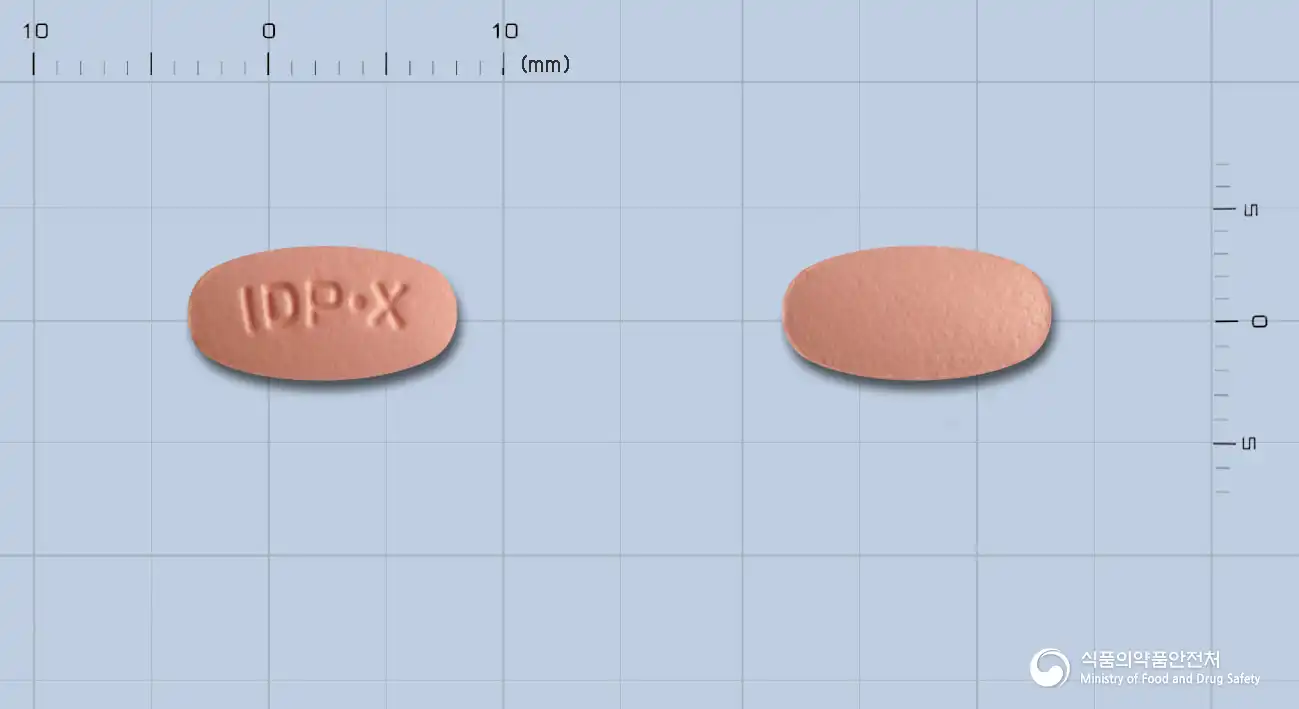
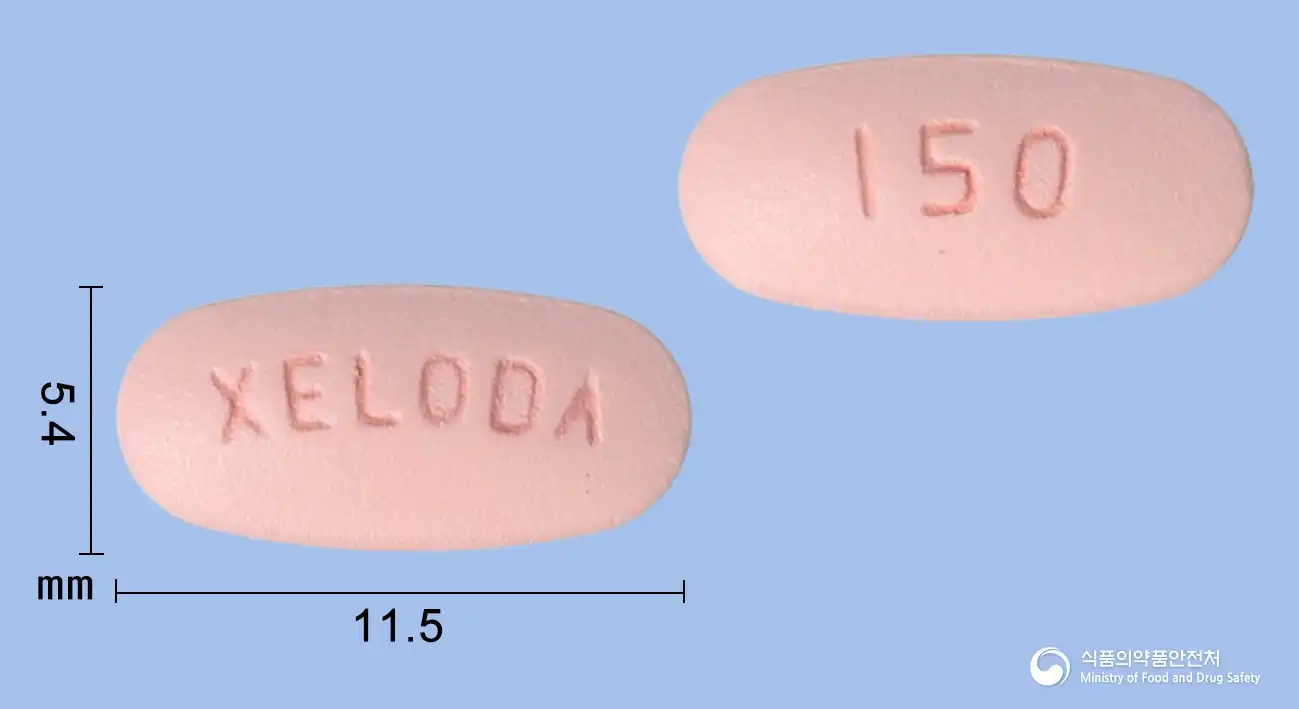
Pale pink oval film-coated tablet
Packaging
60 tablets/box [(10 tablets/PTP) × 6]
Approval status
Active

MFDS item code 201309978 · Approved 2013.10.31 · Insurance code 642904940

Summary

Main use
Treatment of colorectal, gastric, and breast cancer
Who takes it
Adults · Children
Adult dose
This medicine should be swallowed whole with water within 30 minutes after a meal. Do not cut or crush this medicine. If the patient cannot swallow this medicine whole and the tablet must be cut or crushed, this should be done by a professional trained in the safe handling of cytotoxic drugs. ○ Colorectal cancer, breast cancer The recommended dosage of this medicine is 1,250mg/㎡ twice daily (morning and evening) for 2 weeks, followed by a 1-week rest period, in 3-week cycles. When used in combination with docetaxel, the recommended dosage of this medicine is 1,250mg/m2 twice daily (approximately 12 hours apart) for 2 weeks, followed by a 1-week rest period, in 3-week cycles, and docetaxel 75mg/m2 is administered by intravenous injection over 1 hour every 3 weeks. When this medicine is used in combination with docetaxel, premedication should be administered before docetaxel in accordance with the prescribing information for docetaxel. For metastatic colorectal cancer, when used in combination with oxaliplatin, the recommended dosage of this medicine is 1000mg/m2 twice daily for 2 weeks, followed by a 1-week rest period, in 3-week cycles. Concomitant use with bevacizumab does not affect the initial dose of this medicine. For adjuvant therapy after surgery for stage III (Dukes‘ C) colon cancer, administer as follows. When this medicine is administered as monotherapy, it is recommended that 1,250mg/m2 be administered twice daily (morning and evening) for 2 weeks, followed by a 1-week rest period, in 3-week cycles, for a total of 8 cycles (24 weeks). When this medicine is used in combination with oxaliplatin, it is recommended that this medicine be administered at 1,000mg/m2 twice daily (morning and evening) for 2 weeks, followed by a 1-week rest period, in 3-week cycles, and that oxaliplatin be administered by intravenous infusion over 2 hours at 130mg/m2 on Day 1 of each cycle, before the first dose of this medicine, for a total of 8 cycles (24 weeks). When this medicine is used in combination with oxaliplatin, it is recommended that antiemetics and premedication be administered before oxaliplatin in accordance with the prescribing information for oxaliplatin. ○ Gastric cancer 1) Inoperable advanced or metastatic gastric cancer The recommended dosage of this medicine is 1,250mg/㎡ twice daily (morning and evening) for 2 weeks, followed by a 1-week rest period, in 3-week cycles. 2) First-line treatment of advanced gastric cancer in combination with a platinum-based regimen The initial dose of this medicine is recommended to be administered at 1,000mg/m2 twice daily for 2 weeks, followed by a 1-week rest period, in 3-week cycles, or at 625mg/m2 twice daily continuously for 3 weeks. When this medicine is used in combination with cisplatin, premedication should be administered before cisplatin in accordance with the prescribing information for cisplatin. ① When used in combination with cisplatin, the recommended dosage of this medicine is 1,000mg/m2 twice daily (morning and evening) for 2 weeks, followed by a 1-week rest period, in 3-week cycles, and cisplatin 80mg/m2 is administered by intravenous infusion over 2 hours every 3 weeks. ② When used in combination with cisplatin and epirubicin, the recommended dosage of this medicine is 625mg/m2 twice daily (morning and evening) continuously for 3 weeks, in 3-week cycles; cisplatin 60mg/m2 is administered by intravenous infusion over 2 hours every 3 weeks, and epirubicin 50mg/m2 is administered intravenously as a bolus every 3 weeks. ③ When used in combination with oxaliplatin and epirubicin, the recommended dosage of this medicine is 625mg/m2 twice daily (morning and evening) continuously for 3 weeks, in 3-week cycles; oxaliplatin 130mg/m2 is administered by intravenous infusion over 2 hours every 3 weeks, and epirubicin 50mg/m2 is administered intravenously as a bolus every 3 weeks. 3) When used in combination with oxaliplatin as adjuvant therapy after surgery for stage Ⅱ, Ⅲ gastric cancer, the recommended dosage of this medicine is 1000 mg/m2 orally twice daily for 2 weeks, followed by a 1-week rest period, in 3-week cycles; oxaliplatin 130 mg/m2 is administered by intravenous infusion over 2 hours every 3 weeks. ○ Dose calculation according to body surface area (1250mg/m2), 1250mg/m2 per dose (twice daily): body surface area (m2) ≤1.26, dose per administration (mg) 1500, number of tablets to take per dose: 150mg 0, 500mg 3, (75% dose) 950mg/m2 1150, (50% dose) 625mg/m2 800; 1.27~1.38, 1650, 1, 3, 1300, 800; 1.39~1.52, 1800, 2, 3, 1450, 950; 1.53~1.66, 2000, 0, 4, 1500, 1000; 1.67~1.78, 2150, 1, 4, 1650, 1000; 1.79~1.92, 2300, 2, 4, 1800, 1150; 1.93~2.06, 2500, 0, 5, 1950, 1300; 2.07~2.18, 2650, 1, 5, 2000, 1300; ≥2.19, 2800, 2, 5, 2150, 1450. ○ Dose calculation according to body surface area (1000mg/m2), 1000mg/m2 per dose (twice daily): body surface area (m2) ≤1.26, dose per administration (mg) 1150, number of tablets to take per dose: 150mg 1, 500mg 2, (75% dose) 750mg/m2 800, (50% dose) 500mg/m2 600; 1.27~1.38, 1300, 2, 2, 1000, 600; 1.39~1.52, 1450, 3, 2, 1100, 750; 1.53~1.66, 1600, 4, 2, 1200, 800; 1.67~1.78, 1750, 5, 2, 1300, 800; 1.79~1.92, 1800, 2, 3, 1400, 900; 1.93~2.06, 2000, 0, 4, 1500, 1000; 2.07~2.18, 2150, 1, 4, 1600, 1050; ≥2.19, 2300, 2, 4, 1750, 1100. ○ Dosage adjustment guidelines: Patients should be carefully monitored for toxicity. Toxicity due to treatment with this medicine may be managed with symptomatic treatment, temporary interruption of treatment, and dosage adjustment. Once the dose has been reduced, it should not be increased later. If toxicity is judged by the attending physician to be non-serious or non-life-threatening (e.g., alopecia, taste alteration, nail changes), treatment may continue at the same dose without dose reduction or treatment interruption. Patients should be informed that treatment may need to be stopped immediately if moderate or severe toxicity occurs. Dosage adjustments during treatment with this medicine: toxicity grade* 1, maintain the dose during the treatment cycle; next-cycle dose adjustment (as % of starting dose): maintain dose; grade 2, first occurrence, temporarily interrupt treatment until it resolves to grade 0-1, 100%; second occurrence, temporarily interrupt treatment until it resolves to grade 0-1, 75%; third occurrence, temporarily interrupt treatment until it resolves to grade 0-1, 50%; fourth occurrence, permanently discontinue treatment; grade 3, first occurrence, temporarily interrupt treatment until it resolves to grade 0-1, 75%; second occurrence, temporarily interrupt treatment until it resolves to grade 0-1, 50%; third occurrence, permanently discontinue treatment; grade 4, first occurrence, permanently discontinue treatment, or, if continuing treatment is considered to be in the patient's best interest, temporarily interrupt treatment until it resolves to grade 0-1, 50%; second occurrence, permanently discontinue treatment. * The NCIC CTG Common Toxicity Criteria and the CTCAE of the Cancer Therapy Evaluation Program were used. Hematology: This medicine should not be taken by patients with a baseline neutrophil count below 1.5×10⁹/L and/or platelet count below 100×109/L. If laboratory values during a treatment cycle fall to a neutrophil count of 1.0×10⁹/L or less or a platelet count of 75×109/L or less, treatment with this medicine should be interrupted. Dosage adjustment guidelines for toxicity when this medicine is administered in 3-week cycles in combination with another drug: When this medicine is administered in 3-week cycles in combination with another drug, dosage should be adjusted according to the dosage adjustment guidelines for this medicine and the prescribing information for the concomitant drug. - If treatment with this medicine and the other drug is temporarily interrupted due to toxicity occurring early in the treatment cycle, treatment should not be resumed until the criteria for resuming both the concomitant drug and this medicine are met. - If toxicity considered unrelated to this medicine occurs during a treatment cycle, treatment with this medicine should continue, and the dose of the other drug should be adjusted in accordance with its prescribing information. - If treatment with the other drug is permanently discontinued, treatment with this medicine may continue if the criteria for resuming treatment are met. The above applies to all patient groups receiving treatment for all approved indications. Dosage adjustment guidelines for toxicity when this medicine is administered continuously in combination with another drug: When this medicine is administered continuously in combination with another drug, the recommended dosage in response to toxicity should be adjusted according to the dosage adjustment guidelines for this medicine and the prescribing information for the concomitant drug. ○ Dosage in special patient populations Patients with hepatic impairment There are insufficient safety and efficacy data on the effects of this medicine in patients with hepatic impairment, and no information is available on hepatic impairment due to cirrhosis or hepatitis. Patients with renal impairment This medicine should not be taken by patients with severe renal impairment (creatinine clearance below 30mL/min). The incidence of grade 3 or 4 adverse reactions was found to be increased in patients with moderate renal impairment (creatinine clearance 30-50mL/min). For patients with moderate renal impairment, reduce the dose to 75% of 1250mg/m2; no adjustment is required for the 1000mg/m2 dose. No dose adjustment is required for patients with mild renal impairment (creatinine clearance 51-80mL/min). Patients who develop grade 2, grade 3, or grade 4 adverse reactions during treatment should be carefully monitored, and subsequent doses should preferably be adjusted with reference to the dosage adjustment guidelines for this medicine. If creatinine clearance falls below 30mL/min during treatment, this medicine should be discontinued. Dose adjustment for patients with renal impairment applies to both monotherapy and combination therapy. Elderly patients No dose adjustment is required when this medicine is used as monotherapy. However, the incidence of treatment-related grade 3 or 4 adverse reactions was higher in elderly patients over 60 years of age. In elderly patients aged 65 years or older who took this medicine in combination with another anticancer drug, the incidence of grade 3 or 4 adverse reactions leading to treatment discontinuation was higher; therefore, patients over 60 years of age should be carefully monitored when this medicine is administered. - Combination therapy with docetaxel: The incidence of treatment-related grade 3 or 4 adverse reactions and serious adverse reactions was increased in patients over 60 years of age. When this medicine is administered in combination with docetaxel to patients over 60 years of age, administer 75% of the dose (950mg/m2 twice daily); if no toxicity occurs at the 75% dose, the dosage may be increased to 1250mg/m2 twice daily.
Child dose
There is no experience with administration in patients under 18 years of age.

Ingredients

Manufacturer
Ildong Pharmaceutical Co., Ltd.

Efficacy & effects

Treatment of colorectal, gastric, and breast cancer

  • Metastatic colorectal cancer
  • stage III colorectal cancer
  • locally advanced breast cancer
  • metastatic breast cancer
  • progressive stomach cancer
  • metastatic stomach cancer
View approved original text

This medicine is used for the treatment of colorectal cancer, breast cancer, and stomach cancer. In cases of colorectal cancer, it is especially used as adjuvant therapy alone or in combination with oxaliplatin for patients with stage III who have undergone complete surgical tumor resection. For breast cancer patients who have failed chemotherapy or can no longer undergo anthracycline treatment, this drug is used alone or in combination with docetaxel. In stomach cancer cases, it is used to treat inoperable or metastatic progressive stomach cancer, and is administered as first-line therapy in conjunction with platinum-based drugs. Additionally, it is also used as an adjuvant treatment after surgery for stages II and III stomach cancer. Overall, this drug offers effective treatment options for various types of cancer.

How to take

Adult dose

This medicine should be swallowed whole with water within 30 minutes after a meal. Do not cut or crush this medicine. If the patient cannot swallow this medicine whole and the tablet must be cut or crushed, this should be done by a professional trained in the safe handling of cytotoxic drugs. ○ Colorectal cancer, breast cancer The recommended dosage of this medicine is 1,250mg/㎡ twice daily (morning and evening) for 2 weeks, followed by a 1-week rest period, in 3-week cycles. When used in combination with docetaxel, the recommended dosage of this medicine is 1,250mg/m2 twice daily (approximately 12 hours apart) for 2 weeks, followed by a 1-week rest period, in 3-week cycles, and docetaxel 75mg/m2 is administered by intravenous injection over 1 hour every 3 weeks. When this medicine is used in combination with docetaxel, premedication should be administered before docetaxel in accordance with the prescribing information for docetaxel. For metastatic colorectal cancer, when used in combination with oxaliplatin, the recommended dosage of this medicine is 1000mg/m2 twice daily for 2 weeks, followed by a 1-week rest period, in 3-week cycles. Concomitant use with bevacizumab does not affect the initial dose of this medicine. For adjuvant therapy after surgery for stage III (Dukes‘ C) colon cancer, administer as follows. When this medicine is administered as monotherapy, it is recommended that 1,250mg/m2 be administered twice daily (morning and evening) for 2 weeks, followed by a 1-week rest period, in 3-week cycles, for a total of 8 cycles (24 weeks). When this medicine is used in combination with oxaliplatin, it is recommended that this medicine be administered at 1,000mg/m2 twice daily (morning and evening) for 2 weeks, followed by a 1-week rest period, in 3-week cycles, and that oxaliplatin be administered by intravenous infusion over 2 hours at 130mg/m2 on Day 1 of each cycle, before the first dose of this medicine, for a total of 8 cycles (24 weeks). When this medicine is used in combination with oxaliplatin, it is recommended that antiemetics and premedication be administered before oxaliplatin in accordance with the prescribing information for oxaliplatin. ○ Gastric cancer 1) Inoperable advanced or metastatic gastric cancer The recommended dosage of this medicine is 1,250mg/㎡ twice daily (morning and evening) for 2 weeks, followed by a 1-week rest period, in 3-week cycles. 2) First-line treatment of advanced gastric cancer in combination with a platinum-based regimen The initial dose of this medicine is recommended to be administered at 1,000mg/m2 twice daily for 2 weeks, followed by a 1-week rest period, in 3-week cycles, or at 625mg/m2 twice daily continuously for 3 weeks. When this medicine is used in combination with cisplatin, premedication should be administered before cisplatin in accordance with the prescribing information for cisplatin. ① When used in combination with cisplatin, the recommended dosage of this medicine is 1,000mg/m2 twice daily (morning and evening) for 2 weeks, followed by a 1-week rest period, in 3-week cycles, and cisplatin 80mg/m2 is administered by intravenous infusion over 2 hours every 3 weeks. ② When used in combination with cisplatin and epirubicin, the recommended dosage of this medicine is 625mg/m2 twice daily (morning and evening) continuously for 3 weeks, in 3-week cycles; cisplatin 60mg/m2 is administered by intravenous infusion over 2 hours every 3 weeks, and epirubicin 50mg/m2 is administered intravenously as a bolus every 3 weeks. ③ When used in combination with oxaliplatin and epirubicin, the recommended dosage of this medicine is 625mg/m2 twice daily (morning and evening) continuously for 3 weeks, in 3-week cycles; oxaliplatin 130mg/m2 is administered by intravenous infusion over 2 hours every 3 weeks, and epirubicin 50mg/m2 is administered intravenously as a bolus every 3 weeks. 3) When used in combination with oxaliplatin as adjuvant therapy after surgery for stage Ⅱ, Ⅲ gastric cancer, the recommended dosage of this medicine is 1000 mg/m2 orally twice daily for 2 weeks, followed by a 1-week rest period, in 3-week cycles; oxaliplatin 130 mg/m2 is administered by intravenous infusion over 2 hours every 3 weeks. ○ Dose calculation according to body surface area (1250mg/m2), 1250mg/m2 per dose (twice daily): body surface area (m2) ≤1.26, dose per administration (mg) 1500, number of tablets to take per dose: 150mg 0, 500mg 3, (75% dose) 950mg/m2 1150, (50% dose) 625mg/m2 800; 1.27~1.38, 1650, 1, 3, 1300, 800; 1.39~1.52, 1800, 2, 3, 1450, 950; 1.53~1.66, 2000, 0, 4, 1500, 1000; 1.67~1.78, 2150, 1, 4, 1650, 1000; 1.79~1.92, 2300, 2, 4, 1800, 1150; 1.93~2.06, 2500, 0, 5, 1950, 1300; 2.07~2.18, 2650, 1, 5, 2000, 1300; ≥2.19, 2800, 2, 5, 2150, 1450. ○ Dose calculation according to body surface area (1000mg/m2), 1000mg/m2 per dose (twice daily): body surface area (m2) ≤1.26, dose per administration (mg) 1150, number of tablets to take per dose: 150mg 1, 500mg 2, (75% dose) 750mg/m2 800, (50% dose) 500mg/m2 600; 1.27~1.38, 1300, 2, 2, 1000, 600; 1.39~1.52, 1450, 3, 2, 1100, 750; 1.53~1.66, 1600, 4, 2, 1200, 800; 1.67~1.78, 1750, 5, 2, 1300, 800; 1.79~1.92, 1800, 2, 3, 1400, 900; 1.93~2.06, 2000, 0, 4, 1500, 1000; 2.07~2.18, 2150, 1, 4, 1600, 1050; ≥2.19, 2300, 2, 4, 1750, 1100. ○ Dosage adjustment guidelines: Patients should be carefully monitored for toxicity. Toxicity due to treatment with this medicine may be managed with symptomatic treatment, temporary interruption of treatment, and dosage adjustment. Once the dose has been reduced, it should not be increased later. If toxicity is judged by the attending physician to be non-serious or non-life-threatening (e.g., alopecia, taste alteration, nail changes), treatment may continue at the same dose without dose reduction or treatment interruption. Patients should be informed that treatment may need to be stopped immediately if moderate or severe toxicity occurs. Dosage adjustments during treatment with this medicine: toxicity grade* 1, maintain the dose during the treatment cycle; next-cycle dose adjustment (as % of starting dose): maintain dose; grade 2, first occurrence, temporarily interrupt treatment until it resolves to grade 0-1, 100%; second occurrence, temporarily interrupt treatment until it resolves to grade 0-1, 75%; third occurrence, temporarily interrupt treatment until it resolves to grade 0-1, 50%; fourth occurrence, permanently discontinue treatment; grade 3, first occurrence, temporarily interrupt treatment until it resolves to grade 0-1, 75%; second occurrence, temporarily interrupt treatment until it resolves to grade 0-1, 50%; third occurrence, permanently discontinue treatment; grade 4, first occurrence, permanently discontinue treatment, or, if continuing treatment is considered to be in the patient's best interest, temporarily interrupt treatment until it resolves to grade 0-1, 50%; second occurrence, permanently discontinue treatment. * The NCIC CTG Common Toxicity Criteria and the CTCAE of the Cancer Therapy Evaluation Program were used. Hematology: This medicine should not be taken by patients with a baseline neutrophil count below 1.5×10⁹/L and/or platelet count below 100×109/L. If laboratory values during a treatment cycle fall to a neutrophil count of 1.0×10⁹/L or less or a platelet count of 75×109/L or less, treatment with this medicine should be interrupted. Dosage adjustment guidelines for toxicity when this medicine is administered in 3-week cycles in combination with another drug: When this medicine is administered in 3-week cycles in combination with another drug, dosage should be adjusted according to the dosage adjustment guidelines for this medicine and the prescribing information for the concomitant drug. - If treatment with this medicine and the other drug is temporarily interrupted due to toxicity occurring early in the treatment cycle, treatment should not be resumed until the criteria for resuming both the concomitant drug and this medicine are met. - If toxicity considered unrelated to this medicine occurs during a treatment cycle, treatment with this medicine should continue, and the dose of the other drug should be adjusted in accordance with its prescribing information. - If treatment with the other drug is permanently discontinued, treatment with this medicine may continue if the criteria for resuming treatment are met. The above applies to all patient groups receiving treatment for all approved indications. Dosage adjustment guidelines for toxicity when this medicine is administered continuously in combination with another drug: When this medicine is administered continuously in combination with another drug, the recommended dosage in response to toxicity should be adjusted according to the dosage adjustment guidelines for this medicine and the prescribing information for the concomitant drug. ○ Dosage in special patient populations Patients with hepatic impairment There are insufficient safety and efficacy data on the effects of this medicine in patients with hepatic impairment, and no information is available on hepatic impairment due to cirrhosis or hepatitis. Patients with renal impairment This medicine should not be taken by patients with severe renal impairment (creatinine clearance below 30mL/min). The incidence of grade 3 or 4 adverse reactions was found to be increased in patients with moderate renal impairment (creatinine clearance 30-50mL/min). For patients with moderate renal impairment, reduce the dose to 75% of 1250mg/m2; no adjustment is required for the 1000mg/m2 dose. No dose adjustment is required for patients with mild renal impairment (creatinine clearance 51-80mL/min). Patients who develop grade 2, grade 3, or grade 4 adverse reactions during treatment should be carefully monitored, and subsequent doses should preferably be adjusted with reference to the dosage adjustment guidelines for this medicine. If creatinine clearance falls below 30mL/min during treatment, this medicine should be discontinued. Dose adjustment for patients with renal impairment applies to both monotherapy and combination therapy. Elderly patients No dose adjustment is required when this medicine is used as monotherapy. However, the incidence of treatment-related grade 3 or 4 adverse reactions was higher in elderly patients over 60 years of age. In elderly patients aged 65 years or older who took this medicine in combination with another anticancer drug, the incidence of grade 3 or 4 adverse reactions leading to treatment discontinuation was higher; therefore, patients over 60 years of age should be carefully monitored when this medicine is administered. - Combination therapy with docetaxel: The incidence of treatment-related grade 3 or 4 adverse reactions and serious adverse reactions was increased in patients over 60 years of age. When this medicine is administered in combination with docetaxel to patients over 60 years of age, administer 75% of the dose (950mg/m2 twice daily); if no toxicity occurs at the 75% dose, the dosage may be increased to 1250mg/m2 twice daily.

Child dose

There is no experience with administration in patients under 18 years of age.

Precautions

This drug may cause diarrhea, which can sometimes be severe. If severe diarrhea occurs, there may be a risk of dehydration, necessitating fluid and electrolyte replenishment. If symptoms of dehydration occur, treatment should be administered immediately, especially for patients with impaired kidney function or those taking nephrotoxic drugs. This drug can cause severe toxicity in patients with specific enzyme deficiencies, so it is important to test for enzyme deficiencies. Hand and foot pain, swelling, erythema may occur as hand-foot syndrome, and if symptoms are severe, discontinuing the drug or reducing the dosage may be necessary. Cardiac-related side effects such as angina, arrhythmias, and myocardial infarction have been reported, so patients with a history of heart disease should exercise caution. There may be abnormalities in calcium levels, so patients with issues related to calcium levels should be administered with caution. Patients with central nervous system or peripheral nervous system diseases may experience exacerbation of symptoms when taking this drug, necessitating caution. Patients with diabetes or electrolyte abnormalities should be monitored closely, as their conditions may worsen during treatment with this medication. This drug may interact with certain anticoagulants or anticonvulsants, so regular blood tests should be conducted to monitor their conditions when taken concurrently. Patients with impaired liver function should have their liver function closely monitored while on this medication, and it should not be administered if there is severe liver damage. Patients with moderate to severe renal impairment should have dosage adjustments and caution exercised due to a higher risk of side effects. Severe skin reactions may occur, so immediate consultation with a doctor is necessary if any skin abnormalities arise. Women who are pregnant or breastfeeding should not take this drug, and fertile women and men should use effective contraception during and for some time after treatment. Elderly patients should be observed closely, as they may have more pronounced side effects from this medication. In cases of overdose, symptoms may include nausea, vomiting, diarrhea, bone marrow suppression, and appropriate treatment should be sought. This medication may affect the ability to drive or operate machinery, so caution is advised if symptoms occur. Store this medication in a tightly sealed container to prevent exposure to air, and keep it at room temperature between 1 and 30 degrees Celsius. Avoid warm or excessively cold places to maintain the effectiveness of the drug.

Side effects

  • Diarrhea
  • necrotizing enterocolitis
  • dehydration
  • stomatitis
  • neutropenia
  • neurotoxicity
  • hand-foot syndrome
  • myocardial infarction
  • ischemia
  • angina pectoris
Show 276 more
  • arrhythmia
  • cardiogenic shock
  • dysrhythmia
  • cardiac arrest
  • heart failure
  • sudden death
  • electrocardiogram changes
  • hypocalcemia
  • hypercalcemia
  • decreased appetite
  • weakness
  • nausea
  • vomiting
  • thrombus
  • embolism
  • herpes infection
  • nasopharyngitis
  • lower respiratory infection
  • sepsis
  • urinary tract infection
  • cellulitis
  • tonsillitis
  • pharyngitis
  • oral candidiasis
  • influenza
  • gastroenteritis
  • fungal infection
  • infectious disease
  • dental abscess
  • lipoma
  • neutropenia
  • anemia
  • febrile neutropenia
  • pancytopenia
  • granulocytopenia
  • thrombocytopenia
  • leukopenia
  • hemolytic anemia
  • increased INR
  • prolonged prothrombin time
  • hypersensitivity reaction
  • decreased appetite
  • weight loss
  • diabetes
  • hypokalemia
  • appetite disturbance
  • nutritional deficiency
  • hyperlipidemia
  • insomnia
  • depression
  • confusion
  • panic attack
  • depressive mode
  • decreased libido
  • headache
  • drowsiness
  • dizziness
  • paresthesia
  • taste disturbance
  • aphasia
  • memory impairment
  • ataxia
  • syncope
  • balance disorder
  • sensory disturbance
  • peripheral neuropathy
  • increased tear production
  • conjunctivitis
  • eye irritation
  • vision loss
  • diplopia
  • dizziness
  • ear pain
  • unstable angina
  • myocardial ischemia
  • atrial fibrillation
  • arrhythmia
  • tachycardia
  • sinus tachycardia
  • palpitations
  • thrombophlebitis
  • deep vein thrombosis
  • hypertension
  • petechiae
  • hypotension
  • flushing
  • peripheral coldness
  • dyspnea
  • epistaxis
  • cough
  • rhinorrhea
  • pulmonary embolism
  • pneumothorax
  • hemoptysis
  • asthma
  • exercise-induced dyspnea
  • vomiting
  • stomatitis
  • abdominal pain
  • gastrointestinal bleeding
  • constipation
  • epigastric pain
  • dyspepsia
  • gastric distension
  • dry mouth
  • intestinal obstruction
  • ascites
  • enteritis
  • gastritis
  • dysphagia
  • lower abdominal pain
  • esophagitis
  • abdominal discomfort
  • gastroesophageal reflux disease
  • colitis
  • bloody stool
  • hyperbilirubinemia
  • abnormal liver function
  • jaundice
  • rash
  • hair loss
  • erythema
  • dry skin
  • pruritus
  • hyperpigmentation
  • maculopapular rash
  • epidermal peeling
  • dermatitis
  • pigmentation disorder
  • nail disorder
  • skin ulcer
  • urticaria
  • phototoxic reaction
  • palmar erythema
  • facial edema
  • purpura
  • limb pain
  • low back pain
  • arthralgia
  • joint swelling
  • bone pain
  • facial pain
  • musculoskeletal stiffness
  • muscle weakness
  • hydronephrosis
  • urinary incontinence
  • hematuria
  • nocturia
  • increased serum creatinine
  • vaginal bleeding
  • fatigue
  • asthenia
  • fever
  • drowsiness
  • peripheral edema
  • lethargy
  • chest pain
  • edema
  • chills
  • influenza-like illness
  • rigidity
  • elevated body temperature
  • vesicles
  • overdose
  • herpes zoster
  • urinary tract infection
  • oral herpes simplex
  • bone marrow suppression
  • febrile neutropenia
  • hyponatremia
  • hypomagnesemia
  • sleep disturbance
  • anxiety
  • neurotoxicity
  • tremors
  • neuralgia
  • sensory loss
  • dry eyes
  • eye pain
  • visual impairment
  • blurred vision
  • tinnitus
  • hearing loss
  • cardiomyopathy
  • heart failure
  • sudden death
  • ventricular ectopic beats
  • encephalopathy
  • cutaneous lupus erythematosus
  • Stevens-Johnson syndrome
  • toxic epidermal necrolysis
  • fistula stenosis
  • keratitis
  • toxic leukoencephalopathy
  • liver failure
  • cholestatic hepatitis
  • angioedema
  • eye irritation
  • eye swelling
  • skin rash
  • headache
  • sensory disturbance
  • gastrointestinal irritation
  • oral ulcer
  • oral pain
  • oral sensory disturbance
  • decreased oral sensation
  • jaw pain
  • muscle cramp
  • trismus
  • muscle weakness
  • dysuria
  • hematuria
  • proteinuria
  • decreased creatinine clearance
  • fever
  • weakness
  • heat intolerance
  • mucosal inflammation
  • limb pain
  • pain
  • chills
  • infusion-related reaction
  • injection site reaction
  • injection site pain
  • bruise
  • skin peeling
  • hand-foot-and-mouth disease
  • pruritus
  • dermatitis
  • nail disorder
  • keratosis
  • herpes simplex
  • hand spots
  • nail discoloration
  • scleroderma
  • skin damage
  • skin fissures
  • erythema
  • dyspepsia
  • mucositis
  • thirst
  • abdominal distension
  • gastrointestinal disease
  • anal pain
  • bloody stool
  • flatulence
  • rectal bleeding
  • ulcer
  • abdominal discomfort
  • esophagitis
  • gastritis
  • hematemesis
  • ascites
  • hypothermia
  • jaundice
  • rigidity
  • weight gain
  • weight change
  • abdominal pain
  • chest pain
  • increased alkaline phosphatase
  • hyperuricemia
  • lymphocytopenia
  • increased serum creatinine
  • cold
  • sputum
  • pharyngeal dysfunction
  • rhinorrhea
  • pneumonia
  • coagulopathy
  • leukorrhea
  • vaginal bleeding
  • chest tightness
  • visual disturbance
  • increased nasal discharge

Not everyone experiences these, and they can vary from person to person.

Storage

This medication should be kept in a tightly sealed container to prevent air from entering and is safely stored at room temperature between 1 and 30 degrees Celsius. Avoid warm or overly cold environments to preserve the efficacy of the drug.

Appearance and packaging

Appearance

Pale pink oval film-coated tablet

Package unit

60 tablets/box [(10 tablets/PTP) × 6]

Same-ingredient medicines

Even with the same ingredient, strength, dosage form and how it is taken can differ.

Even with the same ingredient, the dose and directions can differ by strength and dosage form. Talk to a doctor or pharmacist before switching from a medication you are already taking.

Questions about this medicine

No questions yet.

For anything that needs medical judgment, consult a doctor or pharmacist.

Related searches

Search tags

Suggested searches

This drug information is based on data provided by the Korea Ministry of Food and Drug Safety.
Consult a doctor or pharmacist for accurate dosage, administration, and usage instructions.