
 한국어
 English
 日本語
 中文(简体)
 Viewing now
Shuclarry Tablet 250 mg (Clarithromycin)
Clarithromycin 250mg
Tablet · Prescription medication
Anguk Pharmaceutical Co., Ltd.
MFDS item code 201307925 · Approved 2013.06.28 · Insurance code 650204030
Treats infections (respiratory, skin, and mycobacterial infections) and Helicobacter pylori infection associated with duodenal ulcers
This drug is an antibiotic effective against a variety of bacteria, used for respiratory infections ranging from lower respiratory tract infections such as bronchitis and pneumonia to upper respiratory infections such as pharyngitis and sinusitis. It is also helpful in treating skin and soft tissue infections, and is effective against infections caused by Mycobacterium avium and Mycobacterium intracellulare. Additionally, it is used to eliminate Helicobacter pylori in patients with duodenal ulcers to improve gastric health. Because this drug targets multiple strains, it is widely used for treating various bacterial infections.
Adults: The usual dose of clarithromycin is 250mg (potency) per dose twice daily. For severe infections, administer 500mg (potency) per dose twice daily. The usual treatment duration is 7~14 days. In patients with renal failure and creatinine clearance of 30mL/min or less, the dose should be reduced by half: 250mg (potency) once daily, or, for severe infections, 250mg (potency) per dose twice daily. Do not administer this drug to these patients for more than 14 days. Mycobacterial infections: Administer 500mg (potency) of this drug per dose twice daily. In this case, it should be administered in combination with other antimycobacterial agents such as ethambutol, clofazimine, and rifampin. Eradication of Helicobacter pylori in patients with duodenal ulcers: Administer 500mg (potency) of this drug 3 times daily for 14 days in combination with omeprazole 40mg once daily, followed by omeprazole 40mg once daily for 14 consecutive days. That is, administer clarithromycin 500mg (potency) per dose 3 times daily for 14 days (days 1~14), and omeprazole 40mg once daily for 28 days (days 1~28).
Children aged 12 years and older: Same as adults Children under 12 years: Use clarithromycin dry syrup.
This drug should not be administered to certain patients. For example, patients allergic to the excipients included in this drug or who have shown hypersensitivity to similar antibiotics should not use it. Moreover, patients taking specific heart-related medications or with a history of heart disease may experience dangerous side effects such as cardiac arrhythmia if administered this drug, so caution is advised. Patients with severely impaired liver or kidney function should consult with healthcare professionals before using this drug. It is safest for pregnant or nursing women not to take this drug. This drug may interact with various medications, so patients taking other drugs should inform their doctor or pharmacist. While taking this drug, serious allergic reactions or abnormalities in the liver, kidneys, or heart may occur, albeit rarely, so symptoms should be carefully monitored. If rashes, difficulty breathing, severe abdominal pain, persistent diarrhea, hearing loss, or cardiac abnormalities occur, immediate consultation with healthcare professionals is required. This drug should only be administered to appropriate infection-causing bacteria, and to prevent resistance, it is advisable to administer it only for the necessary duration. Additionally, prolonged or high-dose use may cause hearing impairment or tinnitus, so caution is necessary. This drug may require caution when driving or operating machinery, and it is advisable to refrain from activities if experiencing symptoms such as dizziness or confusion. In case of overdose, gastrointestinal symptoms or neurological abnormalities may appear, so immediate medical assistance should be sought. This drug should not be stored in a refrigerator but should be kept at room temperature, avoiding direct sunlight.
Shock, anaphylactic symptoms, difficulty breathing, convulsions, flushing, rash, itching, hives, skin flushing, angioedema, joint swelling, drug rash, abdominal bloating, nausea, vomiting, indigestion, abdominal pain, discomfort, flatulence, diarrhea, oral mucosal erosion, upper abdominal pain, convulsive forms, dry mouth, transient tooth discoloration, pancreatitis, increased amylase, taste disturbances, loss of appetite, constipation, discoloration of feces, pseudomembranous colitis, hemorrhagic colitis, abdominal pain, frequent diarrhea, fever, cough, abnormal chest X-ray, eosinophilia, eosinophilic lung infiltration, interstitial pneumonia, chronic bronchitis, exacerbation of acute maxillary sinusitis, eosinophilia, thrombocytopenia, pancytopenia, hemolytic anemia, leukopenia, agranulocytosis, dizziness, depression, loss of taste, loss of smell, anxiety, insomnia, nightmares, tinnitus, confusion, impaired orientation, hallucinations, psychosis, depersonalization, convulsions, stiffening, dystonic muscle spasms, loss of consciousness seizures, tremors, numbness, behavioral changes, manic behavior, Stevens-Johnson syndrome, toxic epidermal necrolysis, allergic purpura, drug rash with eosinophilia and systemic symptoms, jaundice, hepatocellular hepatitis, cholestatic hepatitis, increased liver enzymes, liver dysfunction, liver failure, fulminant hepatitis, elevated AST, elevated ALT, increased γ-GTP, elevated LDH, increased ALP, elevated total bilirubin, loss of appetite, dark colored urine, itching, abdominal tenderness, elevated serum creatinine, elevated BUN, interstitial nephritis, renal failure, rhabdomyolysis, myalgia, weakness, elevated CPK, increased serum myoglobin, increased urinary myoglobin, glossitis, stomatitis, oral candidiasis, QT prolongation, ventricular tachycardia, Torsades de pointes, fatigue, headache, taste distortion, hearing loss, paresthesia, arthralgia, myalgia, olfactory dysfunction, tinnitus, auditory impairment, hypoglycemia, tinnitus, hearing loss, vomiting, nausea, abdominal pain, purpuric rash, acute generalized pustular rash, soft tissue infection, candidiasis, gastroenteritis, infections, vaginal infection, leukopenia, neutropenia, thrombocytosis, agranulocytosis, thrombocytopenia, anaphylactic reactions, hypersensitivity, angioedema, decreased appetite, hypoglycemia, insomnia, neuroexcitability, stridor, psychotic disorder, state of confusion, abnormal dreams, movement disorders, non-vestibular dizziness, drowsiness, tremor, vestibular dizziness, hearing impairment, hearing loss, cardiac arrest, atrial fibrillation, ECG QT prolongation, ectopic beats, palpitations, vasodilation, asthma, epistaxis, pulmonary embolism, esophagitis, gastroesophageal reflux disease, gastritis, rectal pain, belching, bloating, tongue discoloration, tooth discoloration, abnormal liver function tests, cholestasis, hepatitis, elevated alanine aminotransferase, elevated aspartate aminotransferase, elevated gamma-glutamyl transferase, hepatocellular jaundice, rash, hyperhidrosis, vesicular dermatitis, papular rash, acne, Henoch-Schonlein purpura, muscle cramps, musculoskeletal rigidity, myopathy, elevated blood urea, injection site thrombophlebitis, injection site pain, injection site inflammation, fever, weakness, chest pain, chills, fatigue, abnormal albumin/globulin ratio, elevated alkaline phosphatase, elevated lactate dehydrogenase, increased international normalized ratio, prolonged prothrombin time, abnormal urine color, changes in mental status, obsessive behavior, hypokalemia, hypoxemia
Not everyone experiences these, and they can vary from person to person.
This drug may be sensitive to air or moisture, so it must be stored in a tightly sealed container. Additionally, avoid extremely hot or cold places, and it is safe to store it at room temperature between 1 and 30 degrees Celsius.
Yellow elongated film-coated tablet
30 tablets/bottle, 100 tablets/bottle
Even with the same ingredient, strength, dosage form and how it is taken can differ.
Viewing nowClarithromycin 250mg
Tablet · Prescription medication
Anguk Pharmaceutical Co., Ltd.

Clarithromycin 250mg
Tablet · Prescription medication
Iyeon Pharmaceutical Co., Ltd.

Clarithromycin 250mg
Tablet · Prescription medication
Jongkundang Co., Ltd.
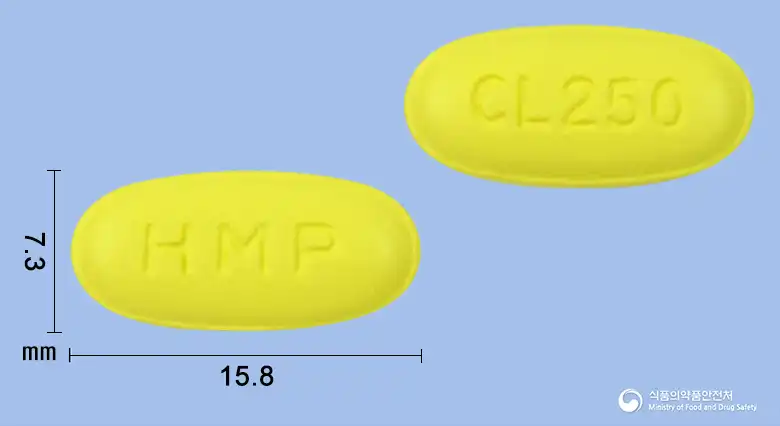
Clarithromycin 250mg
Tablet · Prescription medication
Hanmi Pharmaceutical Co., Ltd.
Clarithromycin 500mg
Prescription medication
Il Sung IS Co., Ltd.

Clarithromycin 250mg
Tablet · Prescription medication
Boryung Co., Ltd.

Clarithromycin 250mg
Tablet · Prescription medication
Kyungdong Pharmaceutical Co., Ltd.

Clarithromycin 250mg
Tablet · Prescription medication
Kunil Pharmaceutical Co., Ltd.
Even with the same ingredient, the dose and directions can differ by strength and dosage form. Talk to a doctor or pharmacist before switching from a medication you are already taking.
No questions yet.
For anything that needs medical judgment, consult a doctor or pharmacist.
This drug information is based on data provided by the Korea Ministry of Food and Drug Safety.
Consult a doctor or pharmacist for accurate dosage, administration, and usage instructions.