
 한국어
 English
 日本語
 中文(简体)
 Viewing now
Xtandi Soft Capsule 40mg (Enzalutamide)
Enzalutamide 40mg
Soft capsule · Prescription medication
Astellas Pharma Korea, Co., Ltd.
MFDS item code 201307883 · Approved 2013.06.26 · Insurance code 677200230
Treatment of castration-resistant and hormone-sensitive prostate cancer
This medicine is effective for patients with metastatic castration-resistant prostate cancer, especially for asymptomatic or mildly symptomatic patients who have a history of docetaxel treatment. It is also used in high-risk non-metastatic castration-resistant prostate cancer patients and treats metastatic hormone-sensitive prostate cancer (mHSPC) in combination with androgen deprivation therapy (ADT). Additionally, it is effective for the treatment of high-risk non-metastatic hormone-sensitive prostate cancer confirmed via biochemical recurrence. This drug helps in the treatment of various forms of prostate cancer and improves the patient's condition by suppressing cancer progression.
The recommended dose of this drug is 160mg (4 capsules of 40mg) once daily. This drug may be taken with or without food. Swallow the capsules whole with sufficient water; do not chew or dissolve them, or open the capsules. Take this drug at approximately the same time each day. If you miss a dose, take it as soon as possible when you remember. If you miss a dose for an entire day, resume taking the daily dose of this drug the next day. Do not take more than the prescribed daily dose. For patients who experience Grade 3 or higher toxicity or intolerable adverse reactions, discontinue this drug for 1 week or until symptoms improve to Grade 2 or lower. Once improvement is confirmed, resume treatment at the same dose or at a reduced dose of 120mg or 80mg. Patients with castration-resistant prostate cancer and hormone-sensitive metastatic prostate cancer who are taking this drug should receive concomitant androgen deprivation therapy. Patients with biochemically recurrent high-risk hormone-sensitive nonmetastatic prostate cancer may be treated with this drug together with androgen deprivation therapy or with this drug alone. In patients treated with this drug alone or in combination with androgen deprivation therapy, treatment may be temporarily interrupted after 36 weeks of treatment if prostate-specific antigen (PSA) reaches an undetectable level (less than 0.2 ng/mL). Treatment should be resumed when PSA increases to 2.0 ng/mL or higher in patients who have previously undergone radical prostatectomy, or to 5.0 ng/mL or higher in patients who have previously received radical radiotherapy. Concomitant administration with strong CYP2C8 inhibitors Concomitant administration with strong CYP2C8 inhibitors should be avoided whenever possible. If concomitant use with a strong CYP2C8 inhibitor is necessary, reduce the daily dose of this drug to 80mg. When concomitant use with the strong CYP2C8 inhibitor is discontinued, return the dose of this drug to the dose used before administration of the strong CYP2C8 inhibitor.
This medication can cause seizures, and if seizures occur during use, it must be stopped immediately. During treatment, a rare neurological disorder known as reversible posterior leukoencephalopathy syndrome (PRES) may occur, which includes symptoms such as seizures, headaches, confusion, and vision changes; if these symptoms appear, immediate consultation with a healthcare professional is required. Allergic reactions may occur, so if swelling of the face, tongue, lips, or throat, or a rash develops, stop taking this drug immediately and visit a hospital. Because this medication is in capsule form and is large, it may be difficult to swallow. Care should be taken to swallow the capsule whole with plenty of water. This drug should not be administered to individuals with hypersensitivity to certain components, pregnant or potentially pregnant women, or breastfeeding women. Patients taking other medications should be cautious, as interactions with this drug may occur, especially with certain enzyme inhibitors or P-gp substrate drugs. Common side effects of this drug include fatigue, flushing, nausea, decreased appetite, high blood pressure, diarrhea, falls, and fractures. Serious side effects such as myocardial ischemia or seizures have also been reported, so patients with a history of heart disease or those at high risk for seizures should be especially cautious. Patients with mild kidney or liver impairment can take this medication without dose adjustment, but its safety has not been adequately established for patients with severe kidney or liver impairment. This drug can be harmful to the fetus, so pregnant women or those planning to become pregnant should not use it, and male patients should also use effective contraception during and for a period after treatment. There is no need for special dosage adjustment in children or elderly patients, but the elderly should be carefully monitored for adverse reactions. In case of overdose, treatment should be stopped immediately, and supportive therapies should be initiated, as the risk of seizures may increase, necessitating special caution. This drug must be kept out of reach of children, and the capsules should not be melted or opened. Handling of this medication should be avoided by pregnant or potentially pregnant women and individuals who are not patients or caregivers.
Seizures, headache, confusion, blindness, visual impairment, neurological disorders, facial swelling, tongue swelling, lip swelling, pharyngeal swelling, rash, difficulty swallowing, fatigue, facial flushing, nausea, decreased appetite, hypertension, diarrhea, falls, fractures, weakness, myocardial ischemia, anxiety, hallucinations, cognitive impairment, taste disturbances, restless legs syndrome, reversible posterior leukoencephalopathy syndrome, skin dryness, itching, severe skin reactions, gynecomastia, nipple pain, breast tenderness, constipation, dizziness, peripheral neuropathy, sensory disturbances, somnolence, loss of taste, pericardial effusion, congestive heart failure, palpitations, indigestion, abdominal pain, abdominal discomfort, abnormal stools, upper abdominal pain, diarrhea, gastrointestinal pain, dry mouth, gum pain, insomnia, sleep disorders, mood disorders, tinnitus, muscle weakness, lumbar spinal stenosis, lower back pain, arthralgia, muscle cramps, limb pain, flank pain, neck pain, hyperkalemia, decreased appetite, hyperlipidemia, breast pain, vertebral compression fracture, hematuria, urinary difficulty, reduced platelet count, elevated prostate-specific antigen, abnormal liver function tests, increased alanine aminotransferase, elevated blood sugar, peripheral edema, fever, chest pain, death, heat sensation, strange feeling, sweating, hives, discoloration of nails, nail loss, alopecia, dermatitis, anemia, dyspnea, nasal bleeding, nasal obstruction, moist cough
Not everyone experiences these, and they can vary from person to person.
This drug is sensitive to air and moisture, so it must be stored in a tightly sealed container. Additionally, it should be kept away from direct sunlight and stored at room temperature, ideally at a general temperature that is neither too hot nor too cold.
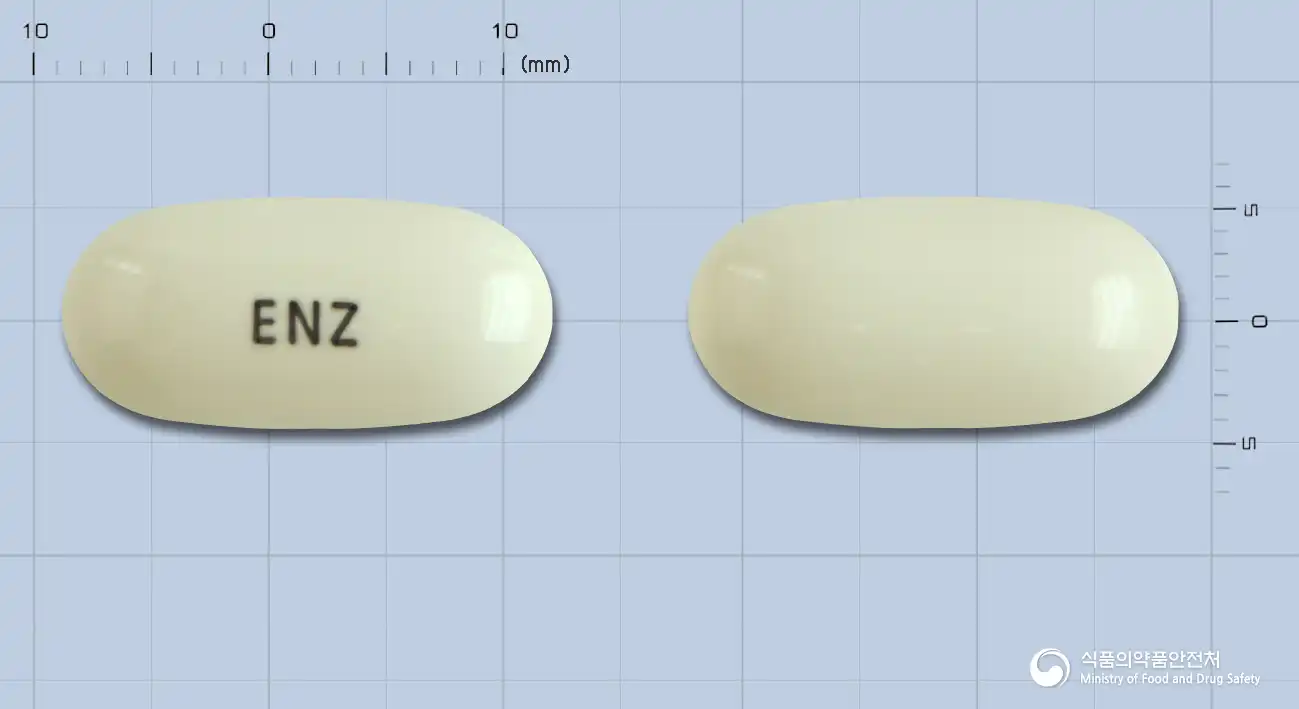
A white to off-white oval soft capsule with a clear yellow liquid inside.
112 capsules (28 capsules/PTP × 4)
Even with the same ingredient, strength, dosage form and how it is taken can differ.
Viewing nowEnzalutamide 40mg
Soft capsule · Prescription medication
Astellas Pharma Korea, Co., Ltd.
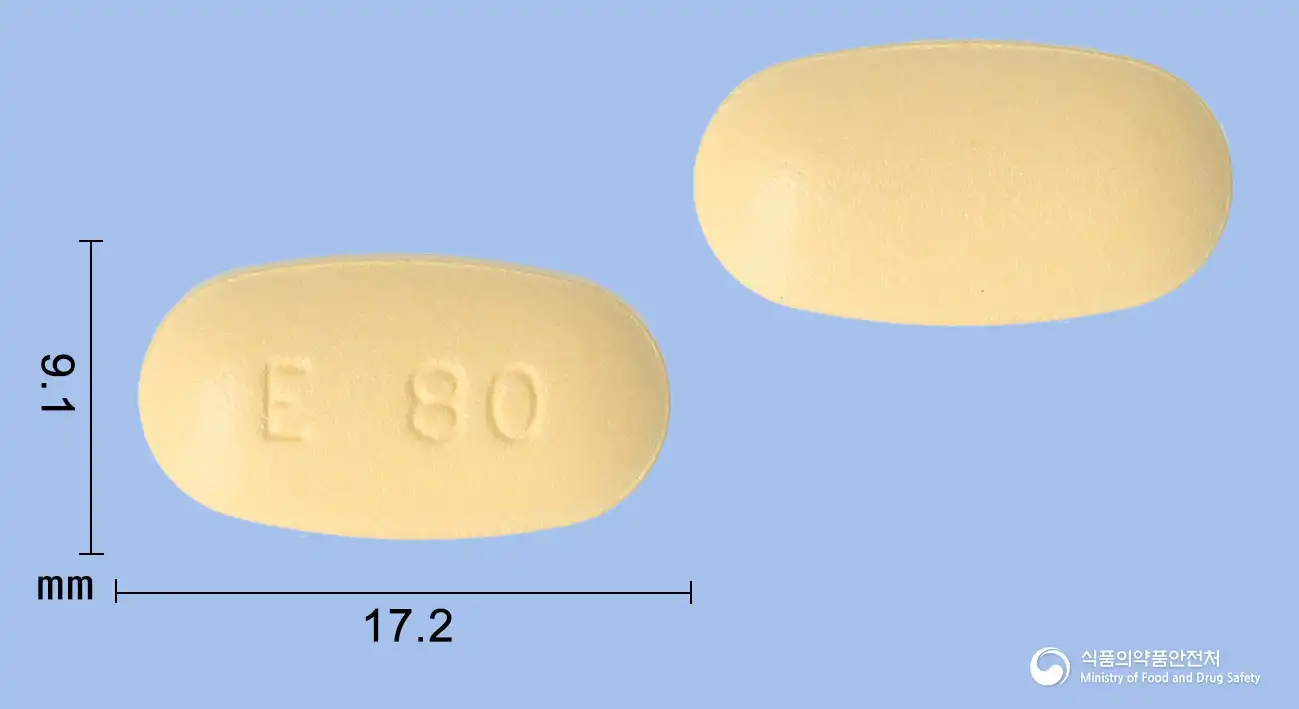
Enzalutamide 80mg
Tablet · Prescription medication
Hanmi Astellas Pharma Co., Ltd.
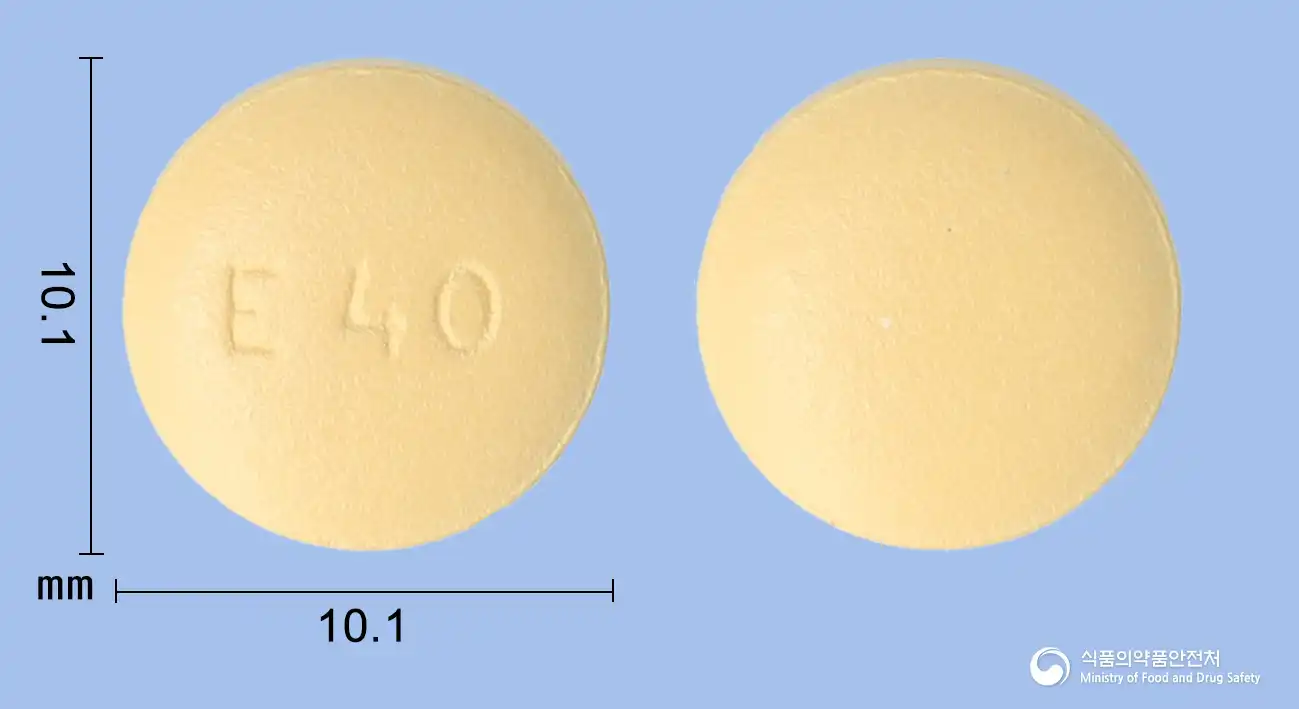
Enzalutamide 40mg
Tablet · Prescription medication
Korea Astellas Pharma Co., Ltd.
Even with the same ingredient, the dose and directions can differ by strength and dosage form. Talk to a doctor or pharmacist before switching from a medication you are already taking.
No questions yet.
For anything that needs medical judgment, consult a doctor or pharmacist.
This drug information is based on data provided by the Korea Ministry of Food and Drug Safety.
Consult a doctor or pharmacist for accurate dosage, administration, and usage instructions.