
 한국어
 English
 日本語
 中文(简体)
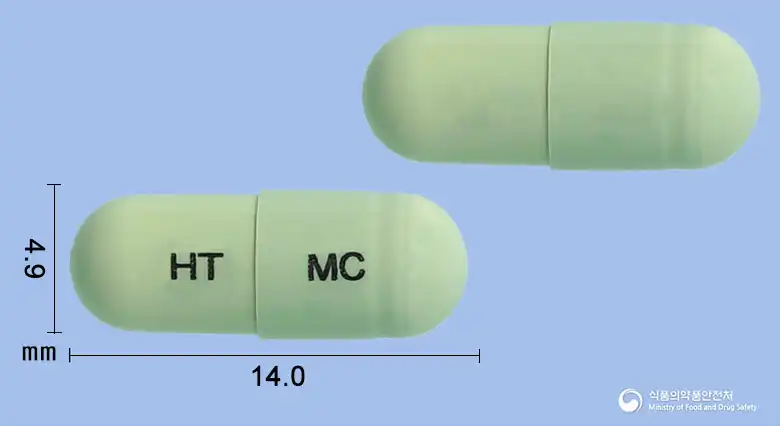 Viewing now
Movixicam Capsule (Meloxicam)
Meloxicam 7.5mg
Hard capsule · Prescription medication
HanKook HuTex Pharmaceutical Co., Ltd.
MFDS item code 201306346 · Approved 2013.03.21 · Insurance code 649102120
Relief of symptoms of acute exacerbations of osteoarthritis, rheumatoid arthritis, and ankylosing spondylitis
This medication is used to assist in the short-term relief of symptoms during acute exacerbations of osteoarthritis accompanied by pain and motor dysfunction, as well as to treat various symptoms of rheumatoid arthritis and ankylosing spondylitis.
1. Acute exacerbation of osteoarthritis (degenerative arthritis): ○ Adults: Administer meloxicam 7.5 mg orally once daily. If symptoms do not improve, the dose may be increased to 15 mg daily as needed. 2. Rheumatoid arthritis, ankylosing spondylitis: ○ Adults: Administer meloxicam 15 mg orally once daily. The dose may be reduced to 7.5 mg daily depending on the response to treatment. Do not administer more than 15 mg of this medicine per day. Take the daily dose all at once with water or another beverage during a meal. ○ For elderly patients or those at increased risk of adverse reactions (e.g., a history of gastrointestinal disease or cardiovascular risk factors), treatment is usually started at a dose of 7.5 mg daily. ○ Patients with severe renal impairment receiving hemodialysis should not receive more than 7.5 mg daily.
This medication may pose a risk of gastrointestinal bleeding in individuals who regularly consume more than three glasses of alcohol per day, so consultation with a doctor or pharmacist is necessary. This medication can impact the cardiovascular system, increasing the risk of serious thromboembolic events such as myocardial infarction or stroke. Careful consideration is particularly needed in patients with cardiovascular disease or risk factors. This medication may elevate the risks of gastrointestinal bleeding, ulcers, or perforation; thus, patients with a history of gastrointestinal disorders or elderly patients should use it with caution. This medication can cause serious skin reactions or life-threatening hypersensitivity; if skin abnormalities occur, discontinue use immediately. This medication may affect kidney function, so patients with kidney disease or related risk factors should closely monitor their renal function while using it. This medication may alter liver function tests, requiring patients with liver disease to undergo regular liver function tests and to discontinue use if abnormalities are found. This medication may reduce reproductive capacity, so it is recommended that women planning to conceive do not use it, and it must not be taken during pregnancy. This medication should not be given to individuals with a history of specific allergies, or those with gastrointestinal bleeding, severe liver disease, severe kidney disease, severe heart failure, or severe hypertension. This medication should be used with caution in elderly patients, those with a history of gastrointestinal disorders, patients with blood coagulation disorders, asthmatics, and patients with risk factors for cardiovascular disease. This medication may interact with other non-steroidal anti-inflammatory drugs, anticoagulants, diuretics, lithium, methotrexate, etc., so consult with a doctor before combining. Pregnant or nursing women should not take this medication, especially in the late stages of pregnancy, as it may cause serious side effects for both mother and fetus. When administered to elderly patients, consideration should be given to kidney function, liver function, and heart function, using the minimum dose cautiously while monitoring for adverse reactions. In case of overdose, symptoms may include drowsiness, nausea, vomiting, gastrointestinal bleeding, and in severe cases, hypertension, acute renal failure, liver failure, or coma may occur, necessitating immediate medical attention. This medication should be kept out of reach of children and stored in its original container, tightly closed.
Not everyone experiences these, and they can vary from person to person.
This medication is sensitive to light and must be stored in a container that blocks light. Additionally, it is important to store it in a cool room temperature, between 1 and 30 degrees Celsius, to maintain its effectiveness.
Hard capsule filled with a pale yellow powder, with upper and lower parts in light green.
30 capsules/bottle, 300 capsules/bottle
Even with the same ingredient, strength, dosage form and how it is taken can differ.
Viewing nowMeloxicam 7.5mg
Hard capsule · Prescription medication
HanKook HuTex Pharmaceutical Co., Ltd.
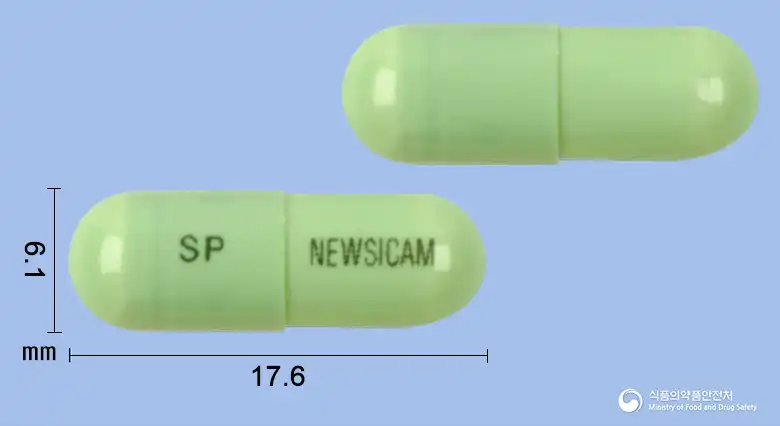
Meloxicam 7.5mg
Hard capsule · Prescription medication
Shinpoong Pharmaceutical Co., Ltd.
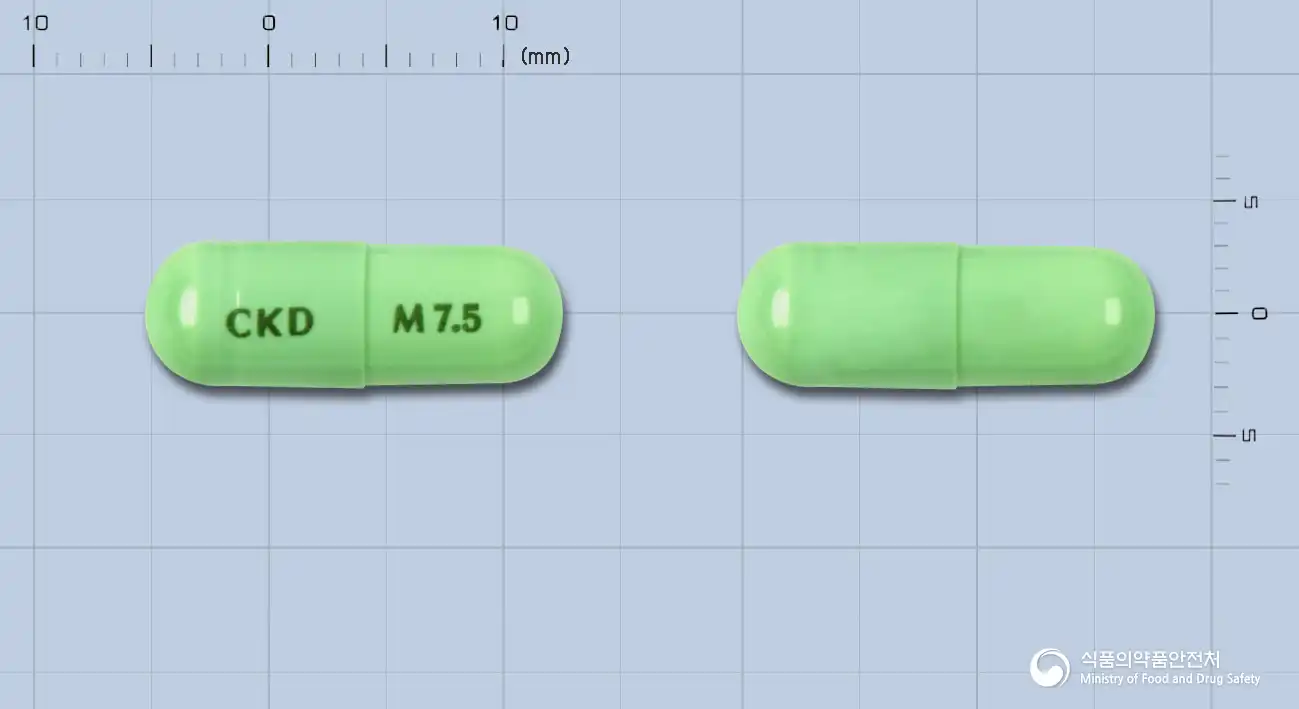
Meloxicam 7.5mg
Hard capsule · Prescription medication
Jongkundang Co., Ltd.
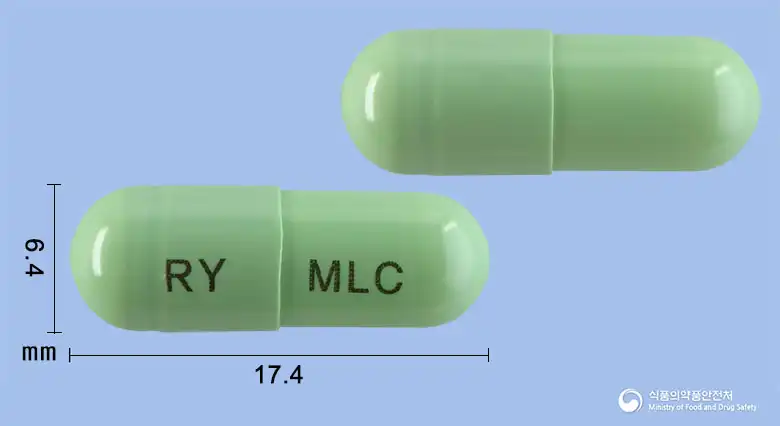
Meloxicam 7.5mg
Hard capsule · Prescription medication
IYUN Pharmaceutical Co., Ltd.
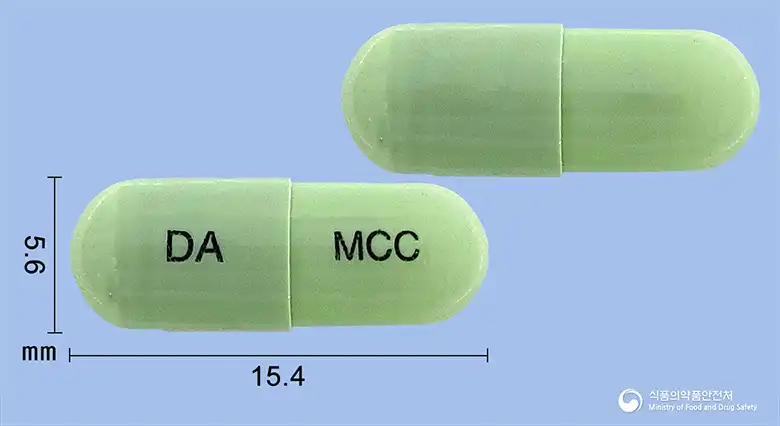
Meloxicam 7.5mg
Hard capsule · Prescription medication
Dong-A ST Co., Ltd.
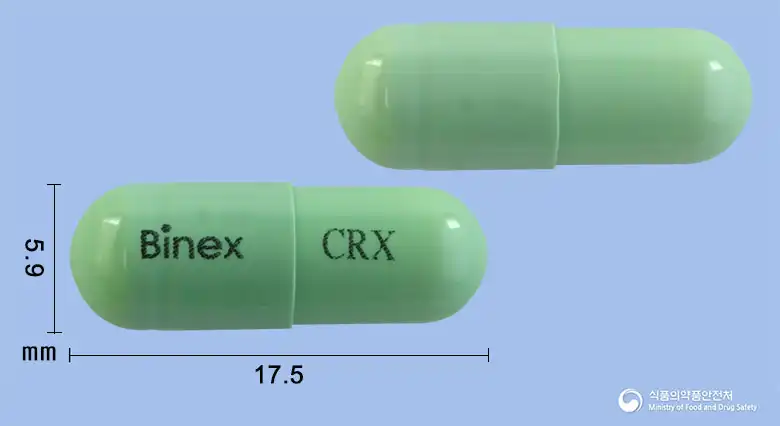
Meloxicam 7.5mg
Hard capsule · Prescription medication
Bionex Co., Ltd.
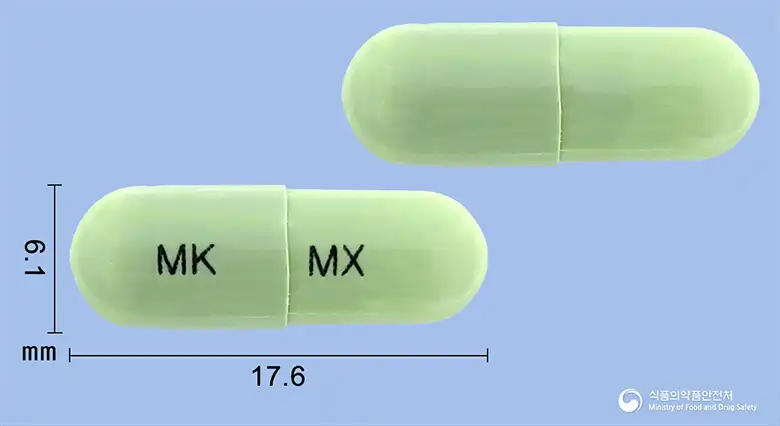
Meloxicam 7.5mg
Hard capsule · Prescription medication
Medica Korea Co., Ltd.
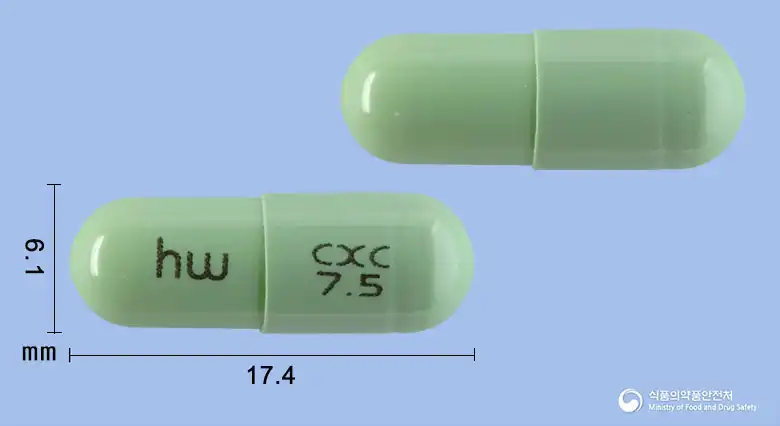
Meloxicam 7.5mg
Hard capsule · Prescription medication
Hawon Pharmaceutical Co., Ltd.
Even with the same ingredient, the dose and directions can differ by strength and dosage form. Talk to a doctor or pharmacist before switching from a medication you are already taking.
No questions yet.
For anything that needs medical judgment, consult a doctor or pharmacist.
This drug information is based on data provided by the Korea Ministry of Food and Drug Safety.
Consult a doctor or pharmacist for accurate dosage, administration, and usage instructions.