
 한국어
 English
 日本語
 中文(简体)
 Viewing now
Keppra Tablets 1000mg (Levetiracetam)
Levetiracetam 1000mg
Tablet · Prescription medication
Hanin Pharmaceutical Co., Ltd.
MFDS item code 201207539 · Approved 2012.10.30 · Insurance code 657202430
Treatment of epilepsy as monotherapy (partial seizures) and as adjunctive therapy (myoclonic seizures, etc.)
This medication is used alone to treat secondary generalized seizures and partial seizures in patients diagnosed with epilepsy aged 4 years and older. It is also used as an adjunct treatment for patients with epilepsy that is not controlled by existing first-line treatments, to alleviate seizures. In children aged 12 years and older, it is effective for treating myoclonic seizures in patients with juvenile myoclonic epilepsy and generalized tonic-clonic seizures in patients with idiopathic generalized epilepsy. It can be administered by injection when oral administration is difficult, making it convenient for use. This medication effectively controls various types of epilepsy seizures and improves patient symptoms.
Initiate treatment with 500mg twice daily. The initial dose may be reduced to 250mg twice daily and increased to 500mg twice daily after 2 weeks. According to clinical response and tolerability, the dose may be increased or decreased by 500mg or 1000mg per day every 2 to 4 weeks; the maximum recommended dose is 3000mg per day. For adjunctive therapy for primary generalized tonic-clonic seizures, initiate treatment with 1000mg per day (500mg twice daily); an initial loading dose of 750mg is recommended. The dose should then be adjusted according to creatinine clearance. For patients with renal impairment, administer twice daily according to creatinine clearance; the dose is 500-1500mg (normal), 500-1000mg (mild), 250-750mg (moderate), or 250-500mg (severe). Patients with end-stage renal disease undergoing dialysis should receive 500-1000mg once daily. An initial loading dose of 750mg is recommended on the first day of dialysis, followed by an additional 250-500mg after dialysis.
Children and adolescents aged 4 years or older weighing less than 50 kg: Initiate treatment with 10mg/kg twice daily. The dose may be increased up to 60mg/kg per day, but should not be increased or decreased by more than 20mg/kg per day every 2 weeks. For children weighing 20kg or less, initiate treatment with the 100mg/ml oral solution. For children weighing 20~40kg, initiate treatment with 500mg per day (250mg per dose, twice daily) and increase the dose by 500mg every 2 weeks, up to a maximum of 1500mg per day (750mg per dose, twice daily). For children weighing more than 40kg, initiate treatment with 1000mg per day (500mg per dose, twice daily) and increase the dose by 1000mg every 2 weeks, up to a maximum of 3000mg per day (1500mg per dose, twice daily). For adjunctive therapy for myoclonic seizures in children aged 12 years or older, initiate treatment with 500mg twice daily; the initial dose may be reduced to 250mg. For adjunctive therapy for primary generalized tonic-clonic seizures, adolescents aged 12~17 years weighing less than 50 kg should initiate treatment with 20mg/kg per day (10mg/kg per dose, twice daily) and increase the dose every 2 weeks, up to 60mg/kg per day. For children with renal impairment and adolescents weighing less than 50 kg, administer twice daily according to creatinine clearance; the dose is 10-30mg/kg (normal), 10-20mg/kg (mild), 5-15mg/kg (moderate), or 5-10mg/kg (severe). Patients with end-stage renal disease undergoing dialysis should receive 10-20mg/kg once daily; a loading dose of 15mg/kg is recommended on the first day. Tablets are not suitable for children 4 years or younger; infants aged 1 month or older should receive the oral solution.
This medication is used for the treatment of epilepsy, and there is a risk of occurrence of mental health issues such as suicidal thoughts or behaviors and depression during treatment, so careful monitoring for these symptoms should be conducted. Additionally, neurological and psychiatric adverse reactions such as drowsiness, fatigue, behavioral changes, and coordination disorders may occur, especially during the first 4 weeks. Abrupt discontinuation of this medication may worsen seizures, so the dosage should be gradually reduced under the guidance of a physician. Patients with allergies to the active ingredient or specific genetic diseases such as lactose intolerance should not take this medication. Patients with a history of depression or suicidal thoughts, or those with kidney or liver dysfunction should consult a physician before administration and undergo regular monitoring of their condition through laboratory tests. This medication may cause behavioral abnormalities, aggression, anxiety, and depressive symptoms, so any changes should be reported to a healthcare professional immediately. Seizures may worsen, so if the frequency of seizures increases or symptoms escalate, consultation with a physician is necessary. Patients with cardiovascular disease or electrolyte imbalances should check for QT interval prolongation through ECG and exercise caution. This medication may cause drowsiness and weakness, so it is advisable to avoid driving or operating hazardous machinery. Women who are pregnant or planning to become pregnant should consult a physician before taking this medication, and nursing mothers should carefully consider whether to stop breastfeeding as the drug can be transmitted through breast milk. In children and the elderly, dosage adjustments may be needed based on kidney function, and it should not be used for infants under 1 month of age as safety has not been established. Drug interactions are relatively low, but caution is required when combined with specific medications, so any concurrent medications should be reported. In case of overdose, it is crucial to visit a medical institution immediately for actions such as inducing vomiting or gastric lavage, as there is no specific antidote for this medication. This medication should be stored out of reach of children and should not be transferred to another container for safety.
Not everyone experiences these, and they can vary from person to person.
This medication may be sensitive to air or moisture, so it must be stored in a tightly sealed container. It is recommended to maintain the storage temperature between 1 degree and 30 degrees Celsius at room temperature to preserve the efficacy of the medication over time.
White oval film-coated tablet
60 tablets (10 tablets/PTP × 6), 30 tablets/bottle, 100 tablets/bottle
Even with the same ingredient, strength, dosage form and how it is taken can differ.
Viewing nowLevetiracetam 1000mg
Tablet · Prescription medication
Hanin Pharmaceutical Co., Ltd.
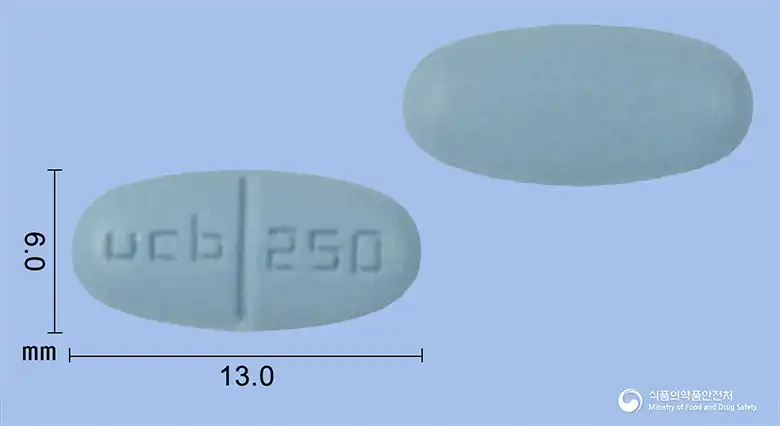
Levetiracetam 250mg
Tablet · Prescription medication
UCB Korea Co., Ltd.
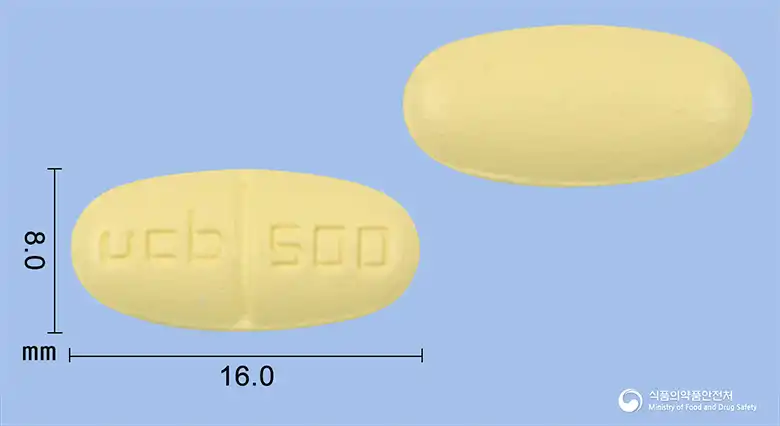
Levetiracetam 500mg
Tablet · Prescription medication
UCB Korea Co., Ltd.
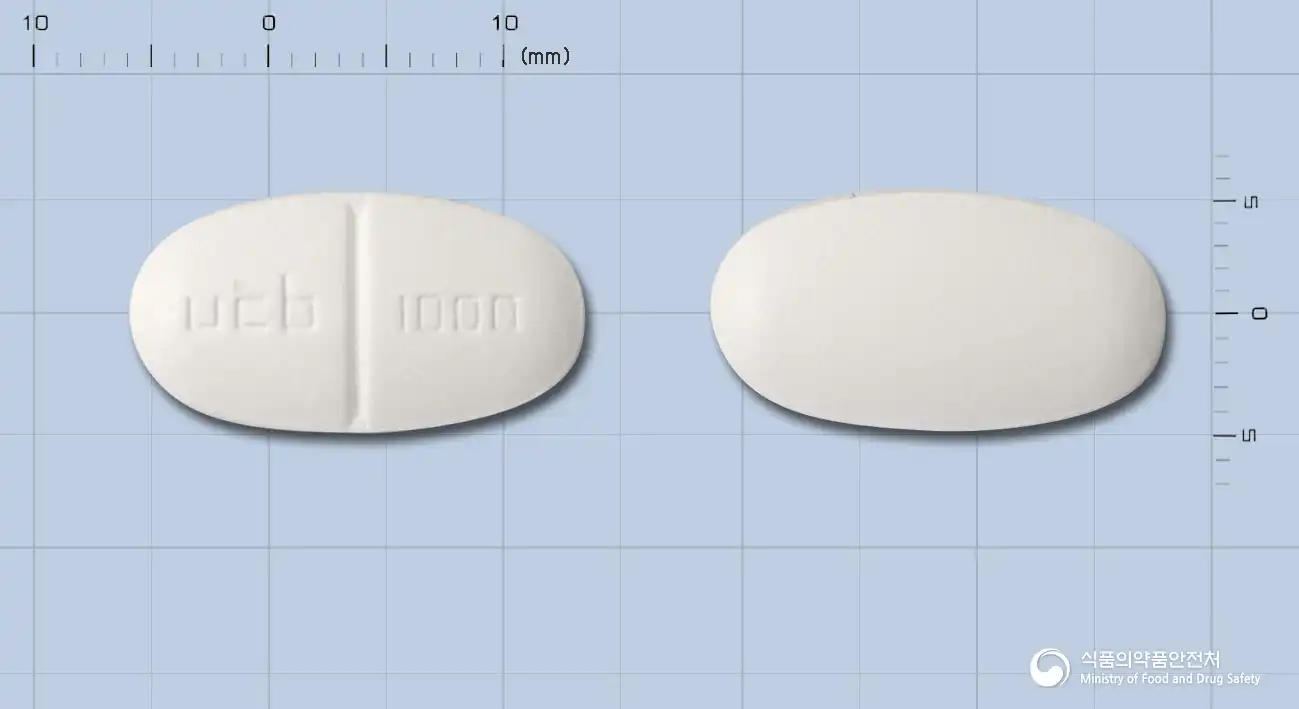
Levetiracetam 1000mg
Tablet · Prescription medication
UCB Korea Co., Ltd.
Levetiracetam 10g
Solution · Prescription medication
UCB Korea Co., Ltd.
Levetiracetam 500mg
Injections · Prescription medication
UCB Pharma Co., Ltd.

Levetiracetam 500mg
Tablet · Prescription medication
Hanmi Pharmaceutical Co., Ltd.

Levetiracetam 1000mg
Tablet · Prescription medication
Hanlim Pharmaceutical Co., Ltd.
Even with the same ingredient, the dose and directions can differ by strength and dosage form. Talk to a doctor or pharmacist before switching from a medication you are already taking.
No questions yet.
For anything that needs medical judgment, consult a doctor or pharmacist.
This drug information is based on data provided by the Korea Ministry of Food and Drug Safety.
Consult a doctor or pharmacist for accurate dosage, administration, and usage instructions.