한국어
 English
 日本語
 中文(简体)
 Viewing now
Inlyta 1 mg (Axitinib)
Axitinib 1mg
Tablet · Prescription medication
Pfizer Korea Co., Ltd.
MFDS item code 201206552 · Approved 2012.08.22 · Insurance code 648902130
First-line combination therapy and second-line monotherapy for advanced renal cell carcinoma
This medication is used in combination with Pembrolizumab for the first-line treatment of advanced renal cell carcinoma. It is also administered alone to treat advanced renal cell carcinoma in patients who have failed one previous systemic therapy. Therefore, this drug expands treatment options for patients with advanced renal cell carcinoma and aids in effective management.
1. First-line treatment of advanced renal cell carcinoma: The recommended dose of this drug is 5 mg orally twice daily (12 hours apart), with or without food, in combination with pembrolizumab 200 mg administered by intravenous infusion over 30 minutes every 3 weeks, until disease progression or unacceptable toxicity occurs. When this drug is used in combination with pembrolizumab, dose escalation from the initial dose of 5 mg may be considered at intervals of 6 weeks or longer. For the recommended dose of pembrolizumab, refer to the prescribing information for pembrolizumab. 2. Second-line treatment of advanced renal cell carcinoma: When this drug is used as monotherapy, the recommended starting dose is 5 mg orally twice daily. This drug should be taken approximately 12 hours apart, with or without food. 3. Precautions for administration: This drug should be swallowed whole with water. If the patient vomits after taking this drug or misses a dose, an additional dose should not be taken. The next prescribed dose should be taken at the usual time. 4. Dose adjustment: Dose escalation or reduction is recommended based on the safety and tolerability of each individual patient. During treatment, the dose may be increased in patients who have had no adverse reactions exceeding Grade 2 (according to the Common Toxicity Criteria for Adverse Events [CTCAE]) for at least 2 consecutive weeks, maintain normal blood pressure, and are not taking antihypertensive medication. If dose escalation from 5 mg twice daily is recommended, the dose may be increased to 7 mg twice daily and, based on the same criteria, further increased up to a maximum of 10 mg twice daily. During treatment, temporary or permanent interruption of treatment with this drug and/or dose reduction may be necessary to manage certain adverse reactions. In general, for a Grade 3 adverse reaction according to CTCAE, reduce the dose of this drug by one dose level; for a Grade 4 adverse reaction, temporarily interrupt treatment with this drug until the adverse reaction resolves to Grade 2 or lower, then restart at one dose level lower. If dose reduction from 5 mg twice daily is required, a reduction to 3 mg twice daily is recommended. If further dose reduction is required, the dose may be reduced to 2 mg twice daily. 5. Concomitant administration with strong CYP3A4/5 inhibitors: Concomitant administration with strong CYP3A4/5 inhibitors (e.g., ketoconazole, itraconazole, clarithromycin, atazanavir, indinavir, nefazodone, nelfinavir, ritonavir, saquinavir, telithromycin, and voriconazole) should be avoided. Selection of alternative concomitant medications with no or minimal potential to inhibit CYP3A4/5 is recommended. Although dose adjustment of this drug has not been studied in patients receiving strong CYP3A4/5 inhibitors, if concomitant administration of a strong CYP3A4/5 inhibitor is unavoidable, reducing the dose of this drug by approximately half is recommended. This reduction is expected to adjust axitinib AUC (area under the plasma concentration-time curve) to a range comparable to that in the absence of the inhibitor. Subsequent doses may be increased or decreased based on the safety and tolerability of each individual patient. If concomitant administration of a strong CYP3A4/5 inhibitor is discontinued, the dose of this drug should be changed back to the dose used before concomitant administration of the inhibitor (after 3-5 times the inhibitor's half-life have elapsed). [See ‘5. Interactions’ under Precautions for Use]. 6. Hepatic impairment: No adjustment of the starting dose of this drug is required for patients with mild hepatic impairment (Child-Pugh class A). Based on pharmacokinetic data, reducing the starting dose of this drug by approximately half is recommended for patients with moderate hepatic impairment (Child-Pugh class B) at baseline. Subsequent doses may be increased or decreased based on the safety and tolerability of each individual patient. This drug has not been evaluated in patients with severe hepatic impairment (Child-Pugh class C) [see ‘4. General Precautions, item 11’ under Precautions for Use]. 7. Hepatotoxicity: In patients receiving this drug in combination with pembrolizumab, • If ALT or AST is elevated to ≥3 times and <10 times the upper limit of normal, without total bilirubin being elevated to ≥2 times the upper limit of normal, withhold both this drug and pembrolizumab until the adverse reaction resolves to Grade 0 - 1. Consider corticosteroid therapy. After resolution, consider restarting one drug or sequentially restarting both drugs. If this drug is restarted, consider dose reduction according to the recommended dose-adjustment guidelines. • If ALT or AST is elevated to ≥10 times the upper limit of normal, or is elevated to >3 times the upper limit of normal together with total bilirubin elevated to ≥2 times the upper limit of normal, permanently discontinue both this drug and pembrolizumab and consider corticosteroid therapy. For additional dose adjustments of pembrolizumab, refer to the prescribing information for pembrolizumab.
This medication may harm the fetus if taken during pregnancy, so women of childbearing age should avoid pregnancy. Patients with a severe allergy to this drug or its components should not take it. Serious side effects may occur if this drug is used in conjunction with other immunotherapies. Regular monitoring of liver function, blood pressure, heart condition, thyroid function, and kidney function is required during treatment. Patients with a history of cardiovascular diseases such as hypertension, heart failure, or thrombosis must consult a doctor before taking this medication. Various side effects can occur including diarrhea, fatigue, loss of appetite, vocal disorders, skin rash; any unusual symptoms should be reported immediately. Liver dysfunction may occur, necessitating adjustment of the treatment dose or discontinuation if liver enzyme levels rise. If severe bleeding, gastrointestinal perforation, or neurological symptoms appear, healthcare providers should be informed immediately. As this drug is metabolized by the CYP3A4 enzyme, caution is needed as certain medications or grapefruit juice can alter blood concentration. If surgery is planned, this medication should be discontinued at least 2 days prior and should be resumed only after checking the wound recovery status. Pregnant or breastfeeding women should consult a healthcare provider before taking this medication and should decide whether to continue breastfeeding or the drug treatment. The safety for pediatric use has not been established; it is best not to administer this drug to growing children. There is no specific antidote in case of overdose; supportive treatment should be provided based on the symptoms. This medication should be kept out of reach of children and stored in its original container.
Fatal adverse reactions include cardiac arrest, pulmonary embolism, heart failure, unexplained death, severe myasthenia gravis, myocarditis, Fournier's gangrene, plasmacytoma, pleural effusion, pneumonia, respiratory failure, hepatotoxicity, diarrhea, acute kidney injury, dehydration, pneumonia, diarrhea, fatigue, weakness, hypertension, hypothyroidism, decreased appetite, hand-foot plantar erythrodysesthesia, nausea, stomatitis, mucositis, voice disorders, rash, cough, constipation, hyperglycemia, increased ALT, increased AST, elevated creatinine, hyponatremia, hyperkalemia, hypoalbuminemia, hypercalcemia, hypophosphatemia, increased ALP, hypocalcemia, increased serum bilirubin, prolonged activated partial thromboplastin time, lymphocytopenia, anemia, thrombocytopenia, erythrocytosis, heart failure, hypothyroidism, hyperthyroidism, decreased appetite, dehydration, hyperkalemia, hypercalcemia, headache, taste disturbance, dizziness, reversible posterior leukoencephalopathy syndrome, tinnitus, bleeding, venous thromboembolic events, arterial thromboembolic events, hypertensive crisis, dyspnea, vomiting, abdominal pain, stomatitis, dyspepsia, upper abdominal pain, hemorrhoids, tongue pain, gastrointestinal perforation and fistula, hyperbilirubinemia, hand-foot erythematous dysesthesia syndrome, dry skin, erythema, pruritus, hair loss, arthralgia, limb pain, myalgia, proteinuria, fatigue, mucosal inflammation, weight loss, rhinitis, gingivitis, pneumonia, edema, chest discomfort, chest pain, peripheral edema, acne, vesicles, pressure ulcer, hand dermatitis, palmoplantar keratoderma, palmoplantar pustulosis, dysuria, chronic kidney disease, dysphagia, rectal pain, dental pain, pulmonary arterial thrombosis, cerebral infarction, peripheral neuropathy, peripheral sensory neuropathy, perineal pain, gout, hemoglobin decrease, hyperglycemia, increased lipase, increased amylase, hypernatremia, hypoglycemia, hyponatremia, hypophosphatemia, increased hemoglobin, hypercalcemia
Not everyone experiences these, and they can vary from person to person.
Store this drug in a tightly closed container to protect it from air and moisture. Additionally, it is recommended to keep the drug at room temperature between 15 and 30 degrees Celsius. This will help maintain the drug's effectiveness.
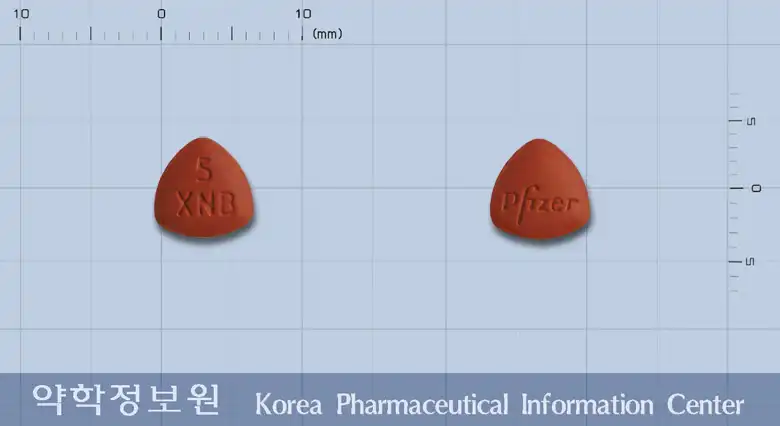
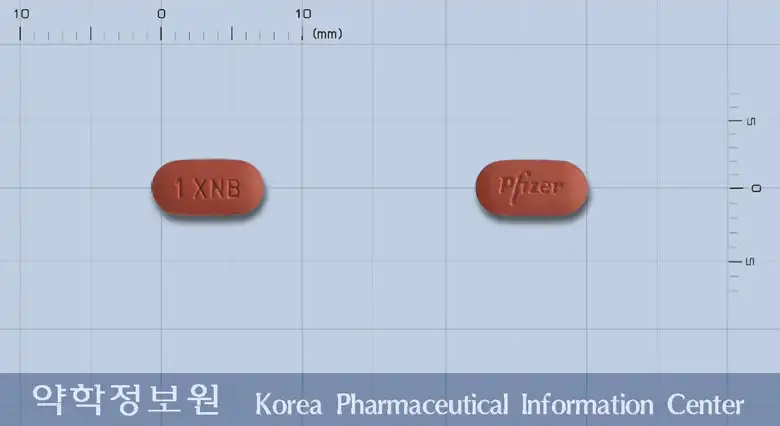
Red oval-shaped film-coated tablet
28 tablets (14/blister x 2), 56 tablets (14/blister x 4)
Even with the same ingredient, strength, dosage form and how it is taken can differ.
Even with the same ingredient, the dose and directions can differ by strength and dosage form. Talk to a doctor or pharmacist before switching from a medication you are already taking.
No questions yet.
For anything that needs medical judgment, consult a doctor or pharmacist.
This drug information is based on data provided by the Korea Ministry of Food and Drug Safety.
Consult a doctor or pharmacist for accurate dosage, administration, and usage instructions.