
 한국어
 English
 日本語
 中文(简体)
 Viewing now
Rapamune 0.5mg (Sirolimus)
Sirolimus Dispersion Solution 3.3mg
Prescription medication
Pfizer Pharmaceuticals Korea Co., Ltd.
MFDS item code 201206317 · Approved 2012.07.30 · Insurance code 648902510
Prevention of kidney transplant rejection; treatment of lymphangioleiomyomatosis
This medication is used to prevent organ rejection in kidney transplant patients aged 13 and older. In patients with low to moderate immunological risk, it is initially used in combination with cyclosporine and corticosteroids, with cyclosporine being discontinued 2-4 months after transplantation. In patients with high immunological risk, combination therapy is recommended for the first year. Additionally, this medication is also used for the treatment of lymphangioleiomyomatosis. However, due to a lack of established safety and efficacy in certain high-risk patients, children, and some administration settings, caution is required. Overall, this medication is effectively used for the prevention of kidney transplant rejection and the treatment of lymphangioleiomyomatosis.
This medicine is administered orally once daily. To minimize variability in exposure to this medicine, it should be administered consistently either with food or on an empty stomach. Do not crush, chew, or cut this medicine. 1. Usual dosage in kidney transplant patients The initial dose of this medicine should be administered as soon as possible after transplantation. It is recommended that this medicine be administered 4 hours after administration of cyclosporine oral solution and/or cyclosporine capsules. Because this medicine has a long half-life, frequent dose adjustments based on concentrations measured at non-steady-state may result in overdosing or underdosing. Once the maintenance dose of this medicine has been adjusted, maintain that dose for at least 7~14 days before readjusting the dose based on blood concentration monitoring. The following equation may be used for dose adjustment in most patients: New dose of this medicine = Current dose X (Target blood concentration / Current blood concentration) If a substantial increase in the trough blood concentration of this medicine is desired, a loading dose should also be considered in addition to the new maintenance dose: Loading dose of this medicine = 3 X (New maintenance dose - Current maintenance dose) The maximum daily dose of this medicine should not exceed 40mg. If administration of the loading dose would cause the scheduled daily dose to exceed 40mg, the loading dose should be administered over 2 days. The trough concentration of this medicine should be monitored at least 3-4 days after administration of the loading dose. In clinical trials in patients at low or moderate immunologic risk, a 2mg dose of this medicine was shown to be clinically equivalent to 2mg of sirolimus oral solution; therefore, oral solution and tablets may be substituted for one another. However, it is not known whether oral solution and tablets are clinically equivalent at doses greater than 2mg. 2. Kidney transplant patients at low or moderate immunologic risk Combination therapy with this medicine and cyclosporine: It is recommended that this medicine initially be administered in combination with cyclosporine and corticosteroids. New kidney transplant recipients should receive a loading dose 3 times the maintenance dose. For kidney transplant patients, an initial loading dose of 6mg/day and a maintenance dose of 2mg/day are recommended. Maintain sirolimus concentrations within the target range through therapeutic drug monitoring. Administration of this medicine after withdrawal of cyclosporine: Patients undergoing cyclosporine withdrawal for the first time should be receiving this medicine in combination with cyclosporine. Withdrawal of cyclosporine is recommended 2~4 months after transplantation. At 2-4 months after transplantation, cyclosporine should be gradually discontinued over 4-8 weeks, and the dose of this medicine should be adjusted so that its trough blood concentration is within 16-24ng/mL (chromatographic method) during the first year after transplantation. Thereafter, the target blood concentration of this medicine should be 12-20 ng/mL (chromatographic method). Cyclosporine inhibits the metabolism and transport of this medicine; therefore, if the dose of this medicine is not increased when cyclosporine is discontinued, the concentration of this medicine will decrease. When cyclosporine is not administered, the dose of this medicine needs to be increased approximately 4-fold because there is no pharmacokinetic interaction (approximately 2-fold dose increase needed) and the requirement for immunosuppression increases (approximately 2-fold dose increase needed). 3. Kidney transplant patients at high immunologic risk For patients at high immunologic risk, combination therapy with cyclosporine and corticosteroids is recommended for 12 months after transplantation. The safety and efficacy of administering this combination therapy for more than 1 year in patients at high immunologic risk have not been studied. Therefore, based on the patient's clinical condition, changes to immunosuppressive therapy after the first 12 months following transplantation should be considered. Patients receiving this medicine in combination with cyclosporine should receive a loading dose of 15mg on the day of transplantation. Starting on day 2, a maintenance dose of 5mg should be administered. Measure the trough concentration on days 5-7 of treatment and adjust subsequent doses of this medicine so that its trough blood concentration is within 10-15ng/mL (chromatographic method). The initial dose of cyclosporine should be 7mg/kg/day in divided doses, and the dose should be adjusted continuously until the target whole-blood trough concentration is reached. The target whole-blood trough concentration is 200-300ng/mL through day 14, 150-200ng/mL from day 15 through week 26, and 100-150ng/mL from week 27 through week 52. Prednisolone should be administered at a dose of at least 5mg/day. Antibody induction therapy may be used. 4. Dosage in patients with lymphangioleiomyomatosis The initial dose of this medicine in patients with lymphangioleiomyomatosis is 2 mg once daily. The whole-blood trough concentration of this medicine should be measured on days 10-20, and the dose should be adjusted to maintain the concentration within 5-15 ng/mL. The following equation may be used for dose adjustment in most patients: New dose of this medicine=Current doseX(Target blood concentration/Current blood concentration). Because this medicine has a long half-life, frequent dose adjustments based on concentrations measured at non-steady-state may result in overdosing or underdosing. Once the maintenance dose of this medicine has been adjusted, maintain that dose for at least 7-14 days before readjusting the dose based on blood concentration monitoring. Once a stable dose has been established, therapeutic drug monitoring should be performed at least once every 3 months. 5. Dose adjustment In patients with hepatic impairment, a maintenance dose of approximately 2/3 of the dose for patients with normal hepatic function is recommended for those with mild to moderate hepatic impairment. For patients with severe hepatic impairment, a maintenance dose of approximately 1/2 of the dose for patients with normal hepatic function is recommended. No change to the loading dose is necessary. No dose adjustment is required in patients with renal impairment.
For patients aged 13 years and older who weigh less than 40 kg, adjust the initial loading dose to 3mg/m2/day and the maintenance dose to 1mg/m2/day based on body surface area.
This medication can suppress immune function, making patients more susceptible to infections; therefore, if any symptoms of infection arise, immediate consultation with medical personnel is required. The use of this medication is not recommended for patients who have received liver or lung transplants, especially in liver transplant recipients, as serious side effects can occur when used in combination with other immunosuppressants. This medication should not be used in patients with specific genetic metabolic disorders, such as galactose intolerance or lactose deficiency. During administration, regular blood tests and kidney function tests should be conducted, as abnormalities such as hyperlipidemia, hyperglycemia, and proteinuria may occur. This medication may increase the risk of certain malignancies such as skin cancer or lymphoma, so care should be taken to use sunscreen and protect the skin. Due to many drug interactions, caution should be exercised when used in combination with certain antifungals, antibiotics, and calcium channel blockers, especially strong CYP3A4 inhibitors or inducers should not be taken together. During pregnancy, there is a risk of harm to the fetus; thus, women planning pregnancy should consult with medical personnel and use effective contraception. During treatment, live vaccinations should be avoided, and necessary vaccinations for infection prevention should be carried out only after consulting with medical personnel. In case of overdose, standard emergency treatment is necessary, and care should be taken as this medication is not removed through hemodialysis. While taking this medication, adhere strictly to the prescribed dosage and administration, and if any abnormal symptoms occur, inform medical personnel immediately.
Increased susceptibility to infections, lymphoma, malignant tumors, skin lymphoma, opportunistic infections, sepsis, fatal infections, hepatic artery thrombosis, transplant failure and death due to hepatic artery thrombosis, bronchial anastomotic dehiscence, thrombocytopenia, anemia, leukopenia, hemolytic uremic syndrome, neutropenia, pancytopenia, thrombotic thrombocytopenic purpura, tachycardia, pericardial effusion, abdominal pain, constipation, diarrhea, nausea, pancreatitis, stomatitis, ascites, impaired healing, edema, peripheral edema, fever, pain, hypersensitivity, pneumonia, fungal infections, viral infections, bacterial infections, herpes simplex, urinary tract infections, pyelonephritis, cytomegalovirus infection, herpes zoster, mycobacterial infection, Epstein-Barr virus infection, abnormal liver function tests, increased serum creatinine, increased serum lactate dehydrogenase, hypokalemia, hypophosphatemia, hyperlipidemia, hyperglycemia, hypertriglyceridemia, fluid retention, diabetes mellitus, arthralgia, osteonecrosis, squamous cell carcinoma of the skin, basal cell carcinoma, malignant melanoma, post-transplant lymphoproliferative disorder, neuroendocrine carcinoma of the skin, headache, reversible posterior leukoencephalopathy syndrome, proteinuria, nephrotic syndrome, focal segmental glomerulosclerosis, menstrual disorders, ovarian cysts, pulmonary embolism, interstitial pneumonia, pleural effusion, epistaxis, pulmonary hemorrhage, alveolar proteinosis, rash, acne, exfoliative dermatitis, hypersensitivity vasculitis, hypertension, venous thrombosis, lymphedema, asthenia, abdominal distension, chills, cold symptoms, hernia, malaise, atrial fibrillation, congestive heart failure, bleeding, hypervolemia, hypotension, palpitations, peripheral vascular disorders, orthostatic hypotension, syncope, vascular dilation, dyspepsia, vomiting, anorexia, dysphagia, belching, esophagitis, gastric distension, gingival hyperplasia, intestinal obstruction, oral candidiasis, Cushing's syndrome, petechiae, leukocytosis, lymphadenopathy, erythrocytosis, hyperkalemia, weight gain, acidosis, increased BUN, increased creatine phosphokinase, dehydration, hypercalcemia, hypocalcemia, hyperphosphatemia, hypoglycemia, hypomagnesemia, hyponatremia, weight loss, arthritis, leg cramps, myalgia, osteoporosis, rigidity, tremor, anxiety, confusion, depression, dizziness, emotional instability, hypertonia, sensory impairment, hypotonia, insomnia, neuropathy, paresthesia, drowsiness, dyspnea, asthma, atelectasis, increased cough, hypoxia, pulmonary edema, fungal dermatitis, hirsutism, pruritus, skin hypertrophy, skin ulcer, sweating, abnormal vision, cataract, hearing loss, tinnitus, dysuria, hematuria, hydronephrosis, erectile dysfunction, renal colic, tubular necrosis, nocturia, oliguria, pyuria, testicular disorders, toxic nephropathy, polyuria, urinary incontinence, urinary retention, polydipsia, localized reactions to surgery, stomatitis, nasopharyngitis, chest pain, upper respiratory tract infection, dizziness, myalgia, hypercholesterolemia, elevated creatinine, herpes zoster, pneumonia, urinary tract infection, hyperglycemia, azotemia, transplant rejection, intestinal obstruction, increased susceptibility to infections, fractures, agranulocytosis, abscesses, cholangitis, cystitis, vesicoureteral reflux, ascites, hyperplasia of the adrenal cortex, contact dermatitis, polyomavirus infection, dyspnea, increased plasma osmolality, worsening angina, cholangitis, renal artery occlusion, caries
Not everyone experiences these, and they can vary from person to person.
This medication should be stored in a tightly sealed container to prevent exposure to air or light, avoiding direct sunlight, and should be kept at room temperature between 20 to 25 degrees Celsius.
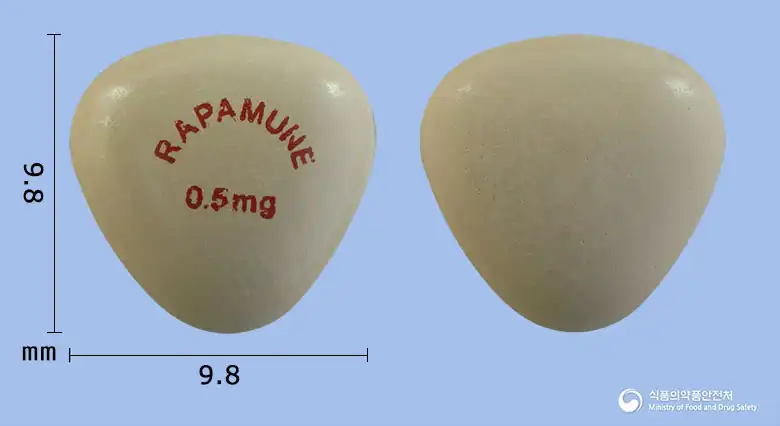
Light brown triangular sugar-coated tablet
100 tablets (10 tablets/blister x 10)
Even with the same ingredient, strength, dosage form and how it is taken can differ.
Viewing nowSirolimus Dispersion Solution 3.3mg
Prescription medication
Pfizer Pharmaceuticals Korea Co., Ltd.
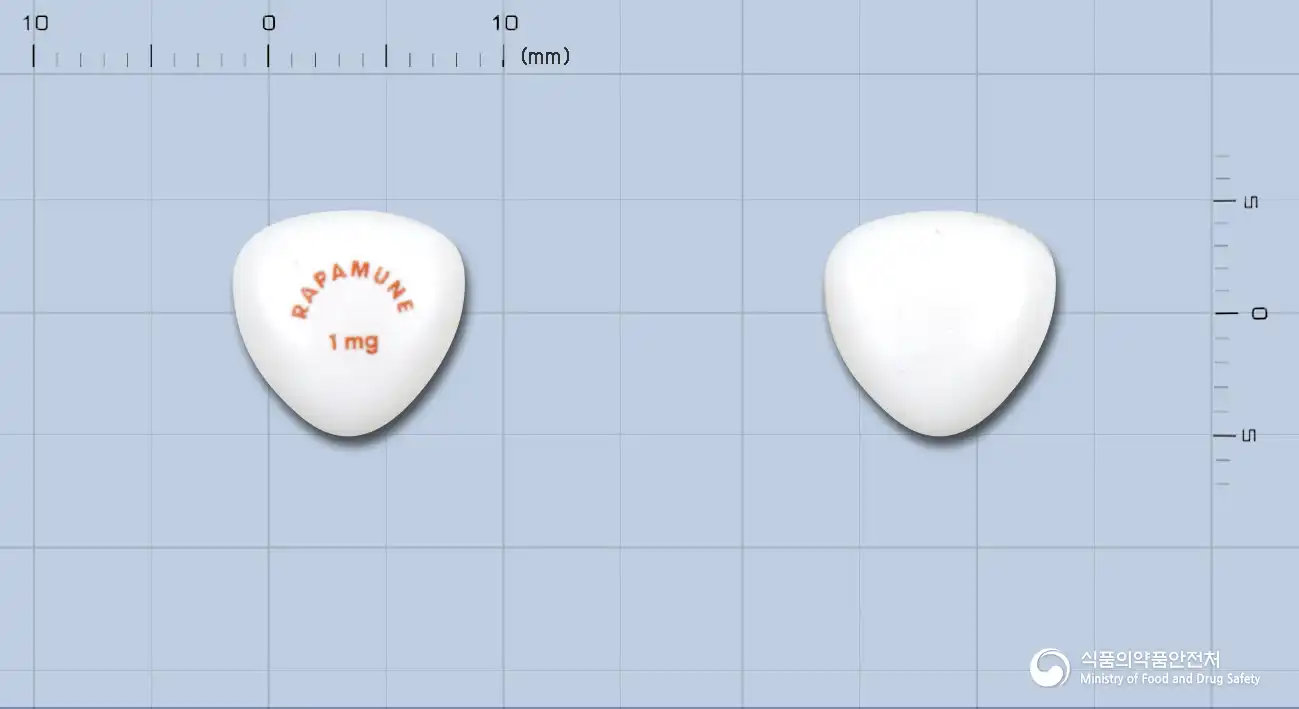
Sirolimus Dispersion Solution 6.6mg
Prescription medication
Pfizer Korea Co., Ltd.
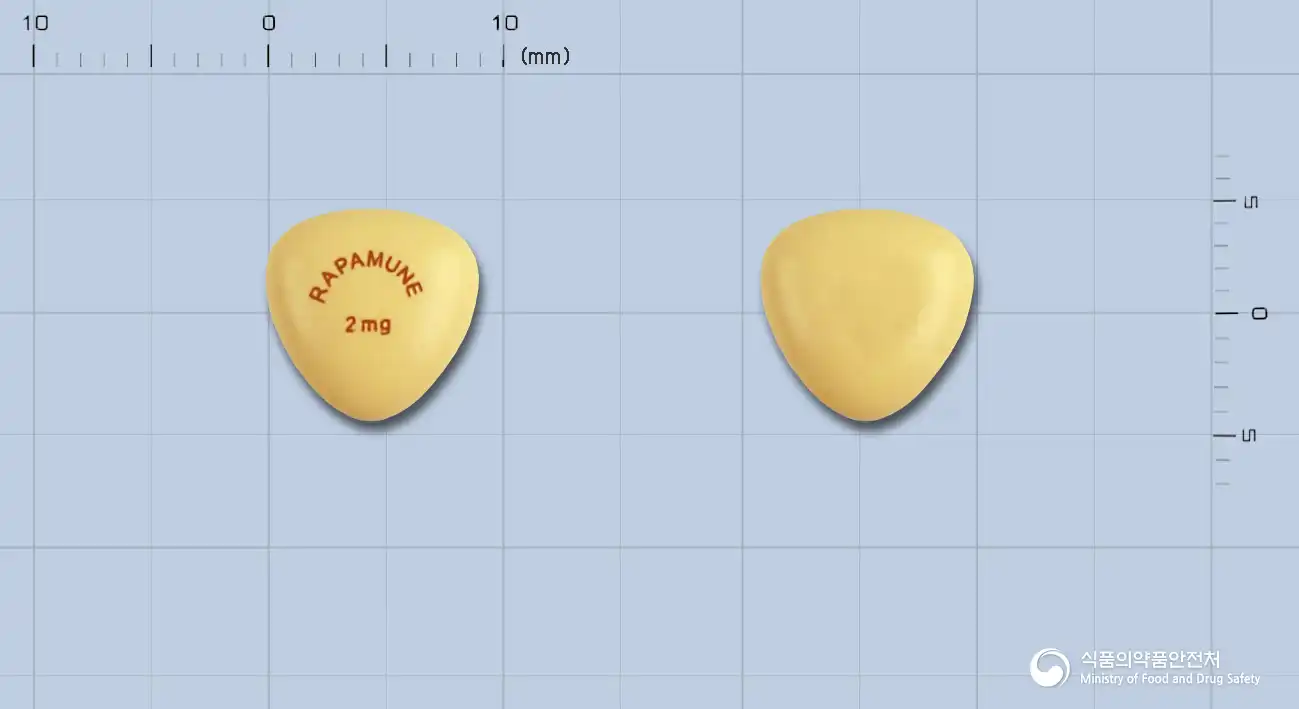
Sirolimus Dispersion Solution 13.3mg
Prescription medication
Pfizer Korea Co., Ltd.
Even with the same ingredient, the dose and directions can differ by strength and dosage form. Talk to a doctor or pharmacist before switching from a medication you are already taking.
No questions yet.
For anything that needs medical judgment, consult a doctor or pharmacist.
This drug information is based on data provided by the Korea Ministry of Food and Drug Safety.
Consult a doctor or pharmacist for accurate dosage, administration, and usage instructions.