
 한국어
 English
 日本語
 中文(简体)
Summary
- Main use
- Treatment of unresectable or metastatic melanoma with the BRAF V600E mutation
- Who takes it
- Adults · Children
- Adult dose
- This medicine should be taken as prescribed by a physician experienced in the use of anticancer agents. Before starting treatment with this medicine, confirm that the tumor is BRAF V600E mutation-positive. Take this medicine at a dose of 960mg twice daily (morning and evening), approximately 12 hours apart (total daily dose of 1,920mg). Take the doses in the same manner in the morning and evening (take both doses with food or both doses on an empty stomach). Swallow with water. Do not chew or cut the tablets. Continue treatment with this medicine until disease progression or unacceptable toxicity occurs. If a dose is missed, it may be taken up to 4 hours before the next dose to maintain the twice-daily schedule. Do not take 2 doses at one time. If vomiting occurs after taking this medicine, do not take an additional dose; continue treatment as scheduled. ○ Dose adjustment Dose reduction, temporary interruption, or discontinuation of treatment may be required to manage adverse reactions or QTc prolongation (Table 1). Dose reduction to less than 480mg twice daily is not recommended. For patients who develop cutaneous squamous cell carcinoma (cuSCC), continuation of treatment without dose adjustment is recommended. Table 1. Dose adjustment guidelines according to the grade of adverse reactions Grade (CTC-AE)(a) Dose adjustment Grade 1 or Grade 2 (tolerable) Continue treatment with this medicine at 960mg twice daily. Grade 2 (intolerable) or Grade 3 At the first occurrence of any Grade 2/3 adverse reaction Temporarily interrupt treatment until the reaction resolves to Grade 0-1. Resume treatment at 720mg twice daily. (If the dose has already been reduced, resume at 480mg twice daily.) At the second occurrence of any Grade 2/3 adverse reaction or if the reaction persists after temporary interruption Temporarily interrupt treatment until the reaction resolves to Grade 0-1. Resume treatment at 480mg twice daily. (If the dose has already been reduced to 480mg twice daily, permanently discontinue treatment.) At the third occurrence of any Grade 2 or Grade 3 adverse reaction, or if the reaction persists after the second dose reduction Permanently discontinue treatment Grade 4 At the first occurrence of any Grade 4 adverse reaction Permanently discontinue treatment. Alternatively, temporarily interrupt treatment until the reaction resolves to Grade 0-1. Resume treatment at 480mg twice daily. (If the dose has already been reduced to 480mg twice daily, permanently discontinue treatment.) At the second occurrence of any Grade 4 adverse reaction, or if the Grade 4 adverse reaction persists after the first dose reduction Permanently discontinue treatment (a) Clinical adverse reaction grades are based on the CTC-AE (Common Terminology Criteria for Adverse Events) v4.0 criteria. Exposure-dependent QT prolongation was observed in a phase 2 clinical trial in patients with previously treated metastatic melanoma; therefore, monitoring to manage QTc prolongation is required. (See the Precautions for Use for monitoring methods.) Table 2. Dose adjustment guidelines for QT interval prolongation QTc value Dose adjustment Baseline QTc>500 ms Treatment with this medicine is not recommended QTc increase >500ms and change from pretreatment >60ms Permanently discontinue treatment First occurrence of QTc >500 ms during treatment, and change from pretreatment <60 ms Temporarily interrupt treatment until QTc decreases to below 500ms. Resume treatment at 720mg twice daily. (If the dose has already been reduced, resume at 480mg twice daily.) Second occurrence of QTc >500 ms during treatment, and change from pretreatment <60 ms Temporarily interrupt treatment until QTc decreases to below 500ms. Resume treatment at 480mg twice daily. (If the dose has already been reduced to 480mg twice daily, permanently discontinue treatment.) Third occurrence of QTc >500 ms during treatment, and change from pretreatment <60 ms Permanently discontinue treatment ○ Dosage and administration in special populations: Patients with renal impairment There are insufficient data in patients with renal impairment. Since the risk associated with increased exposure in patients with severe renal impairment cannot be ruled out, patients with severe renal impairment should be closely monitored. Patients with hepatic impairment There are insufficient data in patients with hepatic impairment. This medicine is metabolized in the liver, and exposure may be increased in patients with moderate to severe hepatic impairment; therefore, these patients should be closely monitored. Elderly patients No special dose adjustment is required in elderly patients aged 65 years or older.
- Child dose
- The safety and efficacy have not been established in patients under 18 years of age.
Ingredients
- Importer
- Roche Korea Co., Ltd.
Efficacy & effects
Treatment of unresectable or metastatic melanoma with the BRAF V600E mutation
View approved original textHide original text
This medication is used for the treatment of unresectable or metastatic melanoma with confirmed BRAFV600E mutation.
How to take
Adult dose
This medicine should be taken as prescribed by a physician experienced in the use of anticancer agents. Before starting treatment with this medicine, confirm that the tumor is BRAF V600E mutation-positive. Take this medicine at a dose of 960mg twice daily (morning and evening), approximately 12 hours apart (total daily dose of 1,920mg). Take the doses in the same manner in the morning and evening (take both doses with food or both doses on an empty stomach). Swallow with water. Do not chew or cut the tablets. Continue treatment with this medicine until disease progression or unacceptable toxicity occurs. If a dose is missed, it may be taken up to 4 hours before the next dose to maintain the twice-daily schedule. Do not take 2 doses at one time. If vomiting occurs after taking this medicine, do not take an additional dose; continue treatment as scheduled. ○ Dose adjustment Dose reduction, temporary interruption, or discontinuation of treatment may be required to manage adverse reactions or QTc prolongation (Table 1). Dose reduction to less than 480mg twice daily is not recommended. For patients who develop cutaneous squamous cell carcinoma (cuSCC), continuation of treatment without dose adjustment is recommended. Table 1. Dose adjustment guidelines according to the grade of adverse reactions Grade (CTC-AE)(a) Dose adjustment Grade 1 or Grade 2 (tolerable) Continue treatment with this medicine at 960mg twice daily. Grade 2 (intolerable) or Grade 3 At the first occurrence of any Grade 2/3 adverse reaction Temporarily interrupt treatment until the reaction resolves to Grade 0-1. Resume treatment at 720mg twice daily. (If the dose has already been reduced, resume at 480mg twice daily.) At the second occurrence of any Grade 2/3 adverse reaction or if the reaction persists after temporary interruption Temporarily interrupt treatment until the reaction resolves to Grade 0-1. Resume treatment at 480mg twice daily. (If the dose has already been reduced to 480mg twice daily, permanently discontinue treatment.) At the third occurrence of any Grade 2 or Grade 3 adverse reaction, or if the reaction persists after the second dose reduction Permanently discontinue treatment Grade 4 At the first occurrence of any Grade 4 adverse reaction Permanently discontinue treatment. Alternatively, temporarily interrupt treatment until the reaction resolves to Grade 0-1. Resume treatment at 480mg twice daily. (If the dose has already been reduced to 480mg twice daily, permanently discontinue treatment.) At the second occurrence of any Grade 4 adverse reaction, or if the Grade 4 adverse reaction persists after the first dose reduction Permanently discontinue treatment (a) Clinical adverse reaction grades are based on the CTC-AE (Common Terminology Criteria for Adverse Events) v4.0 criteria. Exposure-dependent QT prolongation was observed in a phase 2 clinical trial in patients with previously treated metastatic melanoma; therefore, monitoring to manage QTc prolongation is required. (See the Precautions for Use for monitoring methods.) Table 2. Dose adjustment guidelines for QT interval prolongation QTc value Dose adjustment Baseline QTc>500 ms Treatment with this medicine is not recommended QTc increase >500ms and change from pretreatment >60ms Permanently discontinue treatment First occurrence of QTc >500 ms during treatment, and change from pretreatment <60 ms Temporarily interrupt treatment until QTc decreases to below 500ms. Resume treatment at 720mg twice daily. (If the dose has already been reduced, resume at 480mg twice daily.) Second occurrence of QTc >500 ms during treatment, and change from pretreatment <60 ms Temporarily interrupt treatment until QTc decreases to below 500ms. Resume treatment at 480mg twice daily. (If the dose has already been reduced to 480mg twice daily, permanently discontinue treatment.) Third occurrence of QTc >500 ms during treatment, and change from pretreatment <60 ms Permanently discontinue treatment ○ Dosage and administration in special populations: Patients with renal impairment There are insufficient data in patients with renal impairment. Since the risk associated with increased exposure in patients with severe renal impairment cannot be ruled out, patients with severe renal impairment should be closely monitored. Patients with hepatic impairment There are insufficient data in patients with hepatic impairment. This medicine is metabolized in the liver, and exposure may be increased in patients with moderate to severe hepatic impairment; therefore, these patients should be closely monitored. Elderly patients No special dose adjustment is required in elderly patients aged 65 years or older.
Child dose
The safety and efficacy have not been established in patients under 18 years of age.
Precautions
This medicine may cause serious allergic reactions, so if symptoms such as rash, difficulty breathing, or low blood pressure occur, discontinue use immediately. Before using this medication, check for specific genetic mutations, and do not administer it to patients without the mutation. It may affect heart rhythm, so patients with heart disease or prolonged QT interval should consult a physician before use, and regular ECG and electrolyte level monitoring is required during treatment. Severe skin reactions may occur, so if skin rash, blisters, or severe itching occur, discontinue treatment immediately and inform medical personnel. During the use of this medication, exposure to sunlight may cause increased skin sensitivity, so it is essential to apply sunscreen and wear protective clothing when going outdoors. This medicine may affect liver and kidney function, so regular liver and kidney function tests should be conducted before and during treatment. This medication can interact with other drugs, so if you are taking other medications, inform your healthcare provider. Women and men who are pregnant or planning to become pregnant should use effective contraception during and for a time after taking this medication. The safety and efficacy of this medication in children have not been established; therefore, it should not be used in patients under 18 years of age. Elderly patients aged 65 years and above can use it without special dose adjustments, but potential for adverse reactions should be monitored closely. In case of overdose, since there is no specific antidote, seek medical attention immediately for appropriate treatment if symptoms occur. This medication should be stored in a tightly sealed container, away from moisture and direct sunlight, and out of reach of children.
Side effects
Anaphylaxis, Stevens-Johnson syndrome, systemic rash, erythema, hypotension, toxic epidermal necrolysis, drug reaction with eosinophilia and systemic symptoms (DRESS), arthralgia, fatigue, rash, phototoxic reaction, hair loss, nausea, diarrhea, headache, pruritus, vomiting, skin papilloma, hyperkeratosis, squamous cell carcinoma of the skin, actinic keratosis, maculopapular rash, basal cell carcinoma, dry skin, hand-foot erythema and sensory disturbance syndrome, keratosis pilaris, papular rash, lobular panniculitis, erythema nodosum, myalgia, limb pain, musculoskeletal pain, back pain, arthritis, Dupuytren's contracture, peripheral edema, fever, asthenia, taste alteration, peripheral neuropathy, dizziness, seventh cranial nerve palsy, retinal vascular occlusion, uveitis, iridocyclitis, elevated GGT, elevated ALT, elevated alkaline phosphatase, elevated bilirubin, elevated AST, decreased appetite, weight loss, cough, vasculitis, sunburn, folliculitis, acute kidney injury, liver injury, neutropenia, thrombocytopenia, pancreatitis, radiation injury, plantar fibromatosis
Not everyone experiences these, and they can vary from person to person.
Storage
This medicine is sensitive to air and moisture, so it must be stored in a tightly sealed container. The recommended storage temperature is room temperature between 1 degree and 30 degrees Celsius. This helps maintain the efficacy of the drug for a long time.
Appearance and packaging
Appearance
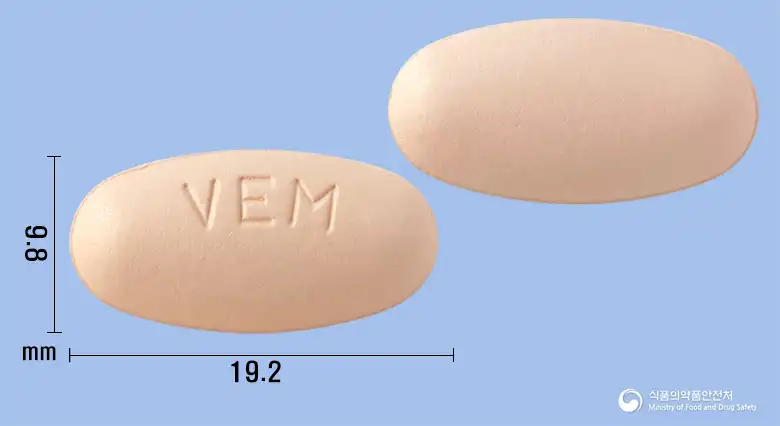
Bright pink oval film-coated tablet
Package unit
56 tablets (8 tablets x 7 PTP packages)
Questions about this medicine
No questions yet.
For anything that needs medical judgment, consult a doctor or pharmacist.