
 한국어
 English
 日本語
 中文(简体)
 Viewing nowCombination
Alendros Plus D Tablet
Sodium Alendronate Hydrate 91.37mg · Cholecalciferol Concentrate Powder 53.33mg
Tablet · Prescription medication · Combination
International Pharmaceutical Co., Ltd.
MFDS item code 201203485 · Approved 2012.04.26 · Insurance code 643703460
Treatment of osteoporosis (in postmenopausal women and men)
This medication is used to treat osteoporosis in postmenopausal women and men.
Take 1 tablet of this medicine (70 mg/2800 IU or 70 mg/5600 IU) once weekly in the morning with plenty of water, at least 30 minutes before consuming food, beverages, or other medicines (see “General Precautions”). The appropriate dose for most patients with osteoporosis is 70 mg/5600 IU once weekly. The optimal duration of treatment has not been established. The safety and efficacy of this medicine for the treatment of osteoporosis are based on clinical data from 4 years. The need for continued treatment should be reassessed periodically in all patients receiving bisphosphonates. Discontinuation should be considered after 3~5 years of treatment in patients at low risk of fracture. Patients who discontinue treatment should be periodically reassessed for fracture risk. Other beverages, foods, and medicines, including mineral water and barley tea, may reduce the absorption of alendronate (see “Drug Interactions”). Consuming food within 30 minutes after taking this medicine or at the same time may reduce the absorption of alendronate in the body and decrease its effect. Take this medicine as soon as you get up in the morning and swallow it with plenty of water (170∼230 mL) to help the medicine reach the stomach quickly and reduce the possibility of esophageal irritation. Do not lie down for at least 30 minutes after taking it, and remain upright until after your first food intake. Do not take this medicine at bedtime or before getting up in the morning. Failure to follow these instructions may increase the risk of esophageal adverse reactions (see “Warnings” and “General Precautions”). Patients who do not get enough calcium and vitamin D from food should take supplements (see Precautions for Use, 4. General Precautions, 2) Information to Be Provided to Patients (4)). Patients at increased risk of vitamin D deficiency (e.g., patients over 70 years of age, nursing home residents, and patients with chronic diseases) may need additional vitamin D supplementation. Patients with gastrointestinal malabsorption syndrome may require higher doses of vitamin D supplements, and measurement of 25-hydroxyvitamin D levels should be considered. The recommended daily intake of vitamin D is 400 IU to 800 IU. One weekly dose of this medicine provides the equivalent of one week’s supply of daily vitamin D at 400 IU or 800 IU. If a patient taking 1 tablet of this medicine forgets to take it on the scheduled day, take 1 tablet the next morning, resume taking it on the originally scheduled day, and then continue taking it regularly once weekly. Do not take 2 tablets on the same day. Use in elderly patients (65 years and older): No dose adjustment is necessary. Use in patients with renal impairment: No dose adjustment is necessary in patients with mild to moderate renal impairment (creatinine clearance of 35∼60 mL/min). However, use of this medicine is not recommended in patients with severe renal impairment (creatinine clearance below 35 mL/min), because there is insufficient clinical experience.
Children and adolescents (under 18 years): The safety and efficacy in children and adolescents have not been established.
This medication may irritate the upper gastrointestinal mucosa and can lead to esophageal adverse reactions such as esophagitis or esophageal ulcers. If such symptoms occur, discontinue use immediately and consult a doctor. Take this medication with plenty of water, and do not lie down for at least 30 minutes after taking it. Patients with esophageal clearance problems or those who cannot sit or stand upright should not take this medication. This medication is also not administered to patients with low calcium concentrations or certain genetic metabolic disorders. During treatment, gastrointestinal symptoms, musculoskeletal pain, headaches, dizziness, dysgeusia, and other abnormal symptoms may occur, necessitating consultation with a doctor. In particular for osteoporosis patients, ensure adequate intake of calcium and vitamin D before and during the use of this medication and supplement if necessary. This medication may be hindered in absorption when taken with calcium supplements or antacids, and it should be spaced at least 30 minutes apart from other medications. Furthermore, caution should be exercised when used in conjunction with aspirin or nonsteroidal anti-inflammatory drugs due to an increased risk of gastrointestinal adverse reactions. It is administered during pregnancy only in special cases due to potential effects on the fetus, and usage during breastfeeding should also be approached with caution. It is not recommended for children or patients with severe renal insufficiency. In case of overdose, hypocalcemia and gastrointestinal irritation may occur, necessitating immediate contact with a medical institution for appropriate action. This medication should be stored out of reach of children and should not be transferred to another container.
esophagitis, esophageal ulcer, esophageal erosion, esophageal obstruction, esophageal perforation, bleeding, dysphagia, odynophagia, retrosternal pain, heartburn, abdominal pain, nausea, indigestion, constipation, diarrhea, flatulence, acid reflux, vomiting, abdominal distension, gastritis, musculoskeletal (bone, muscle, or joint) pain, muscle cramps, headache, dizziness, taste disturbance, rash, erythema, anastomotic ulcer, urticaria, angioedema, hypersensitivity reaction, myalgia, symptoms of hypocalcemia, peripheral edema, oral pharyngeal ulcer, gastric ulcer, duodenal ulcer, localized jaw necrosis, joint swelling, low-energy fractures of the femoral head and other bones, itching, hair loss, Stevens-Johnson syndrome, toxic epidermal necrolysis, uveitis, scleritis, episcleritis, cholesteatoma of the external auditory canal, nasopharyngitis
Not everyone experiences these, and they can vary from person to person.
This medication is sensitive to air and moisture and should be stored in a container that is tightly sealed. Storage temperature should be maintained between 1 to 30 degrees Celsius, and it’s advisable to keep it in a cool place away from direct sunlight.
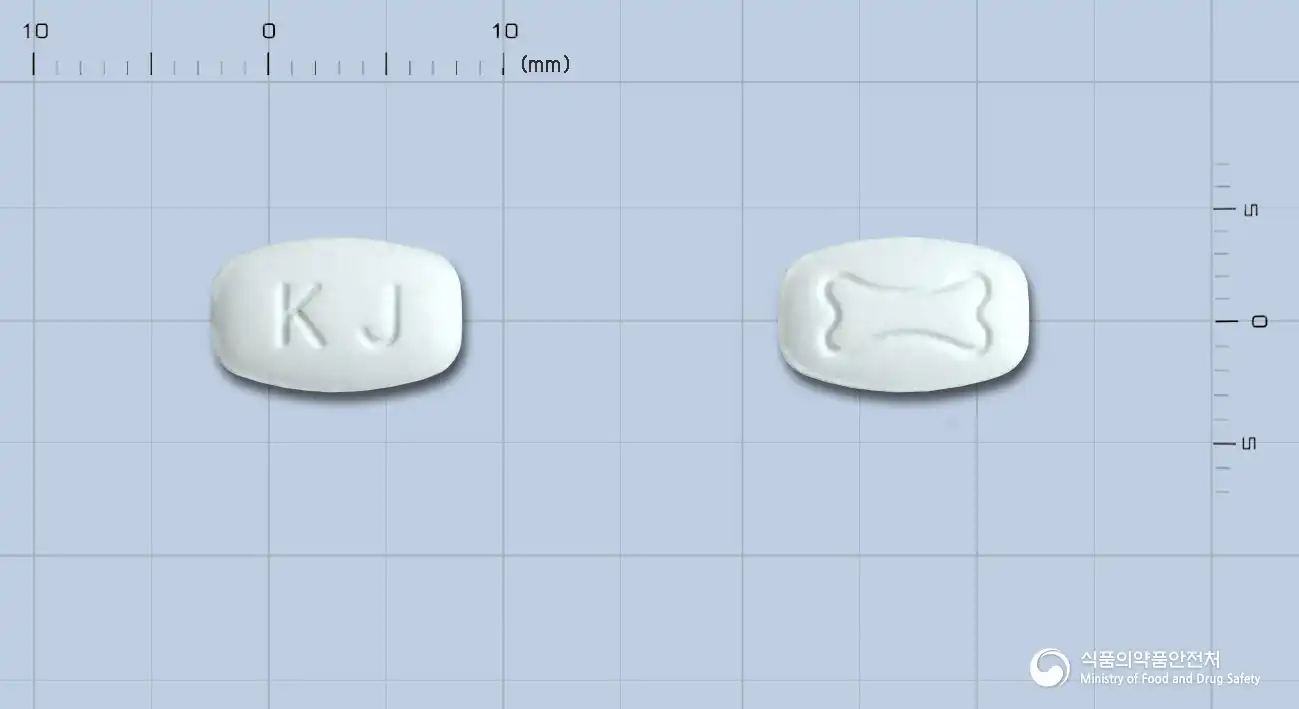
White to pale white oblong tablets with KJ engraved on one side and a bone illustration on the other side.
4 tablets/PTP
Even with the same ingredient, strength, dosage form and how it is taken can differ.
Viewing nowCombinationSodium Alendronate Hydrate 91.37mg · Cholecalciferol Concentrate Powder 53.33mg
Tablet · Prescription medication · Combination
International Pharmaceutical Co., Ltd.
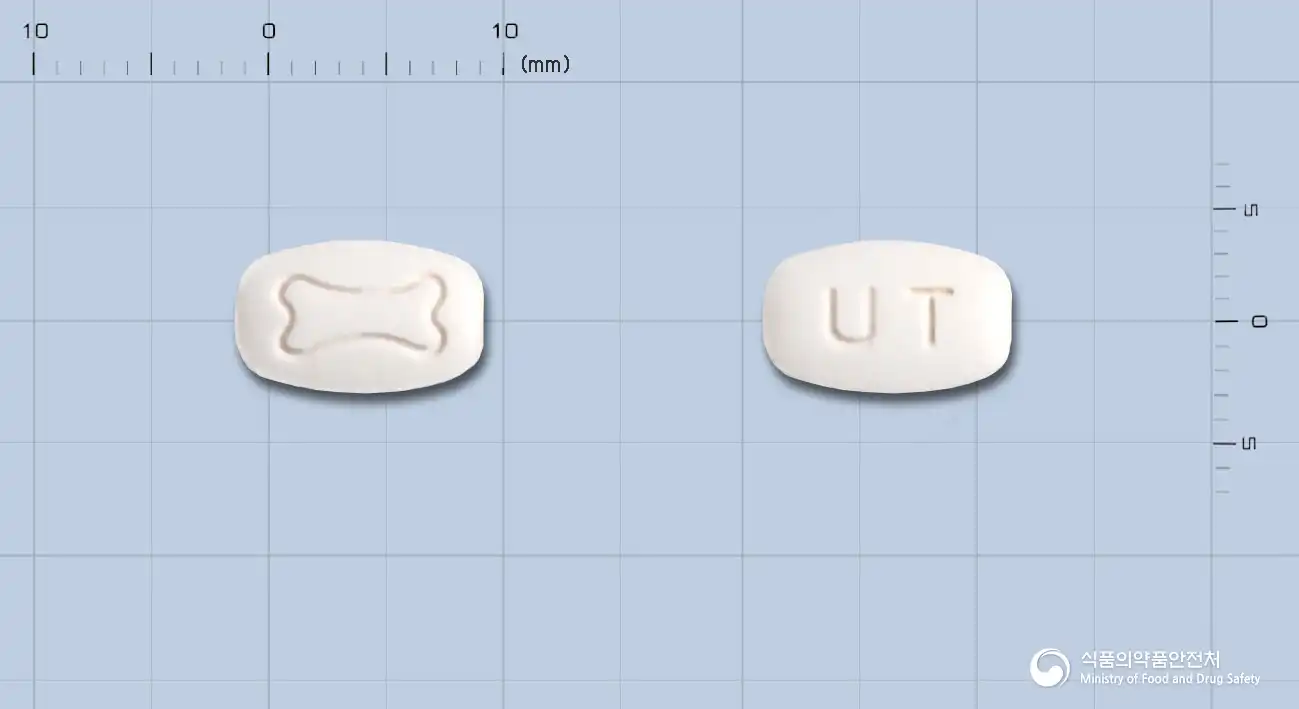 Combination
Sodium Alendronate Hydrate 91.37mg · Cholecalciferol Concentrate Powder 53.33mg
Tablet · Prescription medication · Combination
Korea United Pharmaceutical Co., Ltd.
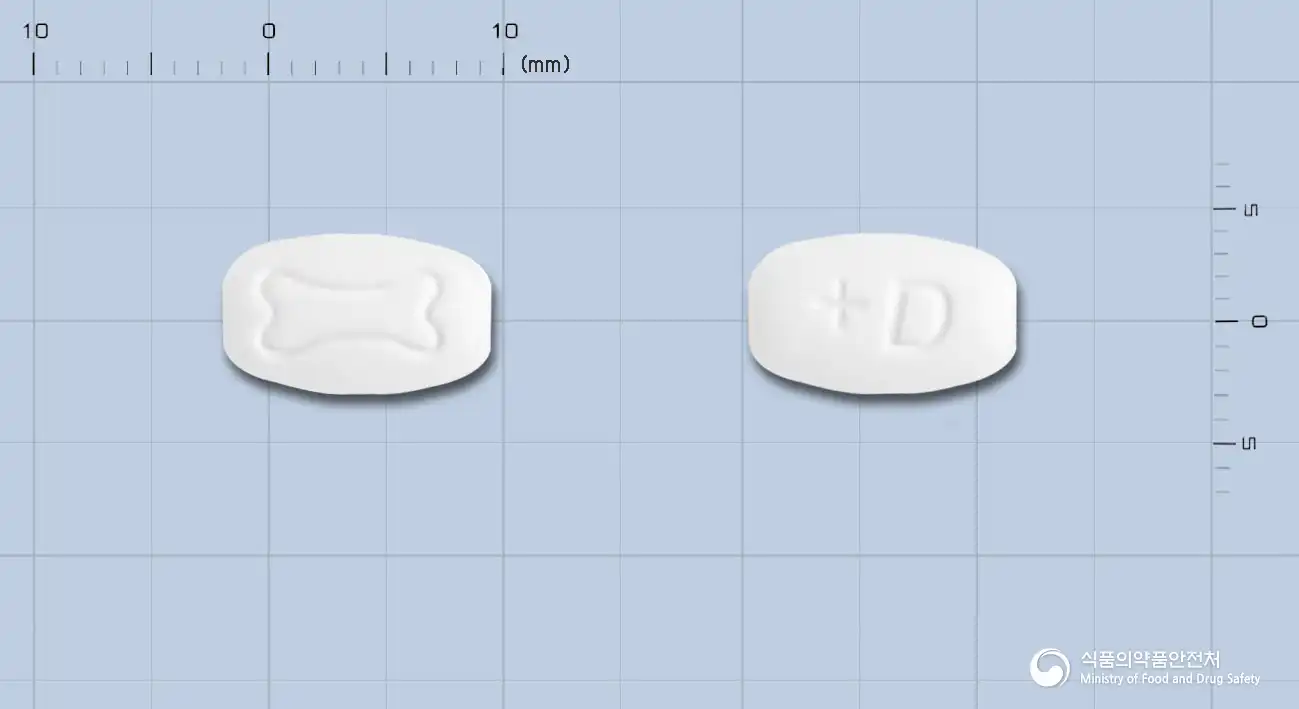 Combination
Sodium Alendronate Hydrate 91.37mg · Cholecalciferol Concentrate Powder 53.33mg
Tablet · Prescription medication · Combination
Hanol Bio Pharma Co., Ltd.
Even with the same ingredient, the dose and directions can differ by strength and dosage form. Talk to a doctor or pharmacist before switching from a medication you are already taking.
No questions yet.
For anything that needs medical judgment, consult a doctor or pharmacist.
This drug information is based on data provided by the Korea Ministry of Food and Drug Safety.
Consult a doctor or pharmacist for accurate dosage, administration, and usage instructions.