
 한국어
 English
 日本語
 中文(简体)
Dosage form image
Viewing nowDaewon Fentanyl Citrate Injection
Fentanyl Citrate 78.5μg
Prescription medication
Daewon Pharmaceutical Co., Ltd.
MFDS item code 201200585 · Approved 2012.01.26
Anesthesia adjunct, induction, and maintenance; anesthesia for high-risk surgery; relief of pain before and after anesthesia and surgery
This medication provides short-term analgesic effects during anesthesia, used for premedication, induction, and maintenance of anesthesia, as well as in the recovery room immediately after surgery. Additionally, it is utilized as an adjunctive analgesic during general or local anesthesia. When used in conjunction with a neuroleptic drug like Droperidol, it acts as an effective premedication for induction and maintenance of anesthesia. It particularly aids in safe anesthesia for high-risk patients undergoing surgeries such as open-heart surgery or complex neurological and orthopedic procedures, especially when used in combination with oxygen. Due to these characteristics, it is used to manage perioperative pain and the anesthesia process smoothly.
The dose should be determined individually, taking into consideration age, body weight, physical condition, pathological condition, use of other medications, and the type and duration of surgery and anesthesia. Reduce the dose in elderly or debilitated patients. In obese patients (20 % or more above standard body weight), determine the dose based on lean body weight. 1. Adults and adolescents 12 years of age and older (see adult dosage table) 1) Preanesthetic medication: Inject 50∼100㎍ (1∼2mL) intramuscularly 30∼60 minutes before surgery (adjust the dose as appropriate in elderly or debilitated patients or patients receiving other depressants). 2) Analgesic adjunct during general anesthesia: See adult dosage table. 3) Analgesic adjunct during local anesthesia: If additional analgesia is required, inject 50∼100㎍ (1∼2mL) slowly intravenously over 1∼2 minutes or intramuscularly. 4) Postoperative (recovery room): If pain control is required or tachypnea or delirium occurs, inject 50∼100㎍ (1∼2mL) intramuscularly. The dose may be repeated after 1∼2 hours if necessary. 5) General anesthetic: When it is important to reduce stress due to surgery, administer 50∼100㎍/kg (1∼2mL/kg) in combination with oxygen and a neuromuscular blocking agent. In some cases, up to 150㎍/kg (3mL/kg) may be required to achieve this anesthetic effect. Total dose, low dose 2㎍/kg (0.04mL/kg) Total dose, moderate dose 2∼20㎍/kg (0.04∼0.4mL/kg) Total dose, high dose 20∼50㎍/kg (0.4∼1mL/kg) This may be reduced by administering 20∼50㎍/kg (0.4∼1.0mL/kg) in combination with N2O/O2. Maintenance dose, low dose 2 ㎍/kg (0.04 mL/kg) Maintenance dose, moderate dose 2∼20㎍/kg (0.04∼0.4 mL/kg) 25∼100㎍/kg (0.5∼2 mL/kg) may be administered intravenously or intramuscularly. Maintenance dose, high dose 20∼50㎍/kg (0.4∼1mL/kg) Administer 25㎍ up to 1/2 of the initial dose.
Children 2∼12 years of age: A low dose of approximately 2∼3㎍/kg of body weight for induction and maintenance of anesthesia
This medication can potentially introduce glass particles from the injection vial, so special care should be taken when cutting the container, particularly when it is used on children or the elderly to minimize glass particle exposure. The combination of this medication with central nervous system depressants such as narcotics, benzodiazepines, or alcohol may result in severe sedation, respiratory depression, coma, or death, so it should only be used at the minimum effective dose and for the shortest duration required, with close monitoring of the patient. This medication should not be used in patients with known allergies to it, in patients contraindicated for neuromuscular blocking agents, those with increased intracranial pressure, patients with seizure disorders, infants under 2 years old, asthmatics, patients with severe respiratory depression, or patients receiving MAO inhibitors. Patients with compromised respiratory function, liver or kidney issues, arrhythmias, elderly patients, those with severe myasthenia gravis, hypothyroidism, bleeding disorders, those with a history of substance dependence or alcohol addiction, and cardiovascular diseases should be particularly cautious and closely monitored while using this medication. This medication may cause dependence, and a range of side effects such as respiratory depression, muscle rigidity, anaphylactic reactions, hypotension, arrhythmias, neurological disturbances, gastrointestinal symptoms, and respiratory problems may occur, thus patients should be continuously observed during its use. This medication must be administered by professionals capable of managing anesthesia or respiratory support, and it should be given with equipment and drugs prepared for emergency situations. Fasting is required before anesthesia, and during the recovery phase from anesthesia, dosages should be cautiously reduced and adjusted. This medication can induce movements associated with muscle rigidity, which can be mitigated by co-administering neuromuscular blocking agents. During administration, vital signs including blood pressure, heart rate, respiration, and level of consciousness should be regularly monitored, and adequate respiration should be observed post-surgery. This drug may cause drowsiness or dizziness; thus, driving or operating heavy machinery should be avoided for 24 hours following administration. Repeated use over a long period may lead to withdrawal symptoms, dependence, or opioid use disorder; caution is advised. When used concurrently with other central nervous system depressants, effects may be potentiated, necessitating dose adjustment and patient monitoring. Special precautions should be taken when administered to pregnant women or those who might become pregnant, as it should only be used in exceptional cases, and it should not be administered during childbirth. Nursing should be suspended for 24 hours following administration. The safety of this medication in infants under 2 years of age has not been established, so its use should be avoided. Elderly or frail patients should receive dosage adjustments and careful observation due to their decreased physiological functioning which may lead to more pronounced adverse reactions. In the case of overdose, severe symptoms such as respiratory depression, decreased consciousness, hypotension, and bradycardia may occur, requiring immediate emergency measures such as securing the airway, providing oxygen, intubation for assisted ventilation if necessary, and administration of opioid antagonists. Prior to administration, ensure there are no abnormalities with the medication.
Dependence, respiratory distress, slow breathing, irregular breathing, apnea, generalized muscle rigidity, respiratory distress following skeletal muscle rigidity of the neck and limbs, anaphylactic reaction, shock, hypotension, arrhythmia, ectopic beats, cardiac arrest, bradycardia, itching, rash, erythema, urticaria, orthostatic hypotension, tachycardia, hypertension, visual disturbances, altered state of consciousness, drowsiness, excessive talking, paralysis, headache, tremor, extrapyramidal symptoms, psychiatric symptoms, insomnia, agitation, dizziness, nonsensical speech, mood swings, rigidity, hallucinations, paresthesia, hypersensitivity to pain, nonpainful stimulation discomfort, nausea, vomiting, secondary respiratory depression following surgery, laryngospasm, sweating, urinary retention, sneezing, sore throat, excessive mucus secretion, increased sputum production, difficulty expelling sputum, hypothermia, coldness, peripheral coldness, cyanosis, wheezing, hiccups, miosis, thirst, hoarseness, fever, sexual dysfunction, withdrawal syndrome, lethargy, involuntary muscle contractions, anaphylactic shock, respiratory depression, unconsciousness, coma, skeletal muscle relaxation, cool skin, miosis, bradycardia, hypotension, apnea, circulatory collapse, cardiac arrest, toxic white matter encephalopathy
Not everyone experiences these, and they can vary from person to person.
This medication is sensitive to light and should be stored in a container that protects it from light. Additionally, it is important to maintain a room temperature between 1°C and 30°C when storing the drug. This preserves the drug's efficacy and prevents degradation.
A brown vial containing a colorless, transparent liquid.
10mL/vial X 10, 20mL/vial X 5
Even with the same ingredient, strength, dosage form and how it is taken can differ.
Fentanyl Citrate 78.5μg
Prescription medication
Daewon Pharmaceutical Co., Ltd.
Fentanyl Citrate 0.0785mg
Solution · Prescription medication
Myungmoon Pharmaceutical Co., Ltd.
Fentanyl Citrate
Prescription medication
DaeWon Pharmaceutical Co., Ltd.
Fentanyl Citrate 78.5μg
Injections · Prescription medication
BC World Pharmaceutical Co., Ltd.
Fentanyl Citrate 0.0785mg
Prescription medication
Gujoo Pharmaceutical Co., Ltd.
Fentanyl Citrate 0.0785mg
Injections · Prescription medication
Hana Pharmaceutical Co., Ltd.
Fentanyl Citrate 78.5μg
Injections · Prescription medication
Halim Pharmaceuticals Co., Ltd.
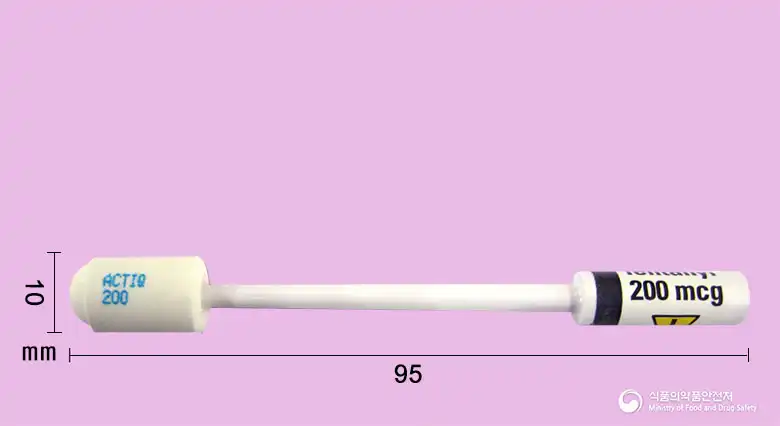
Fentanyl Citrate 0.3142mg
Prescription medication
Hyundai Pharmaceutical Co., Ltd.
Even with the same ingredient, the dose and directions can differ by strength and dosage form. Talk to a doctor or pharmacist before switching from a medication you are already taking.
No questions yet.
For anything that needs medical judgment, consult a doctor or pharmacist.
This drug information is based on data provided by the Korea Ministry of Food and Drug Safety.
Consult a doctor or pharmacist for accurate dosage, administration, and usage instructions.