한국어
 English
 日本語
 中文(简体)
 Viewing now
Zelcoricapsule 250 mg (Crizotinib)
Crizotinib 250mg
Hard capsule · Prescription medication
Pfizer Pharmaceuticals Korea Co., Ltd.
MFDS item code 201112195 · Approved 2011.12.29 · Insurance code 648902070
Treatment of locally advanced or metastatic ALK- or ROS1-positive non-small cell lung cancer
This medication is used to treat patients with locally advanced or metastatic non-small cell lung cancer that is ALK positive or ROS1 positive. It helps effectively inhibit the proliferation of cancer cells in lung cancer patients with specific genetic mutations, aiding symptom improvement. Therefore, it is a suitable treatment option for lung cancer patients with the identified genetic mutations.
Adults: Take 250 mg orally twice daily. This drug may be taken with or without food. Swallow the capsule whole. Continue treatment for as long as clinical benefit is observed. If a dose is missed, take it as soon as remembered if 6 hours or more remain until the next dose; if less than 6 hours remain, skip the missed dose. Do not take 2 doses at once to make up for a missed dose. If vomiting occurs after taking a dose, take the next dose at the originally scheduled time. For patients with moderate hepatic impairment [all AST and total bilirubin >1.5 times and ≤3 times the upper limit of normal (ULN)], the recommended dose is 200 mg orally twice daily. For patients with severe hepatic impairment [all AST and total bilirubin >3 times the ULN], administer 250 mg orally once daily. First dose reduction: 200 mg orally twice daily Second dose reduction: 250 mg orally once daily If 250 mg once daily is not tolerated, permanently discontinue treatment Grade 3: Temporarily withhold treatment until the adverse reaction recovers to Grade 2 or lower, then resume treatment at the same dose and schedule as before Grade 4: Temporarily withhold treatment until the adverse reaction recovers to Grade 2 or lower, then resume treatment at the next lower dose Monitor complete blood counts, including differential white blood cell counts, monthly and as clinically indicated. If Grade 3 or 4 abnormalities are observed, or fever or infection develops, perform tests more frequently. Grade 3 or 4 ALT or AST elevation accompanied by a total bilirubin increase of Grade 1 or lower: Temporarily withhold treatment until the adverse reaction recovers to Grade 1 or lower or baseline, then resume treatment at the next lower doseb Grade 2, 3, or 4 ALT or AST elevation accompanied by a Grade 2, 3, or 4 total bilirubin increase (in the absence of cholestasis or hemolysis): Permanently discontinue treatment Interstitial lung disease/interstitial pneumonia of any gradec: Permanently discontinue treatment Grade 3 QTc prolongation: Temporarily withhold treatment until the adverse reaction recovers to Grade 1 or lower, then resume treatment at the next lower doseb Grade 4 QTc prolongation: Permanently discontinue treatment Bradycardiad (symptomatic, severe and potentially medically significant, requiring medical intervention): Temporarily withhold treatment until the bradycardia resolves to asymptomatic bradycardia or the heart rate recovers to 60 bpm or higher. Assess concomitant medications known to cause bradycardia, as well as antihypertensive medications. If a concomitant medication that causes bradycardia is identified and that medication is discontinued or its dose adjusted, resume treatment at the previous dose when the bradycardia resolves to asymptomatic bradycardia or the heart rate recovers to 60 bpm or higher. If no concomitant medication that causes bradycardia is identified, or the concomitant medication is not discontinued or its dose is not adjusted, resume treatment at a reduced dose when the bradycardia resolves to asymptomatic bradycardia or the heart rate recovers to 60 bpm or higher. Bradycardiad, e (life-threatening, requiring emergency intervention): If no concomitant medication that causes bradycardia is identified, permanently discontinue treatment. If a concomitant medication that causes bradycardia is identified and that medication is discontinued or its dose adjusted, resume treatment at 250 mg once daily with frequent monitoring when the bradycardia resolves to asymptomatic bradycardia or the heart rate recovers to 60 bpm or higher. Grade 4 eye disorder (loss of vision): In cases of severe vision loss, discontinue this drug. If the adverse reaction recurs, temporarily withhold treatment until it recovers to Grade 1 or lower, then resume treatment at 250 mg once daily. If a Grade 3 or 4 adverse reaction recurs again, permanently discontinue treatment. Monitor liver function every 2 weeks for the first 2 months, then monthly and as clinically indicated. If Grade 2, 3, or 4 abnormalities are observed, perform tests more frequently.
This medication may cause liver damage; therefore, liver function should be regularly monitored. Particularly, liver enzyme levels may rise within 2 months after treatment initiation, requiring careful observation. Additionally, this drug can cause inflammation or interstitial lung disease in the lungs, so if symptoms such as difficulty breathing or coughing occur, medical personnel should be informed immediately. Due to cardiac-related side effects, it may affect the electrical activity of the heart, potentially prolonging the QT interval; therefore, an electrocardiogram may be necessary. Patients with congenital long QT syndrome or pre-existing heart disease should use this medication with caution. If symptoms of heart failure such as shortness of breath, edema, or rapid weight gain occur, they should discuss it with medical personnel immediately. Patients with allergies to this medication should not use it, and dosage adjustment may be necessary for patients with liver or kidney dysfunction. During treatment, side effects such as visual disturbances, dizziness, and fatigue may occur, so caution is advised when driving or operating machinery. Women who are pregnant or planning to become pregnant should consult with medical personnel regarding the use of this medication due to potential effects on the fetus, and appropriate contraception should be employed. Breastfeeding women should consult with medical personnel regarding the possibility of this medication being secreted in breast milk. This medication may interact with other drugs, especially those affecting CYP3A enzymes or acid-controlling medications, so caution is necessary when taken together. In the case of overdose, since there is no specific antidote, immediate medical attention should be sought for appropriate treatment. Special dosage adjustments may be required for children and the elderly, and elderly patients may experience symptoms such as edema or constipation more frequently. This medication must be taken according to the instructions of a qualified medical professional, and it is crucial to conduct regular examinations and symptom monitoring to early detect and manage side effects.
Hepatotoxicity, increased bilirubin, increased ALT, increased AST, interstitial lung disease, pneumonia, QT interval prolongation, decreased heart rate, heart failure, weakness, fatigue, loss of appetite, nausea, vomiting, abdominal pain, jaundice, dark urine, generalized pruritus, bleeding tendency, dyspnea, pulmonary embolism, septic shock, acute respiratory failure, diabetic ketoacidosis, visual disturbances, diarrhea, edema, constipation, elevated transaminases, decreased appetite, dizziness, neuropathy, rash, renal cysts, syncope, decreased serum testosterone, weight gain, limb pain, muscle cramps, headache, upper respiratory tract infection, nausea, esophagitis, weight loss, dyspepsia, dysphagia, fever, hematological abnormalities (neutropenia, lymphopenia, leukopenia), hypophosphatemia, hypokalemia, increased serum creatine phosphokinase, vision loss, photopsia, blurred vision, floaters, photophobia, floaters, complex renal cysts, decreased kidney function, syncope, secondary hypogonadism, hypogonadism
Not everyone experiences these, and they can vary from person to person.
This medication should be stored in a tightly closed container to prevent exposure to air and moisture, and it is best to keep it at room temperature, between 15 and 30 degrees Celsius. Proper storage will maintain the medication's efficacy and prevent degradation.
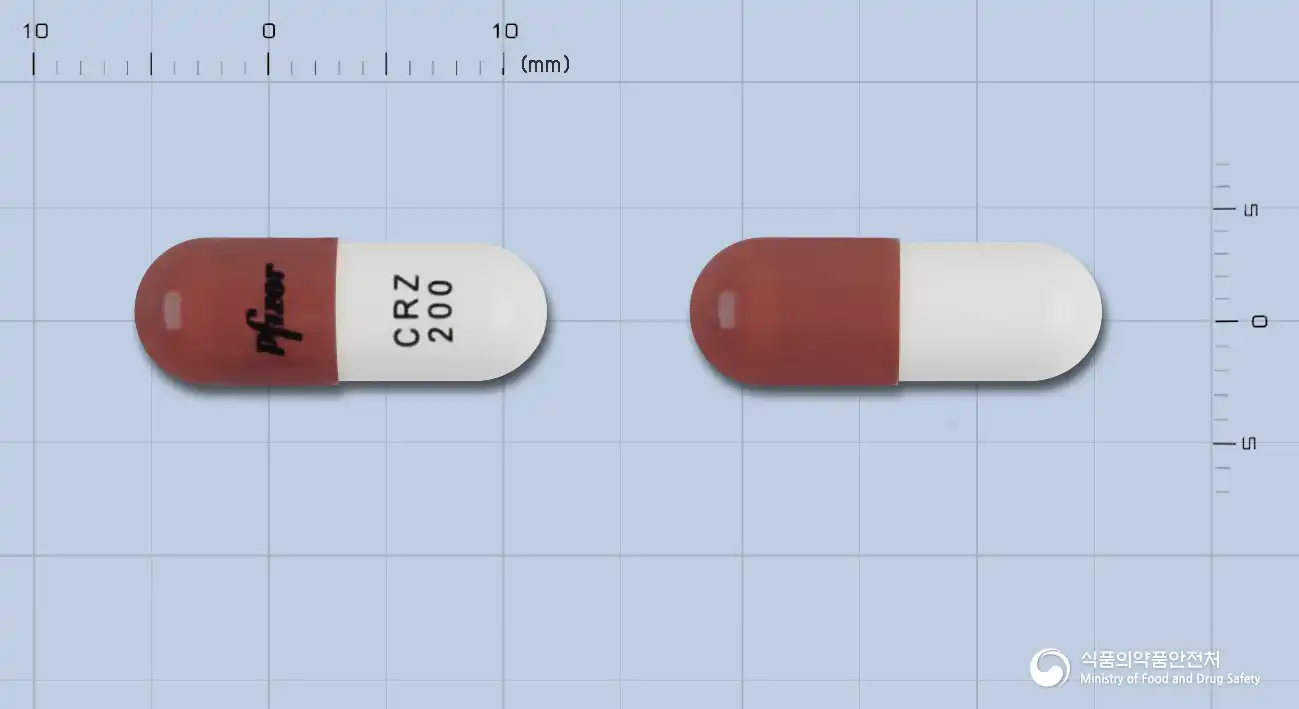
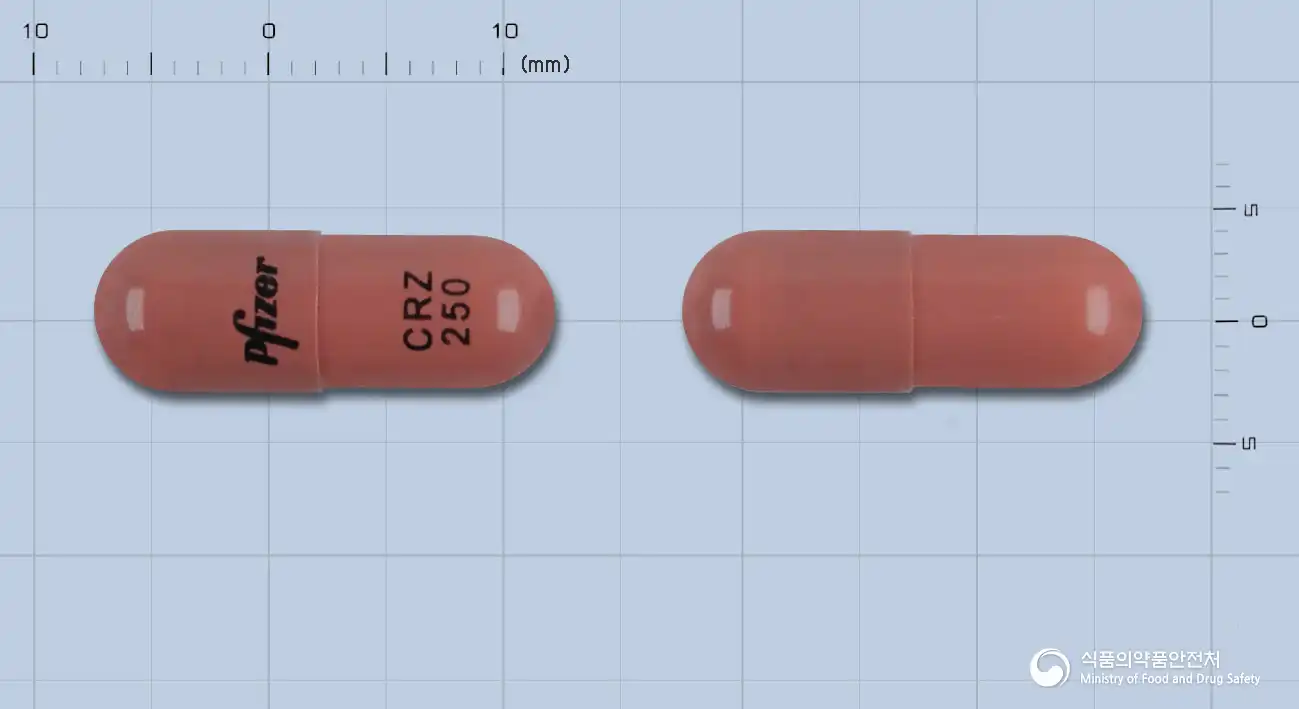
A pink hard capsule containing a white or pale yellow powder
60 capsules (10 capsules/blister x 6)
Even with the same ingredient, strength, dosage form and how it is taken can differ.
Even with the same ingredient, the dose and directions can differ by strength and dosage form. Talk to a doctor or pharmacist before switching from a medication you are already taking.
No questions yet.
For anything that needs medical judgment, consult a doctor or pharmacist.
This drug information is based on data provided by the Korea Ministry of Food and Drug Safety.
Consult a doctor or pharmacist for accurate dosage, administration, and usage instructions.