
 한국어
 English
 日本語
 中文(简体)
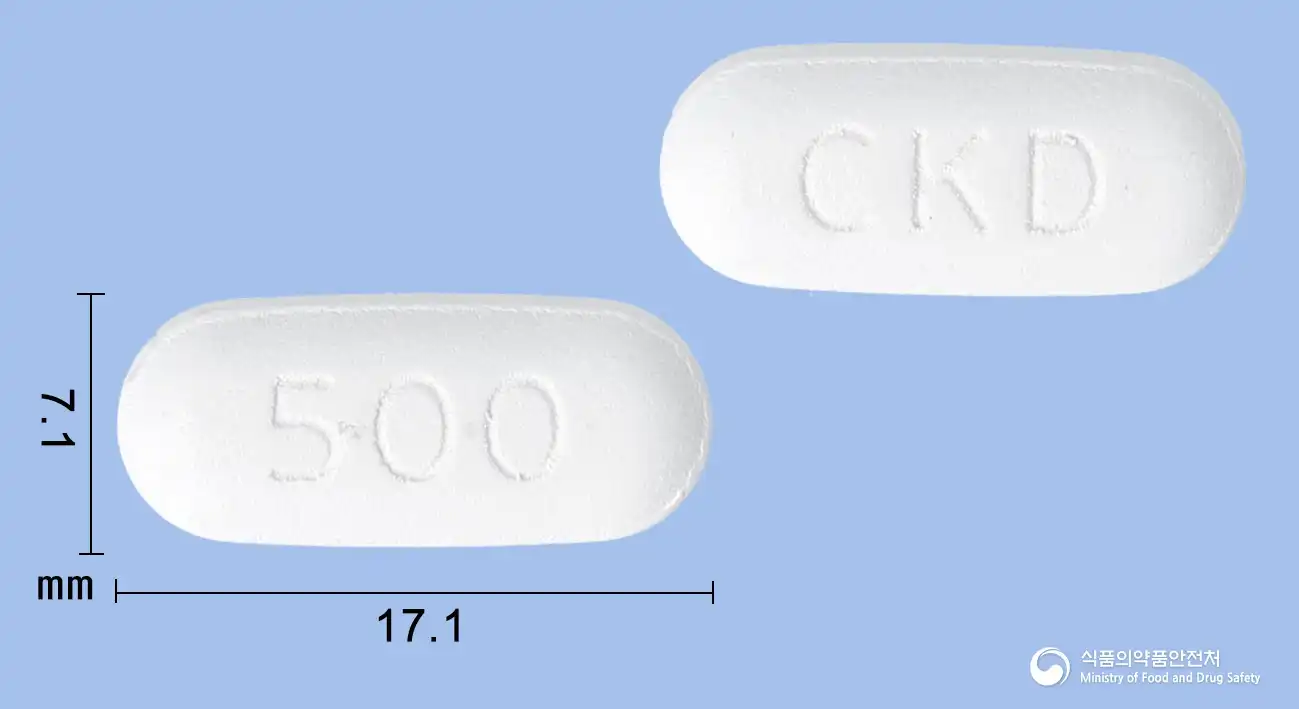 Viewing now
Myrept 500 mg (Mycophenolate Mofetil)
Mycophenolate Mofetil 500mg
Tablet · Prescription medication
Jong Kun Dang Co., Ltd.
MFDS item code 201005121 · Approved 2010.08.23 · Insurance code 643305790
Prevention of acute rejection after organ transplantation (e.g., kidney or heart)
This drug is used to prevent acute organ rejection that can occur in patients who have received kidney, heart, or liver transplants. It is particularly effective when used in combination with cyclosporine and corticosteroids to enhance the effect. This treatment helps maintain the function of the transplanted organ and minimizes the risk of rejection.
Oral administration of this medicine should be started as soon as possible after kidney, heart, or liver transplantation. Adult kidney transplant recipients: Administer 1 g of mycophenolate mofetil orally twice daily. In clinical trials, 3 g daily (1.5 g twice daily) demonstrated efficacy and safety, but its efficacy benefit has not been established in kidney transplant recipients. Adult heart transplant recipients: Administer 1.5 g of this medicine orally twice daily (daily dose 3 g). Adult liver transplant recipients: Administer 1.5 g of this medicine orally twice daily (3 g daily). In patients with severe chronic renal failure (glomerular filtration rate < 25 mL/min/1.73 m2), do not administer more than 1 g of this medicine twice daily, except immediately after transplantation. No dose adjustment is necessary in patients with delayed graft function after transplantation. There are no data in heart transplant recipients with severe chronic renal failure. Use this medicine in these patients only if the expected benefits outweigh the potential risks. Elderly patients may be treated with the recommended doses of 1 g twice daily after kidney transplantation and 1.5 g twice daily after heart transplantation. However, the risk of adverse reactions may generally be increased in these elderly patients. The risk of adverse reactions may also be increased in patients receiving this medicine concomitantly with other immunosuppressants (see Adverse Reactions section). No dose adjustment is necessary in kidney transplant recipients with severe hepatic parenchymal disease; however, there are no data in heart transplant recipients with severe hepatic parenchymal disease. If neutropenia (ANC [absolute neutrophil count] < 1.3 x 10³/㎕) is observed, discontinue this medicine or reduce the dose, perform appropriate diagnostic tests, and provide necessary treatment. Kidney transplant rejection does not alter the pharmacokinetics of MPA; discontinuation or dose reduction of this medicine is not necessary.
Children and adolescents (2~18 years): This medicine is administered to patients with a body surface area of 1. 25 m2 or greater. 1.25 ~ 1.5 m2: Administer 750 mg of this medicine orally twice daily (1.5 g daily). (Capsules only.) Greater than 1.5 m2: Administer 1.0 g of this medicine orally twice daily (2 g daily). Infants under 2 years of age: Use of this medicine is not recommended because data on its safety and efficacy in patients under 2 years of age are limited.
Women of childbearing potential must use contraception, as taking this drug during pregnancy may increase the risk of miscarriage or congenital malformations. Due to immunosuppressive effects, there may be an increased susceptibility to infections and an increased risk of developing tumors such as lymphoma, necessitating a prescription and management by an experienced specialist. This drug is used for kidney, heart, and liver transplant patients, and regular check-ups at an appropriate medical facility should be performed to monitor their condition after transplantation. It should not be administered to patients with allergies or specific genetic disorders, nor to pregnant or breastfeeding women. Patients with severe renal failure or significant gastrointestinal disease should use this drug with caution, and careful administration is required as increased blood concentration can lead to side effects. While taking this medication, various adverse reactions may occur, including diarrhea, leukopenia, infections, and vomiting, with elderly patients and children being at higher risk of infection and gastrointestinal bleeding. This drug may interact with other medications, so patients taking other drugs must consult their doctor or pharmacist. Women planning to become pregnant or who may become pregnant should undergo regular pregnancy tests before and during treatment and must use effective contraception for a certain period after treatment. Breastfeeding women should not take this drug as it may be transmitted through breast milk and harm the baby. In the case of overdose, excessive immunosuppression may increase the risk of infection, so the dosage must be strictly adhered to, and if symptoms occur, immediate consultation with healthcare professionals is needed. This drug should not be crushed or split, and care must be taken to avoid contact between the drug powder and skin or eyes. When storing, it must be kept in a tightly sealed container to avoid air and moisture, and it is best kept at room temperature between 1 degree and 30 degrees Celsius. This way of storage helps maintain the drug's effectiveness.
Diarrhea, leukopenia, sepsis, vomiting, tuberculosis, atypical mycobacterial infection, meningitis, infectious endocarditis, lymphoma, skin malignancy, mucocutaneous candidiasis, cytomegalovirus viremia, herpes simplex, anemia, infection, gastrointestinal bleeding, pulmonary edema, weakness, fever, headache, chest pain, abdominal pain, back pain, dysmenorrhea, edema, peripheral edema, ascites, chills, abdominal bloating, hernia, peritonitis, hypochromic anemia, leukocytosis, thrombocytopenia, urinary tract infection, hematuria, tubular necrosis, renal impairment, oliguria, hypertension, arrhythmia, bradycardia, hypotension, acute heart failure, pericardial effusion, cardiovascular disease, tachycardia, hypercholesterolemia, hyperglycemia, hyperkalemia, hypokalemia, hypophosphatemia, bilirubinemia, elevated BUN, elevated creatinine, elevated enzyme levels, hyperlipidemia, hyperuricemia, hypervolemia, hypomagnesemia, hyponatremia, weight gain, constipation, dyspepsia, oral candidiasis, nausea, increased cough, dyspnea, pharyngitis, bronchitis, pneumonia, asthma, rhinitis, pleural effusion, sinusitis, lung disease, acne, herpes simplex infection, shingles infection, rash, sweating, dizziness, sleep disturbances, tremors, anxiety, restlessness, confusion, depression, hyperarousal, sensory disturbances, drowsiness, delirium, insomnia, leg cramps, myalgia, myasthenia, amblyopia, angioedema, anaphylaxis, pulmonary fibrosis, bronchiectasis, lymphocyst, toothache, external genital itching, perineal edema, liver failure due to reactivation of hepatitis B, intestinal villous atrophy, colitis, pancreatitis, agranulocytosis, aplastic anemia, bone marrow suppression, progressive multifocal leukoencephalopathy, bone marrow failure, pure red cell aplasia, hypogammaglobulinemia, miscarriage, angioedema, anaphylaxis, fatal infection, severe neutropenia, invasive cytomegalovirus disease, candidemia, tissue-invasive candidiasis, invasive aspergillosis, candidiasis, prostate disease, congestive heart failure, taste disorders, urge disorder, fatal infection/sepsis, sepsis, invasive cytomegalovirus disease, fatal infection, severe neutropenia, hepatitis due to reactivation of hepatitis B virus, cleft lip, cleft palate, micrognathia, binasal strabismus, abnormal formation of the outer/middle ear, congenital absence of eyelid-iris-choroid, microphthalmia, polydactyly, syndactyly, monodactyly, atrial and ventricular septal defects, esophageal atresia, spondylolisthesis, anophthalmia, mandibular aplasia, hydrocephalus, cardiac displacement, renal displacement, diaphragmatic hernia, umbilical hernia
Not everyone experiences these, and they can vary from person to person.
This drug should be stored in a tightly closed container to avoid exposure to air or moisture, and it is recommended to be kept at room temperature between 1 and 30 degrees Celsius. This storage method helps maintain the drug's effectiveness for a longer period.
White, rectangular film-coated tablet
Domestic - 100 tablets/box [10 tablets/PTP x 10], Export - 50 tablets/box [10 tablets/PTP x 5], Export - 100 tablets/box [10 tablets/PTP x 10]
Even with the same ingredient, strength, dosage form and how it is taken can differ.
Viewing nowMycophenolate Mofetil 500mg
Tablet · Prescription medication
Jong Kun Dang Co., Ltd.
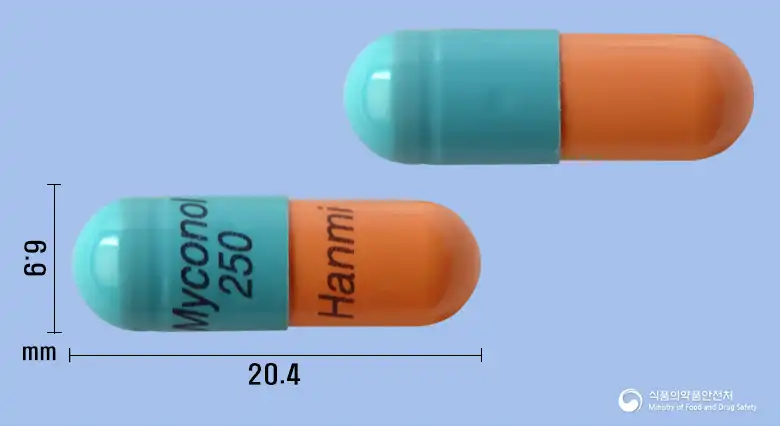
Mycophenolate Mofetil 250mg
Hard capsule · Prescription medication
Hanmi Pharmaceutical Co., Ltd.
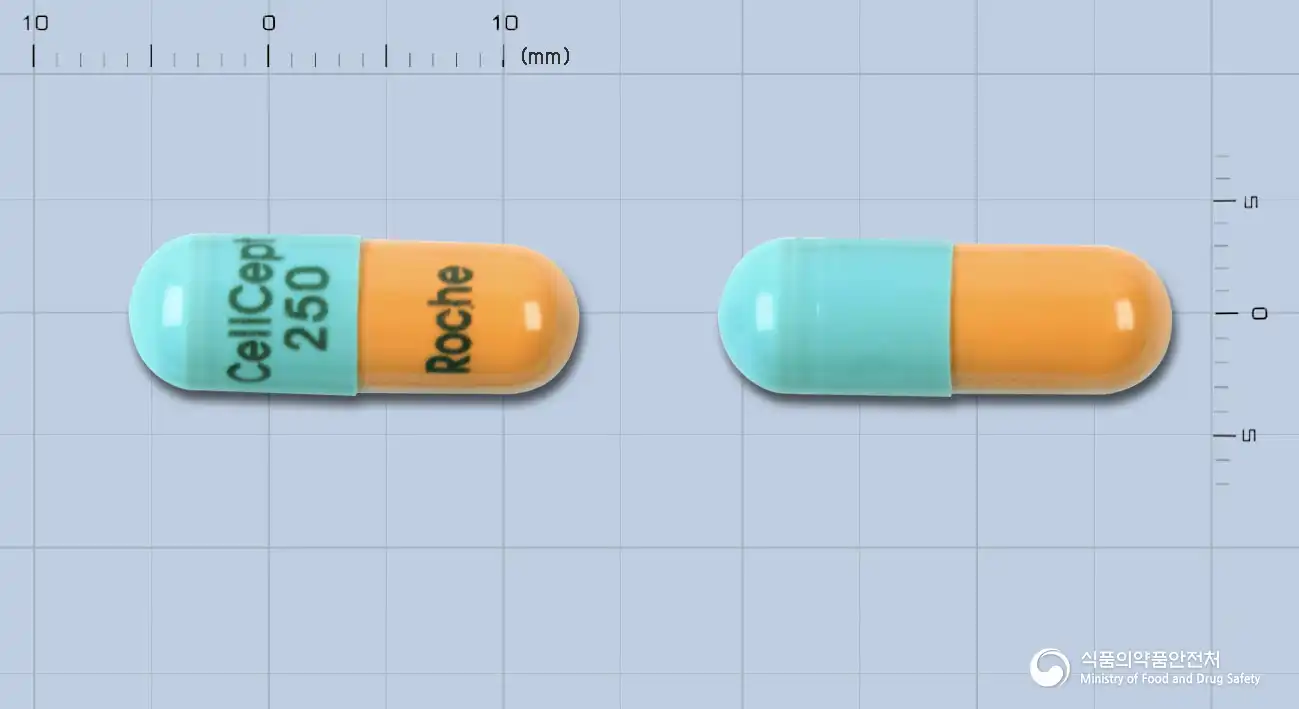
Mycophenolate Mofetil 250mg
Hard capsule · Prescription medication
Roche Korea, Co., Ltd.
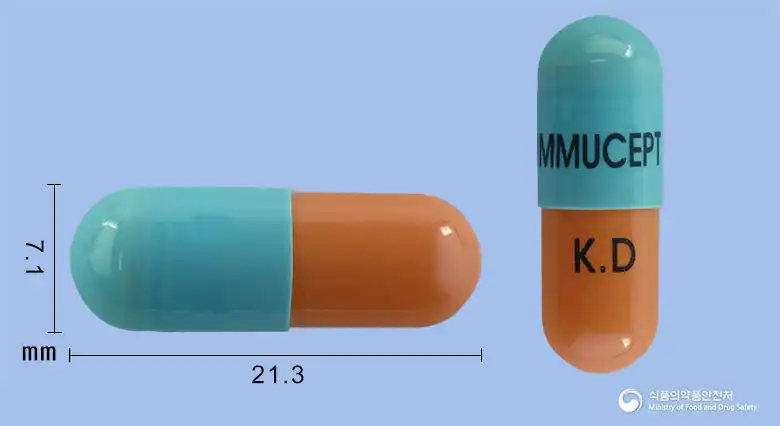
Mycophenolate Mofetil 250mg
Hard capsule · Prescription medication
Kwangdong Pharmaceutical Co., Ltd.
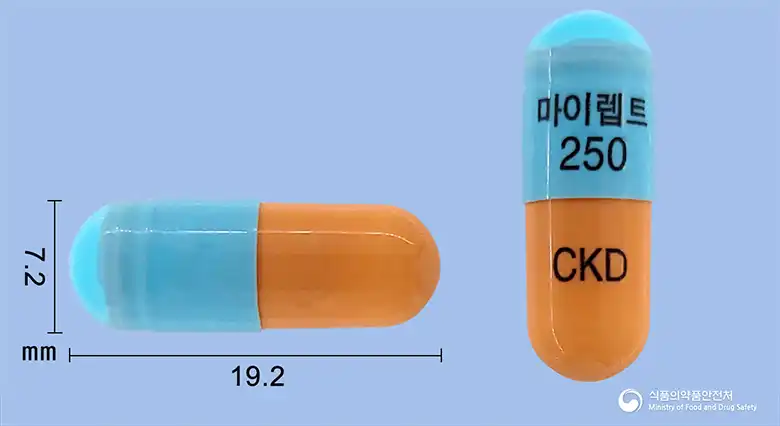
Mycophenolate Mofetil 250mg
Hard capsule · Prescription medication
Jongkundang Co., Ltd.
Mycophenolate Mofetil
Prescription medication
Korea Roche Co., Ltd.
Mycophenolate Mofetil 34.98g
Prescription medication
(Co., Ltd.) Chong Kun Dang
Even with the same ingredient, the dose and directions can differ by strength and dosage form. Talk to a doctor or pharmacist before switching from a medication you are already taking.
No questions yet.
For anything that needs medical judgment, consult a doctor or pharmacist.
This drug information is based on data provided by the Korea Ministry of Food and Drug Safety.
Consult a doctor or pharmacist for accurate dosage, administration, and usage instructions.