Medication info
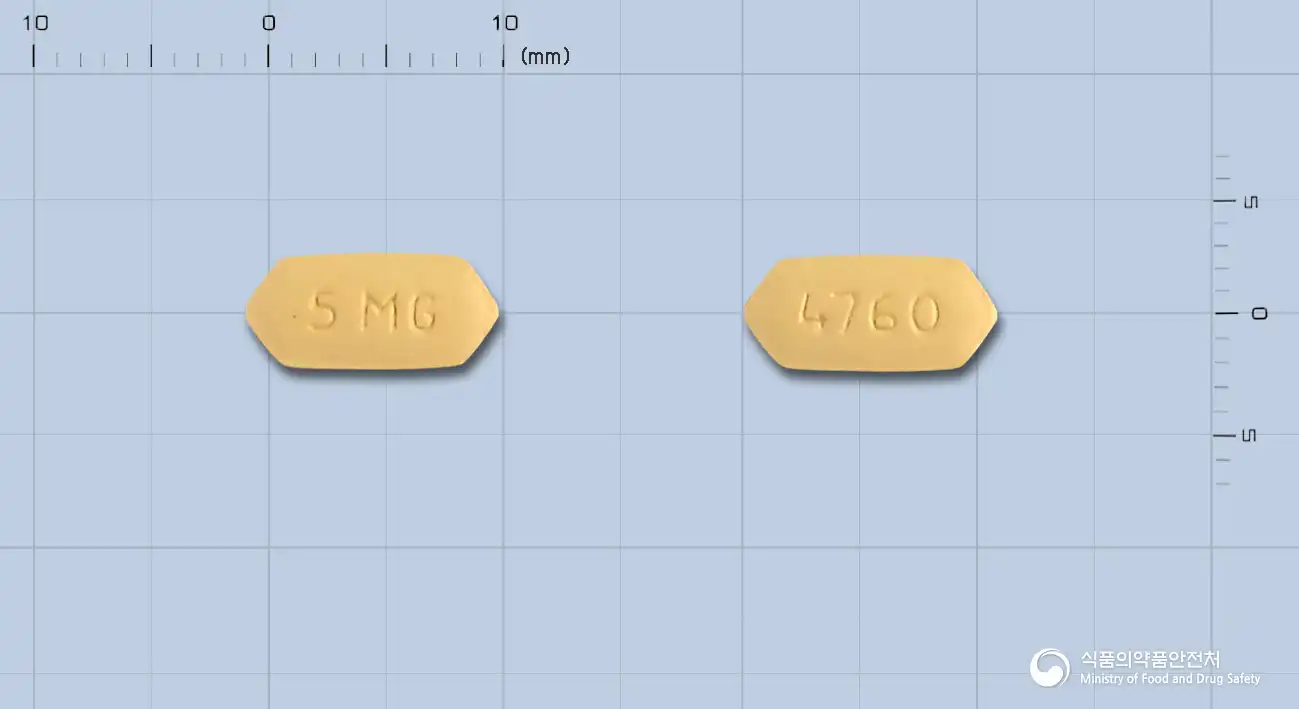
Effient 5 mg Tablet (Prasugrel Hydrochloride)

Effient 5 mg Tablet (Prasugrel Hydrochloride)

Prescription medicationTabletOral
Ingredient · strength
Prasugrel Hydrochloride›5.49mg / 1 tablet
Manufacturer / importer
Daiichi Sankyo Korea Co., Ltd.
Appearance
Yellow hexagonal film-coated tablet
Packaging
30 tablets (6 tablets/PTPX5)/carton
Approval status
Active

MFDS item code 201004753 · Approved 2010.07.29 · Insurance code 680900210

Summary

Main use
Prevention of thrombotic cardiovascular events in patients with acute coronary syndrome undergoing an intervention
Who takes it
Adults · Children
Adult dose
This medicine is for adults weighing 60 kilograms or more and aged under 75 years (body weight ≥ 60 kg, age < 75 years) only. Administer a single oral loading dose of 60 milligrams of prasugrel, followed by a maintenance dose of 10 milligrams once daily. However, for patients at increased risk of bleeding, administer a maintenance dose of 5 milligrams once daily. (See the bleeding risk factors under 1. Warnings and 3. Use with caution in the following patients in Precautions for Use.) For patients with unstable angina/non-ST-segment elevation myocardial infarction, if coronary angiography is performed within 48 hours of admission, the loading dose must be administered at the time of percutaneous coronary intervention (PCI). This medicine may be taken with or without food and must be administered concomitantly with aspirin (75~325 milligrams daily). Patients with renal impairment No dosage adjustment is required for patients with renal impairment; however, since experience with this medicine is limited, it should be administered with caution. Patients with hepatic impairment No dosage adjustment is required for patients with mild to moderate hepatic impairment (Child-Pugh Class A and B); however, since experience with this medicine is limited, it should be administered with caution.
Child dose
Safety and efficacy have not been established in pediatric and adolescent patients 18 years of age or younger.

Ingredients

Importer
Daiichi Sankyo Korea Co., Ltd.

Efficacy & effects

Prevention of thrombotic cardiovascular events in patients with acute coronary syndrome undergoing an intervention

  • Acute coronary syndrome
  • stent thrombosis
  • thrombotic cardiovascular events
  • deaths due to cardiovascular disease
  • non-fatal myocardial infarction
  • non-fatal stroke
  • unstable angina
  • non-ST elevation myocardial infarction
  • ST elevation myocardial infarction
View approved original text

This medication is used in patients with acute coronary syndrome who have undergone or are scheduled for coronary intervention. The primary indications are patients with unstable angina and non-ST elevation myocardial infarction. It also applies to patients with ST elevation myocardial infarction who are to undergo primary or delayed coronary intervention. This medication can reduce the occurrence of thrombotic cardiovascular events, including stent thrombosis. This includes deaths due to cardiovascular disease, non-fatal myocardial infarction, and non-fatal stroke. Therefore, this medication is effectively used for the prevention of cardiovascular complications in patients with acute coronary syndrome.

How to take

Adult dose

This medicine is for adults weighing 60 kilograms or more and aged under 75 years (body weight ≥ 60 kg, age < 75 years) only. Administer a single oral loading dose of 60 milligrams of prasugrel, followed by a maintenance dose of 10 milligrams once daily. However, for patients at increased risk of bleeding, administer a maintenance dose of 5 milligrams once daily. (See the bleeding risk factors under 1. Warnings and 3. Use with caution in the following patients in Precautions for Use.) For patients with unstable angina/non-ST-segment elevation myocardial infarction, if coronary angiography is performed within 48 hours of admission, the loading dose must be administered at the time of percutaneous coronary intervention (PCI). This medicine may be taken with or without food and must be administered concomitantly with aspirin (75~325 milligrams daily). Patients with renal impairment No dosage adjustment is required for patients with renal impairment; however, since experience with this medicine is limited, it should be administered with caution. Patients with hepatic impairment No dosage adjustment is required for patients with mild to moderate hepatic impairment (Child-Pugh Class A and B); however, since experience with this medicine is limited, it should be administered with caution.

Child dose

Safety and efficacy have not been established in pediatric and adolescent patients 18 years of age or younger.

Precautions

This medication is an antiplatelet drug that prevents blood clotting. However, taking this medication may increase the risk of bleeding, so it should not be administered, especially to patients with existing bleeding or those at high risk of bleeding. Elderly patients over 75 years old or those weighing less than 60 kg are at greater risk of bleeding, so its use is not recommended. Patients undergoing surgery should discontinue this medication at least 7 days before the surgery, and caution is necessary as bleeding may occur during or after the surgery. This medication may further increase the risk of bleeding when taken with other drugs that elevate bleeding risk, such as warfarin, heparin, and non-steroidal anti-inflammatory drugs. If sudden bleeding symptoms appear, the physician should be notified immediately, and in cases of severe bleeding, treatments such as platelet transfusion may be necessary. Pregnant or breastfeeding women should consult with a physician regarding the use of this medication, and safety and efficacy have not been established in children and adolescents. Additionally, during the use of this medication, special care is required during trauma or surgery due to the risk of bleeding, and it may take longer to stop the bleeding. This medication inhibits platelet function and interferes with blood clotting, so if blood tests or symptoms related to bleeding abnormalities occur, medical personnel should be consulted immediately. Lastly, patients taking this medication should inform healthcare providers of all other medications they are taking, paying special attention to interactions with drugs that pose a bleeding risk.

Side effects

  • Hemorrhage
  • intracranial hemorrhage
  • gastrointestinal hemorrhage
  • puncture site bleeding
  • nosebleed
  • hemoptysis
  • subcutaneous hematoma
  • post-procedural bleeding
  • retroperitoneal hemorrhage
  • retinal hemorrhage
Show 223 more
  • thrombotic thrombocytopenic purpura
  • thrombocytopenia
  • anemia
  • abnormal liver function
  • allergic reaction
  • angioedema
  • hypertension
  • hypercholesterolemia
  • hyperlipidemia
  • headache
  • low back pain
  • dyspnea
  • nausea
  • dizziness
  • cough
  • hypotension
  • fatigue
  • non-cardiogenic chest pain
  • atrial fibrillation
  • bradycardia
  • leukopenia
  • rash
  • fever
  • peripheral vascular edema
  • limb pain
  • diarrhea
  • hematochezia
  • gastric ulcer
  • melena
  • esophagitis
  • erosive gastritis
  • lower gastrointestinal bleeding
  • urticaria
  • Henoch-Schönlein purpura
  • congestive heart failure
  • myocardial infarction
  • angina
  • pneumonia
  • pyelonephritis
  • Enterobacter pneumonia
  • soft tissue infection
  • sepsis
  • malnutrition
  • hyponatremia
  • vascular stent restenosis
  • vascular stent thrombosis
  • disseminated intravascular coagulation
  • hematuria
  • nephrosclerosis
  • benign prostatic hyperplasia
  • sudden deafness
  • contusion
  • petechiae
  • gum bleeding
  • conjunctival hemorrhage
  • nasopharyngitis
  • upper respiratory infection
  • positional dizziness
  • sensory abnormalities
  • diabetes
  • decreased appetite
  • dyslipidemia
  • hypokalemia
  • constipation
  • gastroesophageal reflux disease
  • abdominal discomfort
  • epigastric pain
  • anal bleeding
  • palpitations
  • purpura
  • pruritus
  • dermatitis
  • exertional dyspnea
  • productive cough
  • pleural effusion
  • pulmonary edema
  • hematuria
  • insomnia
  • depression
  • anxiety
  • erectile dysfunction
  • asthenia
  • peripheral edema
  • musculoskeletal pain
  • myalgia
  • muscle cramps
  • neck pain
  • limb discomfort
  • flank pain
  • rotator cuff syndrome
  • injection site hematoma
  • tinnitus
  • increased blood glucose
  • decreased potassium in the blood
  • fatty liver disease
  • atherosclerosis
  • hemorrhagic cerebral infarction
  • vascular stenosis
  • carotid artery stenosis
  • orthostatic hypotension
  • aortic aneurysm
  • arterial dissection
  • peripheral coldness
  • blood pressure fluctuations
  • reflux laryngitis
  • pneumothorax
  • asthma
  • pulmonary congestion
  • hemothorax
  • respiratory failure
  • pleuritic pain
  • aspiration pneumonia
  • falls
  • ligament sprain
  • rib fracture
  • epidural hematoma
  • subdural hemorrhage
  • traffic accident
  • femoral neck fracture
  • femoral fracture
  • knee fracture
  • meniscal injury
  • clavicle fracture
  • facial bone fracture
  • traumatic intracranial hemorrhage
  • dental fracture
  • carotid artery occlusion
  • syncope
  • facial paralysis
  • tension headache
  • cerebral edema
  • diabetic neuropathy
  • paralysis
  • gait disturbance
  • vocal cord paralysis
  • decreased level of consciousness
  • sciatica
  • ulnar nerve neuropathy
  • ischemic stroke
  • chronic gastritis
  • oral bleeding
  • stomatitis
  • abdominal pain
  • dry mouth
  • gum swelling
  • rectal polyp
  • hemorrhoids
  • hematemesis
  • tongue ulcer
  • subcutaneous bleeding
  • itchy rash
  • mechanical urticaria
  • hyperhidrosis
  • blister
  • eczema
  • hair loss
  • skin mass
  • erythema
  • heart failure
  • coronary artery spasm
  • coronary artery occlusion
  • sinus bradycardia
  • Dressler syndrome
  • arrhythmia
  • myocardial ischemia
  • bronchitis
  • herpes zoster
  • rhinitis
  • urinary tract infection
  • periodontitis
  • chronic tonsillitis
  • viral keratitis
  • cystitis
  • sinusitis
  • gastroenteritis
  • furuncle
  • tinea corporis
  • osteoarthritis
  • arthralgia
  • musculoskeletal chest pain
  • musculoskeletal stiffness
  • musculoskeletal discomfort
  • gouty arthritis
  • gout
  • hyperkalemia
  • hyperglycemia
  • chronic kidney failure
  • pollakiuria
  • urinary stones
  • dysuria
  • urinary disease
  • decreased urine output
  • renal hematoma
  • ureteral stone disease
  • urethral pain
  • cholelithiasis
  • non-alcoholic fatty liver
  • edema
  • systemic edema
  • pain
  • pain at the site of vascular puncture
  • lymphadenitis
  • coagulopathy
  • increased C-reactive protein
  • panic disorder
  • decreased libido
  • sleep disorders
  • sexual dysfunction
  • gynecomastia
  • prostatitis
  • ear bleeding
  • ear pain
  • vestibular disorder
  • conjunctival congestion
  • eye hemorrhage
  • diabetic retinopathy
  • retinal vascular occlusion
  • decreased vision
  • hyperthyroidism
  • ventricular septal defect
  • colon polyp
  • essential thrombocythemia
  • lipoma

Not everyone experiences these, and they can vary from person to person.

Storage

This medication should be stored in a tightly sealed container to protect it from air and moisture. It is best kept at room temperature, specifically between 1°C and 30°C.

Appearance and packaging

Appearance

Yellow hexagonal film-coated tablet

Package unit

30 tablets (6 tablets/PTPX5)/carton

Same-ingredient medicines

Even with the same ingredient, strength, dosage form and how it is taken can differ.

Even with the same ingredient, the dose and directions can differ by strength and dosage form. Talk to a doctor or pharmacist before switching from a medication you are already taking.

Questions about this medicine

No questions yet.

For anything that needs medical judgment, consult a doctor or pharmacist.

Related searches

Search tags

Suggested searches

This drug information is based on data provided by the Korea Ministry of Food and Drug Safety.
Consult a doctor or pharmacist for accurate dosage, administration, and usage instructions.