
 한국어
 English
 日本語
 中文(简体)
 Viewing now
CoFax XR Sustained Release Capsule 37.5 mg (Venlafaxine Hydrochloride)
Venlafaxine Hydrochloride 42.425mg
Hard capsule · Prescription medication
Myungjin Pharmaceutical Co., Ltd.
MFDS item code 201001057 · Approved 2010.01.29 · Insurance code 651903250
Treats depression and anxiety disorders (including generalized anxiety disorder and panic disorder)
This medication is used to alleviate symptoms of mental health issues such as depression, generalized anxiety disorder, social phobia, and panic disorder.
(Extended-release capsules)(Extended-release tablets) The therapeutic dose of this medicine should be adjusted according to the patient's clinical condition, and the lowest effective dose possible should be administered. This medicine should be taken with food, preferably at the same time each morning or evening. Do not split, crush, chew, or dissolve the capsules in water before taking them. Adults 1. Depression and generalized anxiety disorder The recommended initial dose is 75 mg of venlafaxine hydrochloride orally once daily. Depending on the patient, 37.5 mg once daily may be administered for 4∼7 days after starting treatment to allow the patient to adjust to the medicine before increasing to 75 mg daily. If further clinical improvement is needed after 2 weeks of treatment, the dose may be increased to 150 mg daily. If necessary, the dose may be increased to a maximum of 225 mg daily. Dose increases should be no greater than 75 mg per day and should be made at intervals of at least 4 days. Patients with depression who are currently taking the immediate-release tablets containing this medicine may be switched to this medicine; the dose should be as close as possible to the dose of the tablets. For example, patients taking 37.5 mg of the immediate-release tablets containing this medicine twice daily may take 75 mg of this medicine once daily. Individual dose adjustment may be needed when switching. 2. Social anxiety disorder The recommended dose is 75 mg of venlafaxine hydrochloride orally once daily. There is no evidence of additional benefit from increasing the dose. 3. Panic disorder The recommended initial dose is 37.5 mg of venlafaxine hydrochloride once daily for 7 days. In clinical trials conducted in outpatients with panic disorder to evaluate the efficacy of this medicine, the initial dose was 37.5 mg once daily for 7 days, followed by an increase to 75 mg once daily, with subsequent increases of 75 mg at 1-week intervals up to 225 mg daily. Although the dose-response relationship for the efficacy of this medicine in patients with panic disorder has not been clearly established, some patients who do not respond to 75 mg/day may benefit from an increase up to a maximum of 225 mg daily. If the dose is increased, increases should be no greater than 75 mg per day as needed and should be made at intervals of at least 7 days. 4. Dosing in special populations 1) Patients with hepatic impairment In patients with hepatic impairment, the clearance of venlafaxine and O-desmethylvenlafaxine (ODV) is reduced and their half-lives are prolonged; therefore, the dose should be reduced by 50% in patients with moderate hepatic impairment. Because drug clearance varies considerably among patients with cirrhosis, individual dose adjustment is necessary. 2) Patients with renal impairment In patients with renal impairment (GFR=10∼70 mL/min), clearance of this medicine is reduced and the half-lives of venlafaxine and ODV are increased compared with those in individuals with normal renal function. Therefore, the total daily dose should be reduced by 25∼50%. For patients undergoing hemodialysis, the total daily dose should be reduced by 50%, and the medicine should be administered after hemodialysis is completed. Because drug clearance varies considerably among patients with renal impairment, individual dose adjustment is necessary. 5. Maintenance/continuation/long-term treatment The physician should periodically assess the efficacy of long-term treatment with this medicine for each patient. Although there is no clinical-trial evidence regarding how long this medicine should be administered to patients with depression, generalized anxiety disorder, social anxiety disorder, or panic disorder, it is generally agreed that acute depression requires continued pharmacotherapy for several months or longer. 6. Discontinuation of treatment with this medicine If this medicine is discontinued after being taken for more than 1 week, the dose should be gradually reduced over several days to minimize withdrawal symptoms. Patients who have received this medicine for more than 6 weeks should have their dose gradually reduced over at least 2 weeks. Although withdrawal symptoms associated with this medicine have not been comprehensively evaluated, retrospective surveys during dose reduction and after discontinuation reported adverse reactions occurring in at least 3% of patients and at more than twice the rate observed in the placebo group. These included hypomania, anxiety, agitation, nervousness, confusion, insomnia or sleep disturbances, fatigue, somnolence, paresthesia, dizziness, headache, sweating, dry mouth, anorexia, diarrhea, nausea, and vomiting. These withdrawal symptoms were mild and resolved without treatment. The time needed for dose reduction may vary depending on the dose, duration of treatment, and the patient. 7. Switching from MAO inhibitors used to treat psychiatric disorders When discontinuing an MAO inhibitor used to treat psychiatric disorders and starting treatment with this medicine, an interval of at least 14 days should be allowed. Conversely, at least 7 days should elapse after discontinuing this medicine before starting an MAO inhibitor to treat psychiatric disorders. 8. Other MAO inhibitors, such as linezolid or methylene blue Patients receiving linezolid or intravenous methylene blue should not start treatment with this medicine because of the increased risk of serotonin syndrome. For patients requiring more urgent treatment of a psychiatric condition, including hospitalization or other interventions, treatment should be considered. It may be necessary to urgently administer linezolid or intravenous methylene blue to a patient already receiving this medicine. If there is no alternative to linezolid or intravenous methylene blue and, for a particular patient, the benefits of treatment with linezolid or intravenous methylene blue are judged to outweigh the risk of serotonin syndrome, this medicine may be discontinued immediately and linezolid or intravenous methylene blue administered. Patients should be monitored for symptoms of serotonin syndrome for 7 days after administration of linezolid or intravenous methylene blue, or until 24 hours after the last dose, whichever occurs first. Treatment with this medicine may be restarted 24 hours after the last dose of linezolid or intravenous methylene blue. The risk associated with methylene blue administered by a non-intravenous route (oral tablet or local injection) or with intravenous administration of this medicine at doses of 1mg/kg or less is unclear. Nevertheless, clinicians should be aware of the possibility of acute symptoms of serotonin syndrome with such use.
This medication can negatively affect the central nervous system when taken with alcohol, so alcohol should be avoided during treatment. This medication can increase the risk of suicidal thoughts or behavior, especially in young adults aged 18 to 24, as well as children and adolescents, so any changes in symptoms should be closely observed during treatment. This medication can cause persistent increases in blood pressure; hence, regular blood pressure monitoring is required during treatment, and dose adjustments or discontinuation should be considered as necessary. This medication can lead to severe neurological side effects, such as serotonin syndrome, when taken with other serotonin-active drugs, so caution is especially needed when using such combinations. If any abnormal symptoms occur, the medication should be stopped immediately and medical help sought. This medication should not be administered to certain patients, such as those with hypersensitivity to this drug or its ingredients, patients currently taking MAO inhibitors, pregnant or breastfeeding women, and children and adolescents under 18 years of age. Patients with a risk of suicide, those with a history of seizures, or patients with heart disease should take this medication with special caution, and any abnormal behaviors or changes in symptoms should be closely monitored during treatment. This medication can cause various side effects, with the most common symptoms including nausea, dizziness, insomnia, drowsiness, sweating, appetite loss, and sexual dysfunction. If severe rash or allergic reactions occur, immediate consultation with a physician is necessary. Abruptly stopping this medication can lead to withdrawal symptoms such as dizziness, anxiety, and insomnia, so any discontinuation should be done gradually under a physician's direction. This medication can interact with other drugs, so if other medications are being taken, the physician or pharmacist should be informed, especially when combining with drugs like lithium, diazepam, cimetidine, or haloperidol. Caution is needed when driving or operating heavy machinery, as drowsiness or dizziness may occur after taking this medication. Regular health check-ups are recommended due to possible increases in blood pressure, heart rate, and serum cholesterol. Abnormal bleeding may occur while taking this medication, so patients with bleeding tendencies should be cautious and report any bleeding symptoms to a doctor immediately. This medication should not be administered to pregnant or breastfeeding women, or to patients under 18, and women of childbearing potential should consult a physician before use.
Headache, weakness, nausea, loss of appetite, dry mouth, vomiting, dizziness, insomnia, nervousness, drowsiness, tremors, sweating, erectile dysfunction, vasodilation, hypertension, constipation, abnormal ejaculation, hyperesthesia, abnormal dreams, decreased libido, anxiety, yawning, abnormal vision, pharyngitis, palpitations, unease, orgasmic dysfunction, weight loss, increased serum cholesterol, weight gain, arthralgia, forgetfulness, confusion, depersonalization, emotional instability, sensory loss, increased muscle tone, tremor, abnormal thoughts, bruxism, inability to sit still, apathy, ataxia, perioral paresthesia, central nervous system excitation, euphoria, hallucination, hostility, hypersensitivity, hyperactivity, decreased tension, dyscoordination, increased libido, mania, dystonic reactions, neuralgia, neuropathy, paranoia, psychosis, seizures, abnormal speech, confusion, numbness, anxiety, suicidal thoughts, torticollis, convulsions, mania, neuroleptic malignant syndrome, serotonin syndrome, feeling intoxicated, hyperchloremia, impulse control disorder, incomplete paralysis, dyspnea, increased cough, itching, rash, acne, alopecia, dry skin, eczema, skin thickening, urticaria, cataracts, conjunctivitis, corneal lesions, double vision, dry eye, exophthalmos, eye pain, hyperacusis, otitis media, abnormal olfaction, photophobia, dysgeusia, taste changes, visual impairment, tinnitus, abnormal uterine bleeding, prostatitis, urinary disorders, vaginitis, prolonged erection, gynecomastia, hypomenorrhea, kidney stones, renal colic, abnormal kidney function, mastitis, menopause, pyelonephritis, frequent urination, salpingitis, urolithiasis, uterine bleeding, uterine contractions, balanitis, endometriosis, orchitis, vaginal dryness, anaphylaxis, angioedema, ventricular tachycardia, stress-induced cardiomyopathy, pancreatitis, agranulocytosis, refractory anemia, pancytopenia, inappropriate antidiuretic hormone secretion syndrome, abnormal liver function tests, increased luteinizing hormone, rhabdomyolysis syndrome, psychomotor instability, delirium, extrapyramidal symptoms, coordination and balance disorders, tardive dyskinesia, interstitial lung disease, Stevens-Johnson syndrome, toxic epidermal necrolysis, erythema multiforme, angle-closure glaucoma, increased bleeding, menstrual disorders, increased urinary frequency, postpartum hemorrhage, fractures, tension, increased creatine phosphokinase, deep venous thrombosis, EKG abnormalities, bleeding, liver disease, involuntary movements, LDH increase, sweating, panic, renal failure, electrical shock-like syndrome, abdominal pain, dyspepsia, petechial hemorrhage, nosebleed, myalgia, mild mania, anxiety, confusion, coordination and balance disorders, depressed mood, emotional instability, hypersomnia, nightmares, fatigue, sensory abnormalities, muscle fiber fasciculation, flu-like symptoms, tinnitus, loss of appetite, diarrhea, hypertension, withdrawal symptoms
Not everyone experiences these, and they can vary from person to person.
This medication should be stored in a sealed container to prevent exposure to air or moisture and is best kept in a cool place below 25 degrees Celsius. Storing this way will help maintain the medication's effectiveness for a long time.
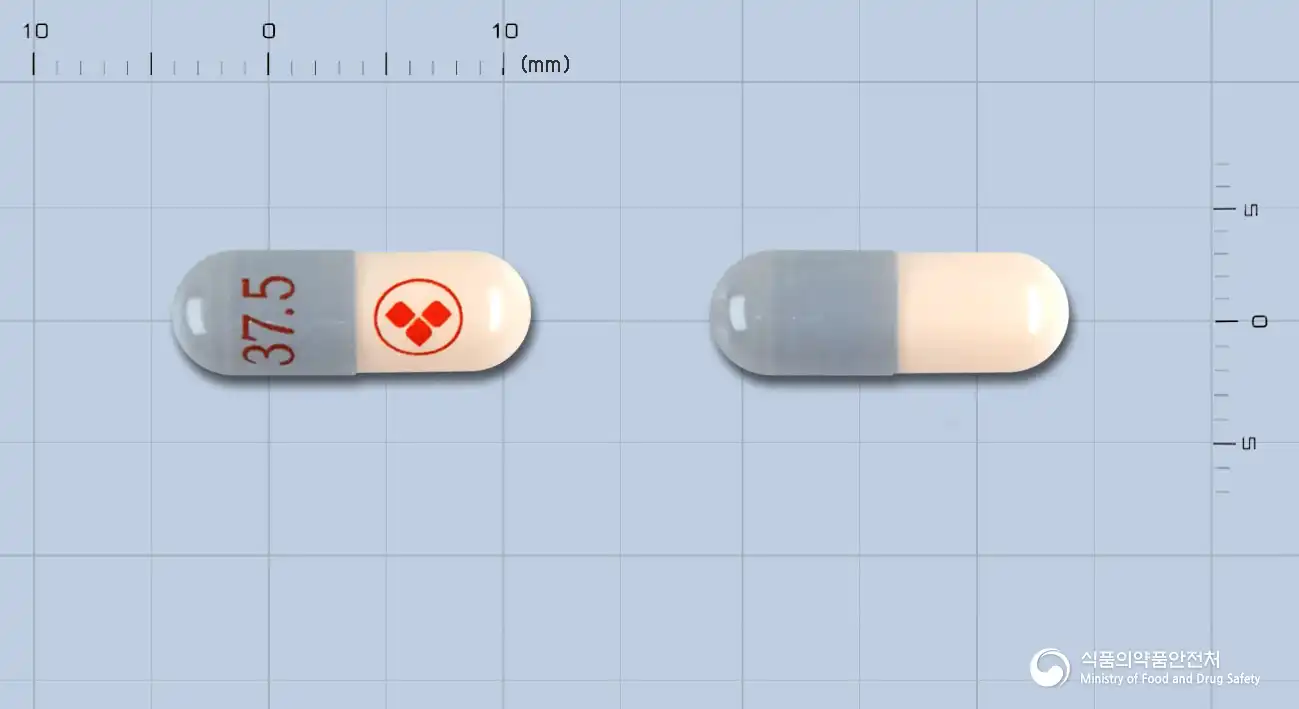
A sustained-release hard capsule with gray upper part and pink lower part containing spherical white to grayish-white granules.
30 capsules/bottle, 200 capsules/bottle
Even with the same ingredient, strength, dosage form and how it is taken can differ.
Viewing nowVenlafaxine Hydrochloride 42.425mg
Hard capsule · Prescription medication
Myungjin Pharmaceutical Co., Ltd.
Venlafaxine Hydrochloride 84.85mg
Prescription medication
Viatris Korea Co., Ltd.
Venlafaxine Hydrochloride 42.43mg
Prescription medication
Viatriss Korea Co., Ltd.
Venlafaxine Hydrochloride 84.84mg
Prescription medication
Hanlim Pharmaceutical Co., Ltd.
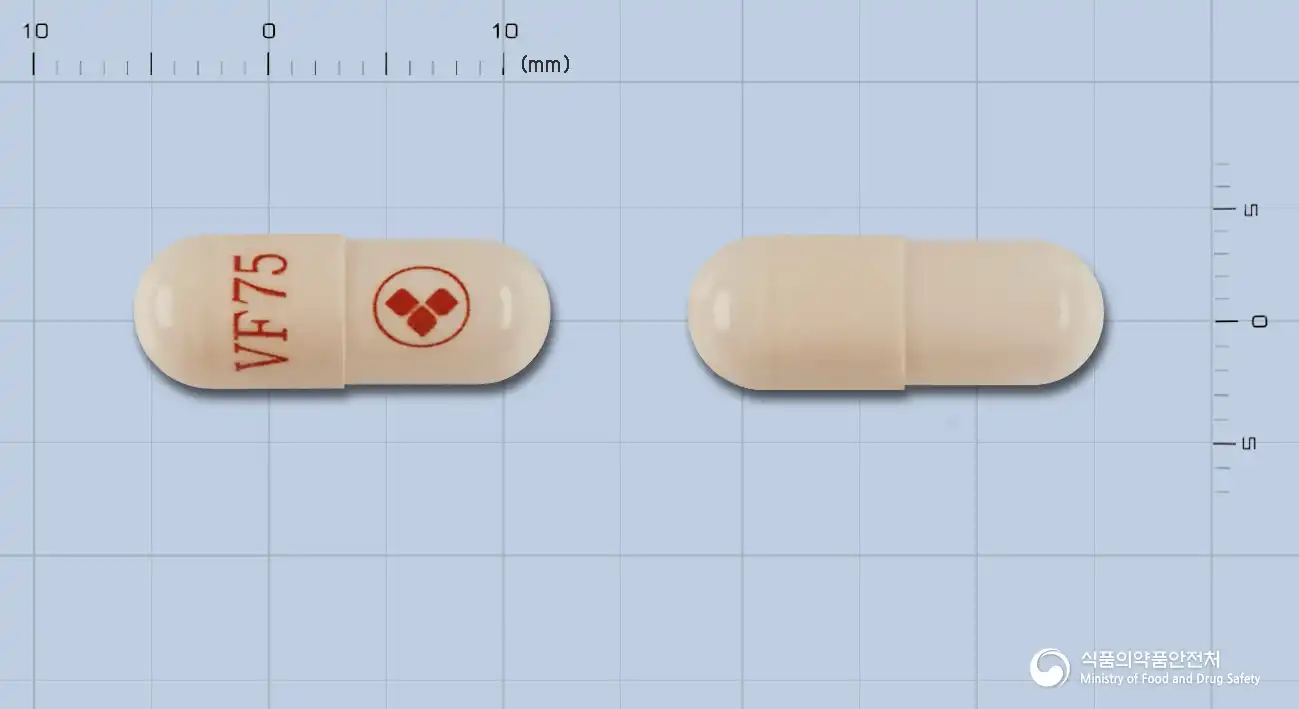
Venlafaxine Hydrochloride 84.85mg
Prescription medication
Myungin Pharmaceutical Co., Ltd.
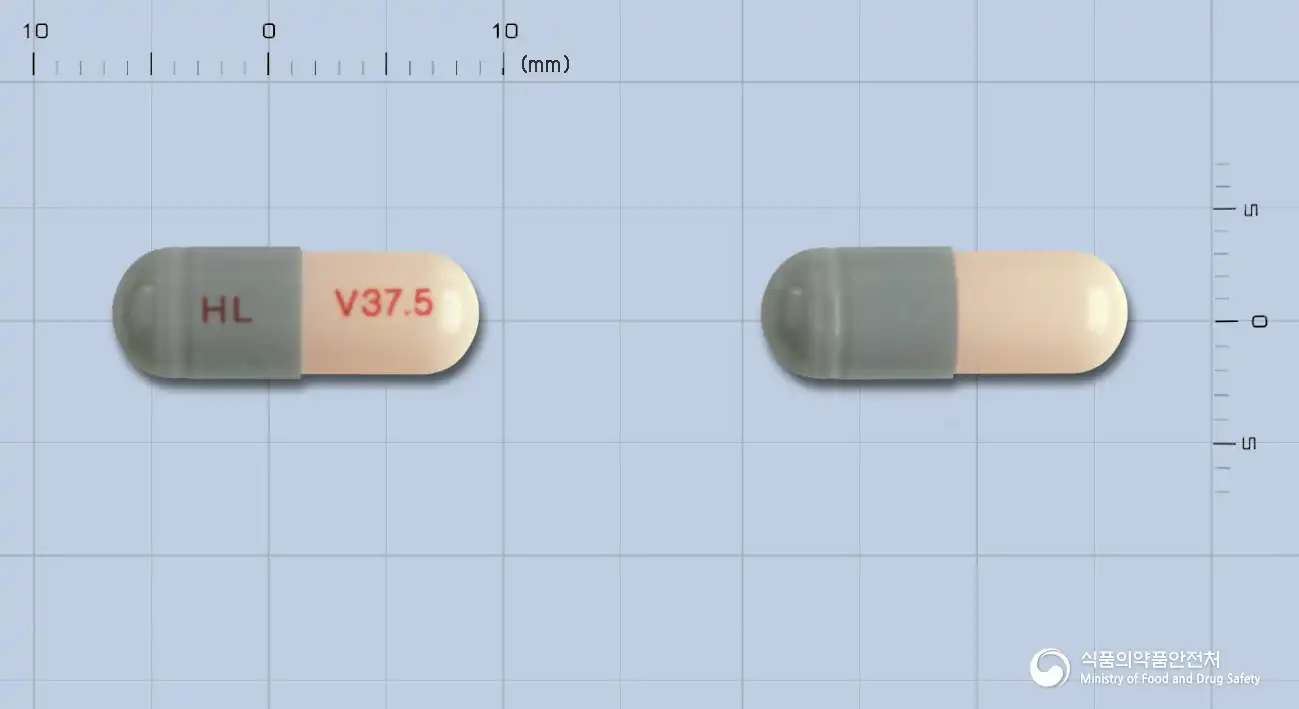
Venlafaxine Hydrochloride 42.42mg
Prescription medication
Hanhim Pharmaceutical Co., Ltd.
Even with the same ingredient, the dose and directions can differ by strength and dosage form. Talk to a doctor or pharmacist before switching from a medication you are already taking.
No questions yet.
For anything that needs medical judgment, consult a doctor or pharmacist.
This drug information is based on data provided by the Korea Ministry of Food and Drug Safety.
Consult a doctor or pharmacist for accurate dosage, administration, and usage instructions.