한국어
 English
 日本語
 中文(简体)
 Viewing now
Procoralan Tablet 7.5 mg (Ivabradine Hydrochloride)
Ivabradine Hydrochloride 8.085mg
Tablet · Prescription medication
Hanmi Serb Pharmaceuticals Co., Ltd.
MFDS item code 200906065 · Approved 2009.07.31 · Insurance code 676300110
Reduction of the risk of cardiovascular death and hospitalization in chronic heart failure; relief of symptoms of chronic stable angina
This medication is used to relieve symptoms in patients with chronic stable angina. It is particularly indicated for patients with coronary artery disease who have a resting heart rate of more than 70 beats per minute and cannot tolerate beta-blockers, or who are using it in combination with beta-blockers. However, the preventive effects on cardiovascular outcomes such as myocardial infarction or cardiovascular death have not been confirmed, so it is limited to symptom relief. In addition, for patients with chronic heart failure (NYHA Class II-IV) with reduced left ventricular systolic function, who have a resting heart rate of more than 75 beats per minute and have a normal sinus rhythm, this medication helps reduce the risk of cardiovascular death and hospitalization due to worsening heart failure. It is particularly effective in patients who have low tolerance to beta-blockers or are using it in combination with beta-blockers. Therefore, this medication is used for the relief of symptoms of chronic stable angina and for reducing hospitalization risk in chronic heart failure.
1. Symptomatic treatment of chronic stable angina Adults: Initiation of treatment or dose escalation should preferably be determined based on the results of continuous heart rate measurement, electrocardiography, or ambulatory 24-hour monitoring. In patients younger than 75 years, the initial dose should not exceed 5 milligrams per dose, twice daily, and should be taken immediately after breakfast and dinner. If symptoms persist 3~4 weeks after starting treatment, the initial dose is tolerated, and the resting heart rate remains at least 60 beats per minute, the dose may be increased to the next higher dose in patients receiving 2.5 milligrams per dose twice daily or 5 milligrams per dose twice daily. The maintenance dose should not exceed 7.5 milligrams per dose twice daily. If there is no improvement in angina symptoms within 3 months of starting treatment, treatment with this medicine should be discontinued. In addition, discontinuation of treatment should be considered if there is no clinically meaningful reduction in resting heart rate within 3 months and only a limited symptomatic response. If the resting heart rate decreases to below 50 beats per minute or symptoms of bradycardia (e.g., dizziness, fatigue, or hypotension) occur during treatment with this medicine, the dose should be reduced and may be adjusted down to the lowest dose of 2.5 milligrams per dose twice daily (1/2 tablet of 5 milligrams per dose twice daily). Monitor the heart rate after dose reduction (see section ‘4. General Precautions’). If a heart rate below 50 beats per minute or symptoms of bradycardia persist despite dose reduction, treatment should be discontinued. In clinical trials, this medicine was administered in combination with a low dose of a beta-blocker (atenolol 50 milligrams once daily). 2. Chronic heart failure Treatment with this medicine should be initiated when the patient is in a stable condition without acute symptoms of heart failure. Adults: The recommended initial dose is 5 milligrams per dose twice daily, taken immediately after breakfast and dinner. If, 2 weeks after starting treatment, the resting heart rate remains consistently above 60 beats per minute, the dose may be increased to 7.5 milligrams per dose twice daily. If the resting heart rate decreases consistently to below 50 beats per minute or symptoms of bradycardia (e.g., dizziness, fatigue, or hypotension) occur, the dose may be reduced to 2.5 milligrams per dose twice daily. If the heart rate is 50~60 beats per minute, maintain the dose at 5 milligrams per dose twice daily. If, while taking 5 milligrams or 7.5 milligrams per dose twice daily, the resting heart rate consistently decreases to below 50 beats per minute or symptoms of bradycardia (e.g., dizziness, fatigue, or hypotension) occur, the dose should be reduced stepwise. If, while taking 2.5 milligrams or 5 milligrams per dose twice daily, the resting heart rate consistently exceeds 60 beats per minute, the dose may be increased stepwise. Treatment should be discontinued if a heart rate below 50 beats per minute or symptoms of bradycardia persist. 3. Patients with hepatic impairment No dose adjustment is necessary in patients with mild hepatic impairment, but this medicine should be administered with caution in patients with moderate hepatic impairment. There is no experience with use in patients with severe hepatic impairment, and this medicine should not be administered because a substantial increase in systemic exposure is expected (see sections 1. Do not administer to the following patients and 2. Administer with caution to the following patients under Precautions for Use). 4. Patients with renal impairment No dose adjustment is necessary in patients with mild or moderate renal impairment (creatinine clearance: 15mL/min or higher). Use of this medicine is not recommended in patients with severe renal impairment (creatinine clearance: below 15mL/min), because experience with its use is limited. 5. Older adults For older adults aged 75 years and over, administration of a low initial dose (2.5 milligrams per dose twice daily) should be considered.
The safety and efficacy of this medicine for the treatment of chronic heart failure have not been established in pediatric patients under 18 years of age. Although data on pediatric use are available, administration of this medicine is not recommended.
This medication should not be used in certain patients. It should not be administered to patients allergic to any of its components, those with excessively low heart rates, patients with serious heart issues, or those with severe hypotension or liver dysfunction. In addition, it should not be taken by patients dependent on pacemakers, certain arrhythmia patients, pregnant or breastfeeding women, or those with lactose intolerance. This medication should be used with caution in some patients. Patients with moderately impaired liver function or those whose heart rates drop too low, showing bradycardia symptoms, severely affected heart failure patients, or those with hypotension should take this medication carefully. Various adverse reactions can occur from this medication. The most common side effects are transient visual disturbances (flashes of light) and decreased heart rate. Other reported effects include headache, dizziness, blurred vision, nausea, constipation, rash, etc. Cardiac-related side effects such as bradycardia, atrial fibrillation, and ventricular arrhythmia can occur, necessitating caution. While taking this medication, regular monitoring of heart rate is essential, and if the heart rate drops too low or arrhythmia symptoms appear, immediate consultation with a healthcare provider is required. It is not recommended for patients with heart arrhythmias, as it may increase the risk of atrial fibrillation; symptoms should be reported immediately. This medication may pose risks when taken with certain drugs. Especially, it should not be combined with drugs that lower heart rates or potent CYP3A4 inhibitors. Grapefruit juice should also be avoided, and any drug combinations should be discussed with healthcare providers. Pregnant or breastfeeding women should not take this medication, and women of childbearing age should use adequate contraception during treatment. In cases of overdose, serious side effects such as markedly slow heart rate may manifest; immediate medical attention is required in such instances. This medication does not significantly impact driving or operating machinery, but visual symptoms such as flashing lights may occur, so caution is advised, especially during nighttime driving. Keep this medication out of reach of children and be careful not to transfer it to another container.
Luminescent phenomenon (visual aura), bradycardia, headache, dizziness, syncope, blurred vision, diplopia, vertigo, first-degree atrioventricular block, ventricular premature contraction, atrial fibrillation, palpitations, ventricular ectopic beats, second-degree atrioventricular block, third-degree atrioventricular block, sick sinus syndrome, uncontrolled hypertension, hypotension, dyspnea, nausea, constipation, diarrhea, abdominal pain, vascular edema, rash, erythema, itching, urticaria, muscle cramps, weakness, fatigue, lethargy, elevated serum creatinine, prolonged QT interval, worsening heart failure, chest pain, blood in stool, myasthenia, death, cardiomyopathy, cardiac arrest, sepsis, pleural effusion, exacerbation of chronic obstructive pulmonary disease, vomiting, cerebral infarction, diabetes, aneurysm, atrial tachycardia, ventricular tachycardia, pericardial effusion, dysphagia, gastrointestinal bleeding, hypokalemia, azotemia, asthma, pneumonia, pulmonary edema, pulmonary fibrosis, hematoma, worsening dyspnea, chest pain, dyspepsia, peripheral edema, gastroesophageal reflux, oliguria, gynecomastia, blepharitis, hyponatremia, change in temperature sensation, increased ALT, increased AST, leg weakness, thirst, sensory disturbances, sensory impairment, dry eyes, hypertension, myalgia, arthralgia, tinnitus, back pain, viral infection, abdominal distension, anemia, pericarditis, blepharitis, gynecomastia, gastritis, hemorrhoids, weight loss, oliguria, hematoma
Not everyone experiences these, and they can vary from person to person.
This medication should be stored in a tightly sealed container to protect it from air and moisture, and safely maintained at room temperature between 1 to 30 degrees Celsius. Storing it this way helps maintain the efficacy of the medication for a longer period.
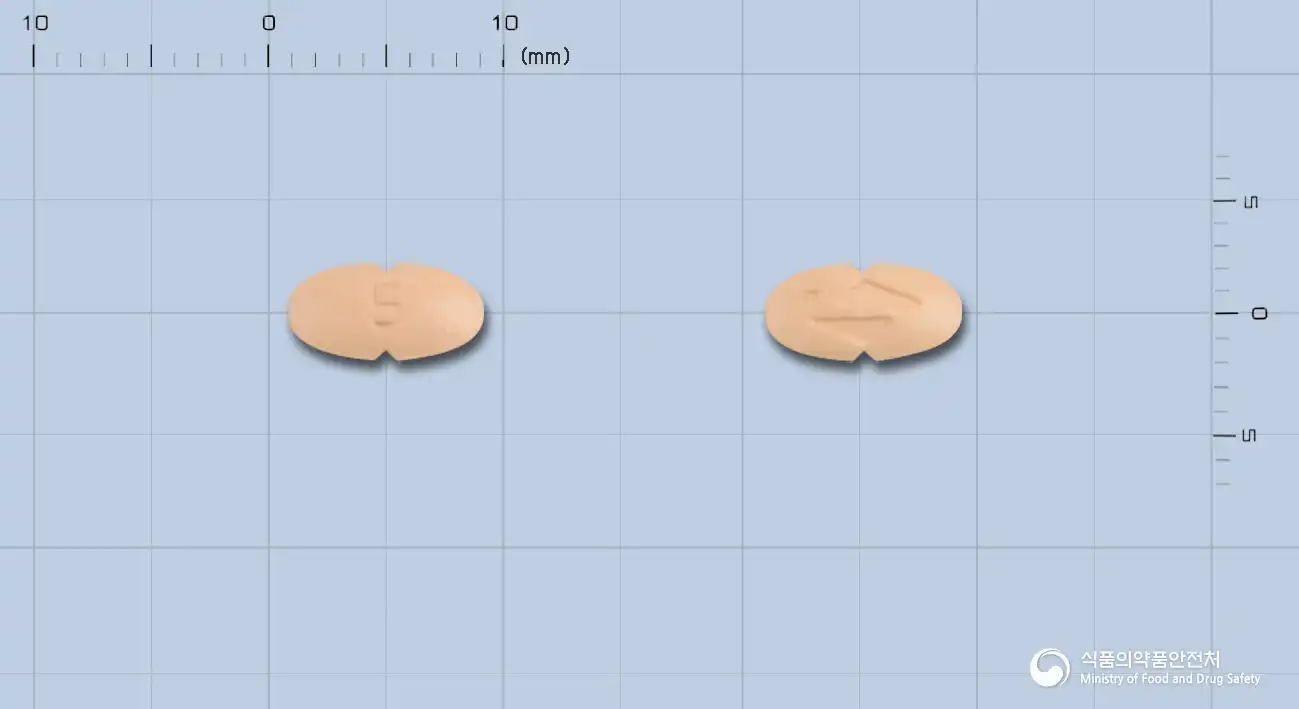
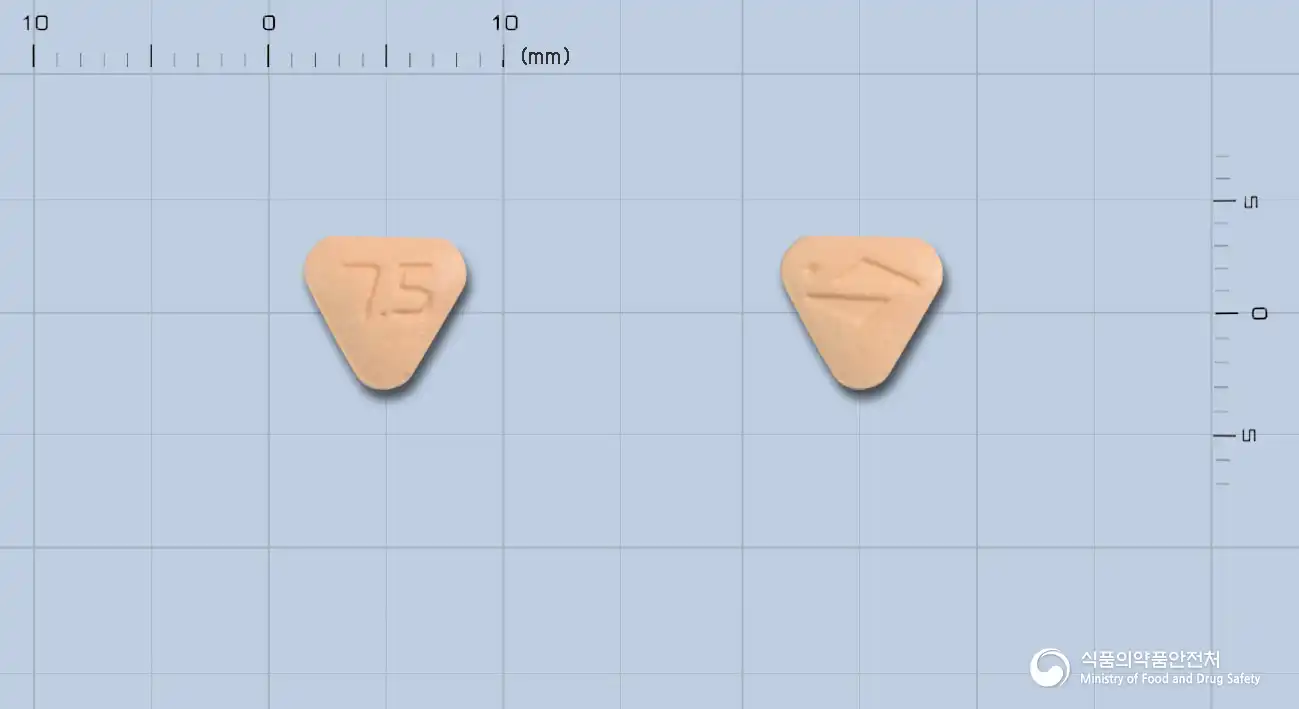
A translucent yellow-orange triangular film-coated tablet with a shape on one side and '7.5' engraved on the other side.
56 tablets (14 tablets/PTP x 4)
Even with the same ingredient, strength, dosage form and how it is taken can differ.
Even with the same ingredient, the dose and directions can differ by strength and dosage form. Talk to a doctor or pharmacist before switching from a medication you are already taking.
No questions yet.
For anything that needs medical judgment, consult a doctor or pharmacist.
This drug information is based on data provided by the Korea Ministry of Food and Drug Safety.
Consult a doctor or pharmacist for accurate dosage, administration, and usage instructions.