
 한국어
 English
 日本語
 中文(简体)
Dosage form image
Viewing nowInnovaron Film-Coated Tablet 100 mg (Lacosamide)
Rufinamide 100mg
Tablet · Prescription medication
Hanmi Pharmaceutical Co., Ltd.
MFDS item code 200905917 · Approved 2009.07.27 · Insurance code 652105330
Adjunctive therapy for seizures associated with Lennox–Gastaut syndrome in patients aged 1 year and older
This medication is used as an adjunct to treat seizures associated with Lennox-Gastaut syndrome in patients aged 1 year and older. It helps effectively manage seizure symptoms and may improve the quality of life of patients.
3) Children aged 4 years and older weighing 30 kg or more, and adults ○ Patients weighing 30 kg or more who are not taking valproate Start treatment at a dose of 400mg per day. Depending on clinical response and tolerability, the dose may be increased by 400mg per day every 2 days, up to the maximum recommended dose listed in the following table. The dose has been studied in a limited number of patients at up to 4,000mg/day (body weight range 30-50kg) or 4,800mg/day (body weight over 50kg). ○ Patients weighing 30 kg or more who are taking valproate Start treatment at a dose of 400mg per day. Depending on clinical response and tolerability, the dose may be increased by 400mg per day every 2 days, up to the maximum recommended dose listed in the following table. 4) Older adults Information on the use of this medicine in older adults is limited. Since the pharmacokinetics of rufinamide do not change in older adults, dose adjustment is not necessary in patients aged 65 years or older. 5) Patients with renal impairment Studies in patients with severe renal impairment showed that dose adjustment is not necessary in these patients. 6) Patients with hepatic impairment The use of this medicine in patients with hepatic impairment has not been studied. Careful and cautious dose titration is required when administering to patients with mild to moderate hepatic impairment. Therefore, use in patients with severe hepatic impairment is not recommended. 7) Effect of food This medicine should be administered with food. 8) Discontinuation of this medicine When discontinuing this medicine, it should be withdrawn gradually. In clinical trials, treatment was discontinued by reducing the dose by approximately 25% every 2 days. If 1 or more doses are missed, an individual clinical assessment is required. Although controlled trials have not been conducted for longer than 3 months, long-term sustained efficacy has been demonstrated in uncontrolled open-label studies.
1) Children aged 1 year to under 4 years who are not taking valproate Start treatment at a dose of 10mg/kg per day. Depending on clinical response and tolerability, the dose may be increased by up to 10mg/kg per day at 3-day intervals to reach the target dose of 45mg/kg per day. The maximum recommended dose in this patient group is 45mg/kg/day. 1) Children aged 1 year to under 4 years who are taking valproate Start treatment at a dose of 10mg/kg per day. Depending on clinical response and tolerability, the dose may be increased by up to 10mg/kg per day at 3-day intervals to reach the target dose of 30mg/kg per day. The maximum recommended dose in this patient group is 30mg/kg per day. 2) Children aged 4 years and older weighing less than 30 kg, and patients weighing less than 30 kg who are not taking valproate Start treatment at a dose of 200mg per day. Depending on clinical response and tolerability, the dose may be increased by 200mg per day every 2 days, up to the maximum recommended dose of 1,000mg. The dose has been studied in a limited number of patients at up to 3,600mg/day. 2) Children aged 4 years and older weighing less than 30 kg, and patients weighing less than 30 kg who are taking valproate Start treatment at 200mg per day. Depending on clinical response and tolerability, the dose may be increased by 200mg/day at intervals of at least 2 days, up to the maximum recommended dose of 600mg/day. 3) Children aged 4 years and older weighing 30 kg or more, and adults; patients weighing 30 kg or more who are not taking valproate 30.0 - 50.0 kg: Maximum recommended dose (mg/day) 1,800 50.1 - 70.0 kg: Maximum recommended dose (mg/day) 2,400 70.1 kg or more: Maximum recommended dose (mg/day) 3,200 3) Children aged 4 years and older weighing 30 kg or more, and adults; patients weighing 30 kg or more who are taking valproate 30.0 - 50.0 kg: Maximum recommended dose (mg/day) 1,200 50.1 - 70.0 kg: Maximum recommended dose (mg/day) 1,600 70.1 kg or more: Maximum recommended dose (mg/day) 2,200 9) Pediatric population The safety and efficacy of this medicine have not been established in neonates and infants under 1 year of age.
This medication is an antiepileptic drug, and there may be an increased risk of suicidal thoughts or behaviors, so careful monitoring is necessary for the emergence of depression, mood changes, or unusual behavior during treatment. CNS-related side effects such as drowsiness, fatigue, dizziness, and coordination disorders may occur, so caution is advised when driving or operating machinery. Patients with specific allergies or genetic conditions, particularly those with lactose intolerance, should not take this medication. Various adverse reactions such as headache, dizziness, vomiting, and rash may appear during use, and immediate consultation with healthcare providers is necessary if symptoms are severe or suspicious. This medication may worsen seizures if suddenly discontinued, so it is essential to gradually taper the dosage under a physician's guidance when stopping. Women of childbearing age should use appropriate contraception during treatment, and it is advisable to plan treatment with a physician if pregnant. This medication may interact with other drugs, so it is crucial to inform healthcare providers about any other medications being taken, particularly regarding dosage adjustments when used concurrently with Valproate. There is no specific antidote for overdose, so immediate medical attention is necessary.
Not everyone experiences these, and they can vary from person to person.
This medication may be sensitive to air and moisture, so it should be stored in a tightly sealed container. It is advisable to maintain the storage temperature between 1 and 30 degrees Celsius to preserve the drug's effectiveness.
Pink oval film-coated tablets with a convex surface on both sides and a dividing line.
30 tablets/bottle
Even with the same ingredient, strength, dosage form and how it is taken can differ.
Rufinamide 100mg
Tablet · Prescription medication
Hanmi Pharmaceutical Co., Ltd.
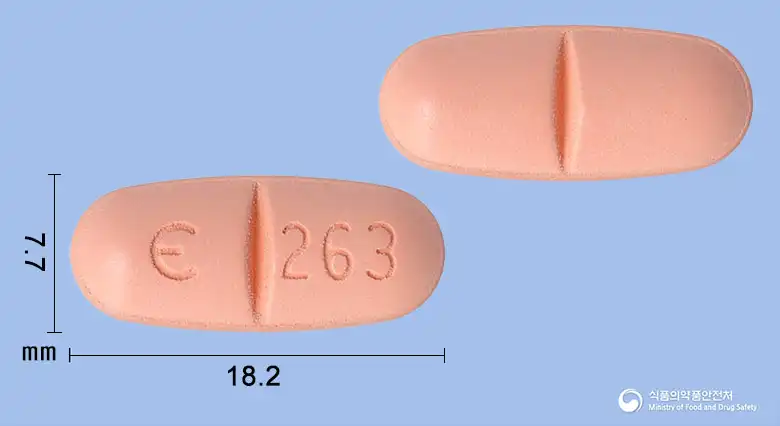
Rufinamide 400mg
Tablet · Prescription medication
Handok Co., Ltd.
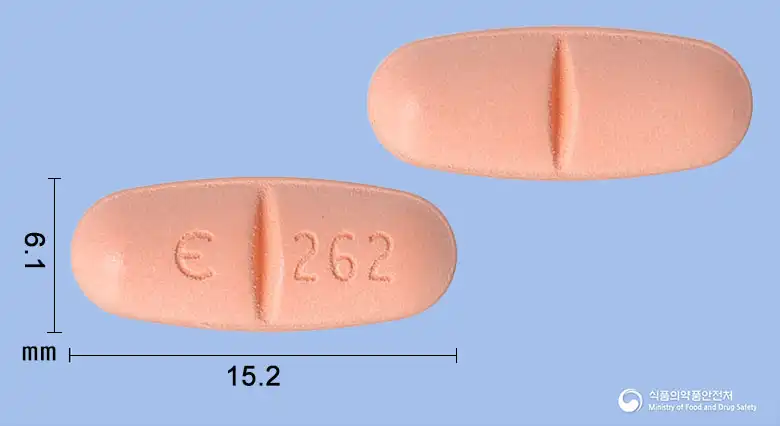
Rufinamide 200mg
Tablet · Prescription medication
Handok Co., Ltd.
Even with the same ingredient, the dose and directions can differ by strength and dosage form. Talk to a doctor or pharmacist before switching from a medication you are already taking.
No questions yet.
For anything that needs medical judgment, consult a doctor or pharmacist.
This drug information is based on data provided by the Korea Ministry of Food and Drug Safety.
Consult a doctor or pharmacist for accurate dosage, administration, and usage instructions.