
 한국어
 English
 日本語
 中文(简体)
 Viewing nowCombination
Tajinseobangjeong 10/5mg
Oxycodone Hydrochloride 10.5mg · Naloxone Hydrochloride Dihydrate 5.45mg
Tablet · Prescription medication · Combination
Korea Mundipharma Co., Ltd.
MFDS item code 200904275 · Approved 2009.06.18 · Insurance code 678000180
Relief of moderate to severe pain requiring opioid analgesics
This medication is used for the relief of pain ranging from moderate to severe.
Patients who have not previously taken opioid analgesics: The usual initial dose for these patients is 1 tablet of Targin prolonged-release tablets 10mg/5mg every 12 hours. Targin prolonged-release tablets 5mg/2.5mg are used to initiate opioid analgesic treatment or adjust the individual dose. In patients currently receiving opioid analgesics, treatment may be initiated at a higher dose depending on their previous opioid analgesic exposure. The maximum daily dose of this medicine is limited to 160mg/80mg (oxycodone hydrochloride 160mg + naloxone hydrochloride 80mg). The maximum daily dose may be used in patients with experience of being stably maintained on a daily dose of Targin prolonged-release tablets and who require a dose increase. For patients who require a higher dose, supplemental prolonged-release oxycodone at the same dosing intervals should be considered, taking into account that the maximum daily dose of prolonged-release oxycodone is 400mg. Oxycodone doses exceeding 40 mg per dose or 80 mg per day should be used only in patients tolerant to opioid analgesics, and sufficient caution should be exercised in such cases. Patients should be informed that use of oxycodone exceeding 40 mg per dose or 80 mg per day in patients who are not tolerant to opioid analgesics may cause serious adverse reactions, including death. The single dose of 'rescue medication' used to treat breakthrough pain should be approximately 1/6 of the daily oxycodone dose. If more than 2 doses of 'rescue medication' are needed per day, this generally indicates that the dose of this medicine needs to be increased. Adjust the dose every 1∼2 days using 5mg/2.5mg or 10mg/5mg (twice daily) until a stable dose is reached. This medicine is administered twice daily at a fixed dose and fixed dosing interval (every 12 hours). For most patients, symmetric dosing at fixed intervals (the same dose in the morning and evening) is appropriate, although asymmetric dosing may be beneficial for some patients depending on their pain pattern. In general, select the lowest dose that provides analgesia. For the treatment of non-cancer pain, a daily dose of oxycodone hydrochloride/naloxone hydrochloride up to 40/20mg (this medicine 20/10mg twice daily) is generally sufficient, but higher doses may be needed. This medicine is taken twice daily at the prescribed times and doses. As in adults, the dose in older adults should be adjusted according to pain intensity and patient sensitivity. Use caution when administering this medicine to patients with mild hepatic impairment. Do not administer this medicine to patients with moderate to severe hepatic impairment. Use caution when administering this medicine to patients with renal impairment.
Children under 18 years: The safety and efficacy of this medicine in children under 18 years have not been established; therefore, use of this medicine is not recommended in children under 18 years.
This medication is in an extended-release formulation that releases its effect slowly, and it should be swallowed whole without chewing or breaking it. If chewed or broken, the drug may be released too rapidly, potentially leading to severe side effects or fatal consequences from overdose. This medication is not suitable for treating withdrawal symptoms, and alternative treatment methods should be sought if withdrawal symptoms occur. There is a risk of respiratory depression with this medication, especially in patients with respiratory diseases, so caution is required. To prevent misuse of this medication, care should be taken to avoid abuse, and serious side effects may occur if taken with other sedatives or alcohol. Particularly when taken together with narcotics or benzodiazepines, deep sedation, respiratory depression, coma, or even death could occur, so consultation with a physician is essential. This medication should not be administered to patients with certain diseases or conditions, and should not be taken by women who are pregnant or breastfeeding. Patients with impaired respiratory function or significantly decreased liver or kidney function, as well as those with central nervous system issues, should be extremely cautious when using this medication. Long-term use may lead to tolerance, and abrupt cessation could trigger withdrawal symptoms, so it is necessary to gradually reduce the dosage as directed by a doctor. This medication can cause drowsiness or sudden sleep attacks, so activities such as driving or operating machinery should be avoided while taking it. Additionally, this medication may affect liver and kidney function, requiring dosage adjustment and close monitoring in patients with issues in these organs. During treatment with this medication, it is crucial to avoid taking it with alcohol or central nervous system depressants, and potential drug interactions should be considered. The safety and efficacy of this drug have not been established in children or adolescents under 18, so its use is not recommended in this population. In elderly patients, starting with a reduced dosage is safer, and careful observation is required due to a higher risk of respiratory depression. In cases of overdose, serious symptoms such as respiratory decline, coma, and hypotension may occur, requiring immediate medical attention. This medication must be taken according to the prescribed dosage and frequency, and dosing should not be altered or stopped arbitrarily.
Hypersensitivity, decreased appetite, insomnia, abnormal thoughts, anxiety, confusion, depression, decreased libido, irritability, restlessness, drug dependence, euphoria, hallucinations, nightmares, aggression, dizziness, headache, drowsiness, seizures, attention disorders, taste disorders, speech disorders, syncope, tremors, somnolence, sensory disorders, sedation, visual impairment, vertigo, angina, palpitations, tachycardia, facial flushing, blood pressure decrease, blood pressure increase, respiratory disorders, runny nose, cough, yawning, respiratory depression, central sleep apnea syndrome, abdominal pain, constipation, diarrhea, dry mouth, dyspepsia, vomiting, nausea, bloating, abdominal distension, belching, increased liver enzymes, biliary colic, itching, rash, sweating, muscle spasms, muscle cramps, myalgia, urgency to urinate, urinary retention, erectile dysfunction, weakness, fatigue, chest pain, chills, drug withdrawal syndrome, lethargy, pain, peripheral edema, thirst, weight loss, weight gain, injury from accidents, herpes simplex, anaphylactic reaction, dehydration, increased appetite, mood swings, personality disorder, decreased activity, hyperactivity, restlessness, perceptual disorders, impaired concentration, migraine, excessive muscle tension, involuntary muscle contractions, sensory decrease, sensory abnormalities, hyperalgesia, pupillary constriction, hearing impairment, vasodilation, dyspnea, hiccups, dysphagia, bowel obstruction, gastritis, bloody stools, gingival bleeding, cavities, biliary stasis, dysfunction of the Oddi sphincter, dry skin, urticaria, dysuria, hypogonadism, amenorrhea, edema, drug tolerance, neonatal drug withdrawal syndrome, accidental injury, chest pain, facial edema, discomfort, throat pain, allergic reaction, miosis, tolerance, migraine, syncope, ST depression, supraventricular tachycardia, dysphagia, abdominal distension, appetite stimulation, biliary pain, lymph node disorders, dehydration, edema, hyponatremia, peripheral edema, inappropriate antidiuretic hormone secretion syndrome, thirst, abnormal gait, excitement, forgetfulness, depersonalization, depression, emotional instability, hyperactivity, seizures, stupor, tinnitus, withdrawal symptoms with or without seizures, tension, involuntary muscle contractions, voice changes, snowfall, amenorrhea, decreased libido, urination disorders, hematuria, polyuria, urinary retention, urination disorders
Not everyone experiences these, and they can vary from person to person.
This medication is sensitive to light, so it should be stored in a dark container that prevents light exposure. Additionally, it is important to store it in a cool place below 25 degrees Celsius to maintain its effectiveness.
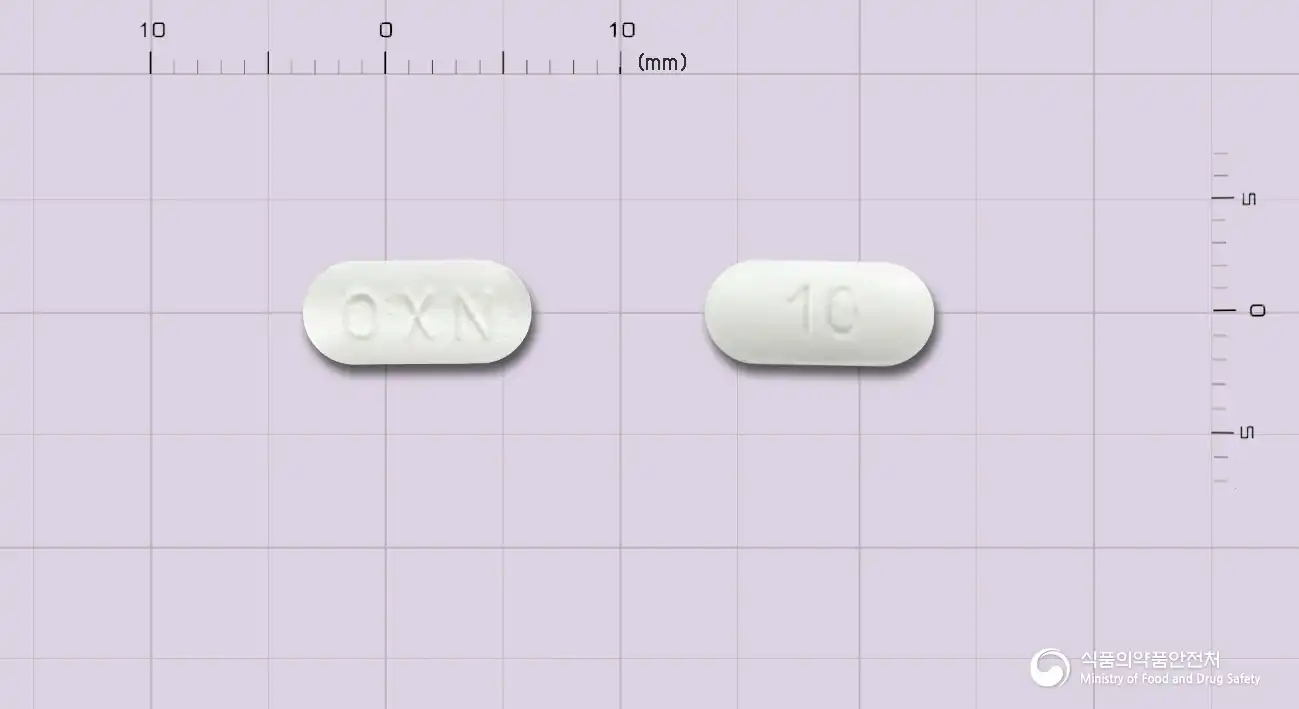
White, biconvex, rectangular film-coated extended-release tablet
56 tablets (14 tablets/PTP packaging x 4)
Even with the same ingredient, strength, dosage form and how it is taken can differ.
Viewing nowCombinationOxycodone Hydrochloride 10.5mg · Naloxone Hydrochloride Dihydrate 5.45mg
Tablet · Prescription medication · Combination
Korea Mundipharma Co., Ltd.
 Combination
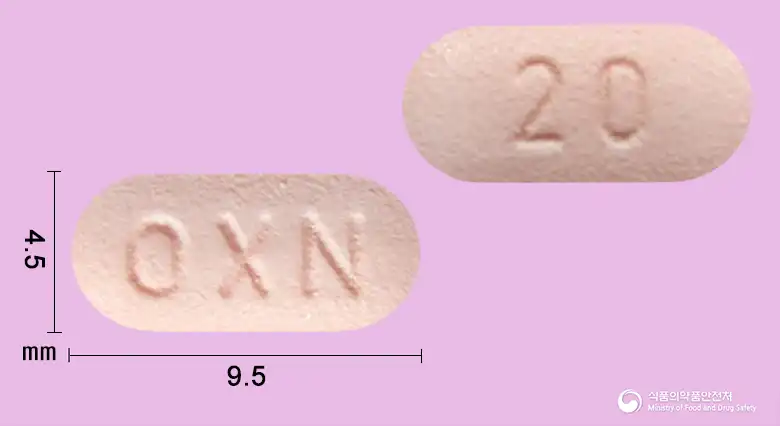
Oxycodone Hydrochloride 21mg · Naloxone Hydrochloride Dihydrate 10.9mg
Tablet · Prescription medication · Combination
Hansung Mundipharma Co., Ltd.
 Combination
Oxycodone Hydrochloride 5.25mg · Naloxone Hydrochloride Dihydrate 2.73mg
Tablet · Prescription medication · Combination
Korea Mundipharma Co., Ltd.
 Combination
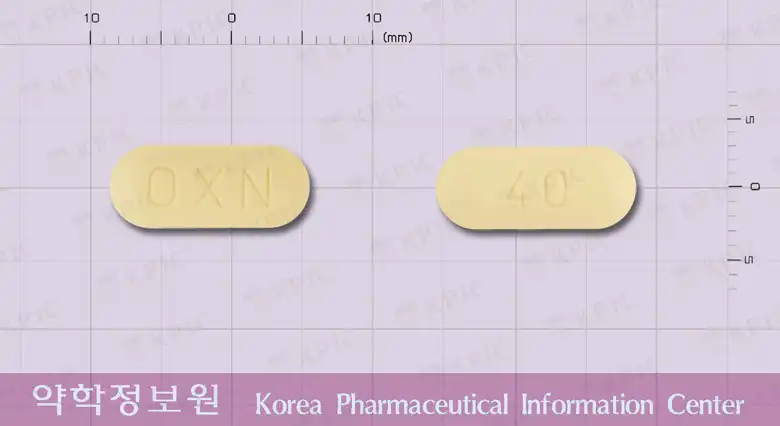
Oxycodone Hydrochloride 42mg · Naloxone Hydrochloride Dihydrate 21.8mg
Tablet · Prescription medication · Combination
Korea Mundi Pharma Co., Ltd.
 Combination
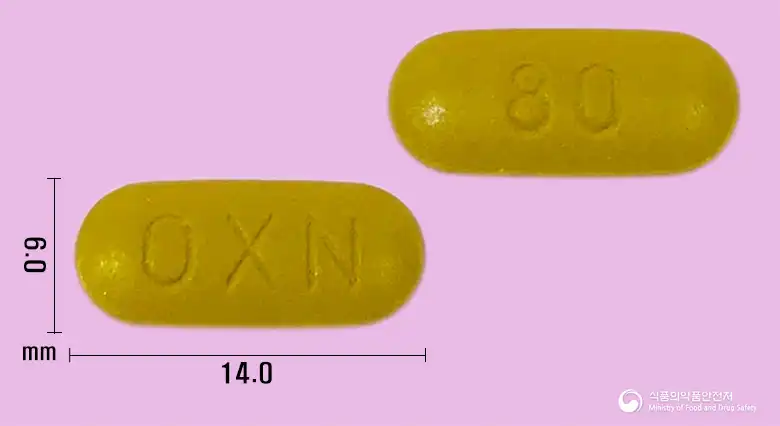
Oxycodone Hydrochloride 84mg · Naloxone Hydrochloride Dihydrate 43.6mg
Tablet · Prescription medication · Combination
Korea Mundi Pharma Co., Ltd.
Even with the same ingredient, the dose and directions can differ by strength and dosage form. Talk to a doctor or pharmacist before switching from a medication you are already taking.
No questions yet.
For anything that needs medical judgment, consult a doctor or pharmacist.
This drug information is based on data provided by the Korea Ministry of Food and Drug Safety.
Consult a doctor or pharmacist for accurate dosage, administration, and usage instructions.