한국어
 English
 日本語
 中文(简体)
 Viewing now
Volibris Tablets 5 mg (Ambrisentan)
Ambrisentan 5mg
Tablet · Prescription medication
GlaxoSmithKline Co., Ltd.
MFDS item code 200902796 · Approved 2009.04.20 · Insurance code 650002310
Delays clinical worsening and improves exercise capacity in patients with pulmonary arterial hypertension
This medication helps improve exercise capacity and delays the clinical worsening of patients with pulmonary arterial hypertension classified as WHO functional classes II and III. It supports patients in maintaining better activity levels and quality of life in daily life. This drug is used effectively to improve the symptoms of pulmonary arterial hypertension.
Treatment should be initiated and monitored by a physician experienced in treating patients with pulmonary arterial hypertension. The dose should be appropriately adjusted according to the patient's symptoms, tolerability, etc. The initial dose is 5mg once daily, with or without food. If 5mg is tolerated, an increase to 10mg once daily may be considered. This medication may be taken with or without food. Do not split, crush, or chew this medication. Exposure to this medication may increase in patients with hepatic impairment. This medication should not be administered to patients with severe hepatic impairment or to patients whose hepatic aminotransferases (ALT, AST) exceed 3 times the upper limit of normal. No dose adjustment is required in patients with mild or moderate renal impairment. There is no clinical experience with administration of this medication to patients with severe renal impairment. No dose adjustment is required in patients aged 65 years and older. There are insufficient clinical data to establish that discontinuation of the medication will not result in adverse reactions or worsening of pulmonary arterial hypertension.
Children and adolescents under 18 years of age: Use is not recommended because safety and efficacy have not been established.
This medication can pose a risk of serious congenital defects to the fetus if taken during pregnancy; therefore, women who could become pregnant must confirm their pregnancy status before taking this medication. Women with potential for pregnancy should use a reliable contraceptive method during treatment and for at least 1 month after discontinuation of this medication, and it is important to undergo monthly pregnancy tests. This drug should not be administered to pregnant women, nursing mothers, patients with severe liver impairment, those with significantly elevated liver enzyme levels, patients with known allergies to this medication or any of its components, patients with certain genetic metabolic disorders, those allergic to soybean oil or peanuts, and patients with certain lung diseases. Caution is required when using this medication in patients with liver impairment, renal impairment, anemia, the elderly, etc., and particularly, liver function and blood status should be monitored regularly. This medication may commonly cause side effects such as headache, dizziness, hypotension, peripheral edema, fluid retention, dyspnea, and liver damage; if any abnormal symptoms occur, immediate consultation with a physician is necessary. If liver function abnormalities are detected, dose adjustment or discontinuation of use may be necessary, especially if there is a significant increase in liver enzymes. This medication can cause fluid retention, thus patients with existing fluid overload must manage their condition well before administration, and if fluid retention is severe, appropriate measures are needed. Due to the risk of pulmonary venous occlusion, treatment should be discontinued immediately if acute pulmonary edema symptoms occur. No dose adjustment is needed in patients with mild or moderate renal impairment; however, safety in severe renal impairment patients is not known, requiring caution. This medication is not suitable for patients with idiopathic pulmonary fibrosis as it may increase the risk of respiratory-related hospitalization and death. This drug may affect driving or operating machinery, therefore caution is needed during treatment. This drug may interact with certain medications; if taking other medications, consult a physician or pharmacist without fail. The safety and efficacy of this drug have not been established in children and adolescents, thus its use is not recommended. In the elderly, peripheral edema could be more common and severe, necessitating caution. Overdosage may lead to hypotension, requiring immediate medical attention; there is no specific antidote. Store this drug out of reach of children and do not transfer it to other containers.
Not everyone experiences these, and they can vary from person to person.
This medication must be stored in a tightly closed container to avoid exposure to air or moisture, and it is important to maintain a storage temperature between 1 and 30 degrees Celsius. Doing so will help preserve the drug's effectiveness for a longer period.
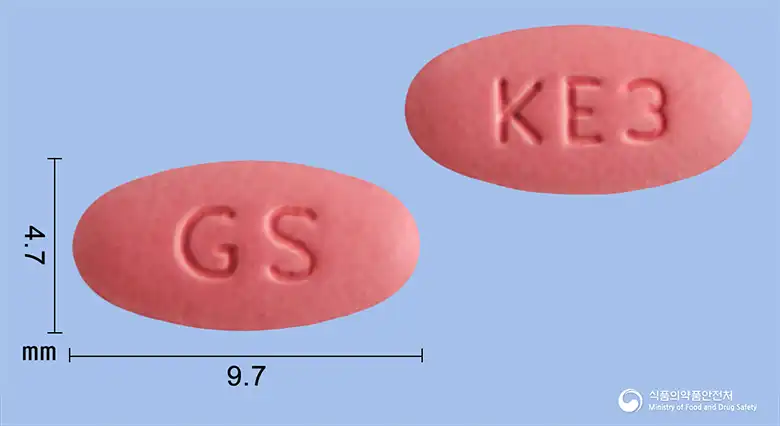
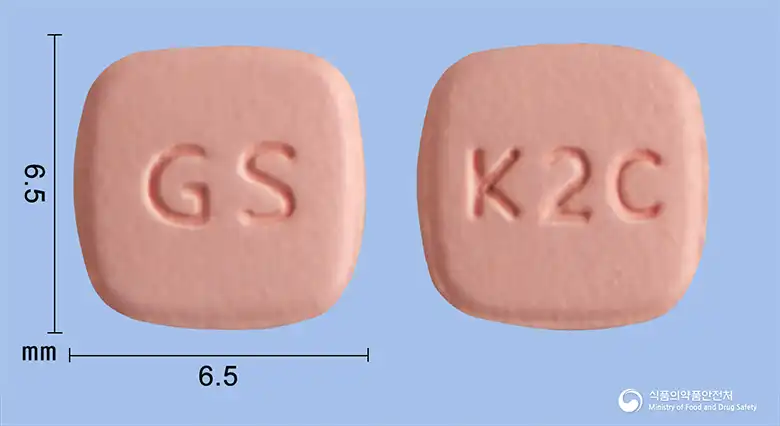
Pale pink, convex square tablets
30 tablets (10 tablets/PTP X 3)
Even with the same ingredient, strength, dosage form and how it is taken can differ.
Even with the same ingredient, the dose and directions can differ by strength and dosage form. Talk to a doctor or pharmacist before switching from a medication you are already taking.
No questions yet.
For anything that needs medical judgment, consult a doctor or pharmacist.
This drug information is based on data provided by the Korea Ministry of Food and Drug Safety.
Consult a doctor or pharmacist for accurate dosage, administration, and usage instructions.