
 한국어
 English
 日本語
 中文(简体)
Summary
- Main use
- Treatment of mild to moderate type 1 Gaucher disease unsuitable for enzyme replacement therapy, and Niemann-Pick disease type C
- Who takes it
- Adults · Children
- Adult dose
- This medicine may be taken without regard to meals. Treatment of type 1 Gaucher disease The recommended initial dose for adult patients is 1 capsule (100mg) orally 3 times daily. In patients who experience diarrhea, the dosing frequency may be temporarily reduced, as needed, to 1 capsule once or twice daily. Treatment of Niemann-Pick disease type C The recommended dose for adults and adolescents is 2 capsules (200mg) per dose, orally 3 times daily. Temporary dose reduction may be necessary in the event of diarrhea. Patients with renal impairment: Pharmacokinetic data show that systemic exposure to this medicine increases when it is administered to patients with renal impairment. For an adjusted creatinine clearance of 50–70 ml/min/1.73 m2, administer 100mg twice daily to patients with type 1 Gaucher disease and 200mg twice daily to patients with Niemann-Pick disease type C. For an adjusted creatinine clearance of 30-50 ml/min/1.73 m2, administer 100mg once daily to patients with type 1 Gaucher disease and 100mg twice daily to patients with Niemann-Pick disease type C. Administration is not recommended in patients with severe renal impairment and a creatinine clearance of less than 30 ml/min/1.73 m2. Patients with hepatic impairment: There is currently insufficient clinical experience to provide a recommended dose.
- Child dose
- There are no study results for this medicine in patients under 18 years of age or over 70 years of age. Administration to children or adolescents is not recommended. For patients 12 years of age or younger, the doses corresponding to the body surface area values below are recommended. > 1.25 200mg 3 times daily > 0.88-1.25 200mg twice daily > 0.73-0.88 100mg 3 times daily > 0.47-0.73 100mg twice daily ≤ 0.47 100mg once daily There are limited study results in patients 4 years of age or younger. For an adjusted creatinine clearance of 50–70 ml/min/1.73 m2, administer 200mg (the initial dose adjusted according to body surface area for patients 12 years of age or younger) twice daily to patients with Niemann-Pick disease type C. For an adjusted creatinine clearance of 30-50 ml/min/1.73 m2, administer 100mg (the initial dose adjusted according to body surface area for patients 12 years of age or younger) twice daily to patients with Niemann-Pick disease type C.
Ingredients
- Importer
- Janssen Korea Ltd.
Efficacy & effects
Treatment of mild to moderate type 1 Gaucher disease unsuitable for enzyme replacement therapy, and Niemann-Pick disease type C
- Type 1 Gaucher disease
- type C disease
- Niemann-Pick disease
View approved original textHide original text
This medication is used for patients with mild to moderate type 1 Gaucher disease for whom enzyme replacement therapy is not suitable. It is also applicable for treating patients with type C Niemann-Pick disease. Therefore, it is a drug that helps alleviate and treat the symptoms of Gaucher disease and Niemann-Pick disease.
How to take
Adult dose
This medicine may be taken without regard to meals. Treatment of type 1 Gaucher disease The recommended initial dose for adult patients is 1 capsule (100mg) orally 3 times daily. In patients who experience diarrhea, the dosing frequency may be temporarily reduced, as needed, to 1 capsule once or twice daily. Treatment of Niemann-Pick disease type C The recommended dose for adults and adolescents is 2 capsules (200mg) per dose, orally 3 times daily. Temporary dose reduction may be necessary in the event of diarrhea. Patients with renal impairment: Pharmacokinetic data show that systemic exposure to this medicine increases when it is administered to patients with renal impairment. For an adjusted creatinine clearance of 50–70 ml/min/1.73 m2, administer 100mg twice daily to patients with type 1 Gaucher disease and 200mg twice daily to patients with Niemann-Pick disease type C. For an adjusted creatinine clearance of 30-50 ml/min/1.73 m2, administer 100mg once daily to patients with type 1 Gaucher disease and 100mg twice daily to patients with Niemann-Pick disease type C. Administration is not recommended in patients with severe renal impairment and a creatinine clearance of less than 30 ml/min/1.73 m2. Patients with hepatic impairment: There is currently insufficient clinical experience to provide a recommended dose.
Child dose
There are no study results for this medicine in patients under 18 years of age or over 70 years of age. Administration to children or adolescents is not recommended. For patients 12 years of age or younger, the doses corresponding to the body surface area values below are recommended. > 1.25 200mg 3 times daily > 0.88-1.25 200mg twice daily > 0.73-0.88 100mg 3 times daily > 0.47-0.73 100mg twice daily ≤ 0.47 100mg once daily There are limited study results in patients 4 years of age or younger. For an adjusted creatinine clearance of 50–70 ml/min/1.73 m2, administer 200mg (the initial dose adjusted according to body surface area for patients 12 years of age or younger) twice daily to patients with Niemann-Pick disease type C. For an adjusted creatinine clearance of 30-50 ml/min/1.73 m2, administer 100mg (the initial dose adjusted according to body surface area for patients 12 years of age or younger) twice daily to patients with Niemann-Pick disease type C.
Precautions
This drug may cause peripheral neuropathy regardless of vitamin B12 deficiency, so it is important to undergo neurological testing every six months from the start of treatment. Patients allergic to the main ingredient or excipients of this drug should not use it. Gastrointestinal disturbances such as diarrhea, abdominal pain, and weight loss may occur during treatment, and neurological symptoms such as tremors and headaches are also frequently reported. Patients using this drug for the first time may take time to see effects, and there is no evidence that it is safer or more effective compared to the existing treatments. If tremor symptoms occur during treatment, careful observation is necessary as dose adjustment or discontinuation may be required. Regularly checking blood levels is recommended, as vitamin B12 deficiency is common. In cases of severe gastrointestinal symptoms, dietary adjustments or the use of antidiarrheals may help alleviate symptoms, and in severe cases further testing may be needed. Weight loss is common during treatment, so periodic monitoring of weight changes is necessary. Male patients should use a reliable method of contraception during and for three months after discontinuing this drug. Patients with impaired renal or hepatic function need to be cautious when taking this drug, and dose adjustment may be required. There is limited experience with this drug in pediatric and adolescent patients, so discretion is advised, and it is not recommended for children under 4 years. Women who are pregnant or may become pregnant should not use this drug, and it should not be used during breastfeeding. There may be dizziness when driving or operating machinery, so caution is advised. This drug should be kept out of reach of children and should not be stored at temperatures above 30 degrees Celsius.
Side effects
- peripheral neuropathy
- diarrhea
- gastrointestinal disorders
- weight loss
- thrombocytopenia
- decreased appetite
- tremors
- headache
- dizziness
- sensory abnormalities
Show 37 moreCollapse
- sensory loss
- amnesia
- intestinal air retention
- abdominal pain
- nausea
- abdominal distension
- abdominal discomfort
- constipation
- dyspepsia
- gastrointestinal pain
- vomiting
- muscle cramps
- muscle weakness
- fatigue
- asthenia
- insomnia
- tremor
- worsened tremor
- nuclear-type paralysis
- gait abnormalities
- stuttering
- muscle tone abnormalities
- hyperreflexia
- spasmodic gait
- ataxia
- extrapyramidal disorders
- nausea
- dysphagia
- nerve conduction abnormalities
- drowsiness
- nasopharyngitis
- insomnia
- stupor
- pharyngitis
- cough
- airway infection
- sinusitis
Not everyone experiences these, and they can vary from person to person.
Storage
This drug may be sensitive to air or moisture, so it should be stored in a tightly sealed container. Additionally, it should be stored at room temperature between 1 degree and 30 degrees Celsius. Storing it this way will help maintain the drug's effectiveness over time.
Appearance and packaging
Appearance
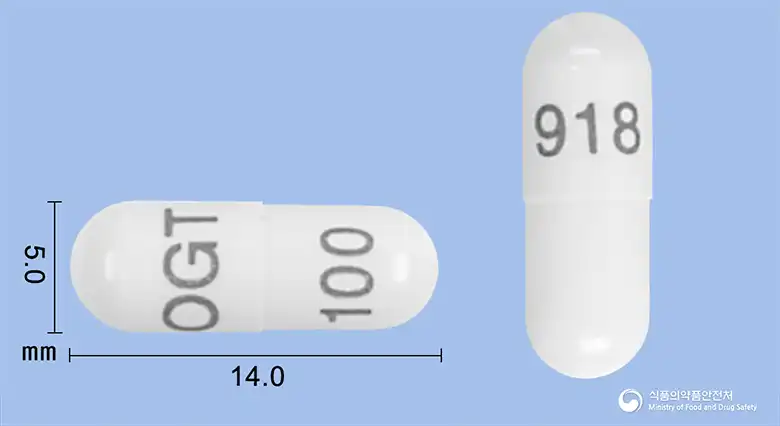
A hard capsule with a white to off-white powder inside, consisting of a white upper and lower capsule.
Package unit
84 capsules (21 capsules/PTP packaging x4)
Questions about this medicine
No questions yet.
For anything that needs medical judgment, consult a doctor or pharmacist.