
 한국어
 English
 日本語
 中文(简体)
 Viewing now
Tasigna Capsule 200 mg (Nilotinib hydrochloride monohydrate)
Nilotinib Hydrochrloride Monohydrate 220.6mg
Hard capsule · Prescription medication
Korea Novartis Co., Ltd.
MFDS item code 200711797 · Approved 2007.10.26 · Insurance code 653601100
Treatment of Philadelphia chromosome-positive chronic myeloid leukemia in adults and children
This medication is used for the treatment of patients with Philadelphia chromosome positive chronic myeloid leukemia (Ph+CML). It is effective for newly diagnosed adult chronic phase patients and pediatric patients aged 2 years and older, and is also applicable for chronic or accelerated phase patients who do not respond to imatinib treatment or are intolerant. The efficacy has been demonstrated based on major molecular, cytogenetic, and hematological response rates. This improves leukemia symptoms and enhances patient health status.
Treatment of adult patients with newly diagnosed chronic-phase Philadelphia chromosome-positive chronic myeloid leukemia (Ph+CML): 300mg twice daily Treatment of adult patients with chronic- or accelerated-phase Philadelphia chromosome-positive chronic myeloid leukemia (Ph+CML) who are resistant or intolerant to prior therapy including imatinib: 400mg twice daily This medication should be taken approximately 12 hours apart and must not be taken with food. Do not eat for at least 2 hours before taking this medication and until at least 1 hour after taking it. Swallow the capsules whole with water. For patients who have difficulty swallowing the capsules, open the capsules, sprinkle the contents onto 1 teaspoon of applesauce (puréed apple), and take immediately. Do not use more than 1 teaspoon of applesauce or any food other than applesauce (puréed apple). QTc interval >480 msec 1. Interrupt treatment with this medication and measure serum potassium and magnesium levels. If either is below the lower limit of normal, correct it to within the normal range. Monitor concomitant medications. 2. If the measured QTcF is less than 450 msec and returns to within 20 msec of baseline, resume the previous dose within 2 weeks. 3. If, after 2 weeks, the QTcF remains between 450 msec and 480 msec, consider reducing the dose to 400mg once daily in adult patients. 4. If the measured QTcF exceeds 480 msec even after dose reduction, discontinue this medication. 5. If the dose is adjusted, repeat ECG 7 days after the adjustment. Adult patients: ANC <1 × 10⁹/L and/or platelet count <50 × 109/L 1. Interrupt treatment with this medication and monitor blood cell counts. 2. If ANC >1 × 10⁹/L and/or platelet count >50 × 109/L is recovered within 2 weeks, resume treatment at the previous dose. 3. If blood cell counts remain low, consider reducing the dose to 400mg once daily. If clinically significant moderate or severe non-hematologic toxicity occurs, interrupt treatment with this medication and appropriately monitor and treat the patients. Newly diagnosed adult patients with CML-CP whose previous dose was 300mg twice daily, and adult patients with resistant or intolerant CML-CP and CML-AP whose previous dose was 400mg twice daily, may restart treatment at 400mg once daily after these toxicities resolve. Adult patients whose previous dose was 400mg once daily should discontinue treatment. If considered clinically appropriate, attempt to re-escalate to the recommended dose (300mg twice daily for adult patients with newly diagnosed chronic-phase Ph+CML; 400mg twice daily for adult patients with chronic- or accelerated-phase Ph+CML who are resistant or intolerant to treatment). If serum lipase levels increase to Grade 3-4, adult patients should consider dose reduction to 400mg once daily or interruption of treatment. Serum lipase levels should be tested every 1 month or when clinically indicated. If bilirubin levels increase to Grade 3-4 in adult patients, consider dose reduction to 400mg once daily or interruption of treatment. Bilirubin and liver transaminase levels should be tested every 1 month or when clinically indicated. If a dose of this medication is missed, do not take an additional dose; take the next dose as usual. No dose adjustment is required in patients with renal impairment. Newly diagnosed chronic-phase Ph+CML - 300mg twice daily Mild, moderate, severe Administer an initial dose of 200mg twice daily and consider increasing the dose to 300mg twice daily depending on the patient's tolerability. Chronic- or accelerated-phase Ph+CML with resistance or intolerance - 400mg twice daily Mild, moderate Administer an initial dose of 300mg twice daily and consider increasing the dose to 400mg twice daily depending on the patient's tolerability. Severe Administer an initial dose of 200mg twice daily and, depending on the patient's tolerability, consider sequentially increasing the dose to 300mg twice daily and then to 400mg twice daily.
Treatment of pediatric patients aged 2 years and older with newly diagnosed Philadelphia chromosome-positive chronic myeloid leukemia (Ph+CML) in the chronic phase, and pediatric patients with Philadelphia chromosome-positive chronic myeloid leukemia (Ph+CML) in the chronic phase who are resistant or intolerant to prior therapy including imatinib: The dose for pediatric patients is calculated individually based on body surface area (BSA, mg/m2). The recommended dose of this medicine is 230 mg/m2 twice daily, rounded to the nearest multiple of 50mg as shown in <Table 1> (maximum dose per administration: 400mg). ≤0.32 m2 : 50 mg per administration (twice daily) 0.33 – 0.54 m2 : 100 mg per administration (twice daily) 0.55 – 0.76 m2 : 150 mg per administration (twice daily) 0.77 – 0.97 m2 : 200 mg per administration (twice daily) 0.98 – 1.19 m2 : 250 mg per administration (twice daily) 1.20 – 1.41 m2 : 300 mg per administration (twice daily) 1.42 – 1.63 m2 : 350 mg per administration (twice daily) ≥1.64 m2 : 400 mg per administration (twice daily) Data in pediatric patients younger than 6 years are limited. QTc interval >480 msec 3. If QTcF remains between 450 msec and 480 msec after 2 weeks, dose reduction to 230 mg/m2 once daily should be considered in pediatric patients. Pediatric patients: ANC <1 × 10⁹/L and/or platelet count <50 × 109/L 1. Interrupt treatment with this medicine and monitor blood counts. 2. If recovery to ANC >1.5 × 10⁹/L and/or platelet count >75 × 109/L occurs within 2 weeks, resume treatment at the previous dose. 3. If blood counts remain low, dose reduction to 230mg/m2 once daily should be considered. 4. If neutrophil and platelet counts remain low despite dose reduction, discontinuation of this medicine should be considered. Pediatric patients whose previous dose was 230mg/m2 twice daily may resume treatment at 230mg/m2 once daily after these toxicities resolve. Pediatric patients whose previous dose was 230mg/m2 once daily should discontinue treatment. If considered clinically appropriate, attempt to re-escalate to the recommended dose (for pediatric patients, 230mg/m2 twice daily). In pediatric patients, interrupt treatment until serum lipase levels recover to Grade 1 or lower. Thereafter, pediatric patients whose previous dose was 230mg/m2 twice daily may resume treatment at 230mg/m2 once daily, while pediatric patients whose previous dose was 230mg/m2 once daily should discontinue treatment. In pediatric patients with Grade 2 or higher elevations in bilirubin levels or Grade 3 or higher elevations in liver transaminases, interrupt treatment until the levels recover to Grade 1 or lower. Thereafter, pediatric patients whose previous dose was 230mg/m2 twice daily may resume treatment at 230mg/m2 once daily, while pediatric patients whose previous dose was 230mg/m2 once daily should discontinue this medicine until recovery to Grade 1 or lower has been maintained for at least 28 days.
This medication should not be administered to patients with allergies to the active ingredient or other components. Since this medication contains lactose, patients with genetic diseases such as galactose intolerance, lactase deficiency, or glucose-galactose malabsorption should not use it. Special care should be taken when administering this medication to patients with hypokalemia, hypomagnesemia, or QT interval prolongation syndrome. Patients with cardiac problems or prolonged QT interval should undergo an ECG before taking this medication and should regularly monitor their cardiac status during treatment. This medication can increase drug concentrations in patients with certain liver diseases, thus patients with poor liver function require dosage adjustment and frequent monitoring. Patients with a history of pancreatitis should pay attention to elevated serum lipase levels and abdominal symptoms, and should discontinue the medication if necessary. For patients who have undergone gastrectomy, the absorption of this medication may be reduced, thereby requiring closer observation. There is a potential for tumor lysis syndrome, so dehydration or hyperuricemia should be treated before administration, and symptoms should be monitored closely during treatment. Blood glucose and lipid levels should be evaluated before and during treatment, and appropriate treatment should be received if abnormalities are found. Cardiovascular events may occur, so patients should immediately inform healthcare professionals if related symptoms appear, and cardiovascular status should be regularly evaluated during treatment. If symptoms of fluid retention occur, the cause should be rapidly evaluated and appropriate treatment should be initiated. Patients who are carriers of the hepatitis B virus require testing before treatment and regular monitoring during treatment, and should consult specialists in cases of reactivation. During pregnancy, it may be harmful to the fetus, so administration during pregnancy should be avoided, or specialists should be consulted if necessary. It is advisable not to take this medication while breastfeeding, and breastfeeding should be avoided for 2 weeks after taking this medication and the last dose. Women of childbearing potential should use effective contraceptive methods during the treatment period and for 2 weeks following the last dose. In pediatric patients, growth retardation has been reported, so growth and development should be closely monitored during treatment. In case of overdose, the patient should be closely observed and appropriate supportive treatment should be conducted. If the capsule is damaged, inhalation of powder or contact with skin and mucous membranes should be avoided, and immediate washing should be done in case of contact. This medication should be stored in its original container at temperatures between 1 to 30 degrees Celsius, protected from air and moisture, and kept out of reach of children. This medication is metabolized in the liver, so caution is necessary in patients with impaired liver function, and drug interactions may occur, thus healthcare professionals should be consulted before administration. Co-administration with certain foods or other medications (especially CYP3A4 inhibitors and QT prolonging drugs) should be avoided, and caution is required during use. Dizziness and nausea may occur when driving or operating machinery, so caution should be exercised.
Not everyone experiences these, and they can vary from person to person.
This medication should be stored in a tightly sealed container to prevent the effects of air and moisture. Additionally, it is recommended to keep it at room temperature between 1 to 30 degrees Celsius, not in extremely hot or cold places.
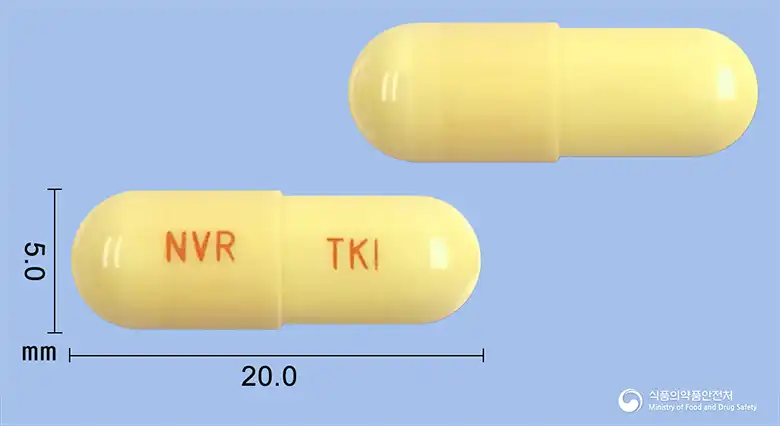
An opaque hard capsule with a light yellow upper and lower part containing white or yellowish powder
40 capsules (8 capsules/ PTB package x 5)
Even with the same ingredient, strength, dosage form and how it is taken can differ.
Viewing nowNilotinib Hydrochrloride Monohydrate 220.6mg
Hard capsule · Prescription medication
Korea Novartis Co., Ltd.
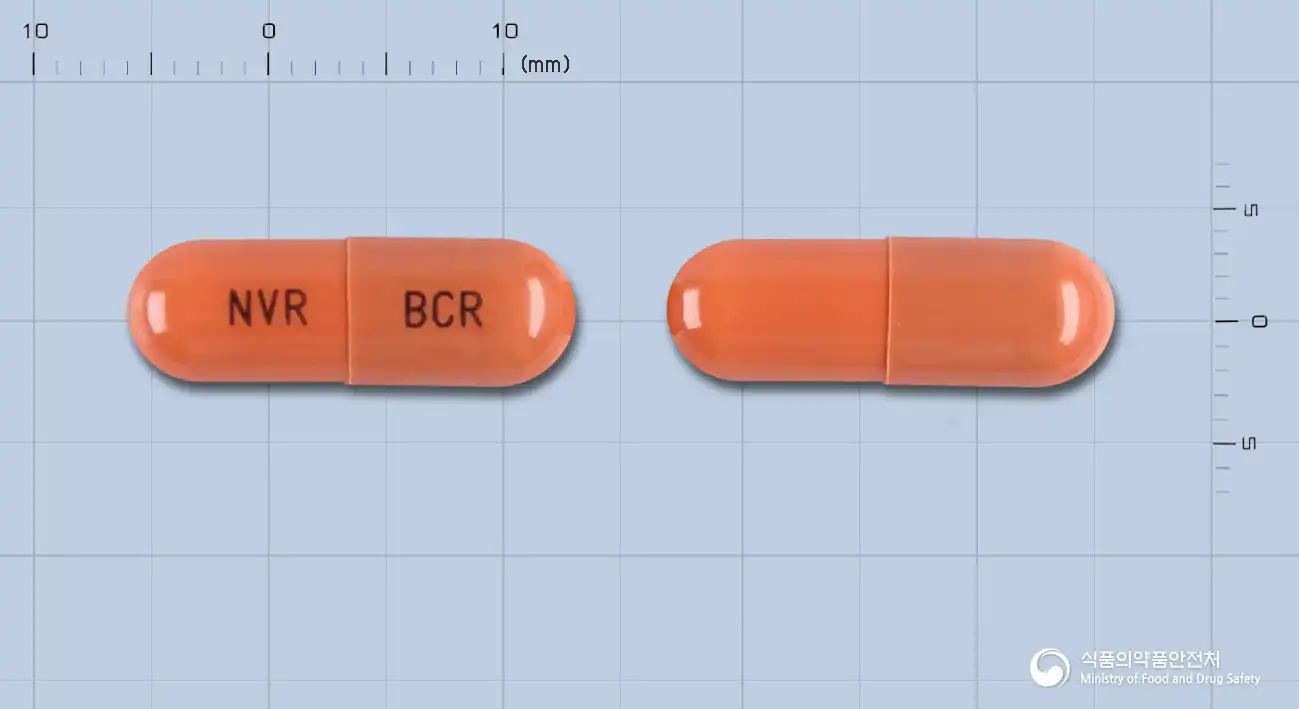
Nilotinib Hydrochrloride Monohydrate 165.45mg
Hard capsule · Prescription medication
Novartis Korea Co., Ltd.
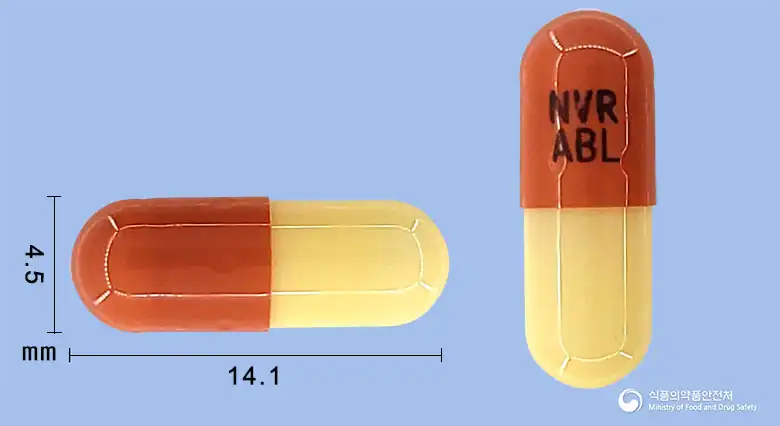
Nilotinib Hydrochrloride Monohydrate 55.15mg
Hard capsule · Prescription medication
Korea Novartis Co., Ltd.
Even with the same ingredient, the dose and directions can differ by strength and dosage form. Talk to a doctor or pharmacist before switching from a medication you are already taking.
No questions yet.
For anything that needs medical judgment, consult a doctor or pharmacist.
This drug information is based on data provided by the Korea Ministry of Food and Drug Safety.
Consult a doctor or pharmacist for accurate dosage, administration, and usage instructions.