
 한국어
 English
 日本語
 中文(简体)
 Viewing now
Sprycel 20 mg Tablet (Dasatinib)
Dasatinib 20mg
Tablet · Prescription medication
Korea BMS Pharmaceutical Co., Ltd.
MFDS item code 200701087 · Approved 2007.01.25 · Insurance code 658700210
Treatment of Ph+ chronic myeloid leukemia and Ph+ acute lymphoblastic leukemia
This medication is used for patients with Philadelphia chromosome-positive chronic myeloid leukemia (Ph+ CML) and acute lymphoblastic leukemia (Ph+ ALL). It is particularly effective in newly diagnosed adults and pediatric patients aged 1 year and older. It can also be applied to patients in chronic, accelerated, myeloid, and lymphoid blast phases who exhibit resistance or intolerance to prior treatments. In addition, it is used in combination with chemotherapy for pediatric patients with acute lymphoblastic leukemia. This drug contributes to the treatment of Philadelphia chromosome-positive leukemia across various stages and age groups, improving disease progression and symptoms.
1. Recommended Dosage for Adults The recommended starting dose of this drug for chronic-phase chronic myeloid leukemia is 100 mg orally once daily. The recommended starting dose of this drug for accelerated-phase or myeloid or lymphoid blast-phase chronic myeloid leukemia, or Philadelphia chromosome-positive acute lymphoblastic leukemia (Ph+ ALL), is 140 mg orally once daily. 3. Dose Modifications 1) Concomitant use with strong CYP3A4 inducers: If a patient must receive a strong CYP3A4 inducer concomitantly, an increase in the dose of this drug should be considered based on pharmacokinetic studies. If the dose of this drug is increased, the patient should be monitored closely for toxicity. 2) Concomitant use with strong CYP3A4 inhibitors: If this drug must be administered concomitantly with a strong CYP3A4 inhibitor, dose reduction should be considered as follows. ㆍ Patients receiving this drug at 140mg once daily: 40mg once daily ㆍ Patients receiving this drug at 100mg once daily: 20mg once daily ㆍ Patients receiving this drug at 70mg once daily: 20mg once daily For patients receiving this drug at 60mg or 40mg once daily, discontinuation of this drug should be considered until the CYP3A4 inhibitor is discontinued. 4. Dose Escalation In clinical studies in adult patients with chronic myeloid leukemia (CML) and Philadelphia chromosome-positive acute lymphoblastic leukemia (Ph+ ALL), dose escalation up to 140mg once daily (for patients with chronic-phase chronic myeloid leukemia) or 180mg once daily (for patients with accelerated-phase or blast-phase chronic myeloid leukemia and patients with Philadelphia chromosome-positive acute lymphoblastic leukemia) was permitted for patients who did not achieve a hematologic or cytogenetic response at the recommended starting dose. 5. Dose Adjustments for Adverse Reactions 1) Myelosuppression Table 3. Dose adjustments for neutropenia and thrombocytopenia in adults Chronic-phase chronic myeloid leukemia (chronic phase CML): Start treatment at a dose of 100mg once daily Absolute neutrophil count below 0.5 x 10⁹/L or platelet count below 50 x 109/L ∙ Interrupt treatment with this drug until the absolute neutrophil count is at least 1.0 x 10⁹/L and the platelet count is at least 50 x 109/L ∙ If recovery occurs within 7 days or less, resume treatment with this drug at the starting dose ∙ If a platelet count below 25 x 109/L or an absolute neutrophil count below 0.5 x 10⁹/L for more than 7 days recurs, repeat step 1; at the second recurrence, resume treatment at a reduced dose of 80mg once daily. At the third recurrence, further reduce the dose to 50mg once daily in newly diagnosed patients, and discontinue this drug in patients resistant or intolerant to prior therapy, including imatinib. Accelerated-phase or blast-phase chronic myeloid leukemia and Philadelphia chromosome-positive acute lymphoblastic leukemia: Start treatment at a dose of 140mg once daily Absolute neutrophil count below 0.5 x 10⁹/L or platelet count below 10 x 109/L ∙ Determine whether the cytopenia is related to leukemia (by bone marrow aspiration or biopsy). ∙ If the cytopenia is not related to leukemia, interrupt treatment with this drug until the absolute neutrophil count is at least 1.0 x 10⁹/L and the platelet count is at least 20 x 109/L, then resume treatment at the starting dose. ∙ If the cytopenia recurs, repeat step 1; at the second recurrence, resume treatment with this drug at a reduced dose of 100 mg once daily, and at the third recurrence, at a reduced dose of 80mg once daily. ∙ If the cytopenia is related to leukemia, increase the dose to 180mg once daily. 2) Nonhematologic adverse reactions In adult patients with Ph+ CML and ALL, if a serious nonhematologic adverse reaction occurs with this drug, treatment should be withheld until the reaction resolves or improves. Thereafter, when appropriate, treatment may be resumed at a reduced dose according to the signs and symptoms of the reaction and whether it recurs. 6. Duration of Treatment In clinical studies, treatment with this drug in adults and pediatric patients with chronic-phase CML was continued until disease progression or intolerance occurred.
2. Recommended Dosage for Pediatric Patients The recommended initial dosage in pediatric patients is based on body weight, as shown in Table 1. This drug is administered orally 1 time daily, with or without food. The dosage should be recalculated every 3 months, or more frequently if needed, based on changes in body weight. The recommended initial daily dosage of this drug for pediatric patients is shown in Table 1. Table 1. Dosage for Pediatric Patients Body weight ≥10 kg and <20 kg: 40mg Body weight ≥20 kg and <30 kg: 60mg Body weight ≥30 kg and <45 kg: 70mg Body weight ≥45 kg: 100mg * Not recommended for patients weighing less than 10kg. ** In pediatric patients with Ph+ ALL, treatment with this drug should be initiated on or before Day 15 of induction chemotherapy. 4. Dose Escalation For pediatric patients with CML who do not achieve a hematologic or cytogenetic response with the recommended initial dosage, the dose escalation shown in Table 2 below is recommended. Table 2. Dose Escalation in Pediatric Patients with CML Body weight ≥10 kg and <20 kg: initial dose 40mg, escalated dose 50mg Body weight ≥20 kg and <30 kg: initial dose 60mg, escalated dose 70mg Body weight ≥30 kg and <45 kg: initial dose 70mg, escalated dose 90mg Body weight ≥45 kg: initial dose 100mg, escalated dose 120mg Dose escalation of this drug is not recommended when it is administered in combination with chemotherapy in pediatric patients with Ph+ ALL. 5. Dosage Adjustment for Adverse Reactions 1) Myelosuppression Table 4. Dosage Adjustment for Neutropenia and Thrombocytopenia in Pediatric Patients with Chronic-Phase CML Dose (tablets, maximum daily dose) Initial dose / First dose reduction / Second dose reduction 40mg / 20mg / ** 60mg / 40mg / 20mg 70mg / 60mg / 50mg 100mg / 80mg / 70mg 1. If cytopenia persists for more than 3 weeks, determine whether it is related to leukemia (bone marrow aspiration or biopsy). 2. If the cytopenia is not related to leukemia, interrupt this drug until ANC*≥1.0× 10⁹/L and the platelet count is ≥75× 109/L, then resume treatment at the starting or reduced dose. 3. If cytopenia recurs, repeat bone marrow aspiration/biopsy and resume treatment with this drug at a reduced dose. *ANC: absolute neutrophil count **No lower-strength tablet available In pediatric patients with chronic-phase CML, if Grade 3 or higher neutropenia or thrombocytopenia recurs during complete hematologic response (CHR), this drug should be discontinued and may subsequently be resumed at a reduced dose. Temporary dose reduction may be implemented as needed for moderate cytopenia and disease response. In pediatric patients with ALL, if the next treatment block is delayed by more than 14 days due to neutropenia or thrombocytopenia, this drug should be discontinued and resumed at the same dose when the next treatment block begins. If neutropenia or thrombocytopenia persists and the next treatment block is delayed by an additional 7 days, a bone marrow examination should be performed to assess cellularity and the percentage of blasts. If bone marrow cellularity is less than 10%, treatment with this drug should be interrupted until the absolute neutrophil count exceeds 500/μL(0.5 x 109/L), and may be resumed at the normal dose when treatment is restarted. If bone marrow cellularity exceeds 10%, resumption of treatment with this drug may be considered. 2) Nonhematologic Adverse Reactions In pediatric patients with Ph+ CML, if a serious nonhematologic adverse reaction occurs with this drug, treatment should be withheld until the reaction resolves or improves. Treatment may then be resumed at a reduced dose, as appropriate, depending on the symptoms and recurrence of the reaction. For pediatric patients with Ph+ ALL who experience Grade 2 nonhematologic toxicity, refer to Table 5 for dosage adjustment. If a Grade 3 or higher nonhematologic adverse reaction occurs, excluding abnormal liver function tests, treatment should be discontinued and resumed at a reduced dose once the adverse reaction resolves to Grade 1 or lower. If direct bilirubin increases to more than 5 times the upper limit of normal (ULN), treatment should be interrupted until the level returns to baseline or below Grade 1. If AST/ALT increases to more than 15 times the ULN, treatment should be interrupted until the level returns to baseline or below Grade 1. If the above abnormal liver function test findings recur, the dose of this drug should be reduced if the adverse reaction recurs after re-administration. Table 5. Dosage Adjustment for Nonhematologic Adverse Reactions in Pediatric Patients Dose (tablets, maximum daily dose) Initial dose / First dose reduction / Second dose reduction 40mg / 20mg / ** 60mg / 40mg / 20mg 70mg / 60mg / 50mg 100mg / 80mg / 70mg 1. If Grade 2 nonhematologic toxicity occurs and does not resolve despite treatment of the symptoms, consider interrupting this drug. Resume treatment at the starting dose once the adverse reaction resolves to Grade 1 or lower. Resume at a reduced dose if the adverse reaction recurs. 2. If Grade 3 nonhematologic toxicity occurs, interrupt this drug until it resolves to Grade 1 or lower, then resume at a reduced dose. 3. If direct bilirubin increases to more than 5 times the upper limit of normal or AST/ALT increases to more than 15 times the upper limit of normal, interrupt this drug until the levels resolve to below Grade 1, then resume at the starting dose. Resume at a reduced dose if the adverse reaction recurs. **No lower-strength tablet available 6. Duration of Treatment In clinical studies, treatment with this drug in adults and pediatric patients with chronic-phase CML continued until disease progression or intolerance occurred.
This medication can cause severe harm to the fetus if taken during pregnancy; therefore, women of childbearing potential must avoid pregnancy. Patients with allergies to any of the ingredients in this medication or specific genetic disorders such as lactose intolerance should not take this drug. Patients taking drugs that affect blood clotting should exercise caution when using this medication, as the risk of bleeding may increase. Since this drug can affect the electrical activity of the heart, patients with hypokalemia, hypomagnesemia, congenital heart defects, etc., must correct these conditions and consult with healthcare providers before taking this medication. Patients with impaired liver function may not metabolize this drug properly, so it should be administered with caution. This drug can increase the risk of a serious vascular disease called pulmonary arterial hypertension; therefore, if symptoms such as shortness of breath or fatigue occur, healthcare providers should be informed immediately. Patients who are carriers of the Hepatitis B virus must closely monitor for virus activation before and during the use of this medication and consult a specialist if necessary. This drug can suppress bone marrow function, leading to decreased blood cell counts, so regular blood tests to monitor blood cell counts are necessary. Fluid retention may occur; if symptoms such as swelling or shortness of breath appear, consult healthcare providers immediately, and appropriate treatment may be required. Adverse cardiac reactions such as heart failure, arrhythmia, myocardial infarction have been reported, so patients with a history of heart disease should be monitored closely. This drug may cause a heart electrical activity abnormality known as QT interval prolongation; patients with related risk factors should consult healthcare providers before taking this medication. Severe skin reactions can occur infrequently; if symptoms such as rash or mucosal abnormality appear, the medication should be stopped immediately, and healthcare providers should be notified. This drug may affect kidney function; therefore, patients with kidney disease should consult healthcare providers before administration. Patients with impaired liver function may have delayed metabolism of this medication; therefore, careful dosing is necessary considering liver function status. When administering to pediatric patients, the impact on bone growth and development should be monitored regularly. Elderly patients may experience side effects such as fatigue, shortness of breath, and pleural effusion more frequently; therefore, careful monitoring is essential during administration. An overdose of this medication can significantly increase the risk of severe bone marrow suppression and bleeding; therefore, strict adherence to the dosing regimen is necessary, and in cases of overdose, immediate medical attention should be sought. Numerous drug interactions may affect blood concentrations when taken with certain medications; therefore, patients must inform healthcare providers of other medications they are taking. This medication contains lactose; therefore, patients with lactose intolerance should consult healthcare providers before taking it. This is an anticancer drug, hence safe handling such as wearing gloves during use is required; particularly, pregnant women should take care not to be exposed to crushed or broken tablets.
Not everyone experiences these, and they can vary from person to person.
This medication should be stored in a tightly closed container to prevent air and moisture from entering. It is recommended to maintain a storage temperature between 15 and 30 degrees Celsius.
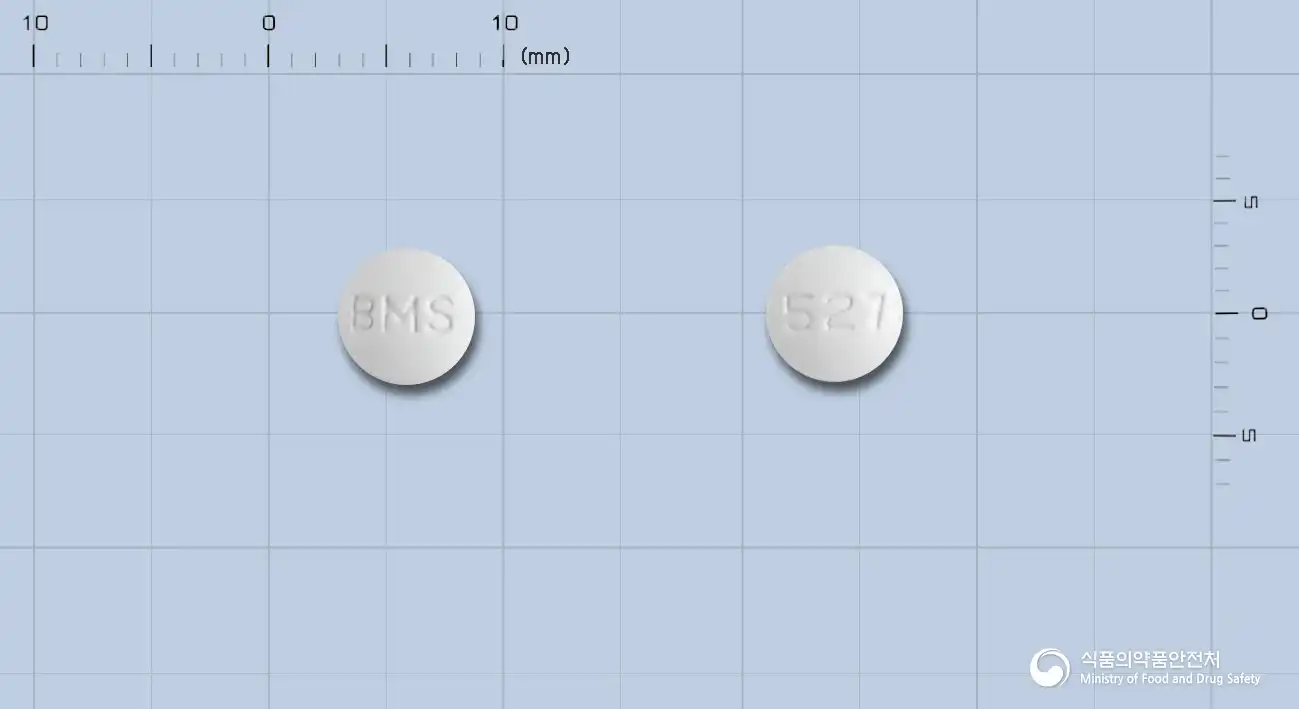
White to grayish-white, biconvex, round film-coated tablet, engraved with 'BMS' on one side and '527' on the other.
60 tablets/PTP
Even with the same ingredient, strength, dosage form and how it is taken can differ.
Viewing nowDasatinib 20mg
Tablet · Prescription medication
Korea BMS Pharmaceutical Co., Ltd.
Dasatinib 70mg
Tablet · Prescription medication
Korea BMS Pharmaceutical Co., Ltd.
Dasatinib 50mg
Tablet · Prescription medication
Korea BMS Pharmaceutical Co., Ltd.
Dasatinib 100mg
Tablet · Prescription medication
(Yoo) Korea BMS Pharmaceuticals
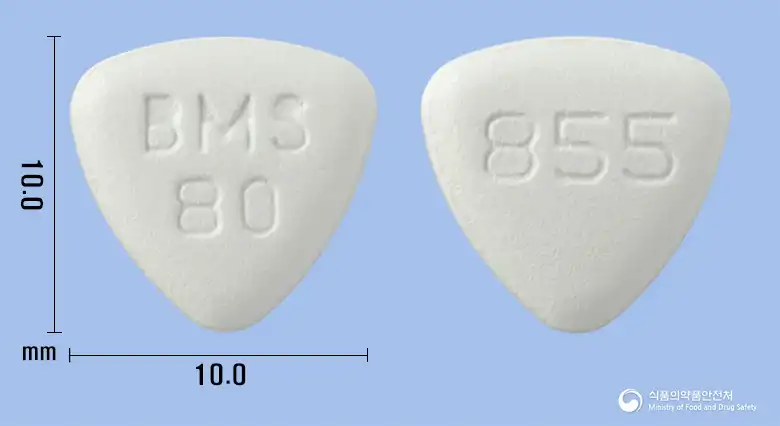
Dasatinib 80mg
Tablet · Prescription medication
(Co., Ltd.) Hanmi Pharmaceutical Company
Even with the same ingredient, the dose and directions can differ by strength and dosage form. Talk to a doctor or pharmacist before switching from a medication you are already taking.
No questions yet.
For anything that needs medical judgment, consult a doctor or pharmacist.
This drug information is based on data provided by the Korea Ministry of Food and Drug Safety.
Consult a doctor or pharmacist for accurate dosage, administration, and usage instructions.